

In the first of a series of regular collaborations with Canary Wharf’s guitar school, Kitchen Jam, we take a look at the history of a track with a local link and deliver some tips on how to play it
Kitchen Jam founder Darryl Powis has created a video tutorial to help Wharfers get their fingers around the riff that drives Rebel Rebel. Simply follow this link to get playing
To play the whole track you’ll need the chords below:
All the chords you’ll need to play Rebel Rebel by David Bowie – image by Wharf Life
looking back on the history of the track and its link to Docklands
BY ZAINAB HASSAN
Picture this – it’s early 1990, and David Bowie has just announced the Sound+Vision tour, a series of gigs where he’d play his biggest hits live for the very last time.
Rather than choose the setlist himself, he handed the decision to his global fanbase through telephone voting.
Dial 1-900-2-BOWIE-90 on your landline, and you were taking your chances at getting your favourite track onto the bill.
As calls flooded in from every corner of the globe, Bowie built the setlist from a mix of UK votes, American votes, and requests from everywhere else in between.
It was a truly global selection, curated to reflect what the world wanted to hear.
echoing on the island
For three nights that March, the tour landed in the capital at the London Arena, an indoor venue on the Isle Of Dogs that held up to 15,000 fans.
Demolished in 2006, the landscape is markedly different to when Bowie’s genre-shifting hits were last played, but the echoes of his riffs still resound in the hands of guitarists to this day.
glam rock swagger
The Sound+Vision tour setlist was shaped with deep cuts standing shoulder to shoulder with Bowie’s biggest hits.
One such song, Rebel Rebel, came early in the setlist. Salvaged from a scrapped Ziggy Stardust musical, it was the lead single for 1974 album Diamond Dogs and was the last of Bowie’s singles to swagger with true glam rock bravado.
Deceptively simple, yet roaring with a Rolling Stones-esque ferocity, the main riff loops around three chords – D, A and E – and an unrelenting descending melody that’s as instantly singable as it is impossible to shake.
the end of two eras
As a swan song to glam rock, Rebel Rebel was the end of an era for Bowie.
The Sound+Vision tour was the end of another, as he retired the hits from his live sets for good.
Two farewells, made decades apart, overlapped for three nights at the London Arena.
But all these memories remain in music. Just listen to that rebellious opening riff – it all comes flooding back.
For those who’d like to know more, east London is also now home to the David Bowie Centre in Stratford.
Based at the V&A East Storehouse, the collection includes more than 90,000 items from the artist’s archive and is free to visit.
key details: Kitchen Jam
Kitchen Jam offers guitar lessons rooted in musical connection and community from its studios in Canary Wharf and Stratford.
Annual free outdoor arts showcase presents its 31st edition on Greenwich, Woolwich, Romford, Thamesmead, East Ham and Stratford
Efectos Especiales (Special Effects) is set to be performed on Greenwich Peninsula on August 29 and 30, 2026 as part of the Greenwich + Docklands International Festival – Image by Matheus Jose Maria
Having given nearly a third of a century to curating and producing the annual event, Bradley’s enthusiasm is undimmed as he and his Greenwich Peninsula-based team prepare for its 31st edition.
“The theme this year is ‘We Move’ – we wanted to respond to what the festival does best, which is to give everyone a bit of a lift,” he said.
“Those wondrous moments in public spaces that are created as part of our programme are exactly that and it’s important that they are free and accessible to everyone.
“For the theme, we took inspiration from a common expression used by young Londoners to indicate when they’ve put an issue to one side so they can get on with their lives.
“We want to embody that spirit of resilience you see in this city – the way people make things happen and get on in difficult times.
“All our events are open to everyone, but we’re especially thinking about how we engage with young Londoners in 2026.”
360 will open the festival in Woolwich – Image by Duy Laurent
opening in Woolwich
This year’s programme kicks off, as is traditional, in Woolwich’s General Gordon Square with a 55-minute performance of 360 at 7pm on August, 21.
“It’s an amazing dance theatre spectacle, that’s getting its London première,” said Bradley.
“The performance takes place on a multi-tiered stage with energising music and a real sense of connection with the challenges that young people face – but it’s also full of hope and possibility.
“The audience will get drawn in until the line between who’s watching and who’s performing is blurred.
“It’s been created by an incredible French choreographer called Mehdi Kerkouche of CCN De Créteil Et Du Val-De-Marne and we’re really excited to be bringing it here.”
Returning to Greenwich Park it boasts an extensive schedule of events.
“This is another festival institution and the new location was hugely successful last year,” said Bradley.
“It’s a setting that audiences really appreciate – it’s relaxed and the tree cover is quite useful at this time of year.
“There are incredible views and the programme we’ve put together is great.
“There will be children’s games, dance performances and installations.
“Do Birds Dream Of Flying? by Fabla Collective from Slovenia will be one of the highlights and I’m also really looking forward to Inertie by the French company Underclouds CIE, who perform using a circular frame that’s very reminiscent of a sundial.
“In the context of the Royal Observatory Greenwich, it will be a nice thing to see alongside.
“Then there’s ElevateHer by Daughters Of The Wire, which has a feminist perspective and a joyous soundtrack that celebrates the heritage of women as circus performers.
“Regular visitors to our events may remember that one of the directors of the company performed on the high wire back in 2018 at the Old Royal Naval College in a piece created to mark the anniversary of women’s suffrage.”
The UK première of Benched will be part of Dancing City – Image by R+Solholm
branching out to Romford
Romford Market will be the setting for a pop-up son et lumière show on August 28 and 29 as the festival reaches out to Essex with Meet Me By The Fountain.
Variable Matter’s presentation takes inspiration from a lost water feature, using video projections and sound to span nearly 800 years of history and take audiences through into an imagined future.
Similarly transformational, Efectos Especiales (Special Effects) is an Argentinian show by Luciana Acuña and Alejo Moguillansky that casts the audience as part of a live film shoot as they follow a dancer past a truck with blaring music before the elements erupt, thunder rolls and snow falls.
“This will be staged over August 29 and 30 on Greenwich Peninsula, which is another of the festival’s long-standing destinations,” said Bradley.
“We’ve worked there since 2017 and we try to do new things each year.
“Our offices are based there and we’re very much a part of the creative district.
“I saw the show in Paris and it’s beautifully staged – a very beautiful piece with wind, rain, smoke and fire.
“It’s one of the pieces we’re able to bring to the festival through support from Without Walls, which works with events nationwide and allows productions to tour across the country.”
I Have No Name forms part of Nature Speaks in Thamesmead – image by Vidy Lausanne
dates for the diary
Other diary dates for readers to note are September 3 and 4 in Queen’s Market Square in Green Street for Chair! and Kismat Walla and September 4 and 5 for Nature Speaks in Thamesmead.
The latter is a two-part immersive storytelling experience in the Tump53 Nature Reserve featuring imagery, music, sound and voice.
The penultimate major pop-up event in GDIF’s programme is then set to take place on September 5 when Dancing City returns to Stratford.
Bradley said: “We’ve packed the schedule with shows, having established a really strong relationship with Sadler’s Wells East and the Queen Elizabeth Olympic Park.
“This includes the UK première of Benched by a Danish company called Uppercut Dance Theatre. It’s a very high energy piece featuring five dancers.
“There’s also a specially commissioned production from Fuse Theatre called Man Down, which explores issues around toxic masculinity.”
GDIF is set to conclude back in Woolwich’s General Gordon Square with a performance of (In)visible Dancingon September 6.
Bradley said: “This is by the fabulous Protein, a phenomenal company based in Woolwich, and audiences are in for a real treat as the choreography builds throughout the town.”
key details: Greenwich + Docklands International Festival
The Greenwich + Docklands International Festival is set to run from August 21 until September 6, 2026, across a variety of locations.
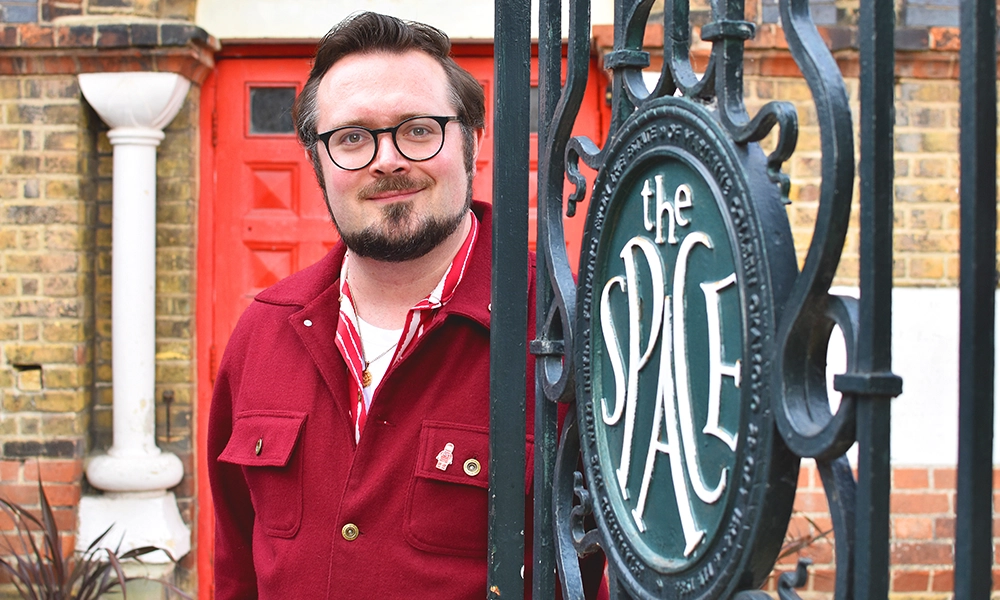
“The aim of Tech Academy is to give people a crash course in the technical aspects of theatre production – hopefully to act as a springboard that will get them into long-term careers,” said Matthew Jameson, artistic director at The Space on the Isle Of Dogs.
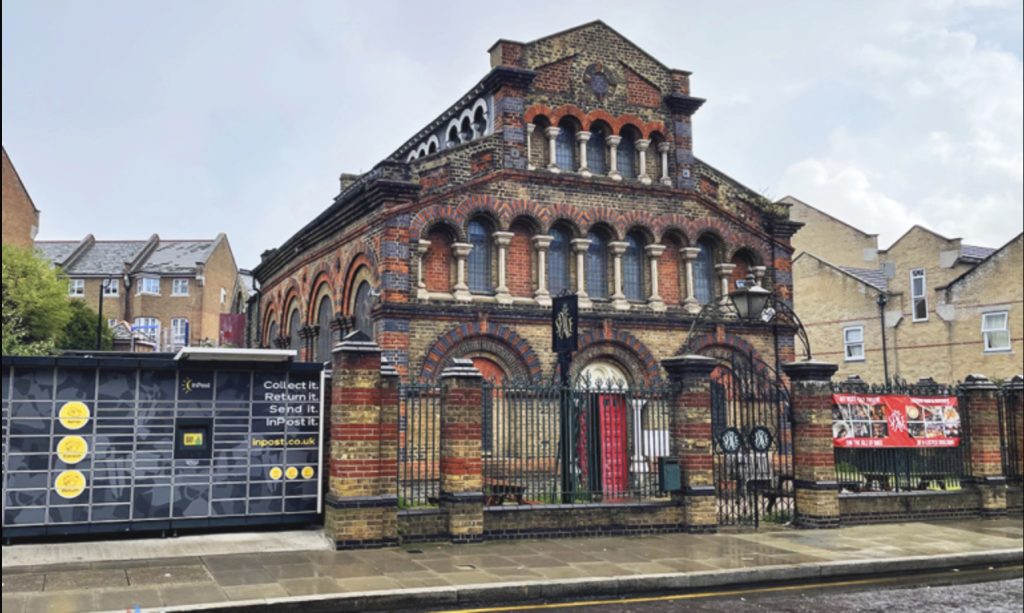
The Westferry Road theatre and arts centre is running a two-day session for up to 15 people who are living in Tower Hamlets and are not currently in education, employment or training.
It’s intended as a gateway to working in the sector.
The pilot scheme, which is supported by the East End Community Foundation, aims to give participants a solid grounding in the key technical elements needed for a fringe theatre show – lighting, sound and stage management.
“Across two intensive days we’ll deliver an introduction to all things technical,” said Matthew.
“The staff here, including our executive director Sarah Reed, have a wealth of experience in the industry to pass on – we want to provide an environment where people can learn safely and fail safely so they get a real understanding of what it’s like to work in this environment.
“We cover vocabulary and terminology because it can be terrifying for people to feel out of their depth if they don’t know the right words to use.
“There’s a lot of jargon and we’re here to demystify and clarify what’s happening.
“We’ll also be showing people all the equipment, how to set it up, treat it with respect and use it in a safe and responsible manner.
“The course covers things like manual handling, working with ladders, hanging, focussing and programming lights.
“The idea is to cover everything to see a show through from setting it up, pressing the buttons to make it go and then clearing up at the end.
“It’s every single step you need to be aware of to work behind the scenes on shows at venues like ours or in bigger theatres.”
Artistic director at The Space, Matthew Jameson – image by Jon Massey / Wharf Life
opening doors to opportunity
While the course doesn’t lead to a formal qualification, The Space hopes it will result in opportunities both within its own programming and at other venues.
“We’d like this pilot scheme will develop into a longer-term programme at The Space in the future,” said Matthew.
“The uptake has been fantastic so far and there’s clearly potential to take it further, which is what we’d like to do in the future.
“There is an identifiable need here and we want to help people explore careers in this sector.

“We really hope these Tech Academy sessions are the springboard for participants to find a discipline they love and identify with.
“While the course covers a range of skills, for longer term opportunities people tend to gravitate to a particular area.
“They might prefer working with lighting to sound, for example.
“We hope these sessions will help participants discover those pathways.
“That might be more on the stage management side – learning how to mark up the props table and how to run a show safely and efficiently back stage.
“It can also be very important for theatre-makers, directors, writers and actors to understand how it all works – what’s possible and what roles everyone is playing when they’re doing the fluffier side of creating performances.
“In the end, all the departments have to work together to make something far greater than any of them are capable of individually.
“This is something I’ll always love about live theatre – that the planning and talents of a group of people can come together to create something extraordinary.
“That’s when performance is at its peak – a well-oiled slick machine, where actors are not bumping into the furniture, everything is exactly where it should be, the sound and lighting are perfectly in sync and the audience are responding to it.
“It’s just wonderful to see.”
Participants get a grounding in a range of skills including how to work safely at height – image by Jon Massey / Wharf Life
a grounding before specilisation
While the Tech Academy sessions are intended to deliver a good grounding, they’ve also been designed to test participants.
“We set up what we call obstacle courses up as part of what we’re doing and an element of one of those is where Sarah and I perform a short, two-page scene,” said Matthew.
“We’re going to be asking the participants to operate a series of sound and lighting effects based on the scene as though we were doing a real performance.
“But actors can be fallible. What happens if one of us makes a mistake?
“Maybe some things will go wrong. That’s just show business.
“One of the lessons we aim to pass on is that live theatre is unpredictable and anything can happen.
“We have to be prepared as theatre-makers to find a way through, to keep that audience there and engaged.
“It’s really important to recognise the power that technicians have and their responsibility.
“Theatre relies on the power of the imagination – the incredible acts of trickery by the people audiences don’t see so that sounds, music and light can help transport them and set their pulses racing.
“That making all of those happen at the right time for what’s happening on stage is also a performance and takes real skill.
“I hope that the people who participate in Tech Academy will feel that technical theatre is demystified and is a real and plausible career that they can consider.
“People should know that it’s not highly specialised, that you can learn the buttons to press and see the routes through to get gigs.
“Hopefully, this time next year, they’ll be preparing to go up to the Edinburgh Festival, and a couple of years down the line, they may be touring internationally.”
The sessions cover sound, lighting, stage management and more – image by Jon Massey / Wharf Life
key details: Tech Academy at The Space
The Space on the Isle Of Dogs is currently recruiting participants for its next two-day session – set to take place in August or September, 2026.
Applicants should be Tower Hamlets residents who are not in education, employment or training.
The course is free to attend and includes lunch and snacks.
It’s an archive that now extends to more than a million individual documents and images.
Frontispiece is the business he established in 1989 to trade in such items, later adding a framing service as a natural extension to its operation.
It – like Reg – continues to have a storied existence and deserves to be a natural point of exploration for anyone moving to this part of London and seeking something of the place they’ve relocated to.
It’s also a fantastic resource for interior designers seeking to bring an authentic connection to history in their creations.
Reg began buying prints and documents as a teenager, initially from dealers and then at auctions in lots of multiple items.
“I was interested in the history of east London when my dad was a lad in the 1890s,” he said.
“People didn’t really have things on the wall when I was growing up apart from stuff like ‘Jesus Saves’ or ‘Welcome Home’ – no artwork.
“But I’d put up these prints.
“A chap I used to buy from suggested I go to an auction and buy 500 prints in a single lot, keep the ones I wanted and then sell the rest on.”
Detail from Victoria Dock Canning Town and East India Docks Poplar antique map, 1902, £48 – image supplied by Frontispiece
from collector to dealer
However, it was some time before Reg would turn that enthusiasm into a business.
He worked as a “camera operator” for the press, snapping musicians and football games as well as garden parties at Buckingham Palace.
After about eight years of pressing the shutter, he “became fed up with that” and pursued another passion – the railway.
“I was a train-spotter as a kid,” he said.
“You’d be standing on the bridge and get swamped with smoke and steam. I became a fireman on diesel engines.
“You see things from the footplate you can’t see from the train. I loved it.”
After a spell travelling, he returned to the East End to work as a labourer at Truman’s Brewery, before deciding – on the advice of his brother – to apply to university.
This was despite having no qualifications, having left school at 15.
After successfully negotiating the entrance exam, he trained as a teacher, returning to east London to work in the classroom – a career that took him through to the launch of Frontispiece.
In his time, Reg has been a male model, photographed the likes of the Rolling Stones, the Yardbirds and Duke Ellington and has been a magistrate since 1986.
He’s a Freeman of the City Of London, a former master of the Worshipful Company Of Poulters and has held the positions of deputy mayor of Tower Hamlets and trustee at Whitechapel Art Gallery. He also plays a mean blues on the mouthorgan.
Having originally opened at Tobacco Dock in Wapping when it became a shopping centre, Frontispiece relocated to Canary Wharf to become the first retail business to open on the estate in the early 1990s, trading successfully in the malls for many years.
Today both his antique maps and prints business and framing services continue to operate from rooms at Cannon Workshops close to West India Quay.
Reg in the process of making a frame for a picture – image by Jon Massey / Wharf Life
an extensive inventory at Frontispiece
Like his life, Reg’s business contains multitudes.
His files and shelves are filled with images, documents, clippings and maps that tell stories.
“I have a particular focus on Docklands,” he said.
“For example, I have more than 500 images of the Great Eastern – Isambard Kingdom Brunel’s ship, which was built on the Isle Of Dogs as well as pictures of the engineer himself.
“Those are some of the most popular items we have.
“People also like to have maps of the places they’re living in and images of how these places used to be.”
Frontispiece has digitised more than 6,000 items, which are now available through its website.
Those browsing there will find everything from pages from The Illustrated London News in the 19th century to prints of flower fairies, sketches of ladies’ fashions, maps and images of maritime history.
There’s also a strong focus on military history, with Reg passionate about The Royal Regiment Of Fusiliers – based at the Tower Of London – which his father served with during the First World War.
Detail from Pheasants And Peacocks antique print, published 1862 in Oliver Goldsmith’s A History Of The Earth And Animated Nature, £45 – image supplied by Frontispiece
fit for the wall
“We started offering frames while we were still at Tobacco Dock,” said Reg.
\“I’d met a chap at a trade fair who would come down from Bedfordshire with the sizes we needed.
“But he didn’t want to keep doing that, so he taught me and people started coming to us for that service.”
Whether for his maps and prints or a client’s own pieces, Reg offers a bespoke service in wood and metal.
One notable client is Sir Michael Caine’s wife, who had the actor’s medals framed for him from his time in the Fusiliers as a gift on his 90th birthday.
Frontispiece also created a golden frame for King Charles, who’d donated a copy of his favourite photograph of himself as a boy with his late mother to a charity auction, raising £35,000 for Great Ormond Street Children’s Hospital.
“We’re more than happy to discuss any job and if we can help, we will,” said Reg.
“Most people these days want frames that are quite simple, although some want designs that are more grand.
“The cost depends on how big the item to be framed is and the materials we’re using – what moulding we choose.
“We have all sorts of woods and metals in stock to suit what people want, starting at 48p per inch.”
As for the prints and maps, prices vary depending on size and rarity, but many are listed around £35 or £45.
Kingston’s failure to embrace the miracle of train travel in the early decades of the 19th century was ultimately Surbiton’s gain.
Councillors feared (perhaps rightly) that the new technology might severely impact the local coaching trade.
Their opposition meant a planned line was re-routed to the south, with Surbiton Station opened in 1838 as the curiously named Kingston-Upon-Railway.
Consequently, the neighbourhood benefits today from a direct, 17-minute connection straight into London Waterloo and frequent services, while Kingston station sits on a branch line to the north.
As a result, Surbiton has become a thriving suburban neighbourhood with a bustling high street that’s managed to resist – to some extent – an over-reliance on big name brands.
A talisman for the area, perhaps, the station looms large both physically and in the imagination.
Built in the art deco style in 1937 by architect James Robb Scott, the white modernist structure is Grade II listed and has appeared as a location in both the very first TV adaptation to feature David Suchet as Agatha Christie’s Poirot in 1989 and more recently Harry Potter And The Half-Blood Prince in 2007.
The Lamb is just off the beaten track in the south-west London town – image by Jon Massey / Wharf Life
There’s history beyond the tracks too, some of it echoing into the present.
For a while, Surbiton was home to John Everett Millais and William Holman Hunt of the Pre-Raphealite Brotherhood, both taking inspiration from the Hogsmill River in nearby Six Acre Meadow.
The former used it as the basis for his painting Ophelia, which now hangs in the Tate Gallery and inspired Taylor Swift’s The Fate Of Ophelia, its accompanying music video and the cover of her blockbuster album The Life Of A Showgirl.
The town is, or has been, home to a slew of famous faces including football manager Roy Hodgson, comedian Julian Clary, children’s author Enid Blyton and composer of The Wombles’ songs, Mike Batt.
Perhaps part of its appeal is that there’s a real sense that you’ll find something of interest just a little way off the beaten path – the spirit of rebellion in suburbia once satirised in The Good Life, also set in Surbiton.
Not far from the station, for example, is The Lamb – a family run pub that traces its lineage back to a brewery that originally occupied the site on Brighton Road in 1855.
The Lamb boasts a quirky interior and a thriving live music programme – image by Jon Massey / Wharf Life
Today it’s operated by Adam and Liz Lewis under the philosophy that their establishment should truly be a public house – essentially their living room open to anyone passing.
There’s a strong flavour of silliness permeating everything within.
While the bar has a serious drinks offering with a focus on interesting beers, the decor embraces everything from the 1902 French sci-fi flick A Trip To The Moon, to Pan’s Labyrinth and giant hungry hippos.
There’s much live music on offer and a large garden complete with caravan, stage and a ramshackle collection of deep sofas sheltering under a series of gazebos.
Visitors can expect a carousel of foodie pop-ups from the likes of Emma’s Kitchen, Happy Hill Kitchen, Smash And Hash and Little Ginger.
There’s also a roster of musicians performing regular gigs such as singer songwriter Leonie Evans, indie band Baby Husband, pianist Joplin Parnell and jaz guitar duo Gypsy Dynamite.
Located overlooking Thames Ditton Marina, close to the River Thames on Portsmouth Road, this corner building is every inch a classic pub.
Visitors can expect plenty of whitewash, beams, dark tiles and hanging baskets and an interior that manages to be both bright and cosy at the same time.
For those who’d rather enjoy some fresh air, there’s also a large covered terrace overlooking the boats.
Sausage and mash at The City Arms in Surbiton – image by Jon Massey / Wharf Life
The menu reads very much as expected with a burger, chilli, scampi and the inevitable fish and chips.
But there are also a few less well-worn dishes including a full rack of ribs and a goats cheese pasta.
In the mood for tradition, however, we sample the Deep Fried Brie for £8.45 and the Sausage And Mash for £16.95.
The cheese arrives oozing from its crispy shells atop a bed of salad leaves, while a satisfyingly decent portion of potatoes and peas follows, swimming (as they should be) in onion gravy and topped off with three slender but tasty bangers.
Joe says SWR Business Direct works on a fee-free model to help promote rail travel to businesses – image supplied by SWR
on track with SWR’s Joe Thurgood
Q
I run a business and it’s important we’re able to track where our employees are going. How does SWR Business Direct help firms keep tabs on where staff are actually travelling to and from?
A
Think about your business’s biggest asset for a second. Is it your team?
Are they on the move? Does keeping track of them feel like a full-time job? Don’t worry.
You do not need to go full bloodhound or micro-manage every single step they take to stay in the loop.
Instead, just change how they get from A to B.
When it comes to business travel, hitting the tracks is a total game-changer. Rail travel keeps your team productive and safe. It’s also surprisingly easy to track.
Think about the classic road trip. It is a black box of stress. You have no idea if your employee is stuck in a jam or hunting for a parking space.
There are few things more annoying than staring at the back of a car when you’re trying to get somewhere and the minutes are ticking by.
This is also all time you’re paying them for.
With rail, you get a clear, predictable schedule. You know exactly where they are and precisely when they will pull into the platform.
Even better, your team will thank you for it. Instead of battling traffic, they can kick back in a comfortable seat, reply to emails, prep for the big meeting, or just take a power nap and recharge.
Plus, trains drop your people right into the heart of a town or city.
Ready to make your corporate travel completely stress-free? Manage it all in one place with SWR Business Direct.
This free-to-use platform lets you book any train across Great Britain with absolutely zero booking fees.
You will automatically get the cheapest ticket options, handy expense tracking, and detailed carbon footprint reports.
Switch your team to a smoother journey today.
Create your free account or email the team at businessdirect@swrailway.com to streamline your corporate bookings.
key details: SWR Business Direct
SWR Business Direct is free to use and allows companies to book, plan and manage business travel across the whole of Britain. Find out more here.
There are no hidden fees or charges and no booking fees on tickets purchased via the operator’s service.
“When I was studying medicine, I spent a lot of time as a student sitting around watching other people doing things,” said James Nicopoullos.
“But then I did my obstetrics and gynaecology rotation and got to deliver babies.
“That was when I began to feel like I was going to be a proper doctor.
“Up until that point, I didn’t really know what I wanted to do within medicine, so I started training in that field.
“Many of the consultants I worked for had an interest in fertility and so mine started to grow.”
Today, following extensive training and the publication of a research thesis in the field, James is the medical director at HCA UK’s Lister Fertility Clinic.
He’s also the “person responsible” for ensuring it complies with the high level of regulation in the sector as overseen by the Human Fertilisation And Embryology Authority.
Offering initial investigations, monitoring and treatment preparation, it extends the reach of the hospital’s operation, which includes procedures such as egg collection and embryo transfer.
Lister Fertility Clinic medical director, James Nicopoullos – image by Jon Massey / Wharf Life
supporting multiple visits
James said: “Fertility journeys aren’t always easy ones and there are lots of things to consider.
“However, once a decision is made to proceed with treatment, that often results in multiple visits to our clinics.
“We know that juggling life and work against the emotional and physical impact of a fertility cycle is not easy.
“That’s why we’ve created these satellite units – we know that being able to go somewhere closer to work or home can be really important to people.
“One of the things to consider is that, to get the desired outcome, people may have to go through multiple cycles of treatment, so making the process easier is really important.”
Canary Wharf joins The Shard Outpatients, The Beaconsfield Clinic and The Portland Hospital on the list of satellite locations operated by the clinic.
In addition to providing treatment to help people conceive, the newly minted clinic also runs HCA UK’s Fit For Fertility health screening – a range of tests and a consultation designed to give them a picture of their reproductive health so they can make decisions for their future based on the best evidence available.
“This is a bit like an MOT,” said James. “In essence, it’s to look to see if there’s anything there which is prohibiting pregnancy now or that might do so in the future.
“For women, we take an ultrasound scan and a blood test to check for any physical abnormalities and to get an idea of the number of eggs she has.
“For men, we collect a sperm sample and look at the number and quality produced.
“Often fertility doctors are gynaecologists and focus on the female for obvious reasons, but it’s actually very common in the couples that come to see us that there’s a male factor when it comes to problems conceiving.
“If that might by an underlying cause we look at how we can improve the situation and what treatments are available.
“The majority of patients we see are people who have been trying for a certain period of time without success. Age is a really important factor.
“For many different reasons, people are seeking to have babies later in their lives at a point where fertility isn’t as good.
“Generally, the younger you are, the longer you can try before seeking help.
“Fertility remains relatively consistent in women up to the age of 35, for example, and then egg quality and quantity begin to decrease.
“From 37, that really accelerates and the chance of getting pregnant mirrors that. Also important to consider is that the same is true of IVF.
“If you’re sitting here at 30 and having a fertility assessment, and, even if you don’t get pregnant for two years, your chances of IVF working at 32 are still going to be very good.
“If you’re sitting here at 40 and everything looks OK, there will inevitably be a massive drop off in IVF success in the next two years.
“This is why testing is important – having early conversations gives people an idea about how quickly they might need to move on to IVF if they want to have a child and aren’t able to conceive naturally.”
The satellite clinic is based at HCA’s 40 Bank Street facility – image supplied by HCA UK
making informed decisions
Age can also play a big part in IVF success rates, which drop the older the donor.
“We are seeing more people nationwide who are thinking more about age, so are considering freezing,” said James.
“If you freeze a 30-year-old egg and then put it into a 20, 30 or 40-year-old, the outcome will be the same – the success rate is based on the age of the egg.
“There’s no guarantee IVF will work, but you are increasing your chances the earlier you freeze an egg. At age 30, it’s around 50% but it drops to 5% for women aged 45.”
For those just starting to try for a baby, James said lifestyle could be a factor in fertility, although people shouldn’t worry too much so long as they weren’t taking things to extremes.
“People shouldn’t be beating themselves up, worrying about an espresso they have in the morning or the two or three glasses of wine they have over the course of a week,” he said.
“Moderation is key, as is eating well, looking after yourself and limiting stress.
“I would say that smoking is definitely a negative factor – that’s also true for men when it comes to sperm production.
“Also for men, I wouldn’t want to see them spend five hours a day in a sauna, but having one once a or twice a week is not going to make a difference – it’s very unlikely that this is going to be the deal-breaker.”
Human eggs under the microscope
case study: Fit For Fertility Screening
Knowledge is always power.
To that end, the Lister Fertility Clinic’s Fit For Fertility health screening service aims to provide men and women with key information about their reproductive health to help them make decisions for the future.
To find out what Wharfers can expect from the service, we sent Isaac, 44, and Fiona, 39, to try out the heterosexual couple package, which costs £690.
For both partners, the service includes a 30-minute consultation where relevant medical history, lifestyle advice and body mass index are discussed.
In addition, Fiona underwent an Anti-Mullerian Hormone blood test to assess her egg supply, an antral follicle count scan to identify the number of egg-producing follicles in her ovaries and a transvaginal ultrasound scan to check for conditions like endometriosis or fibroids that might affect her womb.
Isaac provided a sample of semen for analysis to assess sperm count, movement and shape.
A sperm sample as viewed through a microscope
>> “I’d never really given much thought to the quality and quantity of my sperm before,” said Isaac.
“So it was really interesting to receive my results and hear what our consultant, Timothy Bracewell-Milnes, had to say about them.
“I supplied my sample at the Chelsea hospital, which was quick and efficient, although I understand soon the Canary Wharf clinic will be offering a service for patients to produce one at home, then drop it off.
“My count came back at 17million, 2million above average, although I was slightly below average on the quality.
“I had no idea only about 5% of sperm are capable of fertilising an egg.
“Timothy suggested taking a supplement to address this and was very thorough throughout the consultation.”
>> “Attending the clinic at Canary Wharf, the tests began with a series of questions about my cycle,” said Fiona. “I then had my vaginal ultrasound.
“Every effort was made to make me feel comfortable and relaxed.
“The radiographer kept me constantly updated with what she was seeing and the progress of the scan.
“They then took blood for the hormone test to check the number of my eggs.
“I found the experience to be friendly and the everybody was professional and reassuring.
“At the consultation, Timothy explained the impact that age has on fertility.
“He said I had an above average number of follicles in my ovaries for my age and that this was good news in terms of fertility, indicating a larger pool of remaining eggs.
“We also talked about other procedures on offer such as egg harvesting and freezing, the relative success rates and when they might be appropriate.
“Everything was handled very sensitively and it was really convenient to be able to access these facilities so close to where I work in my office in Canary Wharf.”
key details: Lister Fertility Clinic at Canary Wharf
The Lister Fertility Clinic at Canary Wharf Outpatients is located at the HCA Healthcare UK facility at 40 Bank Street.
It offers services including IVF, egg freezing, fertility testing and fertility treatments.
It wasn’t really all that long ago that ships coming from and going to Sri Lanka were frequenting the docks of east London.
Typically those trade routes saw cargoes of raw materials arriving in Britain while we exported tech and empire overseas.
The arrival of Isso Prawn Crazy flips that narrative, however.
This time it’s Sri Lanka delivering a fresh business model and cutting-edge tech into the Canary Wharf hospitality market.
Having built a brand back home, CEO and founder Apinash Sivagumaaran is now determined to make a splash in London, a city he considers the food capital of the world.
Born and raised in Sri Lanka, he studied banking and finance in Australia, working in restaurants and cafés while at college.
“I figured out my passion was in hospitality and so I went into hotels and moved to Singapore to train at one of the best schools in the world,” he said.
After returning to Sri Lanka he worked his way up to become a resort manager and then worked for a major operator overseeing the whole of one company’s South Asian operation by the time he was 25.
It was then that he spotted a niche.
Mutto rolls at Isso – image by Jon Massey / Wharf Life
finding a spot in the market
“Whenever I’d come back to Sri Lanka, I’d meet up with friends and go for food,” he said.
“There were a lot of new concepts popping up, but they were focusing on crab, which is quite expensive and not accessible for everyone.
“I talked to people and realised there was a middle income audience that wasn’t being served and there was an opportunity to develop a seafood brand.
“Everyone else was doing crab and lobster, but I’ve always loved prawns.
“As a kid, if my mum cooked a prawn curry, I’d give my father one, my sister one and I’d take the rest.
“So I came up with the concept of Isso – which means prawn in Sinhala, one of the languages of Sri Lanka – Prawn Crazy.
“We built a prototype restaurant, about 80sq m, with only 16 seats and we had lines of cars parked outside because we’d priced it correctly.
“We saw growth month on month and we even saw Ferraris and Lamborghinis pulling up to visit.
“Basically we’ve taken one of the best proteins you can find in Sri Lanka and we’re serving it to the mass market.”
from Sri Lanka to Canary Wharf
Off the back of this success, Apinash has expanded the business to five locations in Sri Lanka and has now opened in Canary Wharf.
He puts the company’s success down to a somewhat unusual business model.
“From day one, we’ve partnered with Alpex Marine in Sri Lanka, which gives us something rare in this industry,” said Apinash.
“Through them we work directly with 150 fishers in the north and north-east of the island who use small boats to catch prawns.
“They go out to sea for four hours, chill their catch and then we quick freeze it to -36ºC as soon as they return which means the shellfish you’re eating in our restaurant are as fresh as it gets.
“I call them the wagyu of the sea and when you eat at Isso, you’re supporting a fleet of sustainable, small-scale day boats in Sri Lanka because we import all the prawns we serve in the UK from them.
“We make sure we pay them fairly and I’d love to grow this business until we’re working with 1,000 boats.”
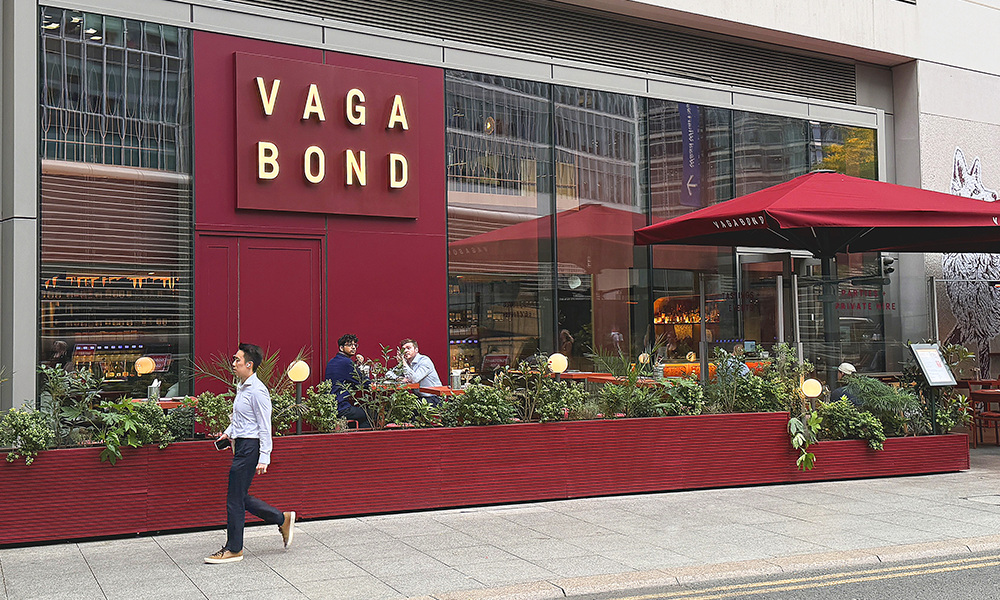
Visitors to Isso’s new 90-seat restaurant at 25 Cabot Square, a unit previously occupied by Vagabond, will find a menu centred around three core species – flower prawns and black tiger prawns, both caught wild at sea, and giant freshwater prawns.
The latter Apinash dubs “the lobster of the river”.
Giant freshwater prawns at Isso in Canary Wharf – image by Jon Massey / Wharf Life
small boats and robots
The space features an open kitchen, complete with robotic equipment to help speed up service, varied seating intended to encourage both formal and casual dining, a private dining room and a mural by artist Geshany Balder celebrating the main ingredient.
Inspired by the original Sri Lankan venues, the Canary Wharf restaurant’s menu features a central “combo” option, where guests choose the type of prawns they’d like, the style they’d like them cooked in and a side to go with them.
This ranges in price from £19 to £45, depending on the shellfish selected.
Diners can also choose from a series of starters such as mutton rolls featuring rich spice and slow-cooked meat, cuttlefish fritto tossed in sea salt and chilli flakes with a fruity dip and coconut prawns if you just can’t get enough. Each is priced at £12.
“Personally, my favourite dish is the great freshwater prawns cooked hot butter style with rice,” said Apinash.
“I also love the mutton rolls. My head chef, Karan Kashyap, has really elevated the whole thing.
“We use more meat in the dish and less potato and serve it with this amazing spicy sauce.
“We’re here to represent Sri Lankan food, take it to the next level and then take it across the world. London is the most exciting market on the planet.
“Most of the Sri Lankan businesses here are UK-born, but we’re offering something different.
“We want to be what the future of restaurants looks like – the supply chain, automation in the kitchens to make them more efficient.
“We’re creating value for everyone involved, our staff, the people catching the prawns and our partners.
“Sri Lanka has gone through a lot – a two-decade civil war, back-to-back recessions and political unrest.
“Back home, there isn’t a lot of time to dream big because there are many problems to focus on.
“For me, I want Isso to be a motivation for all of our entrepreneurs on the island.
“You don’t have to be born in New York, Paris or London to dream big.
“You can have those aspirations from Sri Lanka and take over the world.”
Isso Prawn Crazy will also be operating a month-long pop-up in Victoria Park at the Pavilion Cafe in east London throughout August, 2026, open from 2pm-10pm. Booking details are expected to go live in the third week of July.
Isso Prawn Crazy is located at 25 Cabot Square on the ground floor – image by Jon Massey / Wharf Life
key details: Isso Prawn Crazy
Isso Prawn Crazy is located at 25 Cabot Square and is open every day for lunch and dinner.
You can find full details including menus on the restaurant’s website here.
“Discover is a hands-on centre for creative story sharing,” said Rebekah Polding, the charity’s CEO.
“When you come here, there’s nothing children can’t touch – they are completely free when they come through our doors to enjoy play, making stories, reading books and taking part in storytelling sessions in whatever way works for them.
“Children learn through play, they learn to love stories, to love reading and, as we know, loving books is the single greatest skill that any child can develop to lead a long, happy and successful life.
“It is the magic bullet, it is transformative.
“Books can help us overcome anything this world throws at us. I’m so proud that Discover delivers that for the people who come here.”
Discover Children’s Story Centre CEO Rebekah Polding – image by Jon Massey / Wharf Life
a haven, a cafe, a playground
Following the upgrade, the centre has been brightly decorated outside by artist Hanna Benihoud, whose colours frame large windows onto its new cafe and bookshop space.
Part haven for refreshments, part playground, this features a reception desk complete with purple fur, plenty of plywood construction to create nooks to explore and relax in as well as a horde of books dotted around that are free to read with kids.
This is an attraction in its own right, but pay for entry, venture into the centre and there’s so much more to discover.
Author and illustrator Rob Biddulph has been enlisted to create a graphic retelling of Discover’s origin story – billed as “totally real and intergalactic”.
Alien visitor Hootah, following the disappearance of stories on their own planet, Squiggly Diggly, has journeyed across space to Earth in search of tales to beam back across space and help restore their homeworld.
Consequently all visitors to Discover are not only enriching their own lives, they’re helping save another planet by creating and participating in storytelling.
Everywhere there are little and large Hootahs to spot, not to mention a space ship and plenty more steampunky installations to discover.
“We have a fairytale forest with a trip-trap bridge and plenty of areas for children to explore,” said Rebekah.
“Then on the upper floor there’s a spaceship theme that skews to slightly older kids.
“Outside, we have our beautiful story garden where we’ve increased the diversity of planting for sensory exploration and also have incredible structures to climb on.
“Everything has been designed with the help of children, taking inspiration from their imaginations.
“Following the renovation we now also have a dedicated multi-sensory space for our smallest visitors aged 0-2, filled with interactive toys.
“Books are a great bond between carers and little ones.
“You don’t need to be a scientist to see that babies tune into the person reading to them and they understand a little bit more about focus and concentration each time it happens.
“It’s like a really wonderful hug.”
The centre’s enchanted forest – image by Marc Sethi
a new quiet space and upgraded facilities
Also new is a quiet space that can be used for prayer, feeding or simply taking a little time out.
The centre also features a new heating and cooling system, to better cope with the extremes of weather the UK is now beset with, as well as refurbished toilet facilities that are fit for purpose.
“It feels amazing now we’re back in our space after a meanwhile pop-up in the Stratford Centre while the work was being done,” said Rebekah.
“Now we have a place where people can mingle that’s safe, a place where they can connect both for the people of Newham and London beyond.
“That’s part of the magic – interacting away from screens.
“We enable really supportive behaviours.
“There isn’t really a typical amount of time that people spend here.
“It depends a lot on the attention spans and energies of the individuals involved.
“But we’re designed as an enriching experience – there are lots of quiet nooks and corners where those who are here can rest and refresh themselves.
“A visit might involve free play, time in the gardens and then listening to one of our story builders’ interactive performances, which are included with entry.
“That might involve reading, creating, singing or dancing.
“We also have our early years shows which feature lots of props and action in an intimate setting.”
Discover’s outside now features art by Hanna Benihoud – image by MT Art
from film to stories
Rebekah herself is just the right mixture of silliness and passion.
She’s clearly delighted to be running an institution that carries a crucial message – the importance of reading for both personal education and enjoyment – but carries it with lightness and fun.
We spend some time during our interview, for example, seriously discussing the merits of various jacket potato toppings in the cafe (she is, naturally, right to champion beans and then cheese).
Having worked in the cultural sector her entire career, she became CEO of Discover via a route that included Picturehouse cinemas, Film London, BAFTA and Enfield Council.
She said: “I joined in April 2023 and am extremely grateful to my predecessor Karla Barcacle-Best who saw Discover through Covid.
“The first thing we did was to sit down with kids, local families, community groups and others and that’s enabled us to build our Stories For All strategic framework.
“One of the planks of that has been the capital renovation of the building called ‘up and out’ – words from Willy Wonka who also accepted no limits to what he could achieve.
“That’s the work that we’re nearly at the end of now, turning this former hotel from the 1870s into a place that families will really enjoy visiting in the 21st century.”
The next milestone in the project will be the opening of new immersive exhibition Luna Loves London on July 25, 2026, in the building’s basement, created with former children’s laureate Joseph Coelho and illustrator Fiona Lumbers.
Kids aged 0-11 are encouraged to revel in stories at the Stratford centre – image by Sorcha Bridge
even more to come…
Rebekah said: “These installations are unique to Discover and we have a history of celebrating some of the best writers in children’s literature – Judith Kerr, Michael Rosen and Julia Donaldson.
“The exhibition opens towards the end of the month and it’s a way for children to step in to the kinds of environments they’d find in the Luna Loves series.”
Visitors will encounter a bus, a library, a street for playing sports, an art gallery, a community garden, a dance studio and a carnival with a strong emphasis on the kind of down-to-earth settings of the real city rather than a collection of landmarks.
Tickets for the experience cost £5.50.
One further, major, change is also in the pipeline at the centre.
Discover is set to drop an enormous oak tree into the building that will sit proudly in a disused atrium under a glass roof.
“This is going to be so exciting,” said Rebekah.
“With the help of Adventure Playground Engineers, based in Canning Town, we’re going to build a three-storey vertical playground in its branches with wheelchair accessible treehouses guided by children’s designs.
“The idea is that stories grow like trees and there will be a whole series of adventures for kids to discover and explore.
“Stories are important. One of my favourite books is called My Cat Likes To Hide In Boxes.
“It’s a building story and includes the line: ‘The cat from Norway got stuck in the doorway’, which has always made me laugh.
“So, in our family, whenever anybody gets stuck, we all shout: ‘The cat from Norway’.
“This is what reading is. It’s about shared experience, empathy and connections between people.
“Telling each other how we experience the world and seeing it through new lenses.
“We built Discover so children can learn there’s no right way to tell a story – that’s why the monster on our roof has no name. You have to give them one.”
The refit includes a new space for ages 0-2 and their adults – image by Marc Sethi
key details: Discover Children’s Story Centre
Discover Children’s Story Centre is located at 383-387 Stratford High Street and is open from 10am to 5pm every day.
Entry costs £11 for adults and children aged one and over.
Babies aged 0-1 are free. Discounts are available for Newham residents.
The best value option, however is £19 per person which grants a full year of unlimited access.
In 1951, tens of thousands of people poured into east London to visit the Lansbury Estate.
While the attractions on the South Bank and Battersea have perhaps had the most enduring impact as the government sought to generate a sense of recovery and progress in the wake of the Second World War, Poplar played a significant role as the site of the Live Architecture Exhibition.
Built on a bomb-ravaged tract of land between East India Dock Road, the Limehouse Cut canal and what’s now the DLR to the east, the estate was planned around the idea that it should contain everything people living there needed.
As a result, new churches, schools, shops, a covered market, pubs, open spaces and an old people’s home all linked by footpaths to promote walking, were created.
Three quarters of a century ago, these were new ideas and people flocked to see the likes of Chrisp Street Market, St Mary And Joseph’s Catholic Church and Trinity Independent Chapel (now the Calvary Charismatic Baptist Church).
It’s the 75th anniversary of this influx that provides the theme for this year’s Poplar Picnic – Festival Of Britain, set to take place on August 8, 2026, in Bartlett Park and at Poplar Union.
The event, presented in partnership with Poplar HARCA, will be the culmination of a summer of activities at the arts and community centre, celebrating the history of the festival and its impact on the area.
“Poplar Picnic really serves as an open day for us – we want to make everything as approachable as possible and free wherever we can,” said Paolo Florentini, director of programming at Poplar Union, who has been working with the organisation for a decade.
“It’s showcasing what we do and it’s an opportunity for us to expand out of our venue onto the streets, the park and the canal.
“It’s bringing people here, making sure they know that they have access to this space and the opportunities it provides.
“Each year it’s a big deal for us – we’re a small team, but we are able to manage this because we’re really passionate about what we’re doing.”
Kaltrina Pashtriku, communications and engagement manager, and Paolo Florentini, director of programming, at Poplar Union – image by Jon Massey / Wharf Life
a flavour of 1951 at Poplar Picnic
This year’s event is set to feature street food, a craft market, children’s fairground rides, a games corner for kids, arts and crafts activities, face painting, paddleboarding, bubbles, candy floss and clowns on stilts.
Placing a flavour of 1951 at the very heart of the event, there will also be a recreation of the Rosie Lee Tea Tent and the Lansbury Estate’s show home.
“The refreshment space will be run by a local artist, featuring tea and cakes,” said Paolo.
“There will also be poets, recordings and a display of local history including stories for local groups about the Festival Of Britain.
“We’ll also have an artist who will be inviting people to get involved in making a structure based on the installations on the South Bank in the early 1950s.
“The idea is to remind people what the festival was about – creativity, rebuilding after the war and a positive attitude about the future.
“From August 8 people will also be able to visit the show home – a recreation of a 1951 living room, which will be in place at Poplar Union until late September.
“The Lansbury Estate has endured long after the festival ended – the clocktower and some of the local churches were a part of it.
“People don’t always realise they’re living in the middle of history, an exhibit that 86,000 people came to see.
“We’ll have four actors in the show home space and visitors will be able to watch them going about their lives in the living room.
“We’ve been buying lots of small things from eBay, like 50s chairs, toys, books and magazines, textiles, just to recreate the space.
“It will be completely transformed with period wallpaper and flooring.
“The question for us is how you respond positively to something that’s so far in the past? For me it’s about displaying spaces and welcoming communities.
“Then we can approach the past in a way that’s playful and becomes part of the story around Poplar.
“It has a wonderful history to maintain and to share with the diverse groups that live in this area today.”
Poplar Union is a base for many community activities – image supplied by Poplar Union
bringing the community together
Kaltrina Pashtriku, communications and engagement manager at Poplar Union added: “This picnic brings everyone together.
“Sometimes people might not speak to their neighbours because they come from different backgrounds or feel unsafe to do so.
“But, at the picnic, everyone attending can feel free to enjoy themselves, have fun and maybe talk to somebody they don’t usually speak to.
“We are all humans, we can integrate and there is so much in Poplar that we want people to be proud of.
“With Poplar Picnic, we are celebrating the past, but also the future. I want the community to come out and really enjoy this area.”
Poplar Picnic offers a range of family-friendly attractions – image supplied by Poplar Union
young voices supported
Another facet to the picnic will be a space organised and curated by a group of young producers, engaged to help shape the festival and the events leading up to it.
“Inside we will be hosting an event involving 10 young adults who will run a series of different activities around the space,” said Paolo.
“They’re aged between 15 and 17 and the idea of the project is to give them an understanding of the complexity of delivering an event.
“They’re learning about things like working with artists, finances and health and safety assessments.
“It’s a complex project, because we generally don’t work with teenagers, but it is important for them to be involved in such an environment.
“Our hope is that we can collaborate with them again in the future.
“As part of this, they’re being mentored by singer songwriter Greentea Peng who has been working with Poplar Union for some time now.
“Her contribution is mostly around teaching them to create a space and what’s involved with that.
“She’s been very supportive in making sure that they understand timing, ensuring the stage is full and the need to plan for what happens if an artist doesn’t turn up or something else unexpected happens – all the minor details you need to consider to make an event successful.”
St Mary And Joseph’s Catholic Church – image by Jon Massey / Wharf Life
key details: Poplar Picnic – Festival Of Britain
Poplar Picnic – Festival Of Britain is set to take place on August 8, 2026, at Poplar Union and in Bartlett Park from 11am-5pm.
The event is free to visit and suitable for the whole family. There’s no need to book
“My go-to is always poke – the Honi Salmon with chilli garlic sauce, mango, edamame beans, pickled cucumber, spring onions, sesame seeds and smashed avocado,” said Richard De La Cruz, head of food at Honi Poke Group.
“I probably eat poke four times a week and that dish at least twice – it’s my favourite. We go through 150 tonnes of mangoes a year and there’s a reason for that.”
Richard’s advice isn’t to be taken lightly.
Born in Ecuador, he discovered a passion for cooking at a young age, training and working in his home country before travelling to Mallorca to study at the Ma Escola D’Hoteleria De Les Illes Balears.
A head chef by aged 19, he said: “I was well known for my bad temper back then”.
A career in Spain followed, cooking in a succession of Michelin-starred restaurants including with three-star Quinque Dacosta.
Moving to London in 2014 to follow through on his ambition to learn English, he worked at Coya for three years before his career took him to France and the Caribbean as an executive chef.
Somehow, in 2017, he found time between private gigs to sit down with Honi Poke founders Volodymyr Martynov and Kosta Varesko to develop and then refine the startup’s menu.
Poke, a Hawaiian dish roughly akin to deconstructed sushi, features diced, marinated raw fish served over rice or salad with a variety of toppings.
It became popular in London in the mid 2010s with the arrival of Island Poke, which opened its Canary Wharf restaurant in 2017.
Following the brand’s acquisition by Honi Poke, that site at Crossrail Place has now been relaunched with a new look and a fresh offering for Wharfers.
In addition to standardised poke bowls and the popular build-your-own option, the business serves up ramen, poke burritos, grab-and-go sushi and warm rice bowls with toppings of Miso Salmon, Gochujang Chicken and Chicken Katsu Curry.
“While we are in the process of converting our Island Poke shops, we will be preserving the brand within the organisation by keeping the Bow Lane branch,” said Richard.
“We don’t think of this change as replacing Island – it’s always been a great brand and we have a project to incorporate it into our stores more widely.
“Honi Poke has 35 shops now and we’re looking to grow a bit more as we rebrand the former Island stores.”
Richard’s favourite Honi Salmon bowl – image by Jon Massey / Wharf Life
always fresh, no compromise
Richard himself rejoined the business after spending time back in Spain with Quique Dacosta and then in London for the celebrated Spanish cook as group executive chef of Arros QD off Oxford Street.
“Although I’d created the original menus, joining in 2023 is when I first felt I was really working for Honi Poke – before I’d always been more in a consultative role,” he said.
“One of the things that still amazes me about the business is that the recipes have not been changed.
“We’ve added new things, but there’s been no compromise on the quality – that’s why it’s a great brand.
“Over the years I’ve been approached by suppliers saying things like: ‘You must taste this frozen salmon..’ but that sort of thing is not negotiable.
“It has to be fresh or we’re just not doing it.
“I always remember my father telling me that you have to learn from the lessons of others. We’ve seen other companies who have taken shortcuts crash out of business.
“That’s a mirror and one we always have to be looking in.
“Fortunately, now we’ve grown and so, because we are bigger, we can negotiate better prices – you can’t always charge people more when costs rise.
“There are lots of competitors in Canary Wharf, but we see that as something very healthy. This is a place people come for good food now.
“Hopefully they decide to try us – I think there are enough customers for everyone.
“While the build-your-own-bowl option is the most popular, we also make it easy with a range of signature bowls.
“We’ve tried to create something to suit every customer who walks through the door, so if they want poke, they can have it or grab some sushi if that’s how they’re feeling.”
Honi Poke in Canary Wharf’s Crossrail Place – image by Jon Massey / Wharf Life
a specific, Pacific partnership
Becoming a bigger brand also means more opportunities and Honi Poke is now partnering with the likes of Disney.
To mark the release of the entertainment giant’s live action version of Moana, limited edition Find Your Wave poke bowls will be available until July 31, 2026.
“It took us six months to make sure this collaboration was right and we’re very pleased to be representing this launch,” said Richard.
“We’ve tapped into Polynesian flavours to create the bowl to match the story of the movie.”
Priced at £12.95, those ordering will get fresh tuna, a green coconut curry sauce, mango, edamame beans and smashed avocado on a base of coconut rice all topped off with coriander, coconut flakes and lime.
Visitors to Honi Poke stores during the promotion will also have the chance to win up to £1,000 in credit with the brand.
While 2026 has largely been a time of consolidation for the brand, following its acquisition of Island Poke, Wharfers can expect to see more branches in future.
“This year we went easy on expansion, although on Monday I was asked by my founder to take a look a some new sites,” said Richard.
“Of course our goal is to grow a bit more. Island Poke has nine shops in France, which are now part of our group and so we’re looking into conversion here.
“We’ve also always had a lot of requests for franchises.
“At the moment, all of our shops are run by us directly, but there could be potential in the future for us to listen to that market too.
“It was not the original purpose of the business – that was to grow the core company – but the franchise model is now something we’re looking into.”
key details: Honi Poke in Canary Wharf
Honi Poke’s Canary Wharf branch is located at Crossrail Place.
The restaurant is open from 11am-9.30pm, Monday to Thursday, from 11am-9pm on Fridays, from noon-6.30pm on Saturdays and from noon-4pm on Sundays.