


Charity works across eight London boroughs including Tower Hamlets and Newham as it helps learners improve their skills
Subscribe to our free Wharf Whispers newsletter here
Literacy is – if you’re reading this – probably something you take for granted.
The ability to understand, evaluate and engage with written texts is typically one that’s acquired young, a process difficult to recall.
While we all develop and hone these skills individually, the majority of adults in the UK are able to read to at a least a basic level.
But that’s not everyone. The Adult Literacy Trust – a charity working across eight London boroughs including Tower Hamlets – puts the proportion of the population struggling with basic reading skills at 15% of adults in England.
Being unable to decode complicated written texts can affect all areas of a person’s life.
The charity says people with poor literacy are twice as likely to be unemployed and, for those in work, earn 60% less on average than those able to read well.
Then there are many wider social impacts – the challenges faced by children when their parents struggle with literacy, the shame and stigma the adults feel when masking a lack of ability and the extreme social exclusion of simply not having access to the same information as everybody else.
Worse still, marginalised communities are among the worst affected including ethnic minorities, ex-offenders and those living in poverty.
To help break those cycles, the trust recruits volunteers to act as reading coaches for adults.
Working with learning providers, they take part in free one-to-one sessions for people on courses to help them improve their skills, gain confidence and boost their employability and general wellbeing.

giving something back
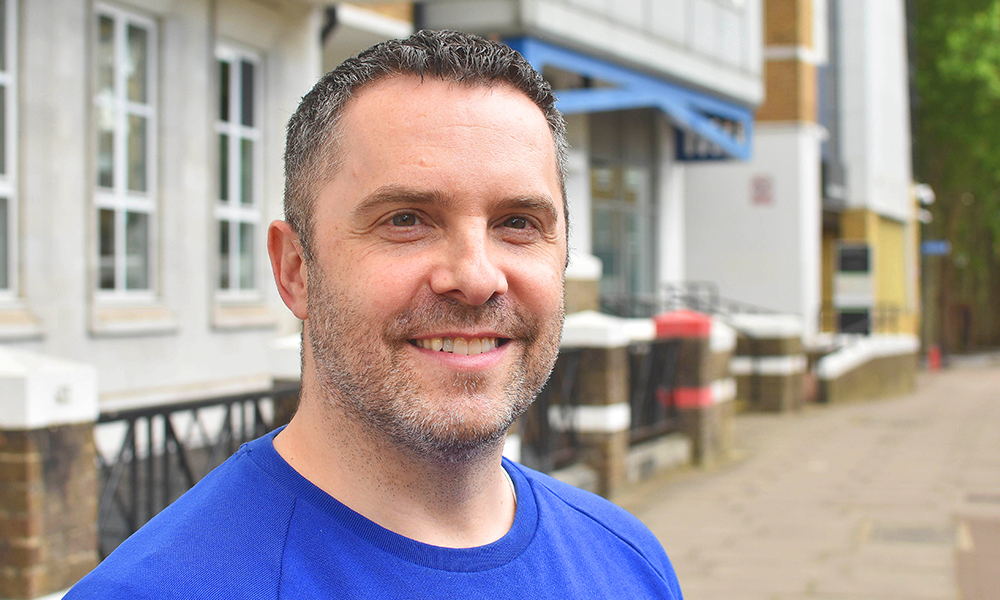
“My father left school at 13, so his education was interrupted,” said Declan Cashin, who volunteers as a reading coach through the Adult Literacy Trust at New City College’s Poplar campus.
“He could read, but it probably held him back.
“I’ve made a career out of reading and writing, I know the joy they can bring and how important these skills are, but I also understand how vulnerable someone can feel if they’re having trouble with them.
“I’ve been involved in voluntary work before, but that was usually over the phone or through text messaging.
“I missed interacting with people and being a reading coach is something you have to do in person, so it seemed the perfect thing to try.”
Born in Ireland, Declan knew he wanted to become a journalist at a young age but initially studied English at university after a teacher talked him out of it.
Nevertheless, after graduating he trained to be a reporter and spent years working in the media, moving to London more than a decade and a half ago.
Today he lives in Hackney and works in communications in Stratford having succumbed to the lure of a “steady desk job”.
Having discovered the Adult Literacy Trust online, he applied to become a volunteer, enrolled on its training programme and began one-to-one sessions earlier this year.
from interview to training
“The trust had an initial chat with me and then invited me for an interview to get a sense of my style and temperament – to ensure I had the right approach and level of empathy for the role,” said Declan.
“Part of that process was about remembering what it was like to learn a skill, recalling being bad at something and then learning to keep that in your head because it’s probably how the person you’re matched with will be feeling about reading.”
Volunteers, who must be 18 or older, complete training sessions across four modules that include topics such as the purpose of the coaching role, who the learners are, the skills and knowledge needed and safeguarding.
They are then matched with a reader and meet with them weekly during term time, typically for an hour.
“During training we were taken into classes at New City College to meet people who were using the trust’s service and to see how they were responding to it,” said Declan.
“One of the things I noticed was how much more seriously everyone seemed to be taking their education in comparison to a school classroom.
“These people are really dedicated.
“Older students often have many responsibilities – multiple jobs, kids and studying – and on top of that they’re taking time to improve their literacy.
“It’s incredible to see people making that effort to succeed.
“I learnt that people often come to the Adult Literacy Trust when they are aiming to get a particular job or responsibility within their career and that further education is a route to that.”
Declan said that, while those using the trust’s services were struggling with literacy, that didn’t mean they couldn’t read at all.
meeting for the first time
“I was matched with a learner from the charity’s waiting list and we met for our first session just to get to know one another,” said Declan.
“He was born overseas and came to the UK as a teenager, so his schooling was interrupted.
“His reading was actually already very good, but he wanted to gain confidence. He was also very clear that he wanted to maximise what he was getting from his course at the college.
“We sit in the library and read.
“At first we used the Metro newspaper because there are passages of different lengths and lots of different levels of complexity – everything from features to advertorials and sports stories.
“It was a good way to get a sense of his ability and what he was interested in, and then I could start to tailor the material.
“A couple of weeks later he brought his own book from home, and we’ve been reading some of that for the last few weeks.
“He knows what his issues are and what he needs to work on.
“He’ll run into certain words he needs to spend longer on.
“He can read very well, but it’s making sure the comprehension is there too.
“One of the things I’ve learnt from volunteers and the trust is that it’s crucial to make sure the learners are understanding what they are reading.
“It’s something that’s easy to take for granted if you don’t have that issue yourself.
“People want to improve their skills for many different reasons.
“It might be to read for themselves for pleasure, reading to their kids, understanding official documents or reading material related to their studies.
“We’re not there as teachers – we always refer learners back to their course leader to answer any questions on their studies – we’re there to help them develop the tools to engage with text, to break it down and to understand it.
“You certainly don’t have to be an expert on what they are studying.
“In the end, all you need to be is patient and constructive with your feedback to encourage them.
“English is a strange, irregular language – it’s not always easy to understand. With my guy, we go at his pace.
“We’ve been reading his book for the last few weeks.
“There might be certain words we need to spend longer on but that’s absolutely fine.
“Sometimes it’s about helping him understand that something isn’t actually very well written in the first place and why that might be.
“Getting through a few paragraphs is better than none.
“His book is quite academic and complicated, but seeing him dive into it and his confidence growing has been really wonderful.”
getting something back
Declan said volunteering with the charity had been a pleasant surprise since he began as a coach.
“It’s very rewarding,” he said.
“I get to come to New City College, which is so buzzy – filled with people who are getting on with things.
“It’s allowed me to meet people I perhaps wouldn’t have otherwise encountered and taking an hour out of my day to help someone is a real privilege.
“You also learn about yourself – how good you are at giving feedback and putting people at ease.
“It’s also about getting involved with something local that connects you to the people in the area you live and work in.
“I’ve got so much out of it, I come out of our weekly session feeling really pumped up.
“Everyone – the learners and the volunteers – are in this for the right reasons and it’s really inspiring.”
they say
The Adult Literacy Trust gathers regular feedback from service users. Here are some of their comments on the sessions it provides:
“It helps me to catch more, you know, so, with my teacher, I can ask him more questions. So, he is explaining more about what I’m interested in and I can talk with him about whatever I wish. It’s helping me a lot to improve my English.”
“Learning to read has opened so many doors for me. It wasn’t always smooth sailing, but my volunteer, Janine, stuck with me through it all. She never stopped encouraging me.”
“Because of her, I found the courage to apply for a job I never thought was possible – and I landed it. This programme has helped me read, but it’s much more than that – it’s been a turning point in my life.”
“ Before, when they say we should read in class, well, I tried to put myself back. But now when it gets to my turn to read, I’m happy to, even if I make one mistake.”
“ It helps you with your mental health and wellbeing because you are reading with someone that will listen to you. It’s really helpful to become, for a moment, separate from all the hustle and bustle around you.”
Source: Adult Literacy Trust
key details: Adult Literacy Trust
The Adult Literacy Trust is currently accepting applications from prospective volunteers for training sessions in September.
Those wishing to find out more can email the charity’s volunteer and training coordinator via laura@alt.org.uk for more details or visit the organisation’s website here.
Read more: How Wharf Wellness is back with a packed programme in June 2026
Read Wharf Life’s e-edition here
Subscribe to our free Wharf Whispers newsletter here
