


International Business Management programme manager at the University Of Sunderland In London explains how its approach benefits students
Subscribe to our free Wharf Whispers newsletter here
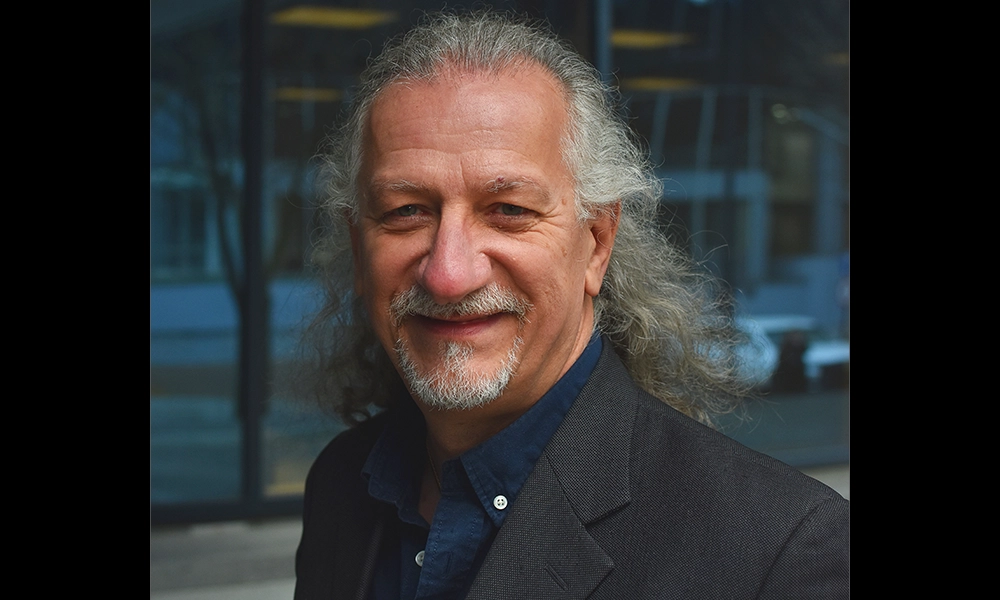
“When I first went to university, it was all about theory,” said Dr Alessandro Ferrazza.
“Working in industry, I’d have to ask how to transfer that theory into practice.
“The ideas sounded good in the book, but I didn’t know how to apply them in reality. What we try to do here is to break down those barriers.”
As senior lecturer and programme manager for the MSc International Business Management (IBM) course at the University Of Sunderland In London, Alessandro is perhaps perfectly placed to take on that task.
A long career in industry – interwoven with a consistent thread of study and personal development – preceded his move into academia, after he enjoyed guest lecturing at the University Of Sunderland In London, following completion of an MBA in business administration, management and operations there in 2017.
Going full-time in 2019, initially as an associate lecturer, Alessandro completed his doctorate in business and remains passionate – alongside the wider team – about continuing to develop the university’s IBM offering.
And, frankly, who better to teach international business?
Born in Switzerland, Alessandro grew up in Rome, completing a diploma from the Institute For Hospitality Management in the Italian capital.
starting out in hospitality
“I started off washing dishes in Guernsey and I hated every single minute of it,” he said.
“After one week, I packed it in and walked out. They didn’t even pay me.
“My lecturer in hospitality had told me I needed to speak English, so I’d moved to the Channel Islands and, after I’d quit my first job, I walked into the hotel next door.
“I hardly spoke any English – I couldn’t even read the name of the place – but I said I wanted to see the manager.
“It might have been luck, but this Italian guy came out.
“We got chatting and he agreed to take me on.
“My first job was to take the dirty dishes to the kitchen, so already it was a step up.
“My career took off from there.”
Moving to mainland UK a couple of years later, Alessandro built his career in hotels in London and rediscovered education.
He said: “I met someone really clever, the then manager of the Cavendish Hotel, and he suggested I should go to university.
“That sounded really good and, in those days it was free, so I signed up at the Ealing College Of Higher Education, which is now West London University.
“On the first day, I sat down in the lecture room on the first floor with my pad and pen out. The lecturer came in and said: ‘Good Morning’.
“After that, I couldn’t understand anything else, so I left.
“But then I took elocution lessons for a year and a half, went back and completed my degree – I was very proud of that.
“One of the things the Cavendish’s manager did was put in my head the idea of personal development.
“It’s something I tell my students. Annual reviews are really bizarre things in business.
“Your boss sits you down once a year and points out where you’re going wrong.
“But what I tell my students is they should go to those meetings armed with what they want. It should be a two-way conversation.
“Do you have all the training and tools to achieve what they want you to do?
“If the answer is yes and there are issues, perhaps the role isn’t right for you.
“But, if the answer is no, then you must ask for what you need to bring your work up to the level the firm expects.”

connecting with the University Of Sunderland In London
Having spent many years working in the hospitality sector in London, Switzerland, Italy and France, Alessandro joined catering giant Compass Group in 2001, initially as a general manager before rising through the ranks to become regional account director.
There, with contracts across England, Italy and Switzerland through his contacts, he had responsibility for more than 500 employees, with the company also sponsoring him to pursue first an MSc in strategic management and leadership and then the MBA that led him to the University Of Sunderland In London.
Today, Alessandro continues to use his links to industry to enrich his students’ experience by inviting senior contacts including CEOs of top companies to participate in their programmes.
“It gives them hands-on knowledge,” he said.
“They get to understand what it’s really like to be in an international managerial setting, running operations remotely across the world.
“Anyone can read a book, the one thing you cannot buy is experience.
“What we try to do with our IBM programme is to create something tangible our students can bring with them to their careers.
“Things have changed. When I first went to university, the Government paid for the course via a grant.
“Now our students are customers – we need to include the element of added value, to ask ourselves what makes our programme different?
“Theory is important, but our IBM course has more of the feel of a hands-on apprenticeship.
“For example, we run a game simulation where students become the board of directors for a company.
“They need to make all the decisions, and those choices then determine how the organisation they’re running progresses.
“The questions for me are: ‘How do I make the books come to life? How can real businesses reflect and use what’s in the books?’.
“There needs to be a real synergy between what’s written in the books and what happens in industry.
“For example, over the years I’ve invited CEOs to come in as associate lecturers, to set the students a problem and then have them report back.
“In the latest one, they’ve been given an issue that a person is actually trying to fix in their business and, in March, he’s going to come back with the head of the global company and listen to their proposals.
“You can’t get any closer to being in the boardroom than that.”
staying relevant
With the business landscape constantly changing and evolving, the University Of Sunderland In London believes such links to real organisations are essential in maintaining the relevance of its courses, with Alessandro also stressing the importance of developing, honing and implementing essential skills.
“One of the reasons I made the move into education is that I want to help shape the managers of the future,” he said.
“When I was in industry, I’d sometimes recruit managers who looked really good on paper, but who turned out not to be very effective on the ground.
“That wasn’t because of an inability to understand business concepts, it was because of an inability to put the theory into practice.
“That’s what I wanted to change. I’d seen lots of people who’d achieved qualifications and wanted more senior roles as a result but then failed.
“Often they didn’t understand how to deal with people. In senior management you are really only managing two things.
“The first is resources. The second is people. If you can’t deal with colleagues, then you’ve had it.
“You’ve got to make sure your team follows your leadership, your strengths, or they won’t do what you want them to do. In the end, the company will recognise that and you’ll be out of a job.
“This is why we run group exercises and encourage collaboration to equip them with those experiences.
“I’m not saying it will be easy for students embarking on our courses. It can’t be, they won’t be spoon-fed.
“But I do want to make sure I give them all the tools possible from the toolbox I’ve built up over my years in industry so that the next generation of management coming out of programmes like our MSc in IBM is going to be well equipped for whatever industry they choose to make their career in or whatever else they do in the future.”
key details: Business
The University Of Sunderland In London offers a wide range of business-focussed courses at undergraduate and postgraduate level.
Its MSc in International Business Management is a full-time course over one year, based at UOSiL’s Isle Of Dogs campus.
You can find out more about business courses at the university here
Read more: Discover Georgian food and wine at Sad Meli in Royal Docks
Read Wharf Life’s e-edition here
Subscribe to our free Wharf Whispers newsletter here
