

Boisdale Of Canary Wharf

Dickson Mbi brings Tellus to Stratford’s Sadler’s Wells East

Choreographer, dancer, musician and composer, born in Cameroon and raised in London unveils his latest work at East Bank

Sadler's Wells East is the venue for Tellus' premiere - image by RULA
Sadler’s Wells East is the venue for Tellus’ premiere – image by RULA

Subscribe to our free Wharf Whispers newsletter here

Dickson Mbi has a strong hat game.

When he answers the zoom call from his north London home, he’s wearing a red beret similar to those of Public Enemy’s S1W security force, known for their stern, imposing presence.

The dancer, choreographer, musician and composer beneath, however, fizzes with fun, energy, enthusiasm and introspection as we talk about his latest work – Tellus – a piece that’s set to get its première at Sadler’s Wells East from October 21-24, 2026.

 Internationally successful, his piece Enowate by Sadler’s Wells and Barbican won him an Olivier Award in 2023 for Outstanding Achievements In Dance and he’s had a storied career on stage and screen, working with the likes of Robbie Williams, Corrine Bailey-Rae and the Black Eyed Peas among many others.

In many ways, however, Tellus is something of a full circle moment for Dickson – a show that explores his origins and childhood tales, staged in the very place where his own journey into dance began.

Born in Cameroon, he learnt English at boarding school before a move to east London, aged 12.

“It was a bit different – I was standing up to ask questions, which puzzled the other students here,” said Dickson.

“But boarding school was great for me, it gave me strong resilience and taught me a lot about life and independence – how to take care of myself on my own – and I’m grateful for that.”

After football at West Ham didn’t work out, Dickson got his first job at McDonald’s before embarking on an apprenticeship to become an IT technician.

However, while out in Stratford, a chance meeting set him ultimately on a different path.

Dancer, choreographer, musician and composer, Dickson Mbi - image by Foteini Christofilopoulou
Dancer, choreographer, musician and composer, Dickson Mbi – image by Foteini Christofilopoulou

discovering dance

“In African culture, dance is not considered a viable source of income or a career to follow,” said Dickson.

“You should be a doctor or a lawyer – something with high status.

“I was 18 or 19 and I met a girl who was dressed unusually, with her hair up in a particular way.

“I asked her why and she said she was going to a dance class at Stratford Circus. She invited me to come.

“I was going because I liked her. At the class, I met a lot of people into all sorts of dance and I thought it was amazing. 

“Then I had to do an improvisation, a freestyle. I’d grown up watching Michael Jackson so I though I could do something like that.

“I was just joking around, trying to impress that girl, but the teacher invited me to another class at Pineapple Studios. 

“At first I said no, then I found out the girl was going to be there, so I signed up. It was a Saturday, my first time on the Central line on my own. 

“I grew up in Manor Park and Forest Gate – you go to Stratford or maybe Hackney, you don’t go anywhere else.

“Being in Covent Garden was different for me. 

“We went in to do the class. There were lots of routines I couldn’t pick up – I didn’t want to look stupid in front of the girl or the teacher, so I pretended I needed the toilet and left.

“But just outside there was a group of guys body popping.

“Their performance drew me in. I wanted to know how people could move their muscles like that, how they could have control of their bodies to that degree.

“I stopped thinking about the girl and started to ask them about the dance.

“They told me what it was called, how it was started in the late 1960s, early 1970s, via James Brown.

“I didn’t know this music.

“All I knew was hip-hop from the 1990s, r’n’b, nothing else. I had heard a bit of jazz and classical music, but nothing like this.

“That was my introduction to dance.”
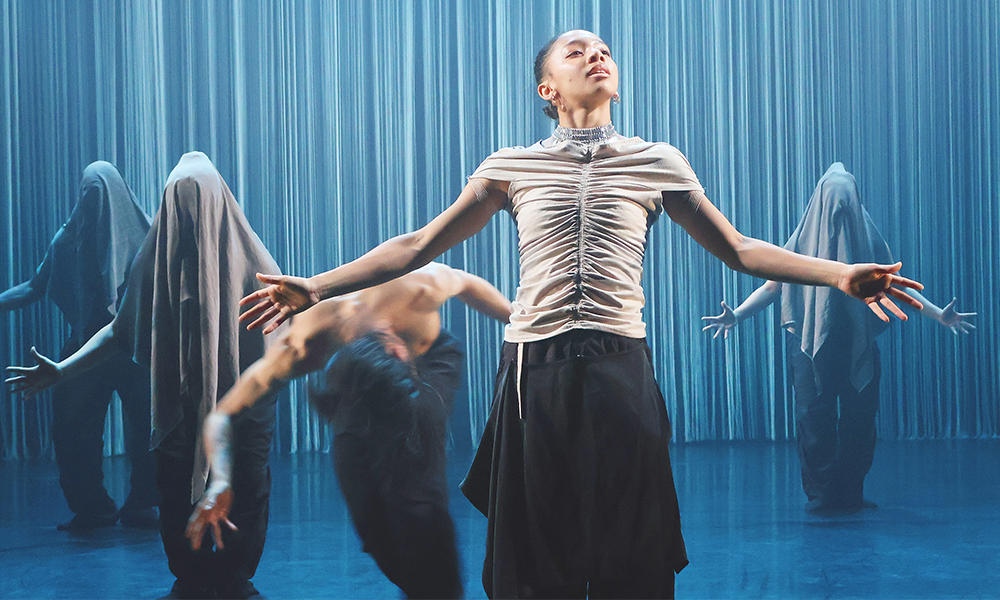
Dickson has worked extensively with the dancers to choreograph the piece - image by RULA
Dickson has worked extensively with the dancers to choreograph the piece – image by RULA

steps to learning

Dickson pursued his passion in his spare time, dancing with friends around London and in Newham, entering and winning competitions.

But it was meeting Stuart Thomas during a class in Graham Technique at Danceworks that proved fateful.

“He said that I had talent, but it needed to be nurtured and that I should go to school to learn how to look after my body,” said Dickson.

“That coming twice a week to his class wasn’t going to cut it.

“I said no – I was African, I couldn’t imagine what my parents would say, but Stuart was quite cunning.

“Without my knowledge, he filled out an application for Lewisham College and he told me I should go down there to try a class that was being taught by his friend.

“He said I’d fit right in. I went and there were some people I knew but something was weird – everyone had numbers on.

“It turned out to be an audition.

“The only reason I didn’t walk out was because, having won some competitions, I’d built up some street cred and, at 22, I didn’t want the younger dancers who were there to say I’d chickened out.

“For the ballet, I just copied the girl next to me – it was the first time I’d ever had a class.

“But then I did some contemporary and jazz, which was just like street dance. It was my thing and, at the end, I was given a full-time place.”
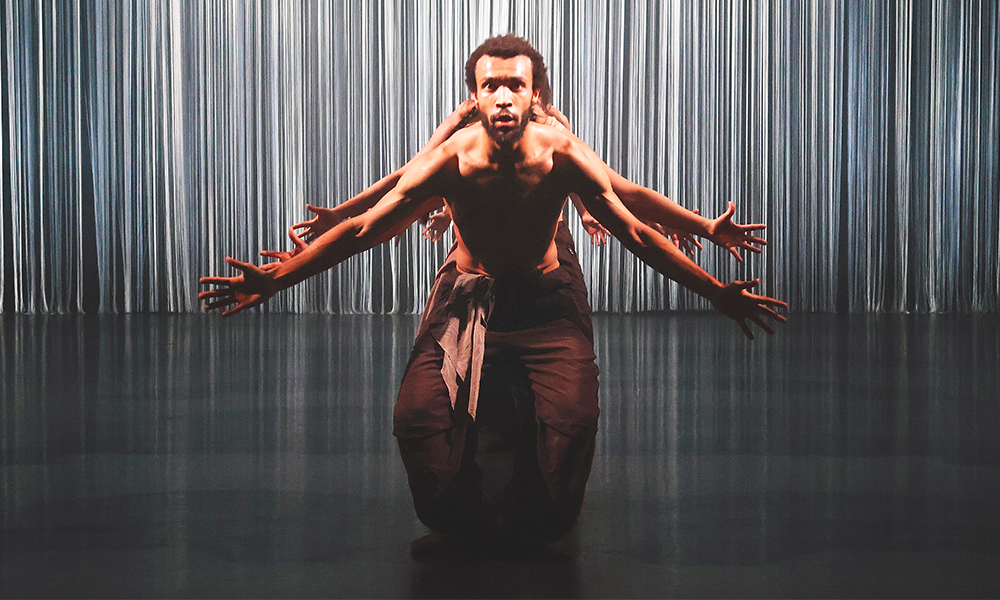
Dickson's latest work was inspired by his childhood and becoming a father - image by RULA
Dickson’s latest work was inspired by his childhood and becoming a father – image by RULA

a door opens

Supported by his future wife, the dancer, Julia Chen, Dickson made the tough decision to quit his job and study. Then another moment of good fortune struck.

“I went on to study for a BA and, while I was a student, I performed an improvisation at Sadler’s Wells and the choreographer, Russell Maliphant, saw me and offered me a job,” said Dickson.

“Upon hearing who it was, the principal of the school I was at said I should take the opportunity because people trained from the age of 10 to get that chance.

“I spent eight years dancing with Russell and I really got my choreographic education from him.

“He taught me how to stand in the lights, how to use dancers in an organic way, so it doesn’t feel jarring to the body, or look weird when you see it.

“He’s worked in so many genres of dance, so I also learnt to bring those different worlds together – he’s my biggest influence in dance.” 

For Tellus, Dickson is back at Sadler’s Wells – this time at its Stratford venue – to present a work that touches on his own childhood and his experience of becoming a father.

“It’s really nice to be able to show this work in east London,” he said. “Tellus means Mother Earth in Latin. In 2023 my son was one and I was putting him to bed.

“The year was very hot, with lots of forest fires happening, lots of droughts in Somalia, for example – my brain was full of all this information. I was wondering what I could do to soothe him and put him to bed.

“Then I remembered a story my parents used to tell me about the goddess of water, and that’s when the whole idea for Tellus started to come up.

“Different melodies started to come into my brain – songs I knew as a child – and I thought this was a starting point. I was thinking about how I could bring a kid up in this world right now.

“When you become a dad, you start thinking about all these crazy things – it’s not just about you any more.

“So you have all these questions about how we connect to our bigger mother, the earth. 

“If Enowate was more about my own biography, my African-ness and my East End-ness, this new piece is about how I see the world, what we’re doing and how we can create space for the next generation.

“I think Tellus is one of the best things I’ve done.

“It has live music, which I’ve composed – I’ve always wanted to bring my music and dance together in exactly the way I want it.

“The melodies come from spending time with my son, but there are also elements of grief in the mix too.

“Having the opportunity to present this in Stratford is one of those emotional moments for me and I’m really proud to be doing it.

“I’m not dancing in it personally and it’s really hard to build a piece like this.

“Not everybody has my background, my training and my body. It’s a long process, it’s not been easy and there have been several iterations with different performers, but it’s been so rewarding.

“The group we have are amazing artists and they do what I need them to way better than I could have done it.

“What I hope, when people come to see it is not that they understand the work, but that they feel it. 

“I want them to feel connected to the story and what I’m trying to express.

“This is my first time back in Stratford and it feels like I’m coming home and it’s great to be back.”

Tellus will be performed at Sadler's Wells East this October - image by Luc Lodder
Tellus will be performed at Sadler’s Wells East this October – image by Luc Lodder

key details: Tellus by Dickson Mbi

Tellus by Dickson Mbi is set to run at Sadler’s Wells East in Stratford from October 21-24, 2026.

Performances will take place at 7.30pm and tickets start at £19.

Find out more about the production here

Read more: Why Third Space is spotlighting strength training

Read Wharf Life’s e-edition here

Subscribe to our free Wharf Whispers newsletter here

Subscribe To Wharf Life

Amero founder fights poverty with coffee from Canary Wharf

How Daniel Kemdeng is using his farming roots in Cameroon to help transform the lives of the next generation alongside his career in banking

Amero founder Daniel Kemdeng outside his home in Canary Wharf - image by Jon Massey / Wharf Life
Amero founder Daniel Kemdeng outside his home in Canary Wharf – image by Jon Massey / Wharf Life

Subscribe to our free Wharf Whispers newsletter here
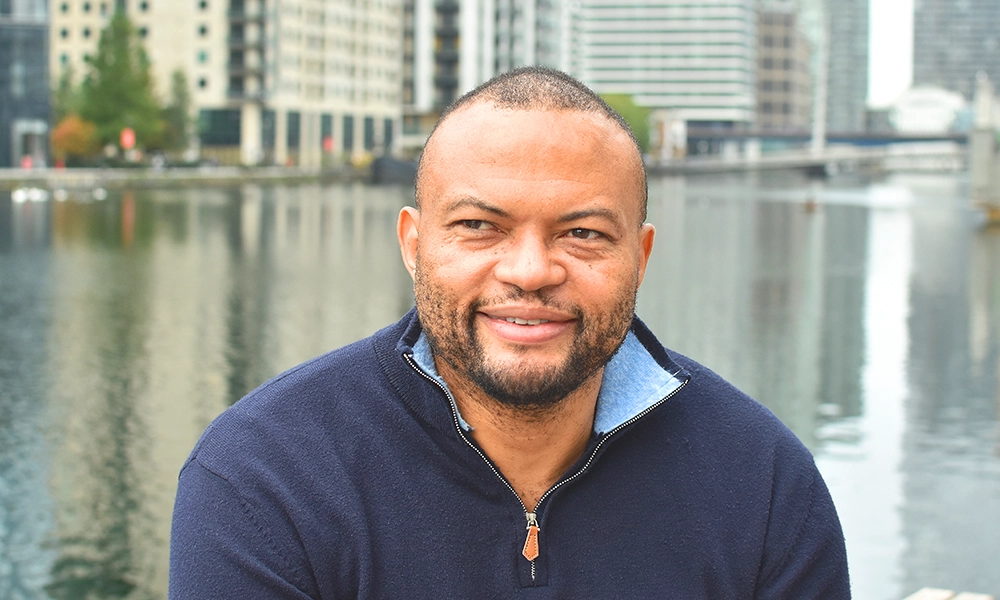
It’s hard to imagine a better candidate as an ambassador for Canary Wharf Group’s Where Ambition Lives campaign than Daniel Kemdeng.

Firstly, he satisfies the description in that his home is at Vertus’ 10 George Street building and he was one of the very first people to take up residence on the estate.

Secondly, he works locally. As vice president of model risk governance and review at JP Morgan Chase & Co, his commute to the office is a short stroll over to Bank Street from his apartment. 

Finally, there’s his purpose – to live a life fighting poverty, honouring the legacy of his grandfather and father through entrepreneurial zeal and the social impact of his flourishing coffee business.

Daniel’s story sits alongside a diverse group of other individuals in CWG’s campaign, which aims to confound lazy, outdated stereotypes about the area by showcasing their work and ambitions.

For a deeper dive, we sat down with Daniel to find out more.

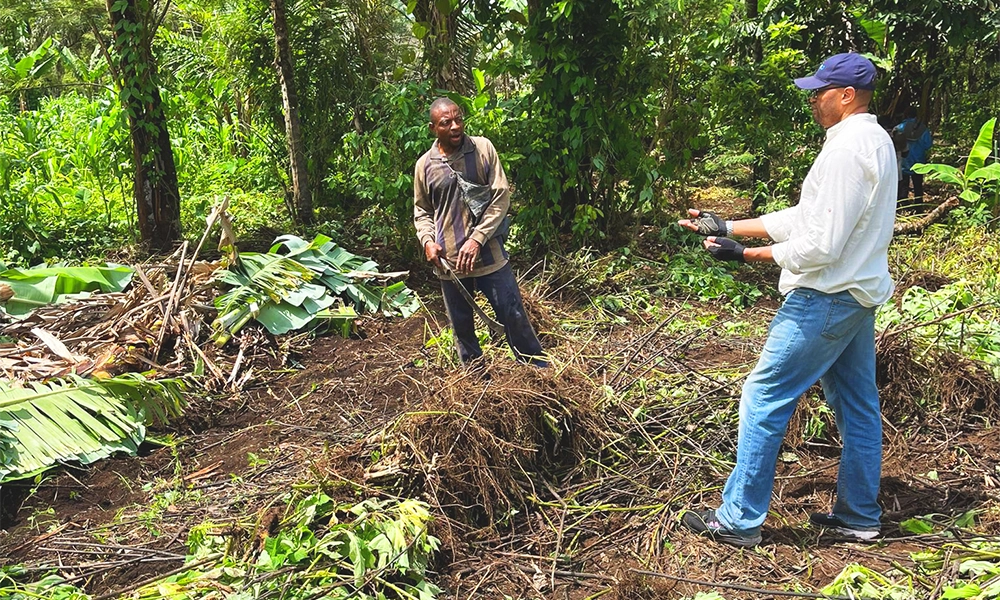
Daniel talks with a farmer in Cameroon - image by Amero
Daniel talks with a farmer in Cameroon – image by Amero

the value of education

“I was born and brought up in a small rural village of farmers in Cameroon,” he said.

“It was very beautiful and my family had been involved in growing produce there for many years.

“One of the main crops was coffee as well as growing food to feed ourselves.

“Even though we were living in a remote place, I was lucky to be in a family and community that really valued education.

“People came together to support one child from the area who was doing well at school and had the mindset to succeed – that was me and they sponsored me to go and study in France.

“My career has always been driven by opportunities.

“When I started at university in Lille, my first idea was simply to survive. In 2001 it was the time of the dot com boom and so I thought I should study IT. 

“I’d never touched a computer before and programming was a completely different language, so I struggled a lot.

“I was stronger in physics, so I decided to study that for two years before going on to an engineering school to study for a masters because I thought I would be able to get a job. 

“I actually started my career in the aerospace industry designing structures for aircraft, which was great but I realised we were not ready to start building planes in my village back home, so I started looking into what I could do for my community.”

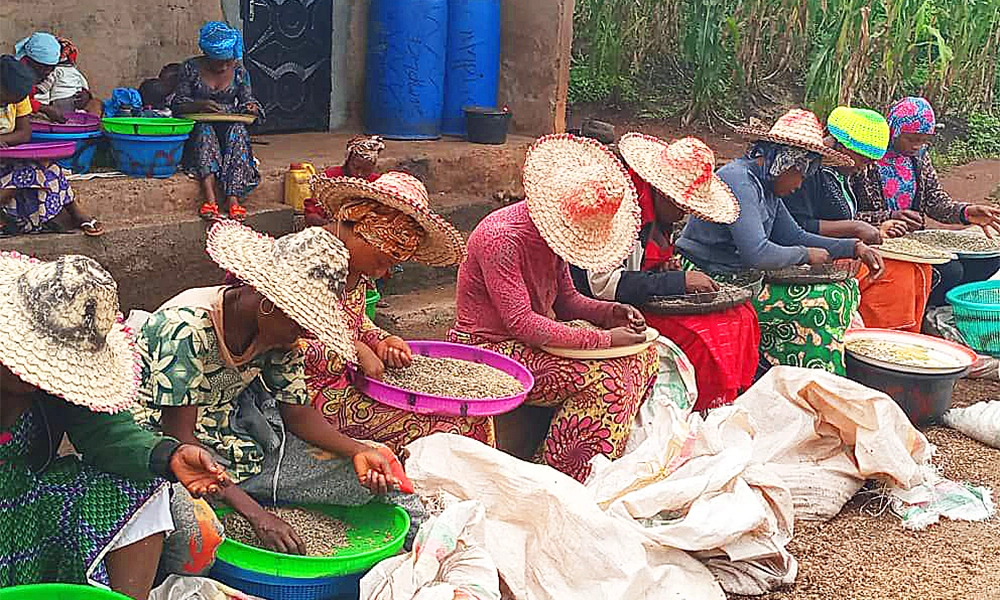
Beans are sorted by farmers in Cameroon - image by Amero
Beans are sorted by farmers in Cameroon – image by Amero

Daniel went back to education, studying for an MBA in Paris before getting a job with Société Générale as a derivatives analyst in the French capital.

While working in banking, he was continuing to support his community via his personal income before a tragic event brought with it major change.

“In 2012, my dad passed away, but two months before he’d told me I would have to be the one to support the community,” said Daniel.

“That was shocking, because I’m the second youngest of 16 children – I wondered how I could manage to lead the community.

“He said leadership wasn’t about age or money and he reassured me that I was the one they would listen to.

“Luckily the tradition of respect is structured in such a way that when I talk with my siblings, I will give the older ones respect, but that when I put my leader’s hat on, they will listen.”

Daniel’s father, Djoumessi, had a long history of fighting poverty in Cameroon, supporting local farmers and encouraging them to send their kids to school – leading by example with his own children.

Following his father’s death, Daniel founded a charity called AMSDM (Association Moh Soh Djoumessi Mathias), which aims to promote education and reduce poverty locally in Cameroon.

He also relocated to London, a city he believed would enable him to both pursue his career in finance and banking as well as explore business.

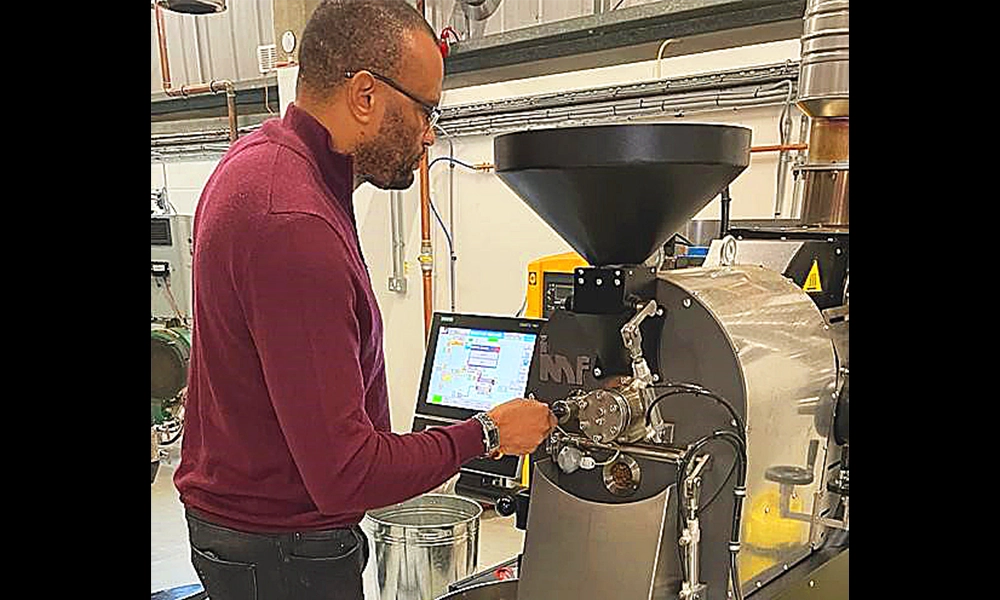
Daniel imports beans from Cameroon before roasting them - image by Amero
Daniel imports beans from Cameroon before roasting them – image by Amero

the birth of Amero

“Using just my personal income to support people wasn’t sustainable,” said Daniel.

“I was thinking about what else we could do and I realised one of the great things we produce in Cameroon is coffee.

“I thought that if we could get that product into the right markets we could do great things.

“The best way to help people in poverty is not to give them a fish but to teach them how to fish – that’s why I decided to go back to farming. 

“Initially the community was shocked when I explained what I wanted to do because the coffee price had dropped and most of the farmers had moved away from it as a crop.

“They wanted to know why, but I could see the demand and now the price has picked back up and is at an all-time peak.”

In the meantime, Daniel got a job with JP Morgan in 2018 and began working in Canary Wharf, deciding to move into his Vertus apartment in 2020 to remove his commute and because of the promise of community.

“I was maybe the first or second resident to move in and it was very convenient, but a month later we went into lockdown,” he said.

“The great thing was that we had that sense of community – we were a small crew living here at that time, but we spent a lot of time together even though we were working very hard and we made our own bubble.

“In the meantime, Canary Wharf Group realised I was into coffee – they knew me as a banker, so I told them I was a farmer first.

“They loved the project in Cameroon and asked me how we could make this coffee available to residents at Vertus and that’s how I came up with the idea to create a coffee brand where we would grow the beans, harvest them, process them and ship them to the UK for roasting and distributing.”

grown in Cameroon, sold globally

The result is Amero, named for Cameroon itself, supplying 100% organic arabica beans to the UK market and now more widely.

Daniel said: “The farms in my village and the ones we work with around it are on volcanic soil, which gives the coffee a unique taste.

“We don’t use any fertilisers.

“We sell the roasted coffee online and also the green beans to roasters all around the world with customers in Italy, Germany, Australia and now China.

“Today, 10,000 people in Cameroon now rely on this product and the idea is to invest more money and expand our production capacity.

“I have my own farm, which is around 250 hectares and every year I increase that. We support many of the small farmers as well.

“My ambition is to bring more and more on board to support a million people, to give them a reliable income so they can send their children to school and to the hospital when they are sick.

“It’s the best way to have an impact on the community. I come from a different way of working – I’m not just focussing on my day-to-day job with the bank.

“That’s why I do a lot of talking to share my experience and show them how, wherever you are, it’s important to support your local economy. 

“It’s not just about poverty in Cameroon but about people here and in France too.

“It’s something we can all do everywhere. 

“My success in life has been the result of the community coming together and it’s important to keep that in mind – it’s only as a team that you can deliver results.

“That’s just as important for my career in banking and why JP Morgan has been so supportive.

“Banking has given me exposure and the opportunity to meet a lot of amazing people, from whom I’ve learnt a lot.

“Everything I’ve learnt, I’ve applied to what we’re doing with Amero.

“In the same way, I bring my own personal leadership experiences from the community to the bank. It’s a win-win.

“I never dreamed my life would be like this – I grew up in a place where I couldn’t imagine this.

“Today I can travel anywhere in the world because of that vision of community and what I’ve achieved today means I can come back and help the younger generation to achieve and to grow.

“I hope they’ll do a lot more than I did, because they can now have the resources I didn’t have 40 years ago and I want to make sure they are available for them.

“My idea is to explain to them that the first thing is to dream and then to have purpose and objectives to achieve.

“Then I hope they will fly by themselves.

“It’s also about communicating to businesses and investors that the future of investment is to have a social impact as well as making money. 

“That’s very important and it’s something organisations can highlight to their clients, shareholders and employees – every single person connected to it because they will all take something from it and understand the impact they are having.”

Canary Wharf – the ideal base

Daniel said that while Amero’s growth might mean he has to make a choice in the future between banking and farming, right now Canary Wharf was playing a key role in his life.

He said: “It gives me all the resources I need to be able to continue my mission, which is fighting poverty everywhere I find it.

“The environment here is great and I feel at home.

“I’m a runner – I do 10k three times a week – and I love the connection with the water here.

“It makes me feel relaxed every day and reminds me of the lake we have on the farm.”  

key details: Amero

You can find out more about Amero and buy its products on the brand’s website here.

Read more: Artship to sail to the Isle Of Dogs

Read Wharf Life’s e-edition here

Subscribe to our free Wharf Whispers newsletter here
Subscribe To Wharf Life