


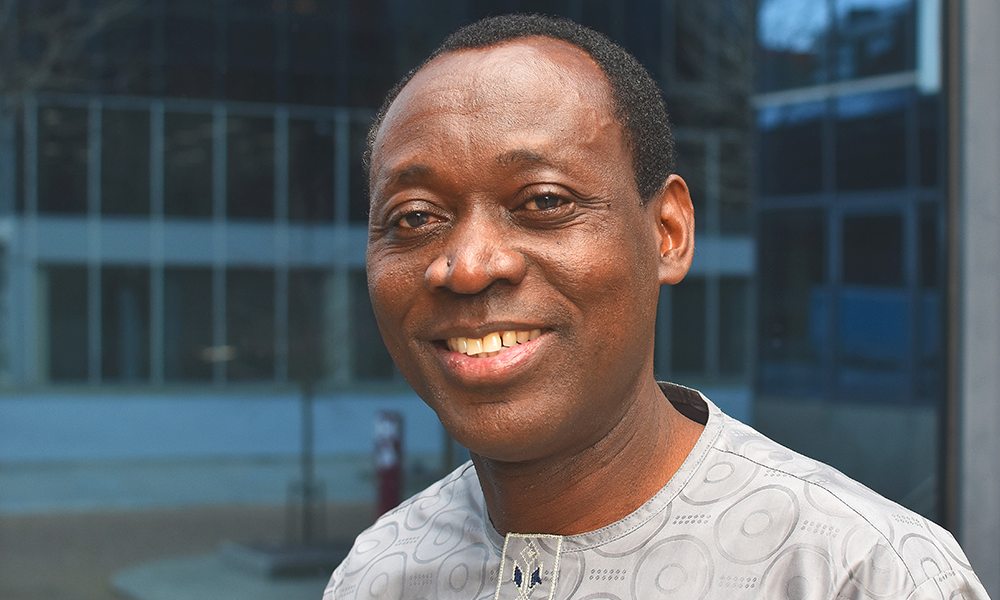
The business course has been developed by Dr Yahaya Alhassan with the aim of equipping students with skills for employment and entrepreneurship
Subscribe to our free Wharf Whispers newsletter here
“Our first students are in their last few months of the course,” said Dr Yahaya Alhassan, head of academic operations at the University Of Sunderland In London.
“For me, it will be very emotional when they graduate from our first MSc Fintech And Trading course.”
In line with the university’s consistently practical approach, the programme was developed after Yahaya spotted a gap in the market.
“It was while I was working as an external examiner for another institution that I realised people were offering trading courses,” he said.
“Some were delivering fintech elements, but these were usually add-ons to finance courses dealing with things like online banking.
“My understanding of fintech is that it relates to specific technologies – things like artificial intelligence, blockchain, cryptocurrencies and machine learning – and how you apply those to finance.
“I couldn’t find a programme like that, which also included trading so, following some market research, I decided to develop a course that would bring the two together.
“I defy anyone to find a similar offering – as of today we are unique.”
Based at the University Of Sunderland In London’s Isle Of Dogs campus at Harbour Exchange, the one-year course features a dedicated Fintech Lab created in partnership with the London Stock Exchange.
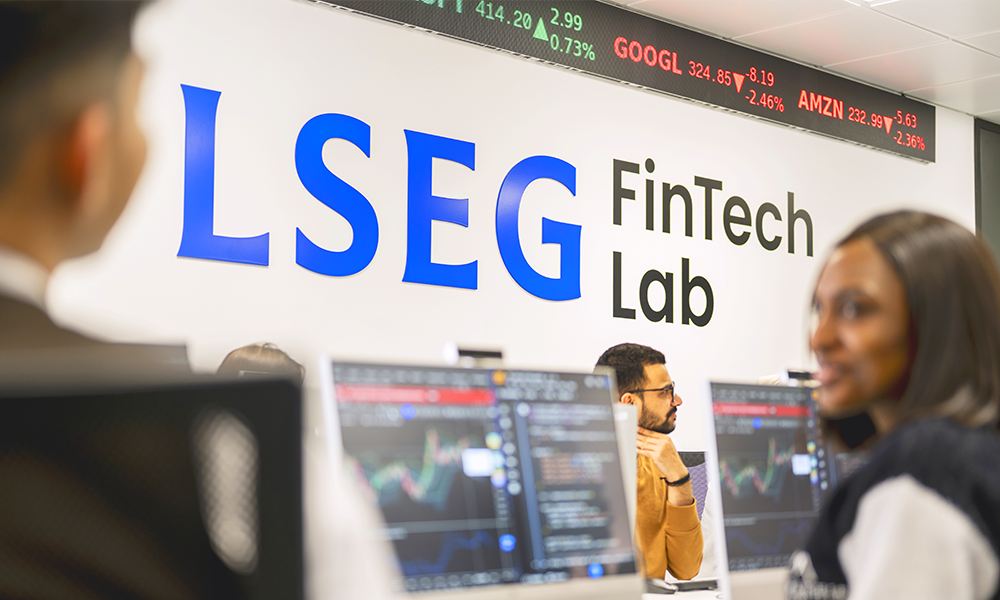
putting practice at the heart of the course
“The approach we adopt with the delivery of this programme is hands-on, practice-based, with a small number of students to ensure we give them a very good level of experience,” said Yahaya.
“We work with a number of prestigious partners, with those on the course also receiving certificates from them as part of the programme.
“Students learn how to trade and invest in stocks – which are doing well and which are not?
“But the reason we combine this with fintech is so they can use technology to make predictions based on the data flowing into the lab.
“In the past, traders have made decisions based on their own experience while looking at such information.
“But with technologies such as AI, once you have a lot of data, you can use it to start forecasting whether the price of a stock will rise or fall.
“With blockchain and machine learning, our students are taught how to model and to build apps, enabling them to potentially create their own fintech businesses.
“We also work with companies to ensure our courses are delivering what employers, such as those at Level39 in Canary Wharf, expect from someone with an MSc from this university.
“We also constantly look at the needs of the students and changes in the market.
“Our programmes come up for review every five years, which is when they get revalidated.
“But with technology developing so fast, we can’t wait that long so we’ve adopted an enhancement plan where we look at our programmes every two months to make sure we’re flexible and giving the market what it needs.”

from Ghana to London via Sunderland
Yahaya himself is a good case study for the way in which education and exposure to new ideas can have a profound impact on the direction of a person’s life.
Originally from Ghana, he began his career in the higher education sector at the University Of Development Studies in Tamale not as an academic but as a member of its support staff as an assistant accountant.
“One day I was in the vice chancellor’s office and I saw an advert in a magazine for an MBA course at the University Of Sunderland,” he said.
“The VC had been in the UK himself, studying and working in Nottingham before he was recruited back to Ghana.
“I’d never thought about travelling abroad in my life, but I decided I might give it a go – I applied and then, honestly, I forgot about it.
“About two months later, a letter arrived containing a provisional offer to go on the course.
“I was supposed to pay £13,500 but it was a lot of money and I had no idea where I would get that from.”
In the end, Yahaya’s employer awarded him a scholarship to go on the course and he wound up bound for the North East and arrived improperly dressed for the weather.
“Arriving in Sunderland was the first time I’d seen snow in my life and I didn’t have a proper jacket,” he said.
“I didn’t know how to get to the university campus and I couldn’t understand the accent of the first man I met.
“Fortunately, I found someone who showed me where to go. I completed my MBA and returned to Ghana in 2003.
“That was part of the agreement for my scholarship but, after about nine months I was feeling discontented.
“Everything was so slow.
“When I came to the UK people were working from 8am, but I realised in Ghana it was going to be difficult for me because of the difference in pace.
“I told my boss I had to go back to England, and he said he understood, so I moved to London in 2004.
“My first job was at a college in Greenwich, teaching English in 2005 and I remained there until 2011.
“That’s when I saw that the University Of Sunderland was opening a London campus and I decided to apply.
“At first I was working 10 hours a week, then 20 and, after a couple of months, full-time – teaching on its MBA programme.
“After a year, the programme manager was leaving and so I applied and got that job in 2014 before going on to become assistant head of academic operations.
“Now, as head of academic operations, I make sure all the teaching and learning at the London campus goes well, dealing with quality assurance and making sure everything is done in line with our academic regulations.
“I am part of the senior managers team as well and I am responsible for the day-to-day running of the London-based academic programmes.
“The courses are led from Sunderland and run down here, which is why our campus has programme managers rather than leaders.
“I never thought I’d be working where I am now. I even told my friends in Ghana I would be coming back in a year.
“I still have that vision, to return one day, perhaps to follow my father in a political career.
“When I’m teaching, I say: ‘Who knows, maybe I’ll be president one day’.”
In the meantime, Yahaya’s passion is continuing to help develop the university’s offering with a BSc in Fintech And Digital Finance now available.
The intention of this three-year course is to act as a pipeline for those seeking to study the MSc, providing them with the relevant skills and knowledge to prepare them for the postgraduate course.
key details:
The University Of Sunderland In London offers a BSc Fintech And Digital Finance course as well as an MSc in Finance And Trading based at its Isle Of Dogs campus at Harbour Exchange.
The university welcomes new students several times during the year, so there are plenty of opportunities to apply.
Find out more about the Fintech And Trading MSc here
Read more: How SWR Business Direct delivers on carbon tracking for train travel
Read Wharf Life’s e-edition here
Subscribe to our free Wharf Whispers newsletter here
