

A sizeable chunk of the centre of the Isle Of Dogs is set to be developed following the approval of a planning application by Tower Hamlets Council.
Mastmaker Court, a joint venture by landowner Pirin Ltd and developer Fifth State, will see two towers built on a site just off Mastmaker Road.
two towers?
That’s right. One will rise to 43 storeys and the other to 27. The larger one will contain 843 co-living apartments, while the other will house 153 affordable homes.
They have been designed by Squire And Partners architects, also known for Landmark Pinnacle locally.
The scheme includes landscaping at ground level – image by Fifth State
co-living?
Essentially the larger block will be rental only following a wider trend in the residential development market.
The offer is typically self-contained flats with communal facilities to encourage socialising.
These are usually marketed to young professionals and key workers.
While Fifth State has built out a couple of office blocks in Shoreditch, its projects in Bermondsey, Hampstead, Croydon, Southwark, Deptford, Hornsey and Leicester Square – spanning co-living student accommodation and affordable housing – have yet to be completed.
Its website promises that accommodation includes a shower room, a kitchenette, a double bed, storage space, high speed broadband and flexibility on length of stay with a three-month minimum.
While details of its Mastmaker Court scheme have yet to be released, the company says its projects include wellbeing studios and facilities with a programme of classes and events for residents such as seminars and debates, cooking classes, brunch and supper clubs, guided group meditation, circuit and weights workouts and more.
co-working?
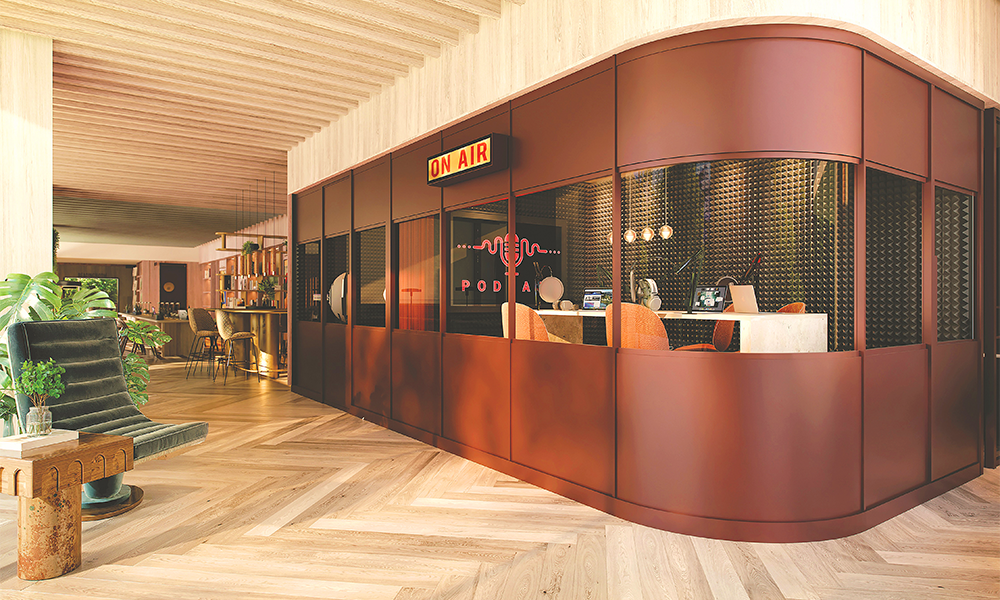
Again, while specifics have not been released, Fifth State says co-creating spaces lie at the heart of its schemes with facilities such as artists studios, private desks, communal workspaces, recording studios and conference walls to be expected.
The scheme features Squire And Partners – image by Fifth State
what about the affordable housing?
For its Isle Of Dogs scheme, the affordable tower will house 121 properties for social rent and 32 earmarked as intermediate homes, which may be offered as below market rent or shared ownership apartments.
Around two thirds of the social rent flats will have three or four bedrooms aimed at families.
a new school?
Two existing warehouse buildings will be knocked down to make way for the towers.
At ground level the affordable housing block will include a 161sq m community facility facing onto a new 1,500sq m park located in the south-west corner of the site.
The plans also include outline permission for a new alternative provision school for up to 100 pupils in the north-west corner of the site, which could deliver up to 4,510sq m of educational space.
key details: Mastmaker Court
Planning consent has been granted for the two-tower scheme at Mastmaker Court.
“Our first students are in their last few months of the course,” said Dr Yahaya Alhassan, head of academic operations at the University Of Sunderland In London.
In line with the university’s consistently practical approach, the programme was developed after Yahaya spotted a gap in the market.
“It was while I was working as an external examiner for another institution that I realised people were offering trading courses,” he said.
“Some were delivering fintech elements, but these were usually add-ons to finance courses dealing with things like online banking.
“My understanding of fintech is that it relates to specific technologies – things like artificial intelligence, blockchain, cryptocurrencies and machine learning – and how you apply those to finance.
“I couldn’t find a programme like that, which also included trading so, following some market research, I decided to develop a course that would bring the two together.
“I defy anyone to find a similar offering – as of today we are unique.”
Based at the University Of Sunderland In London’s Isle Of Dogs campus at Harbour Exchange, the one-year course features a dedicated Fintech Lab created in partnership with the London Stock Exchange.
The London Stock Exchange Group Fintech Lab at the University Of Sunderland In London – image supplied by UOSiL
putting practice at the heart of the course
“The approach we adopt with the delivery of this programme is hands-on, practice-based, with a small number of students to ensure we give them a very good level of experience,” said Yahaya.
“We work with a number of prestigious partners, with those on the course also receiving certificates from them as part of the programme.
“Students learn how to trade and invest in stocks – which are doing well and which are not?
“But the reason we combine this with fintech is so they can use technology to make predictions based on the data flowing into the lab.
“In the past, traders have made decisions based on their own experience while looking at such information.
“But with technologies such as AI, once you have a lot of data, you can use it to start forecasting whether the price of a stock will rise or fall.
“With blockchain and machine learning, our students are taught how to model and to build apps, enabling them to potentially create their own fintech businesses.
“We also work with companies to ensure our courses are delivering what employers, such as those at Level39 in Canary Wharf, expect from someone with an MSc from this university.
“We also constantly look at the needs of the students and changes in the market.
“Our programmes come up for review every five years, which is when they get revalidated.
“But with technology developing so fast, we can’t wait that long so we’ve adopted an enhancement plan where we look at our programmes every two months to make sure we’re flexible and giving the market what it needs.”
The University Of Sunderland In London is based at Harbour Exchange on the Isle Of Dogs – image by Jon Massey / Wharf Life
from Ghana to London via Sunderland
Yahaya himself is a good case study for the way in which education and exposure to new ideas can have a profound impact on the direction of a person’s life.
Originally from Ghana, he began his career in the higher education sector at the University Of Development Studies in Tamale not as an academic but as a member of its support staff as an assistant accountant.
“One day I was in the vice chancellor’s office and I saw an advert in a magazine for an MBA course at the University Of Sunderland,” he said.
“The VC had been in the UK himself, studying and working in Nottingham before he was recruited back to Ghana.
“I’d never thought about travelling abroad in my life, but I decided I might give it a go – I applied and then, honestly, I forgot about it.
“About two months later, a letter arrived containing a provisional offer to go on the course.
“I was supposed to pay £13,500 but it was a lot of money and I had no idea where I would get that from.”
In the end, Yahaya’s employer awarded him a scholarship to go on the course and he wound up bound for the North East and arrived improperly dressed for the weather.
“Arriving in Sunderland was the first time I’d seen snow in my life and I didn’t have a proper jacket,” he said.
“I didn’t know how to get to the university campus and I couldn’t understand the accent of the first man I met.
“Fortunately, I found someone who showed me where to go. I completed my MBA and returned to Ghana in 2003.
“That was part of the agreement for my scholarship but, after about nine months I was feeling discontented.
“Everything was so slow.
“When I came to the UK people were working from 8am, but I realised in Ghana it was going to be difficult for me because of the difference in pace.
“I told my boss I had to go back to England, and he said he understood, so I moved to London in 2004.
“My first job was at a college in Greenwich, teaching English in 2005 and I remained there until 2011.
“That’s when I saw that the University Of Sunderland was opening a London campus and I decided to apply.
“At first I was working 10 hours a week, then 20 and, after a couple of months, full-time – teaching on its MBA programme.
“After a year, the programme manager was leaving and so I applied and got that job in 2014 before going on to become assistant head of academic operations.
“Now, as head of academic operations, I make sure all the teaching and learning at the London campus goes well, dealing with quality assurance and making sure everything is done in line with our academic regulations.
“I am part of the senior managers team as well and I am responsible for the day-to-day running of the London-based academic programmes.
“The courses are led from Sunderland and run down here, which is why our campus has programme managers rather than leaders.
“I never thought I’d be working where I am now. I even told my friends in Ghana I would be coming back in a year.
“I still have that vision, to return one day, perhaps to follow my father in a political career.
“When I’m teaching, I say: ‘Who knows, maybe I’ll be president one day’.”
In the meantime, Yahaya’s passion is continuing to help develop the university’s offering with a BSc in Fintech And Digital Finance now available.
The intention of this three-year course is to act as a pipeline for those seeking to study the MSc, providing them with the relevant skills and knowledge to prepare them for the postgraduate course.
“When I first went to university, it was all about theory,” said Dr Alessandro Ferrazza.
“Working in industry, I’d have to ask how to transfer that theory into practice.
“The ideas sounded good in the book, but I didn’t know how to apply them in reality. What we try to do here is to break down those barriers.”

As senior lecturer and programme manager for the MSc International Business Management (IBM) course at the University Of Sunderland In London, Alessandro is perhaps perfectly placed to take on that task.
A long career in industry – interwoven with a consistent thread of study and personal development – preceded his move into academia, after he enjoyed guest lecturing at the University Of Sunderland In London, following completion of an MBA in business administration, management and operations there in 2017.

Going full-time in 2019, initially as an associate lecturer, Alessandro completed his doctorate in business and remains passionate – alongside the wider team – about continuing to develop the university’s IBM offering.
And, frankly, who better to teach international business?
Born in Switzerland, Alessandro grew up in Rome, completing a diploma from the Institute For Hospitality Management in the Italian capital.
The University Of Sunderland In London is based at Harbour Exchange on the Isle Of Dogs – image by Jon Massey / Wharf Life
starting out in hospitality
“I started off washing dishes in Guernsey and I hated every single minute of it,” he said.
“After one week, I packed it in and walked out. They didn’t even pay me.
“My lecturer in hospitality had told me I needed to speak English, so I’d moved to the Channel Islands and, after I’d quit my first job, I walked into the hotel next door.
“I hardly spoke any English – I couldn’t even read the name of the place – but I said I wanted to see the manager.
“It might have been luck, but this Italian guy came out.
“We got chatting and he agreed to take me on.
“My first job was to take the dirty dishes to the kitchen, so already it was a step up.
“My career took off from there.”
Moving to mainland UK a couple of years later, Alessandro built his career in hotels in London and rediscovered education.
He said: “I met someone really clever, the then manager of the Cavendish Hotel, and he suggested I should go to university.
“That sounded really good and, in those days it was free, so I signed up at the Ealing College Of Higher Education, which is now West London University.
“On the first day, I sat down in the lecture room on the first floor with my pad and pen out. The lecturer came in and said: ‘Good Morning’.
“After that, I couldn’t understand anything else, so I left.
“But then I took elocution lessons for a year and a half, went back and completed my degree – I was very proud of that.
“One of the things the Cavendish’s manager did was put in my head the idea of personal development.
“It’s something I tell my students. Annual reviews are really bizarre things in business.
“Your boss sits you down once a year and points out where you’re going wrong.


“But what I tell my students is they should go to those meetings armed with what they want. It should be a two-way conversation.
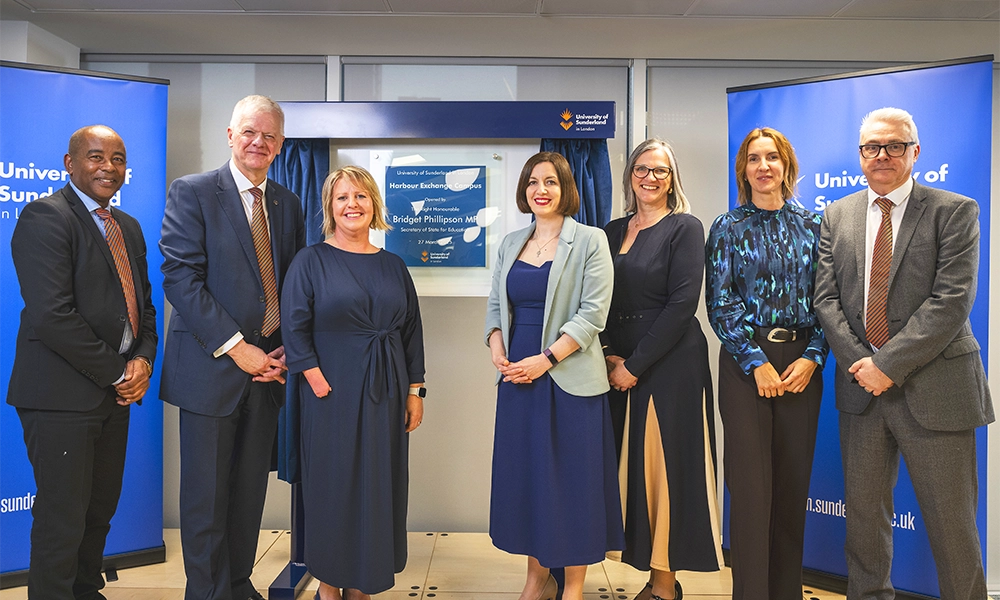
“Do you have all the training and tools to achieve what they want you to do?
“If the answer is yes and there are issues, perhaps the role isn’t right for you.
“But, if the answer is no, then you must ask for what you need to bring your work up to the level the firm expects.”
The university offers wide range of courses, including an MSc in International Business Management – image by Jon Massey / Wharf Life
connecting with the University Of Sunderland In London
Having spent many years working in the hospitality sector in London, Switzerland, Italy and France, Alessandro joined catering giant Compass Group in 2001, initially as a general manager before rising through the ranks to become regional account director.
There, with contracts across England, Italy and Switzerland through his contacts, he had responsibility for more than 500 employees, with the company also sponsoring him to pursue first an MSc in strategic management and leadership and then the MBA that led him to the University Of Sunderland In London.
Today, Alessandro continues to use his links to industry to enrich his students’ experience by inviting senior contacts including CEOs of top companies to participate in their programmes.
“It gives them hands-on knowledge,” he said.
“They get to understand what it’s really like to be in an international managerial setting, running operations remotely across the world.
“Anyone can read a book, the one thing you cannot buy is experience.
“What we try to do with our IBM programme is to create something tangible our students can bring with them to their careers.
“Things have changed. When I first went to university, the Government paid for the course via a grant.
“Now our students are customers – we need to include the element of added value, to ask ourselves what makes our programme different?
“Theory is important, but our IBM course has more of the feel of a hands-on apprenticeship.
“For example, we run a game simulation where students become the board of directors for a company.
“They need to make all the decisions, and those choices then determine how the organisation they’re running progresses.
“The questions for me are: ‘How do I make the books come to life? How can real businesses reflect and use what’s in the books?’.
“There needs to be a real synergy between what’s written in the books and what happens in industry.
“For example, over the years I’ve invited CEOs to come in as associate lecturers, to set the students a problem and then have them report back.
“In the latest one, they’ve been given an issue that a person is actually trying to fix in their business and, in March, he’s going to come back with the head of the global company and listen to their proposals.
“You can’t get any closer to being in the boardroom than that.”
staying relevant
With the business landscape constantly changing and evolving, the University Of Sunderland In London believes such links to real organisations are essential in maintaining the relevance of its courses, with Alessandro also stressing the importance of developing, honing and implementing essential skills.
“One of the reasons I made the move into education is that I want to help shape the managers of the future,” he said.
“When I was in industry, I’d sometimes recruit managers who looked really good on paper, but who turned out not to be very effective on the ground.
“That wasn’t because of an inability to understand business concepts, it was because of an inability to put the theory into practice.
“That’s what I wanted to change. I’d seen lots of people who’d achieved qualifications and wanted more senior roles as a result but then failed.
“Often they didn’t understand how to deal with people. In senior management you are really only managing two things.
“The first is resources. The second is people. If you can’t deal with colleagues, then you’ve had it.
“You’ve got to make sure your team follows your leadership, your strengths, or they won’t do what you want them to do. In the end, the company will recognise that and you’ll be out of a job.
“This is why we run group exercises and encourage collaboration to equip them with those experiences.
“I’m not saying it will be easy for students embarking on our courses. It can’t be, they won’t be spoon-fed.
“But I do want to make sure I give them all the tools possible from the toolbox I’ve built up over my years in industry so that the next generation of management coming out of programmes like our MSc in IBM is going to be well equipped for whatever industry they choose to make their career in or whatever else they do in the future.”
key details: Business
The University Of Sunderland In London offers a wide range of business-focussed courses at undergraduate and postgraduate level.
Its MSc in International Business Management is a full-time course over one year, based at UOSiL’s Isle Of Dogs campus.
“We think it’s a world first,” said Chris, who still lives locally despite running the global business as its CEO.
“Our project with Telstra sees a large enterprise using conversational AI and chatbot technology in a public-facing way – a hybrid approach with all the appropriate guardrails in place.
“There are other companies doing this with AI, but only on a small scale.
“We spent the best part of 2025 building the system and linking it in to all their operations.
“It’s all about knowing when to give a generative answer, something more structured or a combination of the two.
“Our system also does things like summarising, classifying and making all these decisions in real time.
“I’m very proud that we’ve displaced two of the world’s largest companies in this field – IBM and Salesforce – to deliver this solution.
“As soon as Telstra switched it on they doubled their containment rate, which means twice as many interactions have been automated rather than going through to a human in their contact centre.
“Now we have a road map to do much more over the course of the next 12 months.
“Our system is going to be the central point of communication for all their interactions with existing clients and potential customers – all with a clear escalation path for more complex queries or situations.
“There’s always going to be a need for that.”
beyond ChatGPT
Chris said that, while the arrival of ChatGPT in 2022 and the subsequent proliferation of large language models that generate responses had been significant for the sector that Creative Virtual operates in, many firms had done little in the way of implementing the technology.
“People have this perception that computers have to be 100% accurate, or the job they do is not acceptable,” he said.
“If a human makes a mistake, it often doesn’t get the same level of attention as a machine failing or given an answer that’s wrong.
“As a result, many larger organisations were paralysed when it came to putting new systems in place.
“During this time, we stuck to our guns and did what we’ve always done – tune into what organisations really want.
“That’s what’s brought us success. We’ve kept humans in the system to curate answers, working alongside generative AI and other technologies, meaning we can combine their talents when communicating with customers – something that’s reassuring to large organisations such as banks or telecommunications firms.
“With these clients there’s a large number of processes that their customers need to go through – billing enquiries or applications for accounts and credit cards, for example.
“These need high levels of curation and can’t be left to AI.
“That’s why clients like our approach. They can have very tightly controlled parts of the process alongside the simpler enquiries that can be dealt with by AI.
“Our tagline remains completely relevant today – we’re about the science of conversation and finding the best ways to automate those interactions whether that’s via chatbots, texts, WhatsApp or Facebook Messenger.
“We’re still doing that, but using the latest techniques.
“Our project with Telstra – all that hard work – has resulted in a big global showcase for Creative Virtual.
“We have built some bespoke systems for the client, but many of our standard techniques are ready to scale for other organisations.
“One of the most important elements is the expertise to understand what this technology can and can’t do – what you can measure and how to set an organisation’s expectations.
“Having this blueprint as we go into 2026 is absolutely key for our business.”
designed to be flexible
Creative Virtual has built its approach to conversational interaction around the idea that it can rapidly and easily switch out AI systems to benefit its clients as the technology develops.
However, Chris believes that while the sector is showing advancement in several areas, it is important to recognise its limitations.
“There are some very clever people in the industry who claim that we’ll have artificial general intelligence very soon, that computers might even become sentient,” he said.
“But we don’t even understand human intelligence at this point.
“You have to take a step back and recognise all these new systems such as large language models are still based on silicon chips – ones and zeros – backed by incredible processing power, but a model that hasn’t changed since the invention of the computer.
“With quantum computing, biological systems or a combination of the two, it may be possible for AI to do a great deal more, but will it become self aware, will it be able to feel things?
“I think its impossible to say that our existing computer models will take over the world.
“I’m not arguing that we haven’t seen advances in systems that can predict the next word or phrase or that these engines can’t simulate intelligence or awareness.
“But that to have emotions the computers that run them will need more than ones and zeroes.
“I’m sceptical that artificial general intelligence is just around the corner, even if discussing it makes for a good story in the media.”
doing more and more jobs
One thing Chris is certain of is that AI technologies will be increasingly used to automate large parts of our lives.
“AI will do many of the jobs humans do today and robotics will come increasingly into play, such as self-driving cars,” he said.
“It is going to be an exciting area and AI is already being used to help doctors with diagnostics and to process large volumes of data in many different fields.
“That’s how we use the technology, for customer services, training virtual sales people and bringing our systems into the retail experience.
“There will be robots in stores capable of retaining far more information about products on sale than a human ever could, for example.”
That’s not to say AI is perfect or that the large companies involved in developing new models aren’t overly optimistic about the value of their creation.
“With all the billions being invested, there is, perhaps, a bubble – but AI is not going to go away as a tool, just as the end of the dot com boom wasn’t the end of the internet,” said Chris.
“This technology is very much with us and it will be used to automate many things that are not automated at the moment.
“Overall, I think it will enhance our lives and it will encourage us to be more creative as people.
“Who wants to sit in a contact centre answering the same mundane questions day-in, day-out? We have to evolve our technology so the workforce can do more involving things.
“One of the key issues for firms is that, with so much AI generated content, everything will start to feel very similar.
“That’s why I think our current approach is the correct one.
“Having humans work alongside AI has always felt to me like the perfect combination.
“We need human curation so that organisations are able to retain their voice and project their brand whether it’s an AI or a person talking to their customers.
“That’s one of the attributes of our project with Telstra. Its strength has been in the testing we’ve put the systems through against real-life conversations – a way for our client to see our systems work and that gives them confidence.
“We launched with them during the Black Friday and Cyber Monday periods and it was the best possible time to stress-test what we’d put in place.
“Organisations change their content all the time, so our system had to know Telstra’s products, offerings and sales information and deliver that to customers without error.
“It hasn’t been easy to achieve that, but the feedback from them is that this is the first product they’ve had in years that has been on time, on budget and on spec, which is pretty incredible.
“It’s already delivering real business results.”
key details: Creative Virtual
Creative Virtual is based in Canary Wharf’s Cabot Square and operates globally.
“We are very passionate about making sure our students are appropriately qualified and experienced when they go out into the market,” said Dr Banhishikha Ghosh of the University Of Sunderland In London (UOSiL).
“We have academics here who have real-world experience of the nursing and care sectors so they can equip students with both theoretical knowledge and practical know-how.”
Banhishikha has a number of roles at the university, based on the Isle Of Dogs at Harbour Exchange.
She’s both academic champion for employability and enterprise and people, culture and environment lead for REF research in addition to her position as lecturer in health and social sciences.
This trio of jobs – located at the intersection between employment, research and academic study – means she’s well placed to showcase the institution’s offerings to individuals thinking of studying in its social care and nursing departments.
As well as a two-year foundation degree in Health And Social Care, the university offers one-year BSc top-up courses in Health And Social Care and Nursing Practice as well as postgrad courses in Public Health, Nursing Practice and Adult Nursing, the latter leading to eligibility to register with the Nursing and Midwifery Council on successful completion.
“A student, for example, might start with the former and then move on to nursing.
“Many move on from our BSc programmes to postgraduate study.
“We are a young and vibrant campus with a mix of students from all over the world and Britain.
“Many already have degrees, with some qualified as doctors, nurses and pharmacists who come to us to get a UK qualification so they can work in this country.
“One of the reasons individuals should consider studying with us is that we have a fantastic employability team, which connects students with local organisations.
“We are looking at a very dynamic employment market, now including AI, so we hold events and workshops as well as an Employability Week once a year where we bring in people working in various industries to help inform students about what skills they need.
“We also feed the students information about internships so they can go out be a part of the healthcare industry.
“Some launch careers before they finish their degrees and I see them engaged in placements and volunteering.
“That means by the time they graduate they have enough experience to apply for jobs and it feels really lovely when you see them take up their first roles.
“We rely a lot on our alumni and our network as academics to help support our students and link them up with different opportunities and organisations.
“From the first day onwards, we let students know what they have to do to build that experience.
“We advise them to get internships before they come, so they can help us work out what would be the best direction for them.
“We have three pathways we encourage our students to follow.
“The first is the managerial pathway, which trains them to understand how leadership works.
“Then there is the mental health pathway for support workers in that sector.
“Finally, there’s the research pathway, which includes data gathering, report writing and primary and secondary analysis.”
Leyla Hyda, head of innovation at Revolution AI – image by Jon Massey / Wharf Life
working together with industry
Collaboration with outside organisations is key to the UOSiL’s offering.
The university works with many partners including near neighbour Verve Homecare and its sister company Revolution AI – both based at Harbour Exchange but primarily providing services in people’s residences.
“I’ve recently transitioned to the health tech side of the business,” said Leyla Hyda, head of innovation at Revolution AI.
“My mum has been a carer for more than 25 years and refuses to retire, so I learned a lot about the sector and healthcare in general from her.
“I started off in recruitment, placing nurses in NHS hospitals, but I realised there was so much more I could give.
“I then went to work as an internal auditor, analysing care workers and their checks, working my way up to management level where I was responsible for the complex needs of children and adults and the wellbeing of the staff looking after them.
“I absolutely loved it – I learnt so much more about the sector, even though at first it felt scary being thrown in the deep end.
“Now I have the opportunity to work in innovation and improve things for the benefit of some of the most vulnerable in our society – that’s my passion.
“Having met with the university, I found they needed placements for students and that I could facilitate that.
“I knew it would be a great opportunity for them to see what working in the sector is like.
“People forget that care is not just about hospitals and nursing homes – there’s also homecare where, in a nutshell, we provide staff to look after a person in the comfort of their home.
“There’s a lot to consider, but our number one priority is always making sure that person is safe.”
The aim of the collaboration is to offer students practical experience and valuable insights into jobs available in the sector.
Leyla said: “We give those coming on placements a complete induction so they understand the ins and outs of care and our company.
“If a student has an interest in complex care, for example, we put them in training sessions at no cost to them so that they can get that exposure to it and see if they want to follow that path.
“Someone interested in mental health might get similar training.
“Then students have an opportunity to sit with the operations team, dealing with rosters and recruitment and pre-employment checks.
“Depending on the student, they can go on visits with a care team in a shadowing role.
“Those not having that experience will be with us in the office, seeing everything that happens behind the scenes, and assist with that.
“That’s equally important because both operations work in conjunction with each other.”
Both the University Of Sunderland In London and Verve Homecare are based at Harbour Exchange on the Isle Of Dogs – image by Jon Massey / Wharf Life
the key role of research
The university is also working with Verve and Revolution AI on a research project aimed at improving training for care workers and helping providers retain staff more effectively.
In a first for the London campus, the university has been awarded £211,000 of funding from Innovate UK for a project that aims to “generate vital insight into the lived experiences of frontline care workers, to enhance quality care, support workforce wellbeing, and embed equity into social care training and delivery”.
Banhishikha said: “It’s a project that is close to our hearts.
“When I first joined the university, we had lectures and workshops, and we gave students the opportunity to talk about the placements and their experience of working in the organisation.
“In these very small but very rich focus groups, the feelings that came out were that students were not equipped enough to take care of patients and they would like it if they had better training.
“When I met Leyla, I realised she had so much experience in the industry.
“Sometimes carers come and go in the industry – there’s a revolving door – and the reason could be that they do not have enough training.
“At the moment education is for carers, but not necessarily ‘by them’ or ‘with them’.
“The idea is that, in partnership with Verve and Revolution AI, we seek to enrich the training frameworks that are already there by tapping into the experience of care workers – especially those of women from migrant populations who are the backbone of the UK care system.
“We capture data from them that can be fed into the system to create robust training, which equips them better at work.
“We also want to work with others – we’d love to be connected with other organisations who are interested in this area and have information they want to share with us.”
Leyla added: “For us, person-centred care is an essential part of what we do. It’s about the holistic way we deliver services – the people not the bed numbers.
“Training in the sector can be reading slides on powerpoint presentations and tick-box exercises. It’s very easy to pass and could be improved.
“With this project, we are really excited to set the bar high – we want to stop that revolving door.
“Our goal is to equip our care staff with the right tools they need to give them the confidence to go out into the field and deliver the holistic care people deserve.”
key details: Health And Social Care and Nursing courses
The University Of Sunderland In London offers a range of courses in Health And Social Care and Nursing in its Isle Of Dogs campus at Harbour Exchange.
Piano Piano translates from the Italian as “softly, softly” and pretty much sums up Andra Kruka’s approach to teaching children to make music.
As headteacher and founder of Piano Piano Studio, she’s spent nearly a decade in east London helping children develop their playing and singing skills as well as the joy of performing in public.
“I’m Latvian, from Riga, and I’m a classically trained pianist and harpist,” she said.
“My musical education was pretty strict and, when I came to the UK, I saw a huge difference in the mentality of the approach taken here – I really liked that it’s a lot more focused on the personal interests of the children.
“Nobody is trying to turn them into professional musicians on the spot.
“By the time I had finished studying piano and harp, I felt burnt out, which is the downside of the East European method of teaching music.
“There’s a lot of pressure.”
After coming to the UK, Andra initially took a different path, studying business and management from 2013 and then working in marketing.
Piano Piano Studio headteacher and founder, Andra Kruka – image supplied by Piano Piano Studio
creating Piano Piano Studio
“But I realised that I really missed music, so I started researching the structure of education here,” she said.
“Then I took my first steps into teaching and it’s grown from there.”
“I always tried to find a balance between making sure the kids are engaged and delivering good results and that’s how I’ve developed the method we now use across all of our lessons,” said Andra.
“We give a questionnaire to the families as a basis for our journey with them – this is to identify the child’s interests, likes and dislikes, favourite movies,things like that, so we can tailor the lessons to each child individually.
“Unlike some music schools where each teacher has their own approach, we ensure all our tutors are consistent in the line they are taking and adapting to each child’s needs.
“That’s important because the kids are all different. Some are more visual, while others might learn by ear.
“Whether it’s by using different materials, exploring improvisation or using other techniques we can make sure every child is able to succeed.
“We might start the younger ones on the Associated Board Of The Royal Schools Of Music (ABRSM) or Trinity College exams, but think again when they get older.
“Instrumental practice might not be a priority later on, so we offer different options such as Rock School, where you can do keyboard certification with fun pieces and backing tracks.
“There’s always flexibility to find a personalised solution – parents might want their child to do the more traditional exams and we can find a compromise that keeps the pupil interested.
“I’m a teacher myself, but I’m also a methodologist, constantly researching different approaches and trialling new techniques to make sure we’re offering the best education possible.
“Having a shared approach like this with all the teachers also creates a community feel, even though the lessons themselves are one-to-one.”
The music school uses a wide range of techniques to help children learn – image supplied by Piano Piano Studio
showcase concerts
Bringing people together is important to Andra for a number of reasons.
Piano Piano Studio currently teaches just under 60 children and regularly puts on concerts aimed at both entertaining the youngsters and giving them a platform to get used to performing themselves.
Andra said: “We had our first concert in 2018 – it was just my students at that time and it was Disney-themed. I wanted to make sure it was relevant to the children so that they could have fun and dress up as their favourite characters
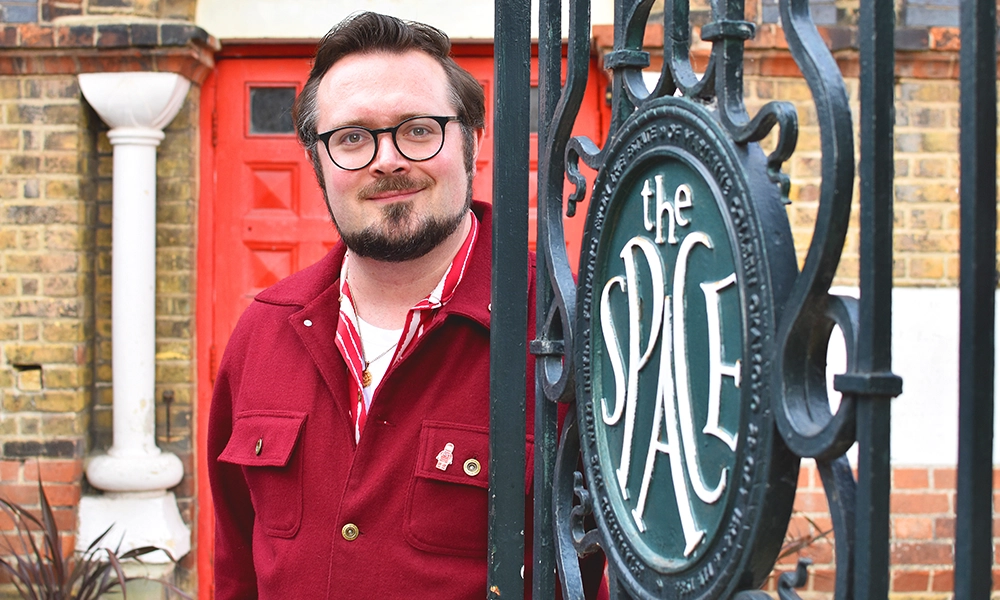
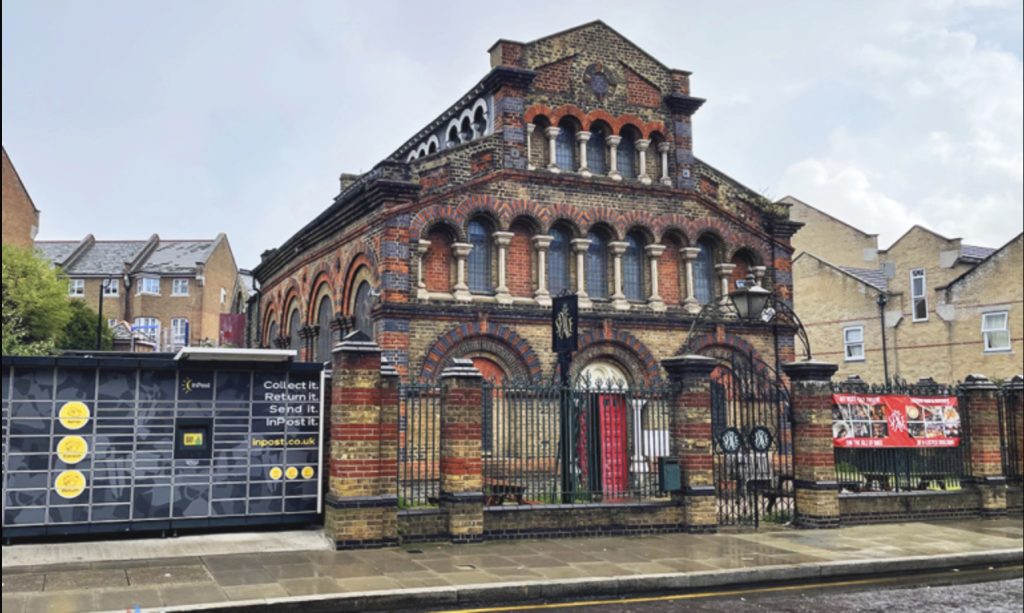
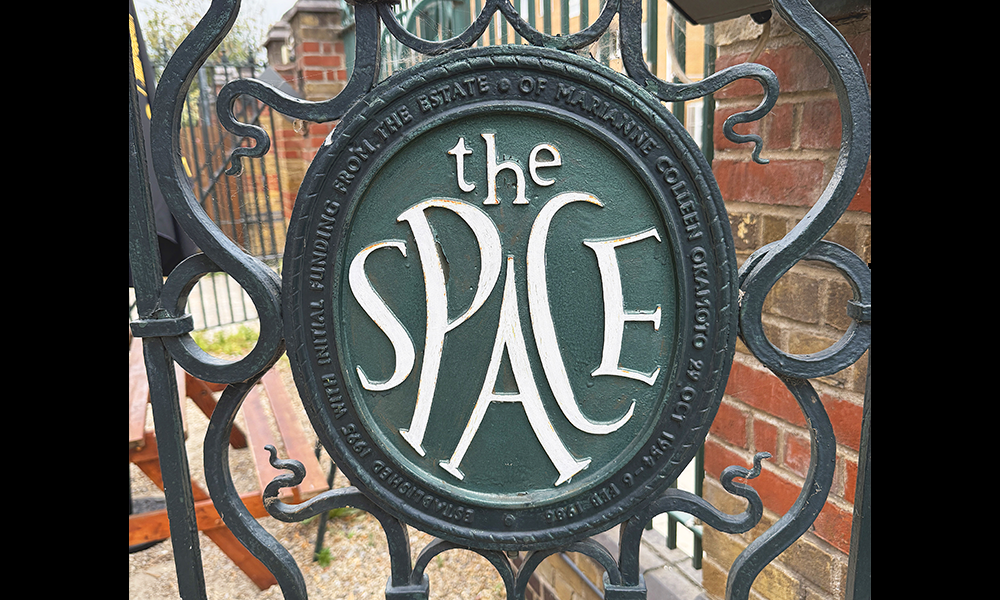
“It was a great experience, everyone enjoyed it, and since then we’ve organised several more including events at The Space on the Isle Of Dogs and through them at Crossrail Place Roof Garden in collaboration with Canary Wharf Group.
“Then we came up with a new concept when I saw a huge demand and interest from families.
“We now open up slots from external players as well alongside offering fun activities.
“There will be student and guest performances, face painting, balloon modelling, a magic show, games with the audience and a special guest.
“It’s a fun environment and it’s a chance for the children to get on stage in an easygoing environment.
“I feel that the earlier musicians do this and have a positive experience, the easier they will find performing.
“Learning an instrument can be a lonely activity, because you have to practise by yourself.
“Having these group gatherings where they can be with other children in the same boat and can see different levels as well is so important.
“We go from Twinkle Twinkle Little Star up to pieces for grades seven and eight.
“At the end we intend to have a performance by a professional pianist so that children can see what the instrument can do.
“These things can be inspirational. The children who perform get a certificate and receive applause.
“In some cases they might only have had a few lessons but they don’t have to wait years to touch a grand piano on stage.
“The concerts are big family events, and anyone can come, so, afterwards, we get loads of requests from the parents of new students.
“I believe we are all born to be musical and everyone can find their own way to express themselves through music.”
Students of all levels get a chance to perform at the concerts – image supplied by Piano Piano Studio
key details: Piano Piano Studio
Piano Piano Studio’s next concert – The Polar Express – is set to take place at The Space on the Isle Of dogs on December 14, 2025, from 11am.
Tickets cost £10 for adults and £8 for children.
These can be booked via email to admin@pianopiano.uk.
In-home lessons cost £52 per hour with a visiting teacher or £42 for online sessions.
However, Andra and the team work out an appropriate lesson length with parents which is often less that 60 minutes, especially for younger kids and beginners.
Lecturer Victoria Wright talks opportunity and job prospects as she discusses courses at the university’s campus near Canary Wharf
Victoria Wright, lecturer in International Tourism and Hospitality Management at the University Of Sunderland In London – image by Jon Massey / Wharf Life
Tourism is booming. In 2024, 1.4billion people travelled for leisure pursuits – an increase of 11.5% on the previous year.
Early 2025 saw 5% growth year-on-year, according to the United Nations.
In the UK – the seventh most visited country in the world – we welcomed 41.8million visitors in 2024, a 12.2% rise on 2023 and a figure that exceeded pre-pandemic numbers in 2019, according to the Office For National Statistics.
Then there’s hospitality. The Harden’s London Restaurants 2026 guide, published in September, found that while 65 of the 3,000 notable establishments it tracks had closed, 146 new venues had opened – a net increase of 81.
Put in context, that’s the lowest rate of closures for a decade in a single year and a growth rate only exceeded on four other occasions in the guide’s 35 years of data.
Put simply, these two interrelated sectors – despite some significant economic pressures – are fundamentally in rude health.
The University Of Sunderland In London is based at Harbour Exchange on the Isle Of Dogs – image by Jon Massey / Wharf Life
industries that ‘thrive on experience and innovation’
“These are dynamic and globally connected industries,” said Victoria Wright, lecturer in International Tourism and Hospitality Management at the University Of Sunderland In London (UOSiL).
“They thrive on experience and innovation – what we try to do here is inspire students about the opportunities that are available.”
With a background in tourism herself, Victoria is passionate about helping to generate opportunities for its students.
She said: “I studied tourism, first at college and then did a tourism management degree.
“As part of that course, I got experience in the industry and that was a stepping stone that led me into a career with international tour operator Tui.
“Working in the sales reservations department, I was very fortunate to go on fantastic familiarisation trips, so we could get to know the product and experience what we were selling.
“I went to Switzerland, Austria, Colorado and Finland, which was amazing.
“I decided I wanted to support people in learning how exciting the industry can be and the career options that are out there, so I decided to enrol on a teaching degree.
“From there I started lecturing in colleges and then went on to do an MA in tourism and cultural policy.
“I’ve been a lecturer for 15 years, joined the UOSiL in 2021 and have now started a PhD.
“Tourism and hospitality are different in many ways, but they are also similar – they’re both part of the service sector and provide tangible and intangible experiences to customers.”
theory, experience and job opportunities
Rated ninth in the UK for student satisfaction by the Complete University Guide 2025, the department is enthusiastic about delivering theory, experience and, crucially, job opportunities to its tourism and hospitality students.
Victoria said: “We make the programmes that we teach as practical as possible to provide students with the skills necessary to develop their careers. We also support them when it comes to employability.
“Our courses give students knowledge of the various dynamics of the sector and how it’s changed over the years – different types of accommodation and the various roles in hospitality, for example.
“That’s attractive to people with ambition and goals to work in these different areas as they pursue their careers.
“It’s important they get a broad understanding as, while they may want to get to the position of hotel manager, for example, it’s important they know about roles in sales, marketing and operations.”
Students can also expect guidance, trips, networking and visits from industry figures to help enhance their experience.
Victoria said: “We’re based in a very exciting part of London and there are lots of opportunities to connect with the hospitality and tourism industries.
“We offer a variety of courses for people at different stages in their careers and we’re always striving to provide students with experiences they’ll remember and get benefit from for the rest of their lives. It’s about enriching their time with us.
“We take students on hotel visits, residential stays – we’ve just had a group return from Budapest – and trips more locally.
“I’m from Surrey and I think it’s really important they learn what the UK has to offer.
“For example, I’ve taken groups to Denbies Wine Estate in Dorking, Box Hill – an area of outstanding natural beauty – and to Brighton as part of a module in creative tourism because of all of the different cultural offerings there.”
local connections in east London
More locally, the university also engages with the likes of Greenwich Market and London Museum Docklands as well as the hubs around Victoria and Waterloo.
“We’re also very proud to be working with Springboard, a charity that helps students and unemployed people with career opportunities in the hospitality sector,” said Victoria.
“I’m really passionate about making sure the courses we offer have both theoretical and practical elements that result in job opportunities – that’s why this partnership works so well.”
Supported by the likes of Barclays and beverage giant Diageo, Springboard works to promote the industry and provide skills for people looking to embark on a career in hospitality.
“We help people from all kinds of backgrounds by delivering courses, experiences and placements in the industry,” said Arion Tsapis, programme and project manager at Springboard.
“We have a very extensive network of partners across the UK, which allows us to help people get an understanding of the industry and what they can achieve – then we help them get jobs.”
Arion Tsapis, programme and project manager at Springboard – image by Jon Massey / Wharf Life
a love of teaching
It’s a sector Arion knows well.
He started his career working in hotels and bars aged 16 in his native Greece.
By 21 he was teaching mixology and bar-tending internationally in locations such as Austria and the Netherlands before heading for “the capital of cocktails”, London.
“What I love most is teaching people about hospitality,” he said.
“I’ve been working with Springboard for a year and a half.
“The industry has seen real growth in recent years – it’s not how it was before the pandemic.
“Employers are offering a lot more training and opportunities.
“They want staff to stay with them as their businesses grow.
“Working behind a bar, for example, is no longer seen as something to do before you get an actual job.
“Now people in those positions can work their way up, even to manager of a big hotel.
“With Springboard, we’ve seen a lot of people who started as waiters are now directors of food and beverage for big companies.
“That’s what draws people to hospitality.
“It’s an industry where you can belong to a family and where, if you put effort in, you’ll be rewarded.
“That’s where degrees come in – they enable people to progress faster in their careers.”
University Of Sunderland In London graduates celebrate their achievements at Southwark Cathedral – image supplied by USOiL
growing partnerships at the University Of Sunderland In London
Victoria added: “We intend to build on and grow our relationship with Springboard because it works for both of us.
“It’s important, so that the students have a sense of accomplishment and they feel a sense of pride in achieving their degree – but it shouldn’t just stop at the graduation ceremony.
“They need to move on to a career that they want.
“As a lecturer, I hear from my students, sometimes years later, and find out about their successes – that’s really what it’s all about for me.
“When that happens I feel very touched – a real sense of pride that I’ve been able to help people on their journey.
“It’s all about caring for the students and helping them to achieve their full potential, to be that teacher that really helps them follow their dreams.
“That’s why our Springboard programmes are offered to alumni as well – the care we have continues beyond graduation.”
key details: University Of Sunderland In London
The University Of Sunderland In London at Harbour Exchange on the Isle Of Dogs offers a range of tourism and hospitality courses.
Joseph (Shangjie) Lyu is quite possibly the first person of Chinese origin to kayak across the English Channel.
However, by his own admission, he’s not especially into kayaking.
“There are three main elements to my life,” said the Stratford resident.
“Work, raising my three-year-old English Cocker Spaniel, Truffle, and rowing. This was really a side quest.”
Joseph came to the UK in 2018 to study computer science at the University Of Manchester after completing a foundation year in his native China, after plans to study in his home country didn’t work out.
“I struggled a bit with the course in Manchester and didn’t really enjoy the software side of it,” he said.
“Then, in the middle, the pandemic arrived and I did a project on Covid in the UK, making predictions on when the turning point would be. It wound up being quite accurate.
“That’s when I realised I enjoyed data analysis and now I’ve taken that into my career in AI as a data scientist.”
Joseph, who currently works for Santander, also had his first taste of rowing at university, but was too engaged with his studies to pursue it again after the pandemic faded away.
It wasn’t until he moved to east London that he took up the sport seriously.
Joseph at Poplar, Blackwall And District Rowing Club on the Isle Of Dogs – image by Jon Massey / Wharf Life
“I did the Learn To Row course in 2022 and I’ve been involved with the club ever since.
“When you’re on a boat – whether crewed or single – if the weather’s nice, it’s one of the best feelings you can have.
“I really enjoy the sport. It’s literally one movement that you’re repeating, but it requires years of effort to refine and apply that consistently.
“I find it very enjoyable.
“It’s normal for us to be out rowing at sunrise and you have London all around you.
“You see seals too.
“In rowing, 10k is considered a relatively short distance, while 20k is quite long. Around 15k is standard.
“Rowing from Tower Bridge to the Thames Barrier is the kind of thing we do at the club.
“Then, a couple of years ago, I realised that the English Channel is not really that wide – it’s about three times the distance between those two landmarks, not an unimaginable journey.
“I’d had the idea I might want to try something and thinking about it like that gave me a frame of reference – a distance on the water I was already comfortable with.
“This gave me confidence.”
Setting out from Rye – image supplied by Joseph Lyu
an idea into reality
After mentioning to friends from the club on the way back from a trip to Henley Royal Regatta, plans began to ferment.
“Making up my mind was the hardest part and I did that around the start of this year,” said Joseph.
“I’d worked out what was doable, what was difficult and so I didn’t commit to it when I had the idea.
“Taking the leap was difficult but coming to this year, physically I was in good shape from years of rowing.
“I felt I was in a good place and I’m in my mid-20s so it needed to happen before any physical decline.
“I thought that if I couldn’t commit to doing it now, with all the time and having everything I needed, then I might never convince myself to try.
“I kept thinking about swimmers – about 2,000 have crossed – and if they could do it, I could too.”
Having little kayking experience, Joseph next went about equipping himself with the skills necessary to make the journey.
He spent time training on the sea off the south coast as well as hitting the water at nearby Docklands Sailing And Watersports Centre.
“I gained confidence after the instructor in Hastings said I was pretty good,” said Joseph.
“Many of the skills I’d developed rowing on the river were transferable and there was a lot of fitness training in the gym.
“I became more active. One of the things that’s changed for me is that I used to just go rowing in the morning, but now I might do that, then go swimming later and maybe go on a hike with Truffle.”
Joseph had a goal to work towards.
He’d managed to secure a booking with a pilot boat – an essential escort across the busiest shipping lane in the world, especially because the French insist those paddling across must be carried in a powered craft over the part of the route they administer.
Weather dependent, the pilot advised Friday, July 18, 2025, would be best, so Joseph and a friend travelled down to Rye the night before, ate some fish and chips and laid in plenty of bananas and energy bars for his solo trip in a hired kayak.
Paddling through the fog – image supplied by Joseph Lyu
setting off for France
“The next day we got to the harbour at 6.30am and met the pilot boat captain,” said Joseph.
“It wasn’t cold, but it was very foggy. We could hardly see anything.
“But we decided to set off anyway. The captain was in constant contact with the Coastguard.
“Because of the lack of visibility we didn’t know whether we’d get clearance to cross the shipping lanes but the captain suggested we paddle out for about an hour and then decide.
“When we started, I felt like it was going to be a good day.
“All the months of preparation had led to this point and I felt like we would make it. I kept going and my energy was at a good level.
“The fog was still heavy but from time to time I could see the sun.
“Every now and then I’d see a big ship and they really are huge.
“Then everything happened so suddenly.
“In one minute it just changed – the fog lifted and the sun came out, and then I was rewarded with the most surreal water conditions.
“The sea was totally flat, the sky was blue and the visibility was really good. I really enjoyed that transition.
“I was busy paddling, but the crew spotted dolphins and jellyfish.
“When I paddled over to the boat for some water and I heard the Coastguard telling the big ships about my crossing, which was exciting.
“We got clearance and I paddled over this calm, serene water, with these massive vessels in the background – it was an interesting contrast.
“Then we reached the French side and I had to get in the boat for that before getting back in the kayak to finish the final six miles.
“That’s when it became challenging physically.
“We weren’t going straight, because the current was pushing our course into a curve.
“The whole journey was about 70 kilometres and the last bit was the most difficult.
“I could see France very clearly, but it felt like it wasn’t getting any closer.
“I’d actually preferred it in the middle with the fog, because I just kept going, even though I couldn’t see anything.
“In that last five miles I lost the sense of progress – my mind was playing tricks, so I really had to concentrate on the strokes.”
Arriving in France – image supplied by Joseph Lyu
a sense of achievement
Joseph did make it to France, pulling into the harbour, tired but happy.
After a shower and a change of clothes, plus a couple of well-deserved pints, there was time to reflect on his achievement.
“The weather was really good, and that’s when I started to feel more excited,” he said.
“I realised that I’d done it and it was incredible.
“I believe I’m the first Chinese person to have done this.
“I’ve googled it and can’t find anyone else.
“Also, you have to have a pilot boat to make a crossing like this and there are only a handful operating.
“It’s also to the best of my pilot’s knowledge that I am the first one, although I didn’t think about any of this until I saw a news report on the first Chinese person to swim across.
“For me, it was just something I wanted to do.
“I put the effort in and I made it happen.
“I never really doubted whether I could do it.
“Having done it does give me a foundation for other things, more side quests.
“Rowing is my main thing and I don’t have any plans to do any more kayaking, but I am also getting into free diving and I’m going to Malta to do a spear fishing course.
“I’m also planning to return to France in October, cycling from London to Paris with a friend from rowing.”
key details: Poplar, Blackwall And District Rowing Club
Poplar, Blackwall And District Rowing Club is located close to Island Gardens on the Isle Of Dogs and offers a range of membership options as well as very popular introductory courses.
Isle Of Dogs resident Lizzie Aaryn-Stanton found herself spending more than nine hours on her device and decided to create an app to coach people in similar situations
Lizzie Aaryn-Stanton has created a new app, KintsÜgi – image by Jon Massey / Wharf Life
“During lockdown, I was averaging nine and a half hours a day of screen time on my phone, mostly on Instagram,” said Isle Of Dogs resident Lizzie Aaryn-Stanton.
“I was posting, then constantly checking for likes and affirmations.”
The portable communications devices that have become a seemingly essential part of modern life have a darker side to them.
We live in an attention economy.
The enormous organisations that create and hone the apps we stuff our phones with want our time and our eyes – not because they’re really keen to improve our lives, but to show us as many adverts as efficiently as possible.
To do this, teams of developers work tirelessly to design better and better ways to keep us looking, with one of their most powerful tools being simple counters.
The work of creating posts is not rewarded financially, in the main, but instead via something much less tangible – engagement.
The social media companies know it feels good to be seen and keep users hooked by showing how many likes, views and shares their post has attracted.
It’s fun, exciting even. You can watch in real time.
But it’s also a system of diminishing returns.
Over time our brains get used to the little pops of dopamine released when we imagine the positive thoughts of others as those counters tick upwards.
Eventually, our heads get wired to those numbers and the rewards they create in our brains. We need them just to keep functioning and our phones are there to feed us more and more of what we crave.
We sit there anxiously refreshing our screens desperate for the smallest indication that someone has noticed us or something we’ve done.
It’s available all day, every day at the tap of a screen and it’s free.
Little wonder, really, that many people struggle to have a healthy productive relationship with a device that ironically was conceived to ease our lives through communication.
Phones are designed to capture our attention and keep it as long as possible – image by Burst / Pexels
recognising the problem
Lizzie knew what was happening to her wasn’t healthy.
Spending an average of 66 hours or more a week was taking its toll and she decided she wanted to do something about it, not just for herself but for other people too.
“I was absolutely miserable at that time,” she said.
“I would turn my phone off or put it in a drawer and then, five minutes later, I’d be checking something on it again.
“There was no need at all, but I was going back time after time, re-editing images on Instagram.
“It was deeply vain and it came from a lack of self-worth – something I was trying to get from my phone but that it was never going to give me.
“I’ve been an actress for the last decade and so at the time of my phone addiction, I saw posting on social media as part of my career.
“There was a lot of TikTok in those nine and a half hours as well and I realised scrolling through videos had even more of a grip on me than Instagram.
“I knew that was really something I shouldn’t do.”
Lizzie was determined to break the cycle of her problematic phone use – image by Dalius Poškaitis
creating KintsÜgi
Determined to break the cycle, Lizzie started by Googling advice on how to get off her phone and began trying things out.
“As an actress, I’ve always been good at inventing games and exercises to help actors unlock characters,” she said.
“Whenever I need to do that, I’ll find a way to make it fun.
“I was having all these ideas about how it might be possible to help others in similar situations.
“Then I realised that I needed to create something on the phone itself so people could reshape their relationship with the device.”
This was the genesis of Lizzie’s creation, KintsÜgi, a recently released app that aims to coach users on establishing and nurturing healthier phone behaviours.
Before going into more depth on the software, first a bit of context.
“I’ve done a lot of deeper work into addiction since I started this journey and I’m not marketing the app as a cure for addicts,” said Lizzie.
“I am an addict of multiple forms and I realise now that the phone was an accessory for a deeper issue – a love addiction.
“I’ve completed the 12 steps through Sex And Love Addicts Anonymous and am doing the 12-step programme with Co-Dependents Anonymous, both of which are based on the AA model.
“I had a break-up in 2022 that brought me to my knees.
“I was only with the guy for a month, but it took me a year and a half to heal from that relationship.
“I was convinced that he was the person I was going to marry and have kids with – that it was going to be all ‘happy-ever-after’.
“I was caught up in very binary, love addict thinking.
“I began working with a therapist who helped me realise that I was addicted to the feeling of falling in love.
“Flash forward and I understood that my Instagram use was a way for me to get little hits of love when I didn’t have somebody to fall in love with.
“Unlike other addictions like alcohol or drugs, as a love addict you’re forced into withdrawal more often than you’d like to be because you can’t control other people.
“I was using social media to help deal with that.
“Through therapy, I’ve gained a deep understanding of who I am.
“Doing the 12-step programmes has also given me knowledge of how addictions are formed and why we’re addicted to things but also how to get yourself back to a place where you can start to put your life back together again.
“That’s how the name of my app – KintsÜgi – came about.
“It takes its name from the Japanese art of repairing broken pottery with gold.
“When a bowl smashes, it’s a very slow process, because you have to put one bit back at a time, paint it gold and then move on to the next bit until you’re finished.
“Eventually the idea is that the end result is more beautiful because of that healing journey.”
Lizzie knew the solution had to start on the phone – image by Dalius Poškaitis
not a programme of abstinence
The contrast for Lizzie is that fighting many forms of addiction involves abstinence.
However, in the same way she’s not shutting herself off from personal relationships, KintsÜgi’s aim is to change its users’ interactions with their phone.
Following a seven-day free trial, the programme costs £5.99 per month and offers users daily tasks and challenges with the intention of helping them achieve this outcome.
“When I was glued to my phone, I turned first to my device for help and then started writing notes on it,” said Lizzie.
“That’s why I knew this had to be on the phone.
“My dad’s in Kenya and my mum’s in Spain, so, without my it, I wouldn’t have a decent relationship with them.
“When users log in there’s a three-part Welcome Pack and the first thing to do is to get a pen and a notebook and start being nice to yourself.
“When people are locked into problematic behaviour, they’re often at their lowest – at or close to rock bottom.
“When you’re there, the person you hate most is yourself and you can’t start a healing journey unless you start to change that.
“Then we go into a week of changing how you react to your phone.
“There are visual things, like cleaning your screen, turning off notifications and changing the ways it steals your attention.
“Then there are some pretty tough habits that I encourage people to adopt such as keeping their phones hidden, not wearing them and never having them on the table when eating or in public.
“Then there’s sleeping with your phone out of the bedroom.
“Watching the screen before you go to bed is not helpful for rest.”
KintsÜgi offers daily challenges to help users reset their relationship – image by Dalius Poškaitis
how KintsÜgi works
After completing the three-day Arrive sessions, users move on to seven days of Reframe followed by seven days of Retrain to complete the Welcome Pack.
They are then free to explore the app’s other content, with packs created by Lizzie to help address myriad issues.
She said: “Wherever you are and whatever pack you’re on there’s either a written lesson or a voice note from me setting a challenge for the day.
“That might be about reconnecting to yourself or engaging with an offline hobby.
“There are packs that cover working from home, the maintenance of good habits, gambling, adult content and social media.
“Realistically, our phones are the gateway to a lot of problematic behaviours. How people progress within the app is up to them and what they need.
“Ultimately KintsÜgi is a way for people to get to know themselves a bit better. It starts as a way to get off your phone, but the benefits are wider than that.
“The people I want to reach are those who need it most, to stop living the rat race, nine-to-five, and take time for themselves.
“The first thing to do is to write out the positive and negative things about your phone.
“Then it’s about how we can relate to ourselves and each other in a healthy way so we don’t need it to fill the gap.”
key details: KintsÜgi
KintsÜgi is available to download for Android and IOS phones.
The app offers a seven-day free trial with a £5.99 subscription allowing access to all content thereafter.
Following the expiry of the current agreement, the charity looking after the land is in limbo and wants Tower Hamlets Council to grant it a 30-year term
Mudchute Park And Farm’s lease expired in June 2024 – image by Jon Massey
In the 1970s, the tract of land now occupied by Mudchute Park And Farm was earmarked for a high-rise housing development.
Under that deal it would have been handed off to the Greater London Council by the Port Of London Authority, which had realised Millwall Docks’ days were numbered.
Instead, local residents rose up and fought a successful campaign to ensure the 32 acres would become public open space.
There are very few living locally who would argue that the park, farm and allotments – which have served generations in the community five decades – are anything other than a source of enormous social benefit to those living and working locally.
There’s also the farm’s work to support and nurture rare breeds and its efforts to preserve and enhance the natural environment.
It’s free, fun and accessible to all.
While there’s always room for improvement, it’s a site that rightly attracts plaudits as one of the borough’s gems.
Sue Mortimer, chair of the Mudchute Association – image by Jon Massey
an expired lease
However, it’s also an operation that’s currently hobbled.
The charity that runs the farm and looks after the site it sits on – the Mudchute Association – has been in negotiation with Tower Hamlets Council (which owns the land) to renew its long-term lease on the site since 2019.
However, that process has not yet resulted in an agreement between the two parties and the existing 20-year lease ran out in June 2024.
The charity currently has the right to continue operating on the site while it works to reach an agreement thanks to the Landlord And Tenant Act 1954, but this leaves it in a tricky position.
While the day-to-day operation of Mudchute Park And Farm continues, plans to improve and develop its offering for the future are severely impacted by the delay.
“We can’t apply for grants and funding because we have no lease in place – that’s especially a problem for large capital projects,” said Sue Mortimer, chair of the board of trustees overseeing the Mudchute Association.
“As a charity, we are heavily reliant on fundraising and volunteers – the farm is totally free at the point of delivery, a community asset that benefits everyone who lives, works and visits the area.
“We welcome 250,000 people every year, including more than 10,000 school children, care for rare breeds, offer volunteer training programmes and provide access to beautiful green space.
“The income we receive – from letting space to Muddy Boots nursery, for example – goes on feeding and looking after the animals and running the farm.
“Since the lease expired, we live hand-to-mouth.”
The land the park and farm sit on was originally earmarked for development – image by Jon Massey
a lease of 30 years for Mudchute Park And Farm?
Sue said the farm would like to agree lease of at least 30 years with the council to enable the charity to apply for funding to further improve the farm and open up new revenue streams from developers locally.
“Mudchute is one of the few areas in Tower Hamlets where organisations engaged in construction can offset the loss of flora and fauna by investing in new habitats resulting in biodiversity net gain,” said Sue.
“But we have to have a lease in place in order to benefit from those arrangements.”
While Sue and Mudchute are at pains to stress there are currently no plans to close the farm or to alter how it operates, just continuing with the status quo will increasingly cause the charity problems and potentially force it to make hard choices.
That could mean charging for services and activities or even entry to the farm.
Negotiation between the council and the charity is seemingly at an impasse.
Free at the point of delivery, the farm is popular with local residents and visitors to the area – image by Jon Massey
However, there is provision in that policy to accommodate longer leases for organisations “where there is an opportunity to seek grant funding from organisations outside the council e.g. Big Lottery Fund” where those applications can only be made on longer leases, typically 25 years or more.
On the face of it, this may apply to the Mudchute Association and the council’s current position on the matter is unclear.
As the only 32-acre farm in the borough (one of the largest city farms in Europe, for that matter) it could well be considered a special case.
“I don’t really understand what the council’s position is, apart from the fact that they don’t like to give long leases to any organisations,” said Sue.
“That seems a bit short-sighted in my view, considering what we do here.
“There’s also been the suggestion that we pay rent for the first time in our history, beyond the peppercorn levy of our old lease.
“We are a charity and we don’t have a lot of excess money, but that’s something we may have to look at – the important thing is we have a fair offer from Tower Hamlets.
“We can’t agree to a rent that in five years time could go up exponentially and we can’t afford to pay.
“But we will look carefully at any offer we get.”
The farm supports rare breeds and has sheep, goats, pigs and cows – image by Jon Massey
ongoing negotiations
Sue and the charity are hoping to resolve the matter with the council through negotiation, but given the past lease’s expiry and the slow pace of dialogue, they are also preparing to go to court over the matter if necessary.
They have launched a fundraising campaign to generate £75,000 with the intention of forcing a renewal – likely a 15-year term, at most.
The charity has also garnered extensive local support – expressed in a petition of more than 6,000 signatures – to raise the matter at a council meeting on July 16, 2025, to address both the lease extension and the principle of charging the charity rent for the first time.
Sue said: “We’d love to have this settled amicably without going to court. We’re all so passionate about the farm and, with a long lease, we could do so much more.”
Nobody from Tower Hamlets Council was available for interview for this piece, however the authority did send a statement.
A spokesperson said: “We remain committed to reaching a fair and sustainable lease agreement with the Mudchute Association that supports their work and benefits the community and we are engaging through the appropriate legal processes to ensure a fair outcome.
“As part of this ongoing dialogue, our chief executive and our corporate director of housing and regeneration will visit the farm to help move discussions forward.”
The Mudchute Association is keen to negotiate a new lease with the council as soon as possible – image by Jon Massey
key details: Mudchute Park And Farm
You can find out more about Mudchute Park And Farm and its campaign for a new lease online.
The Tower Hamlets Council meeting on July 16, 2025, will take place at 7pm in the Council Chamber at the Town Hall in Whitechapel, for those wishing to attend.