

WaterAid Dragon Boat Race

University Of Sunderland In London hosts Isle Of Dogs open day

The institution will welcome prospective students to its Harbour Exchange campus in east London close to Canary Wharf on July 11, 2026

Recruitment and conversion manager at the University Of Sunderland In London, Harpal Larr - image by Jon Massey / Wharf Life
Recruitment and conversion manager at the University Of Sunderland In London, Harpal Larr – image by Jon Massey / Wharf Life

Subscribe to our free Wharf Whispers newsletter here

Harpal Larr is a champion of education.

In his role as student recruitment and conversion manager at the University Of Sunderland In London, he’s responsible for showcasing what the institution has to offer to prospective students.

But beyond increasing the numbers enrolling at its Isle Of Dogs campus, there’s a wider mission.

“While a lot of other universities focus on selling their courses, our goal is quite different,” he said.

“We’re very conscious of the role that we play in the community.

“If we’re able to go into schools and colleges, explain the benefits of studying at university and then see people decide to continue their education, then we’ve achieved something big, whether that’s with us or somewhere else.”

Having opened its new £10million campus in 2025, the University Of Sunderland In London is, however, also preparing to showcase its facilities next month.

Based at Harbour Exchange, it offers a wide range of courses in business, management, finance, nursing, health, tourism and hospitality as well as opportunities for postgraduate research.

To help students understand more about what’s on offer, the university will host an open day on July 11, 2026, from 1pm-4.30pm.

The university's LSEG Fintech Lab - image supplied by UOSiL
The university’s LSEG Fintech Lab – image supplied by UOSiL

welcoming visitors to the open day

“It will be run by our recruitment and admissions team with the support of student ambassadors,” said Harpal.

“Students coming in on the day will get a presentation about life at university, an insight into what we offer here – not just the courses, but also the support.

“There will be a video from our graduates, to give an idea of what students can go on to do too.

“Then there will be a chance for visitors to speak to our staff, get assistance with making applications and even help applying on the day, if they would like to.

“There will also be tours of the campus, to see all the different facilities to help prospective students make an informed decision.

“For us, a big part of that is the student ambassadors.

“They can give visitors real personal insight into what they can look forward to if they study with us.

“This will be our second open day since we opened this campus.

“Having these facilities gives us a lot more to showcase and to offer so that prospective students and their families can really see what’s on offer.”

The university campus is located at Harbour Exchange close to Canary Wharf - image by Jon Massey / Wharf Life
The university campus is located at Harbour Exchange close to Canary Wharf – image by Jon Massey / Wharf Life

catering for diversity

The university is well versed in dealing with the needs of a diverse student body that includes people coming from overseas to study in the UK as well as mature individuals seeking further education for a range of reasons including improved employment prospects. 

“I studied marketing at Middlesex University and then found a natural route to working there in marketing,” said Harpal. 

“My role gave me experience across that department and I really liked student engagement, so became a manager there working on that before moving into recruitment.

“I joined the University Of Sunderland In London in 2021 in a similar role as we look to increase the number of people from the UK enrolling here.

“To achieve that, one of the things we do in our department is to go into schools and colleges in the community, as well as recruitment fairs, so we can talk to prospective students directly.

“It’s also to raise awareness of who we are and what we do – that we are located on the Isle Of Dogs right next to Canary Wharf.

“That we have that proximity to the financial district and the companies that are based there is to our advantage and it’s something we can really shout about.

“Our teams work really hard to engage with the businesses here to secure both expertise and work experience opportunities for our students that will help them in their careers.

“Just walking over to us from the station really opens their eyes to what we have here and the environment they will be studying in.

“The building we have now is also fantastic with facilities such as our mock hospital ward and our fintech lab.

“One of the things we are looking for are more local education partners within a 10-mile radius that we can work with to help students find the right path.”

The simulation ward at the University Of Sunderland In London - image supplied by UOSiL
The simulation ward at the University Of Sunderland In London – image supplied by UOSiL

a strong student culture

Harpal said that, beyond the courses on offer, the culture of the university was also a key selling point.

“A lot of work goes into making students feel welcome here, whether they are international students or from the UK,” he said.

“What I enjoy here is the fact that the student body mixes very well, we have a lot of events and activities.

“We have a great student union space that hosts lots of activities and acts as a meeting space for those studying here.

 “What I find most rewarding, however, is seeing students progress into jobs in the fields they’re gaining qualifications in.

“I know from my personal experience how beneficial a university degree can be.

“It feels really good when you see people you’ve engaged with choose to come to your university and then to embark on a career that is aligned with the course they’ve been on.

“The teams here do a lot of work to ensure that our courses are giving graduates the skills they need in the workplace. 

“We are constantly evolving our offering and there’s a big emphasis on giving students practical experience that will be of use to them in their careers.

“I’d love anyone who’s interested to come along to our open day and see what we offer.” 

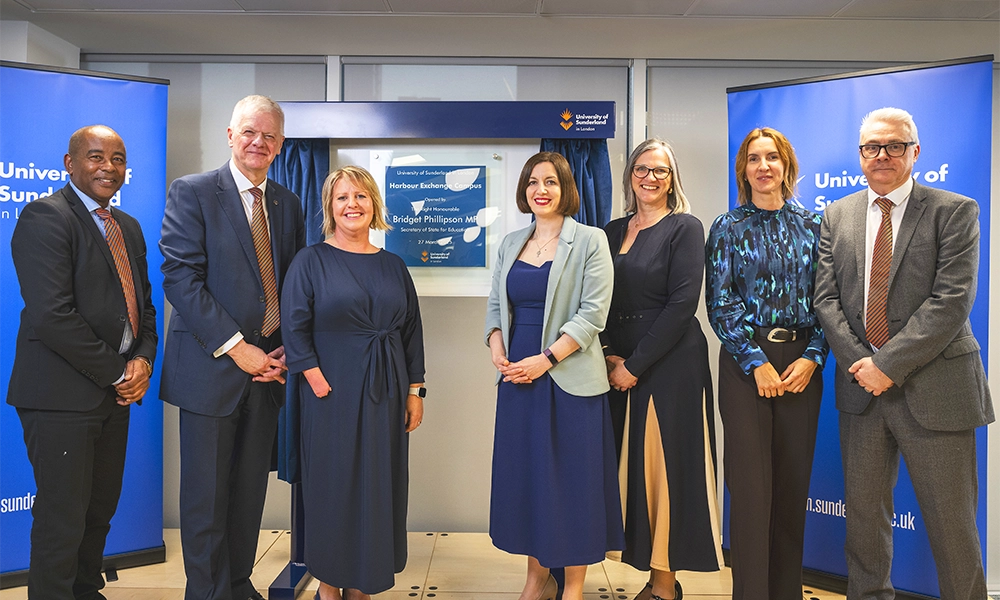
Secretary of state for education, Bridget Philipson MP, opens the new campus in the presence of University Of Sunderland chancellor Leanne Cahill, vice-chancellor Sir David Bell, Alan, deputy directors of the University Of Sunderland In London, Lynsey Bendon and Geoff Paul and head of marketing, recruitment and admissions, Jelena Miljanic – image by UOSiL
In 2025, secretary of state for education, Bridget Philipson MP, opened the £10million campus in the presence of University Of Sunderland chancellor Leanne Cahill, vice-chancellor Sir David Bell, Alan, deputy directors of the University Of Sunderland In London, Lynsey Bendon and Geoff Paul and head of marketing, recruitment and admissions, Jelena Miljanic – image by UOSiL

key details: University Of Sunderland In London open day

The next open day at the University Of Sunderland In London is set to take place at the Harbour Exchange campus on July 11, 2026, and will run from 1pm-4.30pm.

Open days are also planned for September 12 and November 26. 

The university also offers personal consultations that allow prospective students to explore the institution’s facilities and courses. 

Those wishing to attend either an open day or a consultation can register online here

Read more: Whole Foods Market opens its doors in Canary Wharf

Read Wharf Life’s e-edition here

Subscribe to our free Wharf Whispers newsletter here

Subscribe To Wharf Life

Glenn Tilbrook on why it’s vital to support grassroots music venues

Squeeze co-founder is set to play Theatreship on the Isle Of Dogs for Music Venue Trust’s Everywhere At Once festival, plus donate tour cash

Glenn Tilbrook is participating in the Music Venue Trust's Everywhere At Once festival - image supplied by MVT
Glenn Tilbrook is participating in the Music Venue Trust’s Everywhere At Once festival – image supplied by MVT

Subscribe to our free Wharf Whispers newsletter here

“Back in the day, access to venues and pubs was key for me in learning how to do what I do,” said Glenn Tilbrook, co-founder of Squeeze, who is set to play a gig in support of Theatreship on the Isle Of Dogs later this month.

“I wasn’t taught by anybody. I started out playing with Jools Holland in pubs in east and south-east London as well.

“We did that for a couple of years and it taught us a lot about communicating with people – there’s no real substitute for that experience.

“That’s where we got our training – how we got ourselves together to move on and climb the ladder.

“It’s why you need these spaces to do that work in – they’re so important, not just for musicians, but for people to come and access performances – for it not to be all about money.”

Glenn is set to perform on board Theatreship - image by Theatreship
Glenn is set to perform on board Theatreship – image by Theatreship

playing the festival

Glenn is set to perform alongside his son Leon at the venue as part of the Music Venue Trust’s Everywhere At Once festival, which will see more than 1,200 gigs take place from June 26-28, 2026, nationwide.

Thousands of artists are set to participate with the likes of Fatboy Slim, Becky Hill, Tinie Tempah, The Divine Comedy, Rizzle Kicks and many more all performing. 

Glenn, who has fond memories of performing early in his career at The Waterman’s Arms – just down the Isle Of Dogs from Theatreship – is scheduled to perform on the Sunday evening.

“I’ll be playing with Leon, who has joined Squeeze,” said Glenn.

“He’s 23 now and a great musician.

“We’ll be playing a selection of his songs and mine – we’ve just finished a short tour, so we’re well-versed in performing together and we’re sounding great.

“I first went to Theatreship about two months ago and I was so impressed by what they’ve done with the space – the atmosphere is great and it has a lovely bar at the back.

“I think it’s important for people to recognise what venues like this bring to an area.

“They’re quirky, but they work so well. 

“Theatreship is clearly a place people will come and be surprised by what you can do on a ship.

“Squeeze have played on boats – we did a cruise gig last year, which was interesting. 

“We were only on board for one day between Florida and The Bahamas, where we got off.

“It was a small stage, but it seemed like there were thousands of people in the audience.”

Glenn and squeeze will also be performing at The O2 Arena later this year - image supplied by MVT
Glenn and squeeze will also be performing at The O2 Arena later this year – image supplied by MVT

how Glenn Tilbrook co-founded Squeeze

Born in Woolwich, Glenn grew up in Docklands, forming Squeeze after meeting Chris Difford via an advert posted in a shop window. Jools Holland also joined.  

The band first found fame in the 1970s with albums such as Cool For Cats and Argybargy, with Glenn and Chris continuing their partnership to this day.

“Squeeze is having a bit of a moment in the sunshine and we’re relishing that,” said Glenn. 

“We’ve got an album called Trixies out at the moment, which is a set of songs that Chris and I wrote when I was 16 and he was 19 in 1974. 

“At the same time we did an album of new songs that will be coming out next year. I’m keen to prove that our chops are still intact and we’re still growing.

“The old songs really sound like they were written in 1974, and the influences in the songs were in the three years leading up to 1974.

“When you’re 16, you don’t have a lot of history, so we were listening to contemporary music at the time and that’s what we were absorbing.

“Now I’ve had a lifetime of going to see lots of different acts and I’m thrilled by it even now.

“I love the journey – it’s never-ending, it’s fantastic.

“This year we’re on tour in America and we have a lot of huge shows including one at The O2 Arena in Greenwich.

“Who would have thought that at this stage in our career more people would be coming to see us than ever?

“It feels really great and we’re a really tight, professional band – we sound fantastic.

“The reaction we get from audiences now is unlike anything we ever had, even from the beginning of our career.

“We were really exciting when we started out and we’re really exciting now, at the other end of my life.

“It’s wonderful to play locally. I have my studio just yards from the Thames in Charlton.

“I’ve always been around Greenwich, it’s where I grew up and I love it.

“I remember that there was a tradition among the people who worked in the dock and on the ships to sound the ship’s horn at midnight on New Year’s Eve, and it was a really thrilling noise.

“I also love what’s happened to Canary Wharf, which I can remember before anything was built, and I’m amazed at it – it’s a brilliant place.

“It was a big vision to develop that, and it’s ongoing – a really exciting place to be.

“What’s important is that it isn’t just on a monetary level.

“What places like Theatreship do is so good for people’s souls. I don’t think it’s too much to say that. 

“It’s a place that brings people together, it’s so enriching.”

Inigo Lapwood, project director of Theatreship and Artship – image Matt Grayson

how Glenn Tilbrook is supporting Theatreship

Inigo Lapwood, Theatreship director said: “We’re so thrilled to be working with MVT for their Everywhere At Once festival. 

“At the moment we’re sadly all too accustomed to hearing about grassroots music venues when they’re under threat of closing.

“We’ve lost almost a third of them nationwide over the last three years alone.

“The trust has worked tirelessly to try to stem that tide. 

“At Theatreship we’ve been hugely grateful for that work – they’ve been instrumental in our own ongoing battles to stay afloat. 

Everywhere At Once is a great counterpoint to this narrative of loss – a nationwide celebration of the spaces that remain. 

“We really appreciate this timely reminder that we’re not alone, that the UK is filled with passionate grassroots music venues showcasing incredible work, and that brilliant, inventive artists like Glenn can be found in them.

“Since opening Theatreship, we’ve been consistently amazed by the sheer depth of musical talent in London.

“From the upper decks of the ship you can see The O2 where Glenn will be playing later this year, but we’re absolutely certain that he won’t be the only artist currently performing on the grassroots music circuit who’ll be headlining stadium gigs in short order.”

key details: Glenn Tilbrook and Squeeze

Glenn And Leon Tilbrook are set to play Theatreship on June 28 at 7pm. Tickets cost £33, although the gig has now sold out.

Find out more about the venue here

The Everywhere At Once festival runs from June 26-28 with more than 1,200 gigs at 500-plus venues.

Find out more here

Squeeze (with support from Billy Bragg) are set to play The O2 Arena on November 26 at 6.30pm.

Tickets start at £47. Squeeze is donating £1 to support the trust from every ticket sold. 

Find out more here

Read more: Whole Foods Market opens its doors in Canary Wharf

Read Wharf Life’s e-edition here

Subscribe to our free Wharf Whispers newsletter here

Subscribe To Wharf Life

Shenanigans At (The) Space brings comedy back to the Island

Regular monthly comedy night at the Isle Of Dogs venue in Westferry Road has been created by promoter Scott Fitzgerald and MC Matt Price

Scott Fitzgerald, left, and Matt Price have created Shenanigans At (The) Space - image by Jon Massey / Wharf Life
Scott Fitzgerald, left, and Matt Price have created Shenanigans At (The) Space – image by Jon Massey / Wharf Life

Subscribe to our free Wharf Whispers newsletter here

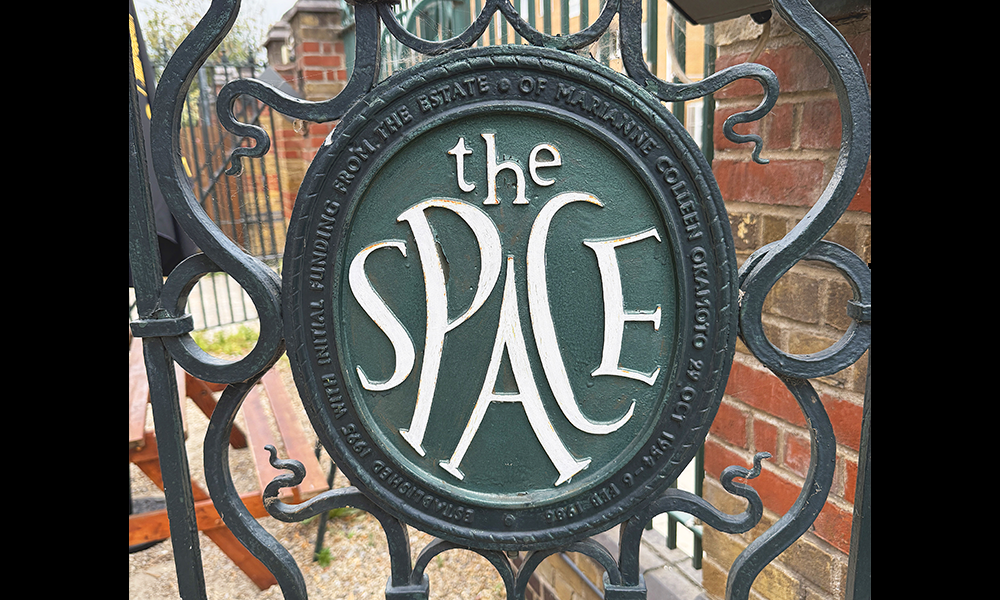
Friday, April 17, 2026, saw the return of regular comedy to The Space theatre in Westferry Road – the first in a new series of monthly gigs that are set to pull in a series of potent line-ups to the Isle Of Dogs venue.

Shenanigans In (The) Space is the creation of producer, writer, promoter and sometime comic, Scott Fitzgerald, (who’s booking the acts) and regular MC Matt Price.

“I first came to The Space to see As You Like It, hosted by Sir Ian Mckellen [performed by all trans and non-binary theatre group Trans What You Will],” said Scott.

“I loved the whole ethos of the venue – a small theatre that doesn’t receive any funding or regular support.

“I met Matty Jameson, the artistic director, who’s a superstar in my eyes – all drive and responsibility, but smiling all the way through it like a beautiful robot.

“Then I met the board members and explained about my background – promoting comedy and performing – and what I thought we could do here.”

Shenanigans is hosted at The Space on the Isle Of Dogs - image by Jon Massey / Wharf Life
Shenanigans is hosted at The Space on the Isle Of Dogs – image by Jon Massey / Wharf Life

hosting Shenanigans At (The) Space

The result is a series of shows hosted by Matt, each featuring three stand-ups with headline spots from the likes of Sam Nicoresti (who won Best Show at the Edinburgh Festival in 2025), Craig Campbell, Marty Gleeson, Dan Tiernan and comic rap powerhouse Doc Brown.

“We’re able to get people of this level because most comedians want to support something,” said Scott.

“I contact them, tell them the story of the venue, why the fee is what it is and appeal to their human side.

“Many acts remember why they started in comedy, that first big laugh and the place they found their voice.

“We want to build that kind of community here with established comedians and those coming through.

“It also helps that a lot of people know Matt.

“He’s one of the best compères in the country and when they know he’s the MC, they’ll come and do the gig.”

The pair first met at an open mic night in 2003.

Scott had fallen out of a career as a window cleaner and into one as a theatre technician, before taking his own steps into stand-up.

Matt had stumbled into comedy having briefly boxed and then taken up writing about the sport.

Together they ran the Yellow Kangaroo Comedy Club in Cardiff and have remained friends ever since.

Scott is promoting the night and booking the comics - image by Jon Massey / Wharf Life
Scott is promoting the night and booking the comics – image by Jon Massey / Wharf Life

forged in a friendship

“I have memories of two speakers exploding on stage and Scott coming to sort them out,” said Matt.

“We became friends and I was deluded enough to carry on as a performer.

“I’d had a few fights as an amateur boxer, but I wasn’t very good and then I spent a couple of years trying to write a book about boxing before I fell into comedy and realised it’s the same thing as being in the ring, but without the punches.

“One wonderful comedian said that stand-up comedy is the most violent, non-contact sport in the world and I know what he means.

“There’s a saying in boxing: ‘It’s not why you start, it’s why you stay’.

“I started it because I was a failed boxing writer, and I stayed because, thankfully, I don’t take myself too seriously and I just genuinely love being a comedian.”

Having performed in 30 countries including Russia, Cambodia and “even Penzance” Matt said he was relishing the prospect of performing at The Space. 

“I’ve been around a bit,” he said.

“One highlight was standing on a piece of wood on top of a former gangland criminal’s house, performing to south-east London’s criminal underworld.

“I looked at a man with a tattooed face who asked me not to talk to him.

“He’d just robbed a post office, but couldn’t stand being spoken to in public.

“Another was accidentally setting myself on fire at the Edinburgh Festival – I just walked backwards into a candle.

“People asked if I’d done it on purpose so I just said: ‘Yes’. I’ve learned to take a compliment.

“The Space already feels very special and I’m really enjoying working with Scott again.

“There’s something about supporting a local community and trying to build a night that people really like.

“There’s no pressure on acts here – we’re not going to say they’ve got to stick to every second as you do in more commercial clubs.

“It will be somewhere acts can come and experiment a bit.”

Matt has performed in more than 30 countries and is Shenanigans In (The) Space's resident MC - image by Jon Massey / Wharf Life
Matt has performed in more than 30 countries and is Shenanigans In (The) Space’s resident MC – image by Jon Massey / Wharf Life

building something on the Isle Of Dogs

Talking with the duo, there’s a sense both of them are quietly revelling in the process of putting the gigs together – a feeling that they’re at the start of something. 

Scott had stepped away from comedy for a number of years, with this bigger goal tempting him to return.

“Not much would have got me back into it – it’s hard work and you can’t please everybody,” he said.

“But this venue should have more people in it – it’s that larger idea that makes me want to put myself through it again.”

The first Shenanigans saw Shaparak Khorsandi headline with sets from Don Biswas and Ciara O’Connor.

The next date – May 22, 2026 – is set to feature ventriloquist Lachlan Werner and softly spoken Welsh comic Morgan Rees.

“The night will be headlined by prop comic Spencer Jones who performs on stage as Clunkerdunk,” said Scott.

Best known for his recurring role as Mr Winner in BBC Shakespearean sitcom Upstart Crow, audiences can expect new material amid the unpredictability of live performance.

“Anything can happen,” said Scott.

“That’s the excitement of it – it’s still thrilling to us after all these years. You just never quite know what you’ll see.

“That’s why Matt is so good – he’s skilled at making almost anything funny and connecting with the audience.

Matt added: “There was one time I was being heckled by a drunk woman in the front row, who just wouldn’t give up, so I walked to the back of the room and got everyone to turn their chairs round, putting her at the back.

“She was very angry, stormed out and slammed the door.

“Some of the audience barricaded the door behind her – you learn how to play a room.

“In between jokes, you could hear her complaining to the manager.”

key details: Shenanigans In (The) Space

Shenanigans In (The) Space is set for a run of monthly performances at the Isle Of Dogs venue.

The next date is May 22, 2026, and doors open at 7.30pm. Tickets cost £20. 

Comedy nights will be listed regularly on The Space’s website here

Read more: How Barge East is growing its canalside presence for summer 2026

Read Wharf Life’s e-edition here

Subscribe to our free Wharf Whispers newsletter here

Subscribe To Wharf Life

Theatreship’s Man With A Movie Camera night shows venue’s value

The floating venue has firmly established itself as a cultural powerhouse in Tower Hamlets and must be supported and protected by those in power

Man With A Movie Camera was released 97 years ago and recently received a screening at Theatreship complete with live music

Subscribe to our free Wharf Whispers newsletter here

The reason silent films,  were presented with live musical accompaniment before the advent of the talkies is hardly a mystery.

Overlay images with melody and the combination of sound and vision immediately delivers double the sensory input for the audience.

We’ve evolved to depend on both our ears and our eyes, so the fact we respond so readily to the two together isn’t especially surprising.

What is unexpected, perhaps, is the depth of the reaction they can provoke.

Recently, Theatreship on the Isle Of Dogs hosted a screening of Soviet classic Man With A Movie Camera alongside largely improvised music from Owen Spafford on violin and Joe Harvey-Whyte on pedal steel and electronics.

Part of the venue’s Silent Film With New Sound season, supported by the BFI, the evening was sold out.

Who knew in 2026 that people, with all the digital distractions in the world, would choose to spend an evening watching a 97-year-old black and white movie?

The improvised soundtrack by Owen Spafford and Joe Harvey-Whyte added remarkable depth to an already fascinating work

But those who attended won’t need me to tell them what a treat this marriage of the sonic and the silver screen was. 

Firstly, there’s the film itself. Directed by Dziga Vertov and shot in Kyiv, Kharkiv and Odesa in Ukraine, the feel is of a day-in-the-life piece showing the activities, technologies and behaviours of the time.

But its far more than that. Deliberately experimental, the film constantly shows the camera man and the set-up of the shots before revealing the results. 

There are even scenes where we see the painstaking process of editing the piece together, with rolls of celluloid sliced up and labelled ready for composition.

But, while the piece is in part a meditation of the process of making film, it’s also brave, funny, sweet and, at times, shocking.

Amongst other things we see are a live birth and a corpse of a man in an open casket, presumably on his way to a funeral.

We’re shown trolley buses, factories and city dwellers at work and play. 

In some senses it’s like stepping into a time machine. In others it’s more familiar than you might expect, after nearly a century of change.

But it’s really the skill of Owen and Joe that lends this extraordinary work meaning.

It takes a special kind of genius to craft sounds that sit so perfectly with the flickering screen and make it almost impossible to imagine watching Man With A Movie Camera without them. 

From the musicians we get a highly nuanced spectrum of emotions that burst forth from the monochrome shots – Irish-tinged melancholy, exuberance, jagged, dissonant uncertainty, passion and even fear.

Watching is a rich experience, heavy with almost tangible appreciation from a packed auditorium.

5/5

*****

Theatreship features a 100-seat auditorium and is moored on the Isle Of Dogs
Theatreship features a 100-seat auditorium and is moored on the Isle Of Dogs – image supplied by Theatreship

protecting the future

  • The benefit of having Theatreship locally might be seen as similarly complementary to the lift that Owen and Joe’s music can deliver to silent images.

If normal everyday lives are the reels of film, then cultural venues are the soundtrack. 

Taking the latter away is akin to muting existence for those who have come to relish and participate in this community.

I mention this because plans to demolish the nearby Sierra Quebec Bravo building at 77 Marsh Wall and replace it with a new residential tower are in the works and place something of a question mark over the future of Theatreship and Artship’s ability to operate.

At a time when venues are closing, the first new significant cultural additions to the Isle Of Dogs for many years must be protected and supported in their activities both during the build and after. 

Hopefully the developer, Tower Hamlets Council and the Canal And River Trust will jointly recognise and fight for the clear benefits these remarkable craft deliver for local residents and, indeed, those considering a move to the area through the planning process.

These boats are golden assets for the borough and are just getting into their stride.

They should be treated as such by all parties to these proposals.

key details: Theatreship / 77 Marsh Wall

You can find out more about Theatreship and Artship here, Owen Spafford here and Joe Harvey-Whyte here.

You can see the 77 Marsh Wall consultation website here and the planning application here.

Read more: Check out Choir Boy’s joyful story at Stratford East

Read Wharf Life’s e-edition here

Subscribe to our free Wharf Whispers newsletter here

Subscribe To Wharf Life

Mastmaker Court set for two residential towers as plans approved

Central Isle Of Dogs site will see two warehouses demolished to make way for co-living and affordable housing blocks from Pirin and Fifth State

An artist's impression of the two towers that are set to be built on the Mastmaker Court site - image by Fifth State
An artist’s impression of the two towers that are set to be built on the Mastmaker Court site – image by Fifth State

Subscribe to our free Wharf Whispers newsletter here

what’s happening?

A sizeable chunk of the centre of the Isle Of Dogs is set to be developed following the approval of a planning application by Tower Hamlets Council.

Mastmaker Court, a joint venture by landowner Pirin Ltd and developer Fifth State, will see two towers built on a site just off Mastmaker Road.

two towers?

That’s right. One will rise to 43 storeys and the other to 27. The larger one will contain 843 co-living apartments, while the other will house 153 affordable homes.

They have been designed by Squire And Partners architects, also known for Landmark Pinnacle locally.

The scheme includes landscaping at ground level - image by Fifth State
The scheme includes landscaping at ground level – image by Fifth State

co-living?

Essentially the larger block will be rental only following a wider trend in the residential development market.

The offer is typically self-contained flats with communal facilities to encourage socialising.

These are usually marketed to young professionals and key workers.

While Fifth State has built out a couple of office blocks in Shoreditch, its projects in Bermondsey, Hampstead, Croydon, Southwark, Deptford, Hornsey and Leicester Square – spanning co-living student accommodation and affordable housing – have yet to be completed.

Its website promises that accommodation includes a shower room, a kitchenette, a double bed, storage space, high speed broadband and flexibility on length of stay with a three-month minimum.

While details of its Mastmaker Court scheme have yet to be released, the company says its projects include wellbeing studios  and facilities with a programme of classes and events for residents such as seminars and debates, cooking classes, brunch and supper clubs, guided group meditation, circuit and weights workouts and more.

co-working?

Again, while specifics have not been released, Fifth State says co-creating spaces lie at the heart of its schemes with facilities such as artists studios, private desks, communal workspaces, recording studios and conference walls to be expected.

The scheme features Squire And Partners - image by Fifth State
The scheme features Squire And Partners – image by Fifth State

what about the affordable housing?

For its Isle Of Dogs scheme, the affordable tower will house 121 properties for social rent and 32  earmarked as intermediate homes, which may be offered as below market rent or shared ownership apartments.

Around two thirds of the social rent flats will have three or four bedrooms aimed at families.

a new school?

Two existing warehouse buildings will be knocked down to make way for the towers.

At ground level the affordable housing block will include a 161sq m community facility facing onto a new 1,500sq m park located in the south-west corner of the site.

The plans also include outline permission for a new alternative provision school for up to 100 pupils in the north-west corner of the site, which could deliver up to 4,510sq m of educational space.

key details: Mastmaker Court

Planning consent has been granted for the two-tower scheme at Mastmaker Court.

Find out more about the scheme here

Read more: How SWR Business Direct delivers on carbon tracking for train travel

Read Wharf Life’s e-edition here

Subscribe to our free Wharf Whispers newsletter here

Subscribe To Wharf Life

University Of Sunderland In London offers fintech and trading MSc

The business course has been developed by Dr Yahaya Alhassan with the aim of equipping students with skills for employment and entrepreneurship

University Of Sunderland head of academic operations, Dr Yahaya Alhassan - image by Jon Massey / Wharf Life
University Of Sunderland head of academic operations, Dr Yahaya Alhassan – image by Jon Massey / Wharf Life

Subscribe to our free Wharf Whispers newsletter here

“Our first students are in their last few months of the course,” said Dr Yahaya Alhassan, head of academic operations at the University Of Sunderland In London.

“For me, it will be very emotional when they graduate from our first MSc Fintech And Trading course.”

In line with the university’s consistently practical approach, the programme was developed after Yahaya spotted a gap in the market.

“It was while I was working as an external examiner for another institution that I realised people were offering trading courses,” he said.

“Some were delivering fintech elements, but these were usually add-ons to finance courses dealing with things like online banking.

“My understanding of fintech is that it relates to specific technologies – things like artificial intelligence, blockchain, cryptocurrencies and machine learning – and how you apply those to finance. 

“I couldn’t find a programme like that, which also included trading so, following some market research, I decided to develop a course that would bring the two together.

“I defy anyone to find a similar offering – as of today we are unique.”

Based at the University Of Sunderland In London’s Isle Of Dogs campus at Harbour Exchange, the one-year course features a dedicated Fintech Lab created in partnership with the London Stock Exchange.

The London Stock Exchange Group Fintech Lab at the University Of Sunderland In London - image supplied by UOSiL
The London Stock Exchange Group Fintech Lab at the University Of Sunderland In London – image supplied by UOSiL

putting practice at the heart of the course

“The approach we adopt with the delivery of this programme is hands-on, practice-based, with a small number of students to ensure we give them a very good level of experience,” said Yahaya. 

“We work with a number of prestigious partners, with those on the course also receiving certificates from them as part of the programme.

“Students learn how to trade and invest in stocks – which are doing well and which are not?

“But the reason we combine this with fintech is so they can use technology to make predictions based on the data flowing into the lab.

“In the past, traders have made decisions based on their own experience while looking at such information.

“But with technologies such as AI, once you have a lot of data, you can use it to start forecasting whether the price of a stock will rise or fall.

“With blockchain and machine learning, our students are taught how to model and to build apps, enabling them to potentially create their own fintech businesses.

“We also work with companies to ensure our courses are delivering what employers, such as those at Level39 in Canary Wharf, expect from someone with an MSc from this university.

“We also constantly look at the needs of the students and changes in the market.

“Our programmes come up for review every five years, which is when they get revalidated.

“But with technology developing so fast, we can’t wait that long so we’ve adopted an enhancement plan where we look at our programmes every two months to make sure we’re flexible and giving the market what it needs.”

The University Of Sunderland In London is based at Harbour Exchange on the Isle Of Dogs - image by Jon Massey / Wharf Life
The University Of Sunderland In London is based at Harbour Exchange on the Isle Of Dogs – image by Jon Massey / Wharf Life

from Ghana to London via Sunderland

Yahaya himself is a good case study for the way in which education and exposure to new ideas can have a profound impact on the direction of a person’s life.

Originally from Ghana, he began his career in the higher education sector at the University Of Development Studies in Tamale not as an academic but as a member of its support staff as an assistant accountant.

“One day I was in the vice chancellor’s office and I saw an advert in a magazine for an MBA course at the University Of Sunderland,” he said.

“The VC had been in the UK himself, studying and working in Nottingham before he was recruited back to Ghana. 

“I’d never thought about travelling abroad in my life, but I decided I might give it a go – I applied and then, honestly, I forgot about it.

“About two months later, a letter arrived containing a provisional offer to go on the course.

“I was supposed to pay £13,500 but it was a lot of money and I had no idea where I would get that from.”

In the end, Yahaya’s employer awarded him a scholarship to go on the course and he wound up bound for the North East and arrived improperly dressed for the weather. 

“Arriving in Sunderland was the first time I’d seen snow in my life and I didn’t have a proper jacket,” he said.

“I didn’t know how to get to the university campus and I couldn’t understand the accent of the first man I met.

“Fortunately, I found someone who showed me where to go. I completed my MBA and returned to Ghana in 2003.

“That was part of the agreement for my scholarship but, after about nine months I was feeling discontented.

“Everything was so slow.

“When I came to the UK people were working from 8am, but I realised in Ghana it was going to be difficult for me because of the difference in pace.

“I told my boss I had to go back to England, and he said he understood, so I moved to London in 2004. 

“My first job was at a college in Greenwich, teaching English in 2005 and I remained there until 2011.

“That’s when I saw that the University Of Sunderland was opening a London campus and I decided to apply.

“At first I was working 10 hours a week, then 20 and, after a couple of months, full-time – teaching on its MBA programme. 

“After a year, the programme manager was leaving and so I applied and got that job in 2014 before going on to become assistant head of academic operations.

“Now, as head of academic operations, I make sure all the teaching and learning at the London campus goes well, dealing with quality assurance and making sure everything is done in line with our academic regulations.

“I am part of the senior managers team as well and I am responsible for the day-to-day running of the London-based academic programmes.

“The courses are led from Sunderland and run down here, which is why our campus has programme managers rather than leaders.

“I never thought I’d be working where I am now. I even told my friends in Ghana I would be coming back in a year.

“I still have that vision, to return one day, perhaps to follow my father in a political career.

“When I’m teaching, I say: ‘Who knows, maybe I’ll be president one day’.”

In the meantime, Yahaya’s passion is continuing to help develop the university’s offering with a BSc in Fintech And Digital Finance now available.

The intention of this three-year course is to act as a pipeline for those seeking to study the MSc, providing them with the relevant skills and knowledge to prepare them for the postgraduate course. 

key details:

The University Of Sunderland In London offers a BSc Fintech And Digital Finance course as well as an MSc in Finance And Trading based at its Isle Of Dogs campus at Harbour Exchange.

The university welcomes new students several times during the year, so there are plenty of opportunities to apply.

Find out more about the Fintech And Trading MSc here

Read more: How SWR Business Direct delivers on carbon tracking for train travel

Read Wharf Life’s e-edition here

Subscribe to our free Wharf Whispers newsletter here

Subscribe To Wharf Life

Dr Alessandro Ferrazza on blending business theory and practice

International Business Management programme manager at the University Of Sunderland In London explains how its approach benefits students

The University Of Sunderland In London's Dr Alessandro Ferrazza - image by Jon Massey / Wharf Life
The University Of Sunderland In London’s Dr Alessandro Ferrazza – image by Jon Massey / Wharf Life

Subscribe to our free Wharf Whispers newsletter here

“When I first went to university, it was all about theory,” said Dr Alessandro Ferrazza.

“Working in industry, I’d have to ask how to transfer that theory into practice. 

“The ideas sounded good in the book, but I didn’t know how to apply them in reality. What we try to do here is to break down those barriers.” 

As senior lecturer and programme manager for the MSc International Business Management (IBM) course at the University Of Sunderland In London, Alessandro is perhaps perfectly placed to take on that task.

A long career in industry – interwoven with a consistent thread of study and personal development – preceded his move into academia, after he enjoyed guest lecturing at the University Of Sunderland In London, following completion of an MBA in business administration, management and operations there in 2017. 

Going full-time in 2019, initially as an associate lecturer, Alessandro completed his doctorate in business and remains passionate – alongside the wider team – about continuing to develop the university’s IBM offering.

And, frankly, who better to teach international business?

Born in Switzerland, Alessandro grew up in Rome, completing a diploma from the Institute For Hospitality Management in the Italian capital.  

The University Of Sunderland In London is based at Harbour Exchange on the Isle Of Dogs - image by Jon Massey / Wharf Life
The University Of Sunderland In London is based at Harbour Exchange on the Isle Of Dogs – image by Jon Massey / Wharf Life

starting out in hospitality

“I started off washing dishes in Guernsey and I hated every single minute of it,” he said.

“After one week, I packed it in and walked out. They didn’t even pay me. 

“My lecturer in hospitality had told me I needed to speak English, so I’d moved to the Channel Islands and, after I’d quit my first job, I walked into the hotel next door.

“I hardly spoke any English – I couldn’t even read the name of the place – but I said I wanted to see the manager.

“It might have been luck, but this Italian guy came out.

“We got chatting and he agreed to take me on.

“My first job was to take the dirty dishes to the kitchen, so already it was a step up.

“My career took off from there.”

Moving to mainland UK a couple of years later, Alessandro built his career in hotels in London and rediscovered education.

He said: “I met someone really clever, the then manager of the Cavendish Hotel, and he suggested I should go to university. 

“That sounded really good and, in those days it was free, so I signed up at the Ealing College Of Higher Education, which is now West London University.

“On the first day, I sat down in the lecture room on the first floor with my pad and pen out. The lecturer came in and said: ‘Good Morning’.

“After that, I couldn’t understand anything else, so I left. 

“But then I took elocution lessons for a year and a half, went back and completed my degree – I was very proud of that. 

“One of the things the Cavendish’s manager did was put in my head the idea of personal development.

“It’s something I tell my students. Annual reviews are really bizarre things in business.

“Your boss sits you down once a year and points out where you’re going wrong.

“But what I tell my students is they should go to those meetings armed with what they want. It should be a two-way conversation. 

“Do you have all the training and tools to achieve what they want you to do?

“If the answer is yes and there are issues, perhaps the role isn’t right for you. 

“But, if the answer is no, then you must ask for what you need to bring your work up to the level the firm expects.”

The university offers wide range of courses, including an MSc in International Business Management - image by Jon Massey / Wharf Life
The university offers wide range of courses, including an MSc in International Business Management – image by Jon Massey / Wharf Life

connecting with the University Of Sunderland In London

Having spent many years working in the hospitality sector in London, Switzerland, Italy and France, Alessandro joined catering giant Compass Group in 2001, initially as a general manager before rising through the ranks to become regional account director. 

There, with contracts across England, Italy and Switzerland through his contacts, he had responsibility for more than 500 employees, with the company also sponsoring him to pursue first an MSc in strategic management and leadership and then the MBA that led him to the University Of Sunderland In London.

Today, Alessandro continues to use his links to industry to enrich his students’ experience by inviting senior contacts including CEOs of top companies to participate in their programmes.

“It gives them hands-on knowledge,” he said.

“They get to understand what it’s really like to be in an international managerial setting, running operations remotely across the world.

“Anyone can read a book, the one thing you cannot buy is experience.

“What we try to do with our IBM programme is to create something tangible our students can bring with them to their careers.

“Things have changed. When I first went to university, the Government paid for the course via a grant.

“Now our students are customers – we need to include the element of added value, to ask ourselves what makes our programme different?

“Theory is important, but our IBM course has more of the feel of a hands-on apprenticeship.

“For example, we run a game simulation where students become the board of directors for a company. 

“They need to make all the decisions, and those choices then determine how the organisation they’re running progresses. 

“The questions for me are: ‘How do I make the books come to life? How can real businesses reflect and use what’s in the books?’. 

“There needs to be a real synergy between what’s written in the books and what happens in industry.

“For example, over the years I’ve invited CEOs to come in as associate lecturers, to set the students a problem and then have them report back.

“In the latest one, they’ve been given an issue that a person is actually trying to fix in their business and, in March, he’s going to come back with the head of the global company and listen to their proposals.

“You can’t get any closer to being in the boardroom than that.”

staying relevant

With the business landscape constantly changing and evolving, the University Of Sunderland In London believes such links to real organisations are essential in maintaining the relevance of its courses, with Alessandro also stressing the importance of developing, honing and implementing essential skills.

“One of the reasons I made the move into education is that I want to help shape the managers of the future,” he said.

“When I was in industry, I’d sometimes recruit managers who looked really good on paper, but who turned out not to be very effective on the ground.

“That wasn’t because of an inability to understand business concepts, it was because of an inability to put the theory into practice.

“That’s what I wanted to change. I’d seen lots of people who’d achieved qualifications and wanted more senior roles as a result but then failed.

“Often they didn’t understand how to deal with people. In senior management you are really only managing two things.

“The first is resources. The second is people. If you can’t deal with colleagues, then you’ve had it.

“You’ve got to make sure your team follows your leadership, your strengths, or they won’t do what you want them to do. In the end, the company will recognise that and you’ll be out of a job.

“This is why we run group exercises and encourage collaboration to equip them with those experiences.

“I’m not saying it will be easy for students embarking on our courses. It can’t be, they won’t be spoon-fed. 

“But I do want to make sure I give them all the tools possible from the toolbox I’ve built up over my years in industry so that the next generation of management coming out of programmes like our MSc in IBM is going to be well equipped for whatever industry they choose to make their career in or whatever else they do in the future.”  

key details: Business

The University Of Sunderland In London offers a wide range of business-focussed courses at undergraduate and postgraduate level. 

Its MSc in International Business Management is a full-time course over one year, based at UOSiL’s Isle Of Dogs campus.

You can find out more about business courses at the university here

Read more: Discover Georgian food and wine at Sad Meli in Royal Docks

Read Wharf Life’s e-edition here

Subscribe to our free Wharf Whispers newsletter here

Subscribe To Wharf Life

Creative Virtual on why the firm believes human-curated AI is better

Founder and CEO of the Canary Wharf-based business, Chris Ezekiel, explains how his firm’s approach is proving attractive to larger organisations

Creative Virtual founder and CEO, Chris Ezekiel – image by Jon Massey / Wharf Life

Subscribe to our free Wharf Whispers newsletter here

It feels like a big year for Chris Ezekiel.

Not only is he gearing up to become a father for the third time – a sibling is on the way for sons Matthew and Harry – but Creative Virtual, the company he founded on the Isle Of Dogs 22 years ago, recently went live with a hybrid human and AI system to help Australia’s largest mobile network better deal with its customers.  

“We think it’s a world first,” said Chris, who still lives locally despite running the global business as its CEO.

“Our project with Telstra sees a large enterprise using conversational AI and chatbot technology in a public-facing way – a hybrid approach with all the appropriate guardrails in place.

“There are other companies doing this with AI, but only on a small scale.

“We spent the best part of 2025 building the system and linking it in to all their operations.

“It’s all about knowing when to give a generative answer, something more structured or a combination of the two.

“Our system also does things like summarising, classifying and making all these decisions in real time.

“I’m very proud that we’ve displaced two of the world’s largest companies in this field – IBM and Salesforce – to deliver this solution.

“As soon as Telstra switched it on they doubled their containment rate, which means twice as many interactions have been automated rather than going through to a human in their contact centre.

“Now we have a road map to do much more over the course of the next 12 months.

“Our system is going to be the central point of communication for all their interactions with existing clients and potential customers – all with a clear escalation path for more complex queries or situations.

“There’s always going to be a need for that.”

beyond ChatGPT

Chris said that, while the arrival of ChatGPT in 2022 and the subsequent proliferation of large language models that generate responses had been significant for the sector that Creative Virtual operates in, many firms had done little in the way of implementing the technology.

“People have this perception that computers have to be 100% accurate, or the job they do is not acceptable,” he said.

“If a human makes a mistake, it often doesn’t get the same level of attention as a machine failing or given an answer that’s wrong.

“As a result, many larger organisations were paralysed when it came to putting new systems in place.

“During this time, we stuck to our guns and did what we’ve always done – tune into what organisations really want.

“That’s what’s brought us success. We’ve kept humans in the system to curate answers, working alongside generative AI and other technologies, meaning we can combine their talents when communicating with customers – something that’s reassuring to large organisations such as banks or telecommunications firms.

“With these clients there’s a large number of processes that their customers need to go through – billing enquiries or applications for accounts and credit cards, for example.

“These need high levels of curation and can’t be left to AI.

“That’s why clients like our approach. They can have very tightly controlled parts of the process alongside the simpler enquiries that can be dealt with by AI.

“Our tagline remains completely relevant today – we’re about the science of conversation and finding the best ways to automate those interactions whether that’s via chatbots, texts, WhatsApp or Facebook Messenger.

“We’re still doing that, but using the latest techniques.

“Our project with Telstra – all that hard work – has resulted in a big global showcase for Creative Virtual.

“We have built some bespoke systems for the client, but many of our standard techniques are ready to scale for other organisations.

“One of the most important elements is the expertise to  understand what this technology can and can’t do – what you can measure and how to set an organisation’s expectations.

“Having this blueprint as we go into 2026 is absolutely key for our business.”

designed to be flexible

Creative Virtual has built its approach to conversational interaction around the idea that it can rapidly and easily switch out AI systems to benefit its clients as the technology develops.

However, Chris believes that while the sector is showing advancement in several areas, it is important to recognise its limitations.

“There are some very clever people in the industry who claim that we’ll have artificial general intelligence very soon, that computers might even become sentient,” he said.

“But we don’t even understand human intelligence at this point.

“You have to take a step back and recognise all these new systems such as large language models are still based on silicon chips – ones and zeros – backed by incredible processing power, but a model that hasn’t changed since the invention of the computer.

“With quantum computing, biological systems or a combination of the two, it may be possible for AI to do a great deal more, but will it become self aware, will it be able to feel things? 

“I think its impossible to say that our existing computer models will take over the world.

“I’m not arguing that we haven’t seen advances in systems that can predict the next word or phrase or that these engines can’t simulate intelligence or awareness. 

“But that to have emotions the computers that run them will need more than ones and zeroes.

“I’m sceptical that artificial general intelligence is just around the corner, even if discussing it makes for a good story in the media.”

doing more and more jobs

One thing Chris is certain of is that AI technologies will be increasingly used to automate large parts of our lives.

“AI will do many of the jobs humans do today and robotics will come increasingly into play, such as self-driving cars,” he said. 

“It is going to be an exciting area and AI is already being used to help doctors with diagnostics and to process large volumes of data in many different fields.

“That’s how we use the technology, for customer services, training virtual sales people and bringing our systems into the retail experience. 

“There will be robots in stores capable of retaining far more information about products on sale than a human ever could, for example.”

That’s not to say AI is perfect or that the large companies involved in developing new models aren’t overly optimistic about the value of their creation.

“With all the billions being invested, there is, perhaps, a bubble – but AI is not going to go away as a tool, just as the end of the dot com boom wasn’t the end of the internet,” said Chris. 

“This technology is very much with us and it will be used to automate many things that are not automated at the moment.

“Overall, I think it will enhance our lives and it will encourage us to be more creative as people.

“Who wants to sit in a contact centre answering the same mundane questions day-in, day-out? We have to evolve our technology so the workforce can do more involving things.

“One of the key issues for firms is that, with so much AI generated content, everything will start to feel very similar. 

“That’s why I think our current approach is the correct one.

“Having humans work alongside AI has always felt to me like the perfect combination.

“We need human curation so that organisations are able to retain their voice and project their brand whether it’s an AI or a person talking to their customers. 

“That’s one of the attributes of our project with Telstra. Its strength has been in the testing we’ve put the systems through against real-life conversations – a way for our client to see our systems work and that gives them confidence. 

“We launched with them during the Black Friday and Cyber Monday periods and it was the best possible time to stress-test what we’d put in place.

“Organisations change their content all the time, so our system had to know Telstra’s products, offerings and sales information and deliver that to customers without error.

“It hasn’t been easy to achieve that, but the feedback from them is that this is the first product they’ve had in years that has been on time, on budget and on spec, which is pretty incredible.

“It’s already delivering real business results.”

key details: Creative Virtual

Creative Virtual is based in Canary Wharf’s Cabot Square and operates globally.

Find out more about its services here

Read more: Orbit Clipper begins carrying ferry passengers between Rotherhithe and Canary Wharf

Read Wharf Life’s e-edition here

Subscribe to our free Wharf Whispers newsletter here

Subscribe To Wharf Life

University offers practical, collaborative, career-driven care courses

How the University Of Sunderland In London’s Health And Social Care and Nursing departments offer qualifications focused on employment

Dr Banhishikha Ghosh, lecturer in health and social sciences at the University Of Sunderland In London - image by Jon Massey / Wharf Life
Dr Banhishikha Ghosh, lecturer in health and social sciences at the University Of Sunderland In London – image by Jon Massey / Wharf Life

Subscribe to our free Wharf Whispers newsletter here

“We are very passionate about making sure  our students are appropriately qualified and experienced when they go out into the market,” said Dr Banhishikha Ghosh of the University Of Sunderland In London (UOSiL). 

“We have academics here who have real-world experience of the nursing and care sectors so they can equip students with both theoretical knowledge and practical know-how.”

Banhishikha has a number of roles at the university, based on the Isle Of Dogs at Harbour Exchange.

She’s both academic champion for employability and enterprise and people, culture and environment lead for REF research in addition to her position as lecturer in health and social sciences. 

This trio of jobs – located at the intersection between employment, research and academic study – means she’s well placed to showcase the institution’s offerings to individuals thinking of studying in its social care and nursing departments.

As well as a two-year foundation degree in Health And Social Care, the university offers one-year BSc top-up courses in Health And Social Care and Nursing Practice as well as postgrad courses in Public Health, Nursing Practice and Adult Nursing, the latter leading to eligibility to register with the Nursing and Midwifery Council on successful completion.

a ‘fantastic employability team’

“Health And Social Care and Nursing are two departments that work together,” said Banhishikha. 

“A student, for example, might start with the former and then move on to nursing.

“Many move on from our BSc programmes to postgraduate study.

“We are a young and vibrant campus with a mix of students from all over the world and Britain.

“Many already have degrees, with some qualified as doctors, nurses and pharmacists who come to us to get a UK qualification so they can work in this country.

“One of the reasons individuals should consider studying with us is that we have a fantastic employability team, which connects students with local organisations.

“We are looking at a very dynamic employment market, now including AI, so we hold events and workshops as well as an Employability Week once a year where we bring in people working in various industries to help inform students about what skills they need.

“We also feed the students information about internships so they can go out be a part of the healthcare industry.

“Some launch careers before they finish their degrees and I see them engaged in placements and volunteering.

“That means by the time they graduate they have enough experience to apply for jobs and it feels really lovely when you see them take up their first roles.

“We rely a lot on our alumni and our network as academics to help support our students and link them up with different opportunities and organisations. 

“From the first day onwards, we let students know what they have to do to build that experience.

“We advise them to get internships before they come, so they can help us work out what would be the best direction for them.

“We have three pathways we encourage our students to follow.

“The first is the managerial pathway, which trains them to understand how leadership works.

“Then there is the mental health pathway for support workers in that sector.

“Finally, there’s the research pathway, which includes data gathering, report writing and primary and secondary analysis.”

Layla Hyda, head of innovation at Revolution AI - image by Jon Massey / Wharf Life
Leyla Hyda, head of innovation at Revolution AI – image by Jon Massey / Wharf Life

working together with industry

Collaboration with outside organisations is key to the UOSiL’s offering.

The university works with many partners including near neighbour Verve Homecare and its sister company Revolution AI – both based at Harbour Exchange but primarily providing services in people’s residences.

“I’ve recently transitioned to the health tech side of the business,” said Leyla Hyda, head of innovation at Revolution AI.

“My mum has been a carer for more than 25 years and refuses to retire, so I learned a lot about the sector and healthcare in general from her.

“I started off in recruitment, placing nurses in NHS hospitals, but I realised there was so much more I could give.

“I then went to work as an internal auditor, analysing care workers and their checks, working my way up to management level where I was responsible for the complex needs of children and adults and the wellbeing of the staff looking after them.

“I absolutely loved it – I learnt so much more about the sector, even though at first it felt scary being thrown in the deep end. 

“Now I have the opportunity to work in innovation and improve things for the benefit of some of the most vulnerable in our society – that’s my passion.

“Having met with the university, I found they needed placements for students and that I could facilitate that.

“I knew it would be a great opportunity for them to see what working in the sector is like.

“People forget that care is not just about hospitals and nursing homes – there’s also homecare where, in a nutshell, we provide staff to look after a person in the comfort of their home.

“There’s a lot to consider, but our number one priority is always making sure that person is safe.”

The aim of the collaboration is to offer students practical experience and valuable insights into jobs available in the sector.

Leyla said: “We give those coming on placements a complete induction so they understand the ins and outs of care and our company.

“If a student has an interest in complex care, for example, we put them in training sessions at no cost to them so that they can get that exposure to it and see if they want to follow that path.

“Someone interested in mental health might get similar training.

“Then students have an opportunity to sit with the operations team, dealing with rosters and recruitment and pre-employment checks.

“Depending on the student, they can go on visits with a care team in a shadowing role. 

“Those not having that experience will be with us in the office, seeing everything that happens behind the scenes, and assist with that.

“That’s equally important because both operations work in conjunction with each other.”

Both the University Of Sunderland In London and Verve Homecare are based at Harbour Exchange on the Isle Of Dogs - image by Jon Massey / Wharf Life
Both the University Of Sunderland In London and Verve Homecare are based at Harbour Exchange on the Isle Of Dogs – image by Jon Massey / Wharf Life

the key role of research

The university is also working with Verve and Revolution AI on a research project aimed at improving training for care workers and helping providers retain staff more effectively.

In a first for the London campus, the university has been awarded £211,000 of funding from Innovate UK for a project that aims to “generate vital insight into the lived experiences of frontline care workers, to enhance quality care, support workforce wellbeing, and embed equity into social care training and delivery”.

Banhishikha said: “It’s a project that is close to our hearts.

“When I first joined the university, we had lectures and workshops, and we gave students the opportunity to talk about the placements and their experience of working in the organisation.

“In these very small but very rich focus groups, the feelings that came out were that students were not equipped enough to take care of patients and they would like it if they had better training. 

“When I met Leyla, I realised she had so much experience in the industry.

“Sometimes carers come and go in the industry – there’s a revolving door – and the reason could be that they do not have enough training.

“At the moment education is for carers, but not necessarily ‘by them’ or ‘with them’.

“The idea is that, in partnership with Verve and Revolution AI, we seek to enrich the training frameworks that are already there by tapping into the experience of care workers – especially those of women from migrant populations who are the backbone of the UK care system.

“We capture data from them that can be fed into the system to create robust training, which equips them better at work. 

“We also want to work with others – we’d love to be connected with other organisations who are interested in this area and have information they want to share with us.”

Leyla added: “For us, person-centred care is an essential part of what we do. It’s about the holistic way we deliver services – the people not the bed numbers.

“Training in the sector can be reading slides on powerpoint presentations and tick-box exercises. It’s very easy to pass and could be improved.

“With this project, we are really excited to set the bar high – we want to stop that revolving door.

“Our goal is to equip our care staff with the right tools they need to give them the confidence to go out into the field and deliver the holistic care people deserve.”

key details: Health And Social Care and Nursing courses

The University Of Sunderland In London offers a range of courses in Health And Social Care and Nursing in its Isle Of Dogs campus at Harbour Exchange.

Full details of these can be found on its website here.

Read more: Why a degree in hospitality and tourism can boost your career

Read Wharf Life’s e-edition here

Subscribe to our free Wharf Whispers newsletter here

Subscribe To Wharf Life

Piano Piano Studio gears up for festive concert on the Isle Of Dogs

East London music school headed by Andra Kruka offers instrumental and singing lessons as well as opportunities to gain performances experience

The music school hosts special themed concerts with the next one set for December 14, 2025 - image supplied by Piano Piano Studio
The music school hosts special themed concerts with the next one set for December 14, 2025 – image supplied by Piano Piano Studio

Subscribe to our free Wharf Whispers newsletter here
Piano Piano translates from the Italian as “softly, softly” and pretty much sums up Andra Kruka’s approach to teaching children to make music.

As headteacher and founder of Piano Piano Studio, she’s spent nearly a decade in east London helping children develop their playing and singing skills as well as the joy of performing in public.

“I’m Latvian, from Riga, and I’m a classically trained pianist and harpist,” she said.

“My musical education was pretty strict and, when I came to the UK, I saw a huge difference in the mentality of the approach taken here – I really liked that it’s a lot more focused on the personal interests of the children.

“Nobody is trying to turn them into professional musicians on the spot.

“By the time I had finished studying piano and harp, I felt burnt out, which is the downside of the East European method of teaching music.

“There’s a lot of pressure.”

After coming to the UK, Andra initially took a different path, studying business and management from 2013 and then working in marketing.

Piano Piano Studio headteacher and founder, Andra Kruka - image supplied by Piano Piano Studio
Piano Piano Studio headteacher and founder, Andra Kruka – image supplied by Piano Piano Studio

creating Piano Piano Studio

“But I realised that I really missed music, so I started researching the structure of education here,” she said.

“Then I took my first steps into teaching and it’s grown from there.”

Today, Piano Piano Studio offers tuition in piano, guitar, violin, drums, singing, music theory and music production with lessons available in students’ homes or online.

“I always tried to find a balance between making sure the kids are engaged and delivering good results and that’s how I’ve developed the method we now use across all of our lessons,” said Andra.

“We give a questionnaire to the families as a basis for our journey with them – this is to identify the child’s interests, likes and dislikes, favourite movies,things like that, so we can tailor the lessons to each child individually.

“Unlike some music schools where each teacher has their own approach, we ensure all our tutors are consistent in the line they are taking and adapting to each child’s needs.

“That’s important because the kids are all different. Some are more visual, while others might learn by ear.

“Whether it’s by using different materials, exploring improvisation or using other techniques we can make sure every child is able to succeed.

“We might start the younger ones on the Associated Board Of The Royal Schools Of Music (ABRSM) or Trinity College exams, but think again when they get older.

“Instrumental practice might not be a priority later on, so we offer different options such as Rock School, where you can do keyboard certification with fun pieces and backing tracks.

“There’s always flexibility to find a personalised solution – parents might want their child to do the more traditional exams and we can find a compromise that keeps the pupil interested.

“I’m a teacher myself, but I’m also a methodologist, constantly researching different approaches and trialling new techniques to make sure we’re offering the best education possible.

“Having a shared approach like this with all the teachers also creates a community feel, even though the lessons themselves are one-to-one.”

The music school uses a wide range of techniques to help children learn - image supplied by Piano Piano Studio
The music school uses a wide range of techniques to help children learn – image supplied by Piano Piano Studio

showcase concerts

Bringing people together is important to Andra for a number of reasons.

Piano Piano Studio currently teaches just under 60 children and regularly puts on concerts aimed at both entertaining the youngsters and giving them a platform to get used to performing themselves.

Andra said: “We had our first concert in 2018 – it was just my students at that time and it was Disney-themed. I wanted to make sure it was relevant to the children so that they could have fun and dress up as their favourite characters

“It was a great experience, everyone enjoyed it, and since then we’ve organised several more including events at The Space on the Isle Of Dogs and through them at Crossrail Place Roof Garden in collaboration with Canary Wharf Group.

“Then we came up with a new concept when I saw a huge demand and interest from families.

“We now open up slots from external players as well alongside offering fun activities.

“Our next concert will be The Polar Express at The Space on December 14, 2025.

“There will be student and guest performances, face painting, balloon modelling, a magic show, games with the audience and a special guest.

“It’s a fun environment and it’s a chance for the children to get on stage in an easygoing environment.

“I feel that the earlier musicians do this and have a positive experience, the easier they will find performing.

“Learning an instrument can be a lonely activity, because you have to practise by yourself.

“Having these group gatherings where they can be with other children in the same boat and can see different levels as well is so important.

“We go from Twinkle Twinkle Little Star up to pieces for grades seven and eight.

“At the end we intend to have a performance by a professional pianist so that children can see what the instrument can do.

“These things can be inspirational. The children who perform get a certificate and receive applause. 

“In some cases they might only have had a few lessons but they don’t have to wait years to touch a grand piano on stage.

“The concerts are big family events, and anyone can come, so, afterwards, we get loads of requests from the parents of new students.

“I believe we are all born to be musical and everyone can find their own way to express themselves through music.”

Students of all levels get a chance to perform at the concerts - image supplied by Piano Piano Studio
Students of all levels get a chance to perform at the concerts – image supplied by Piano Piano Studio

key details: Piano Piano Studio

Piano Piano Studio’s next concert – The Polar Express – is set to take place at The Space on the Isle Of dogs on December 14, 2025, from 11am. 

Tickets cost £10 for adults and £8 for children.

These can be booked via email to admin@pianopiano.uk.

In-home lessons cost £52 per hour with a visiting teacher or £42 for online sessions.

However, Andra and the team work out an appropriate lesson length with parents which is often less that 60 minutes, especially for younger kids and beginners.

Find out more about lessons here

Piano Piano Studio takes over Crossrail Place Roof Garden for a concert - image supplied by Piano Piano Studio
Piano Piano Studio takes over Crossrail Place Roof Garden for a concert – image supplied by Piano Piano Studio

Read more: Why a degree in hospitality and tourism can boost your career

Read Wharf Life’s e-edition here

Subscribe to our free Wharf Whispers newsletter here

Subscribe To Wharf Life