

Alex Neil

EarLab set to expand wax removal services to Canary Wharf

Clinics offer micro-suctioning technique, guided by a surgical microscope to ensure rapid, accurate clearing of the ear canal
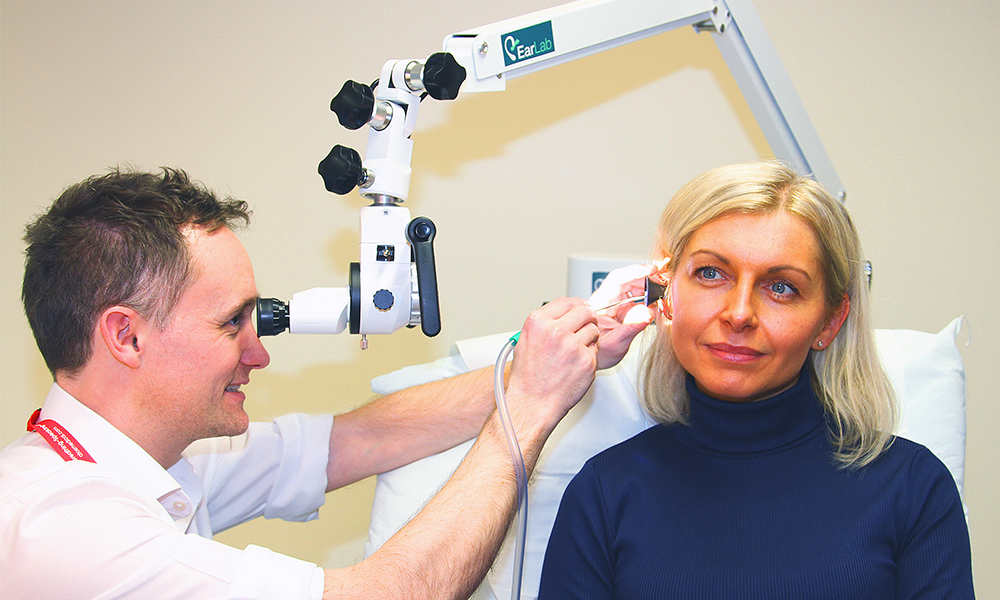
EarLab's David Walker clears a patient's ears using micro-suctioning guided by a surgical microscope - image supplied by EarLab
EarLab’s David Walker clears a patient’s ears using micro-suctioning guided by a surgical microscope – image supplied by EarLab

Subscribe to our free Wharf Whispers newsletter here

Earwax. Right now, if you’re reading this, it’s slowly, imperceptibly flowing out of your ears.

The movement of our jaws and muscles in our faces is usually enough to create a gentle current that renews and refreshes this essential substance, whose role is to protect and sanitise our ear canals.

However, for a range of reasons, this smooth and natural process can go wrong.

Drainage fails and build-up occurs, potentially leading to hearing loss, earache, tinnitus and even vertigo.

“I was seriously ill with leukaemia and in hospital for about eight months,” said Tim Galvin, co-founder and director of EarLab.

“Sometimes I would wake up during that period and I wouldn’t be able to hear.

“When I was up, the wax would shift and I’d be able to hear again. 

“I’m OK now, but one of the lasting side effects of that period is that my ears still block up quite regularly.

“While I was in hospital, a good friend of mine – David Walker – came to visit me.

“He happens to be an ear, nose and throat surgeon and he said I needed to get my ears micro-suctioned to remove the wax.

“He described the process as using a miniature vacuum cleaner to clear the ear canal.

“It’s the modern alternative to syringing – squirting warm water in there and hoping for the best – and it’s much safer.

“With the older technique, some people’s ears can be quite damaged by the pressure. 

“I couldn’t get them suctioned in hospital but, when I got back home I tried to get it done locally but had to travel for the procedure.

“When I had it done, it was instant relief.

“I hadn’t realised that my ears were basically dirty, I’d just lived with it.

“Suddenly I could hear clearly.

“There was no muffling, it was just fantastic.” 
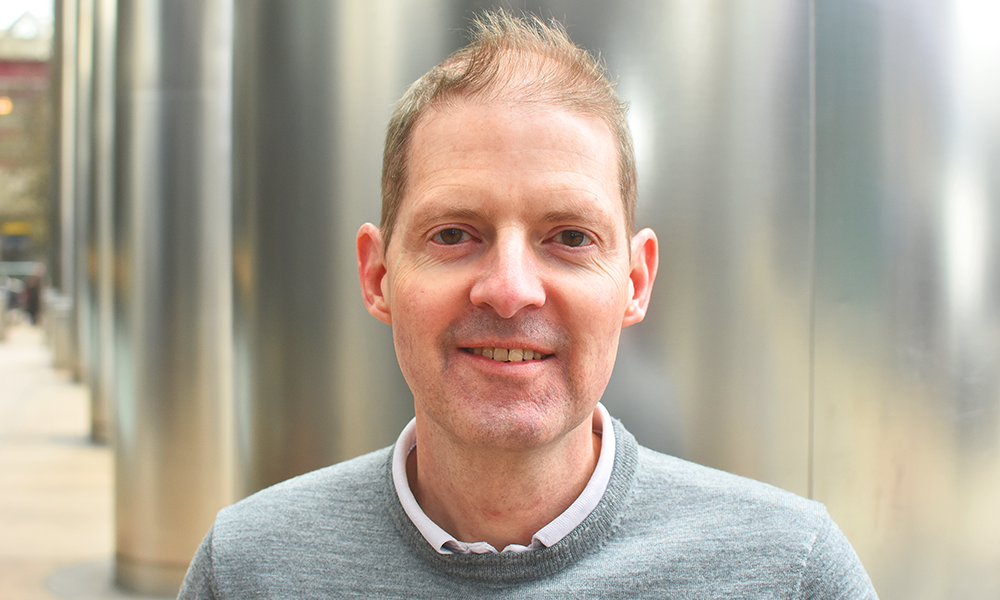
EarLab co-founder Tim Galvin - image by Jon Massey / Wharf Life
EarLab co-founder Tim Galvin – image by Jon Massey / Wharf Life

the birth of a business

A couple of months later, Tim saw David again at a barbecue and the two got talking.

The NHS no longer provides syringing as a core service and GPs tend to advise using drops to tackle troublesome ear wax, but this does not work for all cases.

In some areas referral for micro-suctioning may be possible but long waiting times can be involved.

“Together, we realised there was a gap in the market,” said Tim.

“David had the medical qualifications and the expertise, but no time to handle a side business. 

“I have a background in IT and experience in property, so we  formed a 50-50 partnership, starting in 2022.”

EarLab operates clinics in Haslemere, Guildford, Andover and Cranleigh.

It’s now set to open a branch at Canary Wharf in facilities at Cabot Place. 

“We’ve found people are happy to pay £85 for an instant service and that’s what we’ve built our business around,” said Tim.

“Hearing is really important. Without it people can feel really isolated.

“Some of our clients tell us they feel like they’ve got their lives back after the treatment.

“One elderly gentleman said he couldn’t hear conversations but, once we’d removed the wax, it turned out he didn’t need hearing aids after all.

“We have lots of wonderful stories like that.

“When you wake up in the morning and you can’t hear, it’s horrible – you don’t want to wait six months, you want to get it done as soon as possible. That’s what we offer.”

EarLab is not the only business to offer private micro-suctioning, but Tim believes the service it provides has some key benefits not found elsewhere.

“The first is that our clinicians use surgical microscopes to look inside the ears and guide the procedure,” he said.

“These give you the best possible view inside the ear canal. The equipment provides binocular vision at a very great magnification under a very bright light.

“It doesn’t touch your body at all and it doesn’t hurt in the slightest, but it allows the practitioner to see everything they’re doing and to have both hands free.

“We use a small funnel-like device called an ear speculum that allows us full access to the ear canal, which is curved.

“Together with the microscope, this enables us to be very precise with the suctioning and to ensure we don’t touch the ear drum, which is very delicate, and to make certain we remove all of the wax.

“With the average case, there will be some build-up of wax there, but it might not be completely blocked.”
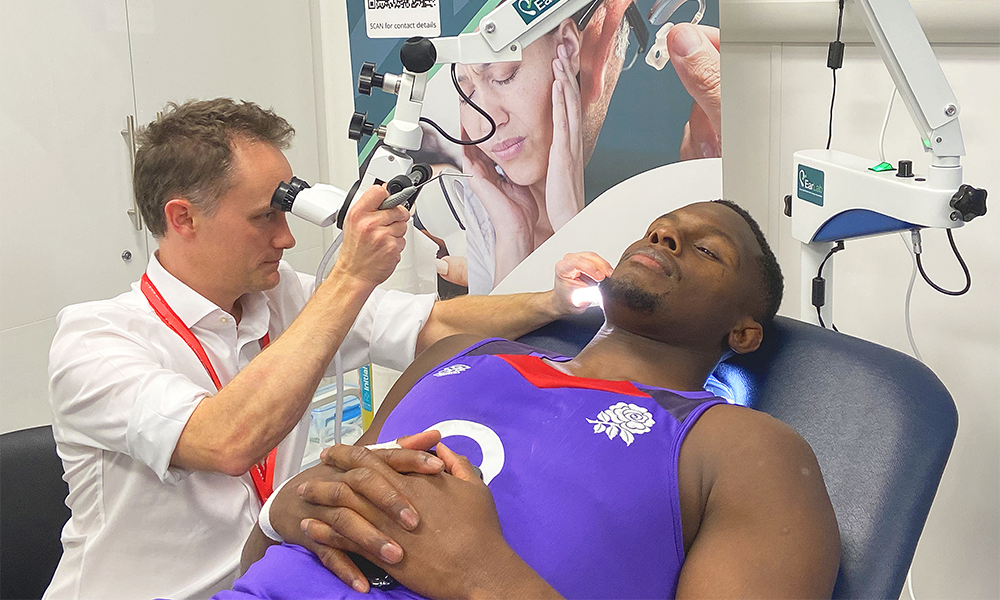
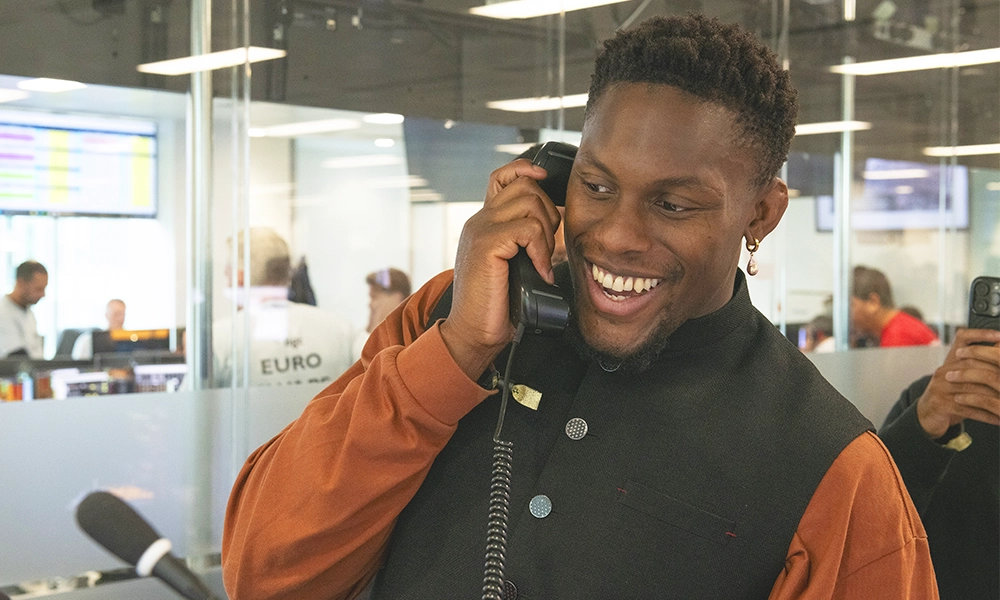
David clears England Rugby captain Maro Itoje's ears - image supplied by EarLab
David clears England Rugby captain Maro Itoje’s ears – image supplied by EarLab

why EarLab employs medical professionals

In addition to precision, EarLab prides itself on the level of expertise its practitioners offer, employing qualified nurses and doctors to carry out the procedure.

“We’ve grown the business organically, often expanding when we’ve found a clinician to work with,” said Tim.

“Our criteria have always been that we offer these services in an excellent medical environment with good transport links so people can access it easily.

“With David’s background and reputation, we’ll never cut corners on the service we provide.

“Having highly qualified professionals working for us means we can offer the complete procedure in 20 minutes because the people doing it are so experienced.

“We’ve expanded to Canary Wharf for two reasons.

“Firstly, I knew the area because I used to work here and also one of our existing doctors recently relocated to Lewisham and said he would love to host a clinic here.

“We prefer to grow like this and the demand is obviously there.

“When we started, we honestly thought a few hours a week would be enough, but that quickly became multiple days as word spread and people came.

“Friends tell each other and we have husbands and wives coming together to get their wax removed.

“Over the four years we’ve been going, we’ve had some people who have come 12 times during that period.

“It’s a very personal business and we have a phone line which is answered by a human being.

“Everything can be done online, but some people like to call and ask questions.

“We pride ourselves on being able to offer that reassurance.”
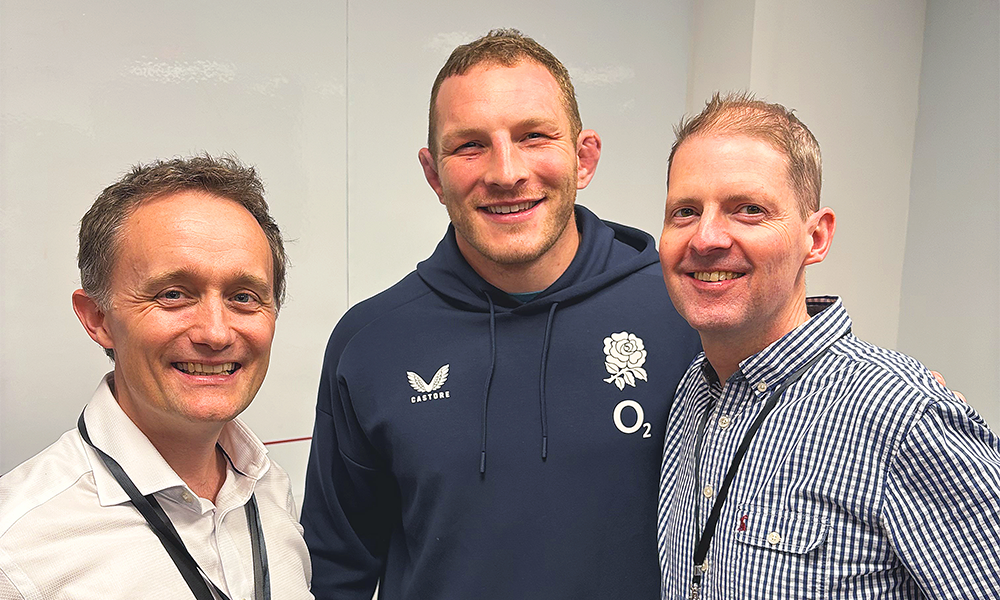
David and Tim with England Rugby's Sam Underhill - image supplied by EarLab
David and Tim with England Rugby’s Sam Underhill – image supplied by EarLab

clearing the ears of the England rugby squad

EarLab also has quite a significant claim to fame as it provides its service to the England Rugby Union squad, having been approached through the team’s full-time doctor.

“We’ve been to Twickenham three times now after David was asked to set up a temporary clinic there,” said Tim. 

“The first time, we were expecting 10 players, then 20 were listed, but we ended up doing many more than that during the course of the afternoon, including the likes of Maro Itoje and Sam Underhill. 

“Being able to hear clearly is an essential part of the game and they’d never had this done before.

“As a business more widely we have been surprised by the demand for our services, although there are things people do that can cause wax to build up.

“Normally, when your jaw moves during the course of a day it flexes the ear canal slightly and this creates a system where little flakes of wax are gradually expelled naturally and imperceptibly.

“That’s the natural order of things and, in a normal healthy person that’s exactly what happens.

“However, if you do anything to impede that process – using ear plugs or in-ear headphones – you interrupt that flow.

“The more you do it, the less wax can get out and the more likely you are to get a build up.

“It can get to the point where, when you’re putting the ear plug or headphone in, you’re pushing wax back down the canal towards the ear drum.

“We’ve also seen people who do a lot of swimming are prone to wax issues and others just have naturally narrow ear canals.

“Everyone is different, we’re all unique and just the shape of your anatomy can, unfortunately, cause problems for some people.

“Putting things in the ear like cotton buds is definitely not a good idea and, similarly, practices such as ear candling and using small plastic screw-like devices can be really dangerous.

“It’s so easy to cause damage with these methods because you can’t see what’s in there and you’re going in and experimenting.

“The ear is incredibly delicate and should always be treated with the utmost care by people who know what they’re doing using microscopes to guide them.

“At EarLab, we keep things simple.

“We just offer micro-suctioning and also expert advice because we can see what’s going on in the ear.

“We’re now right at the heart of Canary Wharf meaning people working or living in the area don’t need to travel to have this procedure. 

“As it only takes 20 minutes, it’s easy for people to have it done in their lunch hour or even a break.

“That’s plenty of time to take the medical information we need and then to complete the treatment.”

key details: EarLab

EarLab is set to run a clinic in Canary Wharf’s Cabot Place, initially on Wednesdays, with scope to expand depending on demand. 

A 20-minute treatment costs £85 and includes micro-suctioning in both ears.

Find out more about the service here

Read more: How SWR Business Direct delivers on carbon tracking for train travel

Read Wharf Life’s e-edition here

Subscribe to our free Wharf Whispers newsletter here

Subscribe To Wharf Life

BGC Group Charity Day raises record sum for good causes

Celebrity ambassadors answer the call at firm’s Canary Wharf office to help generate funds and honour the memory of 9/11 victims

Hugh Grant takes a call at BGC Group's Charity Day as an ambassador for the Press Justice Project - Image 
by Dave Benett/Getty Images for BGC Group
Hugh Grant takes a call at BGC Group’s Charity Day as an ambassador for the Press Justice Project – Image
by Dave Benett/Getty Images for BGC Group

Subscribe to our free Wharf Whispers newsletter here

“You start the day by thinking back to those terrible events, 24 years ago,” said Sean Windeatt, BGC Group’s co-CEO and COO as I ask him how the company’s annual Charity Day feels.

Occupying four floors of the World Trade Centre’s North Tower, BGC’s parent company Cantor Fitzgerald lost 719 employees in the 9/11 terrorist attacks.

From the firm’s London office, brokers listened as their New York colleagues used the squawk box to pass messages through to their families in what became their final moments.

In the aftermath, BGC created Charity Day as a memorial to honour colleagues, friends and loved ones.

Held on September 11 each year, the brokerage donates all revenues and broker commissions to charity, with celebrity patrons manning the phones and collecting contributions on behalf of the organisations they represent.

Since its inception in 2005, the initiative has raised more than $234million for good causes including a record-breaking $14million this year.

“Those thoughts of 2001 quickly pass because you start looking around at all the charities who are in attendance and you realise how wonderful Charity Day is,” said Sean.

“So much good comes out of it.”

Marking 20 years since its creation, this year’s event saw the likes of Princess Beatrice, boxer Anthony Joshua, former Chelsea captain John Terry, and Britain’s Got Talent star Amanda Holden.

Also attending were footballer Mark Bright, presenter Holly Willoughby and actors Ray Winstone, Lily James, Hugh Grant and Will Poulter, among many others.

Charities represented included Action Medical Research, Battersea Dogs And Cats Home, Beefy’s Charity Foundation, The Brain And Spine Foundation, Clean Herts Community, Cure EB, Dame Kelly Holmes Trust, HVH Arts and Haven House Children’s Charity.

This image has an empty alt attribute; its file name is JP84091WEB.webp
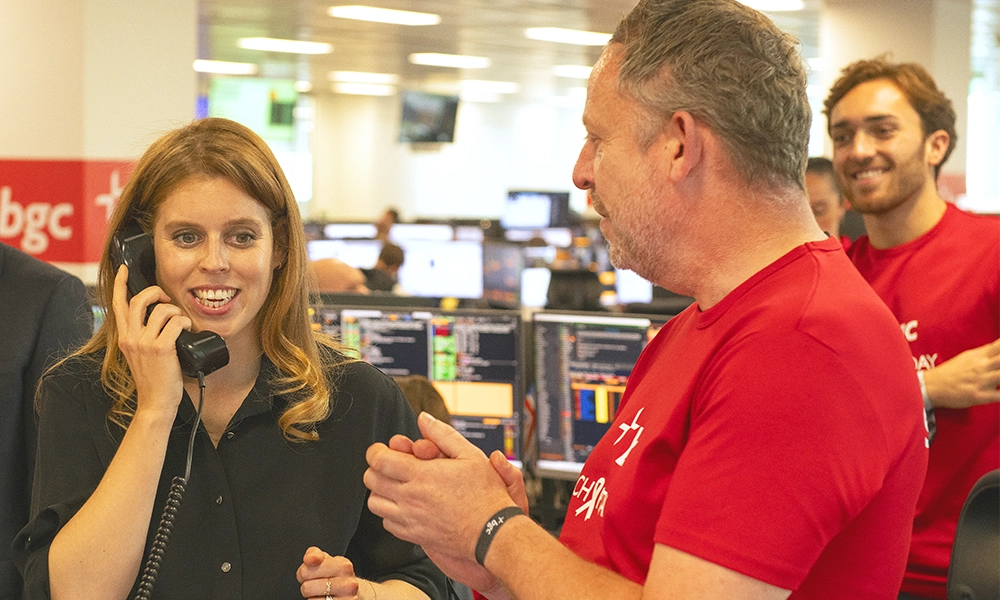
Princess Beatrice lends her voice to the initiative on behalf of the Cantor Fitzgerald Relief Fund, which supports people affected by acts of terrorism, natural disasters, and other emergencies - image by James Perrin
Princess Beatrice lends her voice to the initiative on behalf of the Cantor Fitzgerald Relief Fund, which supports people affected by acts of terrorism, natural disasters, and other emergencies – image by James Perrin

part of BGC’s DNA

“It has become a highlight of the year for me and all the traders,” said Sean.

“9/11 is a memory – something I’ll never forget because I was actually on the phone with one of my colleagues in New York when the plane hit.

“But then you think about how much benefit we’ve given to the charities over the years.

“It’s a great thing for the City Of London because everyone comes together – even our competitors who deal with BGC, as they recognise it’s for such a good cause.

“It’s wonderful to have the celebrity ambassadors, because they help us to generate more money – people really want to talk to them.

“But it’s also about inviting the charities themselves and seeing what’s being done with some of the money. It’s such a fulfilling  day.

“We aim to support around 40 larger organisations and at least 30 smaller charities with some local to Canary Wharf and east London.

“There are still around 100 people working for BGC who were here in 2001.

“There are around 1,500 people who have joined subsequently who weren’t working for the company on 9/11, yet every single one of them wants to be involved in this.

“They know they’re working a day for nothing and all they want to do is to make money for the causes we support.

“They’ve bought into this – Charity Day is part of our DNA, our culture.”

England and Lions rugby captain Maro Itoje attends on behalf of The Pearl Fund - image by James Perrin
England and Lions rugby captain Maro Itoje attends on behalf of The Pearl Fund – image by James Perrin

record-breaking fundraising

With markets busier again, despite the Tube strike, the latest Charity Day broke records with $14million raised for good causes this year.

Sean said: “We started off by making sure we looked after the families of those who lost their lives while working at the company on 9/11.

“Then, once we’d achieved that, we started to look at how we could carry things on and support other charities. 

“The start of Charity Day coincided with our move to Canary Wharf in 2005 where we remain to this day.

“We were in Barclay’s building until 2019 and then moved literally next door where we have our name on the building.

“I think this place is fantastic and we’re very happy here – I’m very much a supporter of the Wharf.”

Find out more about BGC Group’s Charity Day here

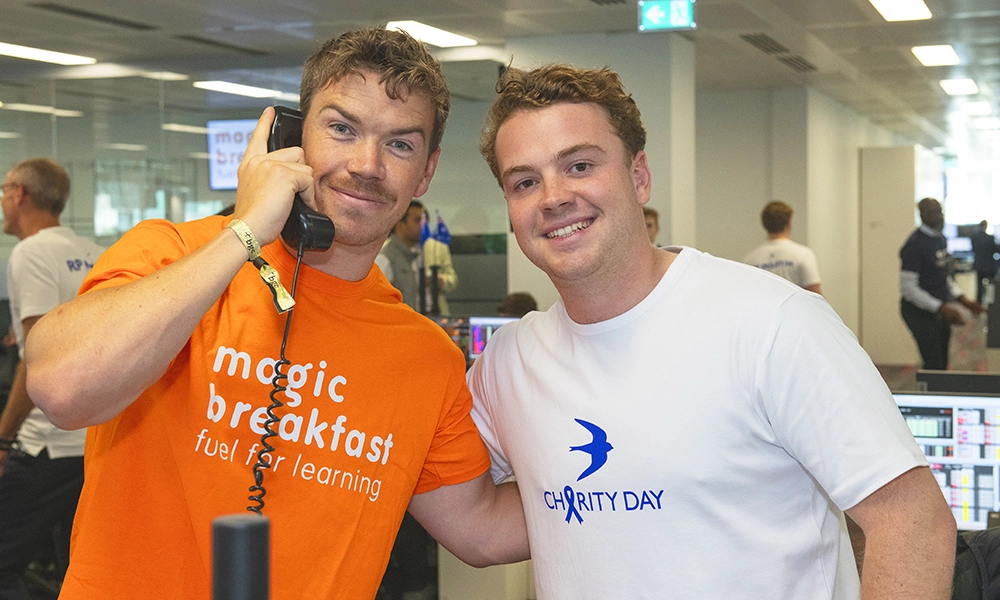
Actor Will Poulter works the phones on behalf of Magic Breakfast - image by James Perrin
Actor Will Poulter works the phones on behalf of Magic Breakfast – image by James Perrin

case study: Magic Breakfast

While the celebrities graft on the phones to generate as much cash and awareness as possible at BGC Group’s annual Charity Day, its impact extends beyond the steel and glass towers of Canary Wharf and out into the community.

One of the beneficiaries of this year’s event is Magic Breakfast, with actor Will Poulter attending as its ambassador.

The charity’s mission is simple – to ensure no child or young person in the UK starts the day too hungry to learn.

It both provides breakfasts directly to schools in a variety of different ways and campaigns for change to address child morning hunger.  

Emma Feltham spent a decade as a teacher and tutor before becoming an engagement partner at Magic Breakfast.

She works in east London to deliver the charity’s services and optimise its provision in schools.

expanding support

“We’re so grateful to Will and for BGC for including us because these funds mean we can recruit more schools and reach more pupils,” she said.

“We always want to expand to place support where it’s needed.

“We know there are so many benefits to tackling morning hunger in children and young people.

“It sets them up for the day – for example, you’ll see fewer kids leaving the classroom because of tummy aches and headaches. 

“We also see a knock-on effect where behaviour and concentration have improved and that has a positive impact on the rest of the class too as there’s less disruption to learning.

“We work across the UK and currently support more than 1,000 schools, providing over 300,000 breakfasts.

“We work in primary and secondary schools and pupil referral units – it’s a real pleasure to work in lots of different settings, because we know this is not just something which is needed in the younger years.”

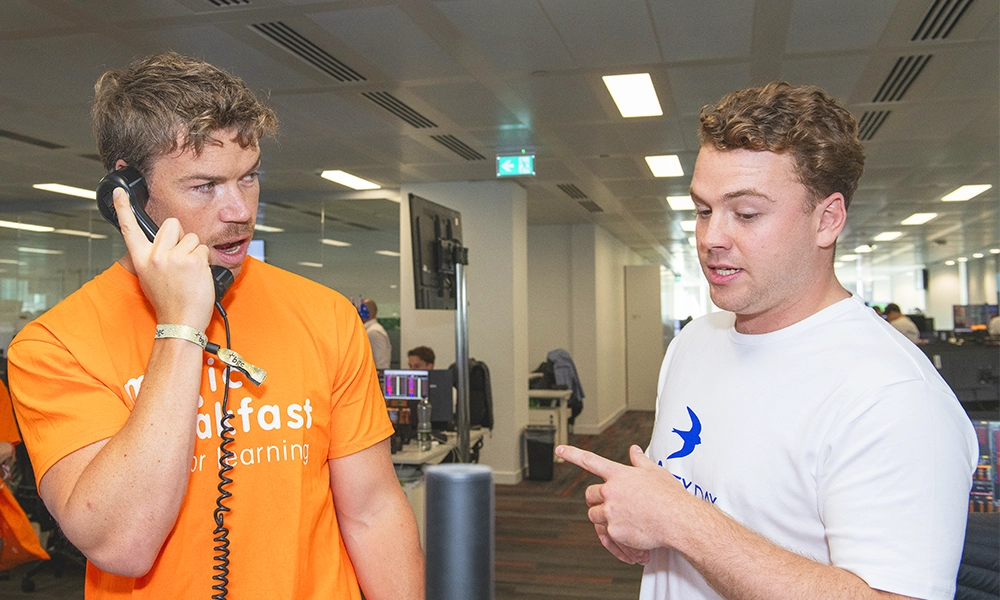
Will takes direction from a BGC trader - image by James Perrin
Will takes direction from a BGC trader – image by James Perrin

bespoke solutions

Due to the diversity of schools the charity works with, its services are anything but a one-size-fits-all solution and are instead tailored to fit the needs of the youngsters in the setting.

Emma said: “Different schools have different offers.

“We support lots of schools, from small ones with 30 pupils to those with 1,500. Logistically, it does look different in every provision.

“They might have a breakfast club, canteen provision or a grab-and-go option where the young people can take something to eat as they come in.

“We work with the schools to handle the logistics and put something in that works for them – in some of the older Victorian buildings, over three or four floors, that can be challenging.

“We’ve learnt over 20 years of providing these services that there are families who don’t qualify for support but who need a little bit of help with childcare.

“The other aspect of what we do is social – it may be that the children have a safe place to come and enjoy food in the morning as a nice start to their day.

“School can be quite full on, from the start to half-past three, it’s pretty much go-go-go.

“We provide an environment where they can come and hang out with their peers and also socialise with pupils in different year groups.

“For us it’s about making breakfast accessible to everybody in a stigma-free way, especially for working parents who may be doing multiple jobs to support their family.”

Find out more about the charity here

Read more: Cody Dock becomes a keeper of the River Lea’s stories

Read Wharf Life’s e-edition here

Subscribe to our free Wharf Whispers newsletter here
Subscribe To Wharf Life