
Boisdale Of Canary Wharf

Canary Wharf: How Ian Berry is set to create a new artwork from donated denim

The Poplar-based artist’s piece will be unveiled on the estate for World Environment Day on June 5
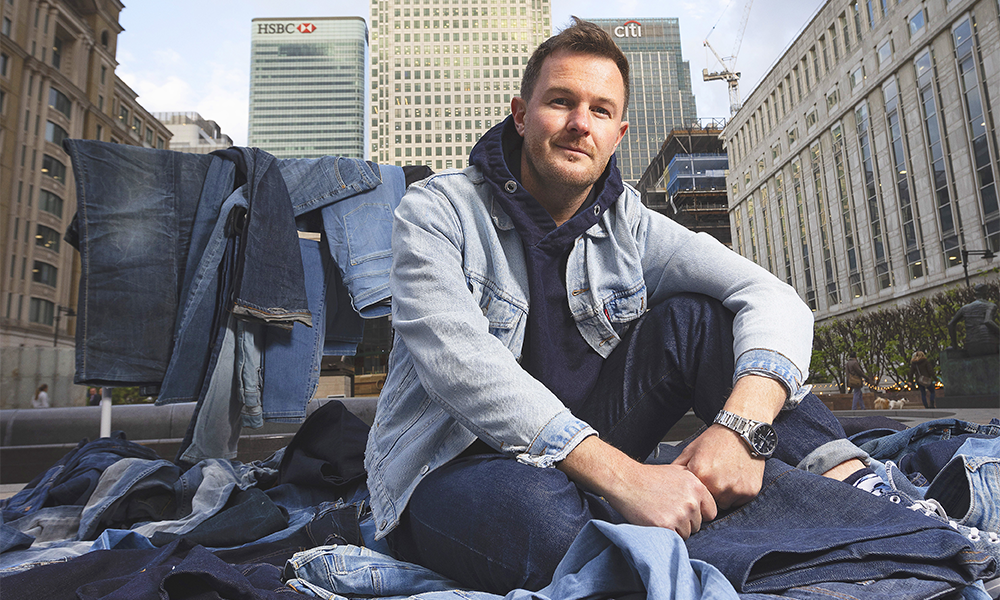
Artist Ian Berry, pictured surrounded by jeans in Cabot Square

Subscribe to Wharf Life’s weekly newsletter here

Artist Ian Berry wants his work to be seen in real life – so apologies to anyone reading the this.

These reproductions might give you an idea of the kind of pieces he creates, but 2D reproductions on paper or digital screens just don’t cut it.

Based in Poplar, but hailing from Huddersfield via High Wycombe, Australia, Sweden and the Netherlands, the constant in Ian’s life is also his medium – denim.

Cutting, layering and gluing, he creates images and installations using a palette of jeans, constantly pushing to make the material accurately depict all manner of scenes, lighting effects, substances and surfaces.

The reason you’re looking at one of the pieces from Ian’s Behind Closed Doors series is that he’s just embarked on a project in partnership with Canary Wharf Group.

With used clothes donated at Jubilee Place last week, he’ll be stripping out the denim and using it to create an artwork, which will be unveiled on World Environment Day – June 5.
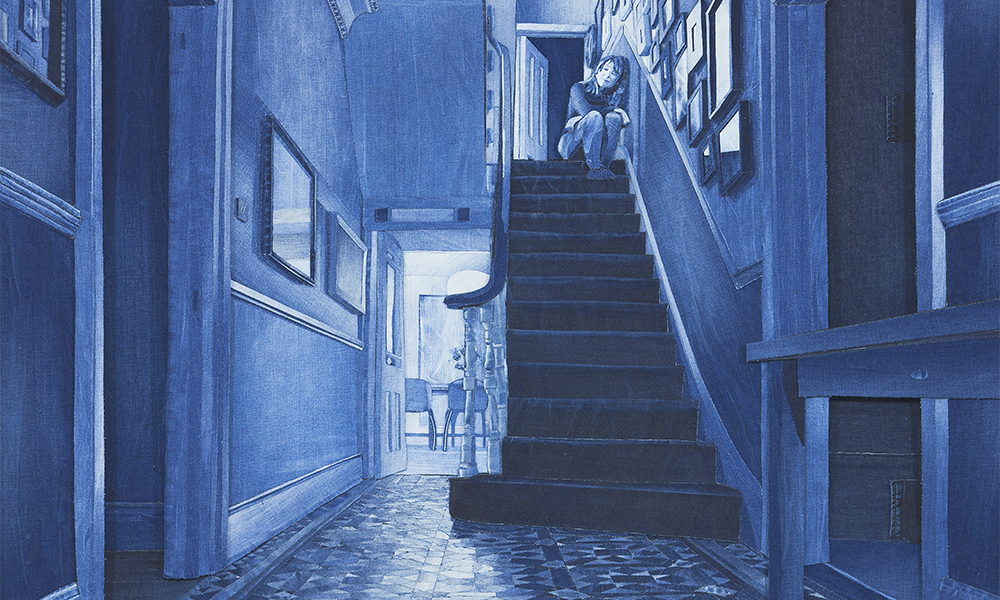
Detail for one of Ian's pieces for his Behind Closed Doors series
Detail for one of Ian’s pieces for his Behind Closed Doors series

“My work needs to be seen in real life to be understood,” said Ian, who works from a studio overlooking the Limehouse Cut canal.

“I don’t really feel like a real artist to those who haven’t seen my work in that way.

“I’d spent the pandemic having seven different shows in other countries – most of them solo and that was tough with all the quarantines and shipping issues.

“I’d just got back from Chile when I got an email from Canary Wharf asking about this project.

“At first I thought it would be great just because I could walk there rather than having to take pieces on aeroplanes.

“I walk through the estate when I catch the Jubilee line, so I thought it would be a good opportunity to get my work seen by more people in real life.

“But it also sounded interesting because of the estate’s sustainability credentials – it’s something that’s taken very seriously whereas some other places just use it for marketing. I’ve not spoken much about sustainability in the context of my work.

“Others have – as recycling or upcycling – but when I started 16 years ago it wasn’t the buzzword it is now.

“The project I’m doing with Canary Wharf Group reflects sustainability and the environment – denim’s terrible in its impact at the end of the day – but there are also good things happening in the industry.

“I don’t believe there’s a material that better reflects contemporary times, good or bad.”
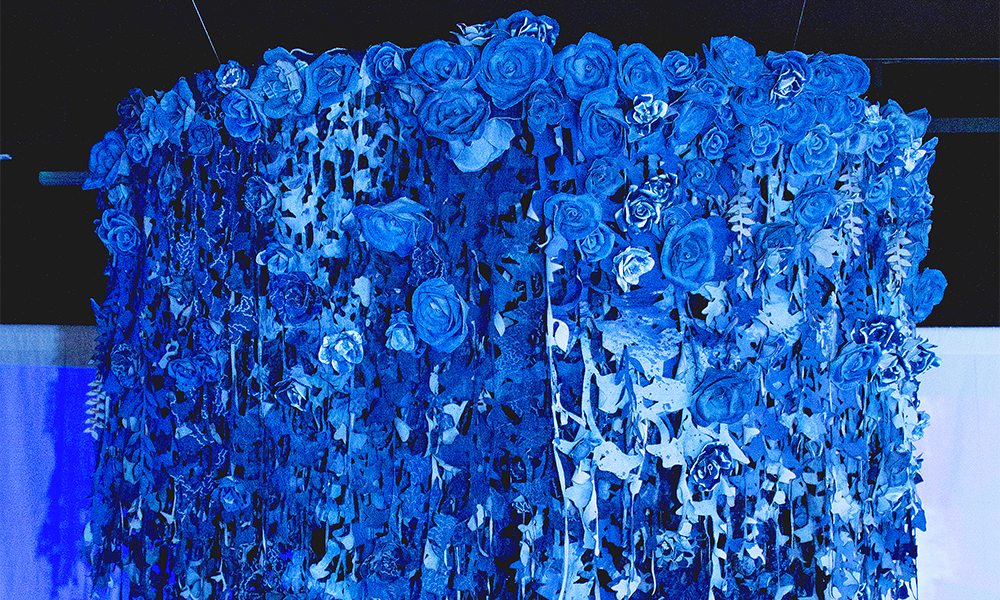
Detail from Ian's Secret Garden
Detail from Ian’s Secret Garden

That really is the crux of things for Ian. While we talk it becomes clear there are all sorts of tensions at work between the artist, his medium and the subjects he chooses.

He tells me denim stands for freedom, democracy and the West to the point where it was banned in Russia and Belarus, where it’s still worn symbolically by dissenters.

Then again, it’s also the clothing of capitalism, excess and greed, with designer jeans selling for astronomical sums.

“I’m interested in people and in the denim industry, in workers’ rights,” said Ian. “I know everyone in the sector and there’s a lot of greenwashing going on – a lot of lying and they even tell me what their lies and exaggerations are. It’s frustrating.”

While Ian’s pieces are necessarily shot through with such issues – how noble attempts to pass on clothing to do good can come unstuck as second-hand garments wind up flooding foreign markets or simply get dumped overseas, for example – the denim he uses is also, importantly, just the stuff he uses to capture the world.

“I use it literally as my paint to represent contemporary life and issues you see every day,” he said.

“I have struggled for 16 years to know what to call them –  they’re not paintings, they’re collages, but using just one medium.

“In some there are 16 layers of denim, so they are very sculptural, 3D pieces, and they can be very effective, with the texture of the denim as well. All that gets lost if people look on their phones or laptops.

“The magic in my work is finding the gradients in the denim, the fades, the cat’s whiskers – where it goes from indigo to lighter shades. You can connect them together and get quite a photo-realistic piece.

“Sometimes I achieve that too well and people don’t realise it’s jeans, but you need that ‘aha’ factor for people to connect.

“It happens in America especially, where people look for a while and then get closer and closer and, at about 50cm away, they say: ‘Oh, my God, it’s blue jeans’. I don’t want it to be seen as a gimmick, though.

“I hope people appreciate the craft, the love and attention to detail and they are amazed that the piece is made out of denim.

“I do set myself technical challenges – how to depict shiny, metallic objects or water using this matt material. But the main thing is the subject.

“With the Behind Closed Doors series I wanted to depict this busy city we’re living in, which can be lonely. 

“That really connected with people – two out of three were saying: ‘Wow, that’s me’ – and it was kind of special.”
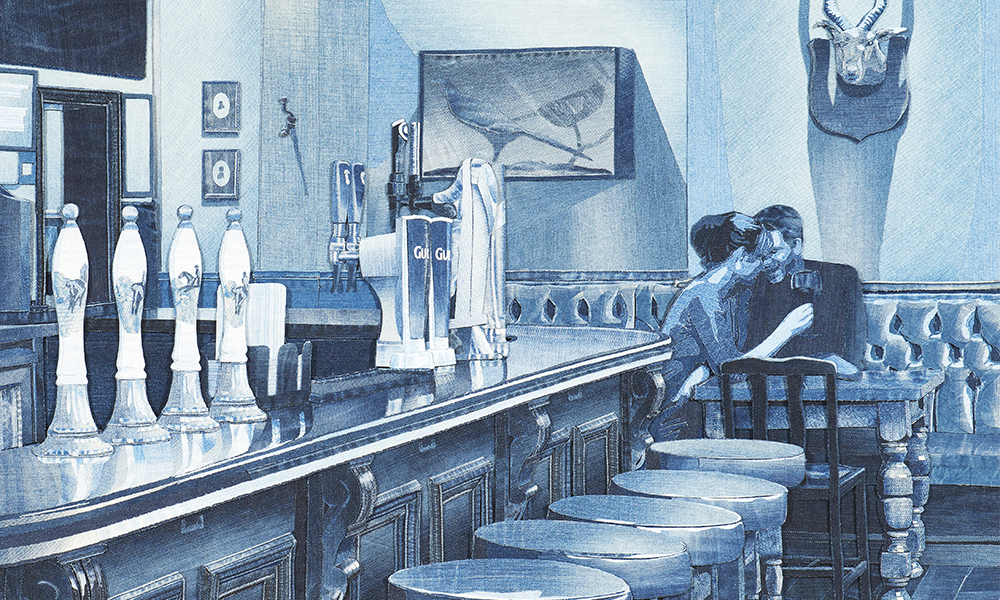
Detail from The Game by Ian Berry

Ian, whose granddad was from east London, said he wasn’t sure what kind of piece he would create from the jeans donated in Canary Wharf.

He said: “Hopefully the piece I create will cause discussion and make people think. 

“I can’t give too much away at this stage in case the idea changes but I think it’s going to have an element of my hanging Secret Garden, which turns plants into cotton, into jeans and then back into plants again. 

“There’s a nod to sustainability in that – it’s nice because we can make something permanent out of the jeans. 

“If you wear a pair for 10 years and then throw them away, it might be just about OK, but now we have a world where people buy them, wear them two or three times and throw them out.”

Ian’s piece will be added to the Wharf’s permanent art collection.
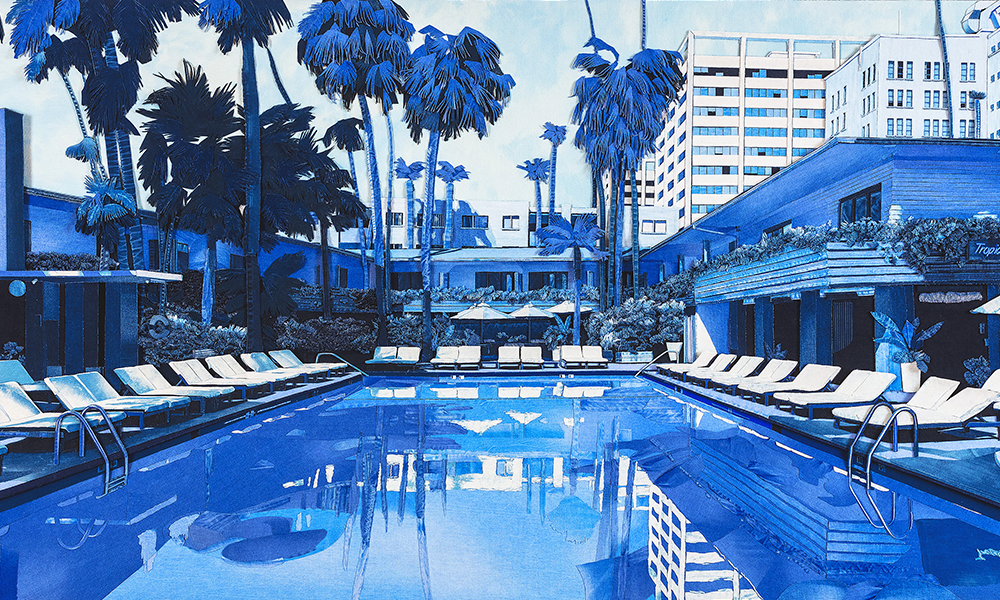
Detail from The Roosevelt, LA, by Ian Berry

Read more: Find out where to make your own cloth with Freeweaver Saori Studio

Read Wharf Life’s e-edition here

Subscribe to Wharf Life’s weekly newsletter here

- Jon Massey is co-founder and editorial director of Wharf Life and writes about a wide range of subjects in Canary Wharf, Docklands and east London - contact via jon.massey@wharf-life.com

Subscribe To Wharf Life

Poplar: How Felix’s Kitchen is cooking thousands of meals for those in need

Food charity is looking for more volunteers and donations so it can help feed more people

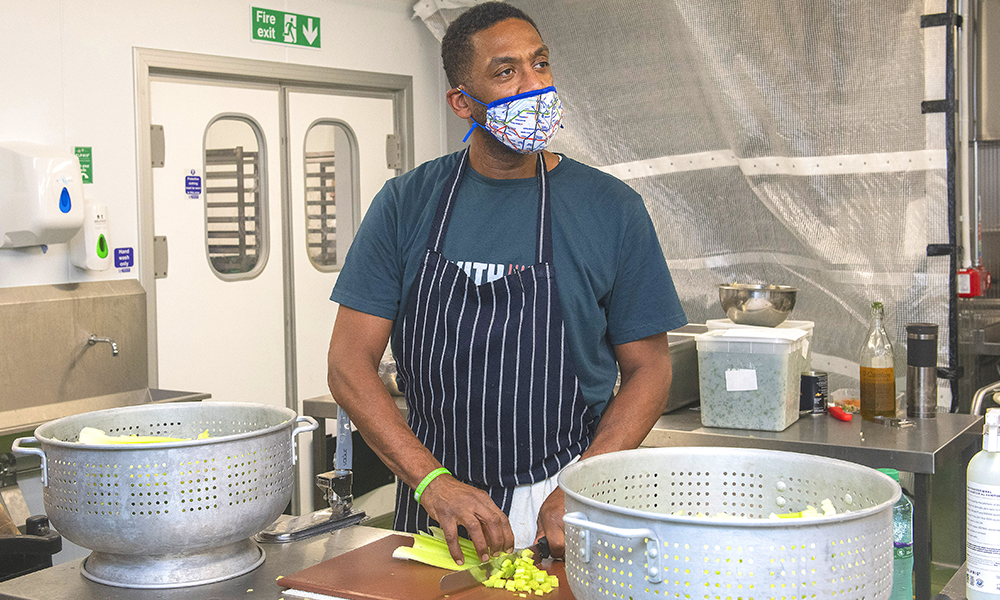
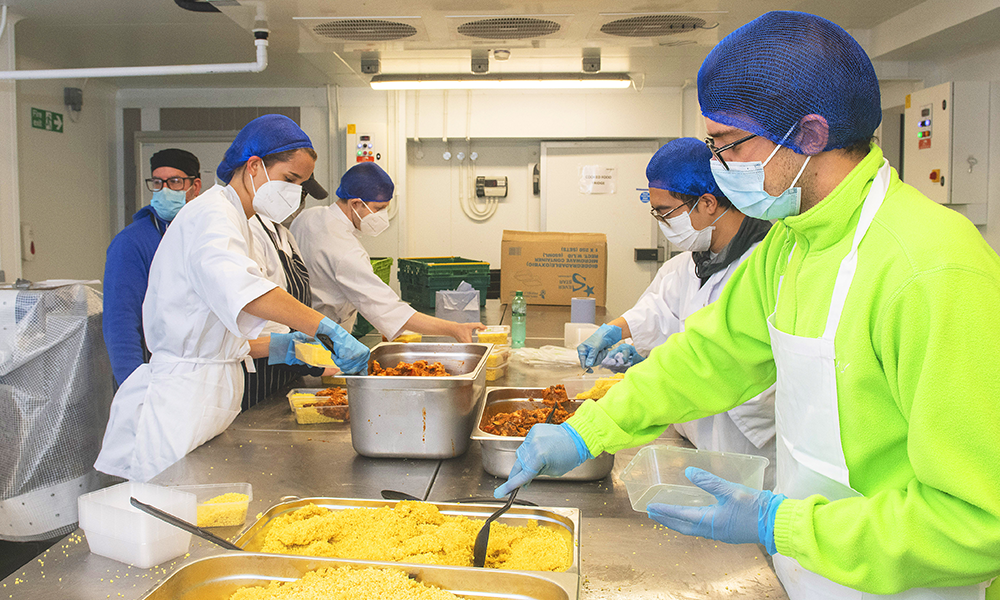
Staff and volunteers portion up meals at Felix's Kitchen
Staff and volunteers portion up meals at Felix’s Kitchen – image Matt Grayson

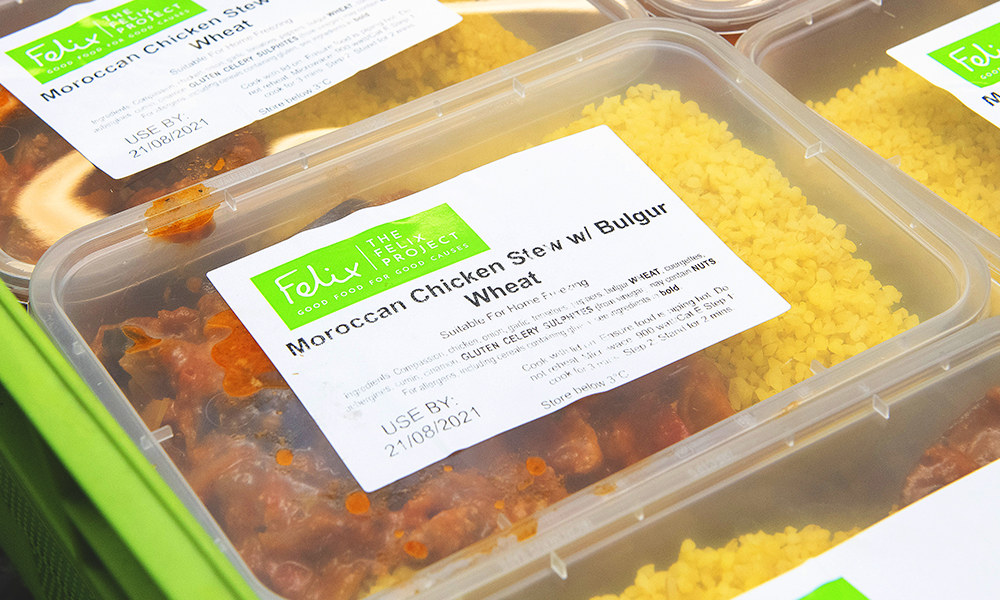
Felix’s Kitchen does an incredible thing. Recently opened on an unassuming industrial estate in Poplar the 4,400sq ft facility is ramping up production with the aim of eventually producing 6,000 meals a day using surplus ingredients from supermarkets, wholesalers and restaurants – most of which would be thrown out as they near their sell-by date.

Those meals are then distributed to people who need it for free, via a network of organisations and charities across London. 

People are hungry in the capital and cannot afford to buy food. The hard work of staff and volunteers at the kitchen goes some way to addressing that, but The Felix Project – the largest food redistribution charity in London, which operates the kitchen – expects a spike in demand in the autumn as furlough comes to an end and potential benefit cuts bite.  

It’s 2021. The UK was the fifth largest economy in the world in January.

That such organisations exist at all is a damning indictment of those managing our society.

That more and more people are expected to need their services is a shameful failure of that governance.

But there are mouths to feed right now and those doing the hard practical work to achieve that end deserve our support and admiration for spending their time on this planet compassionately helping others. 

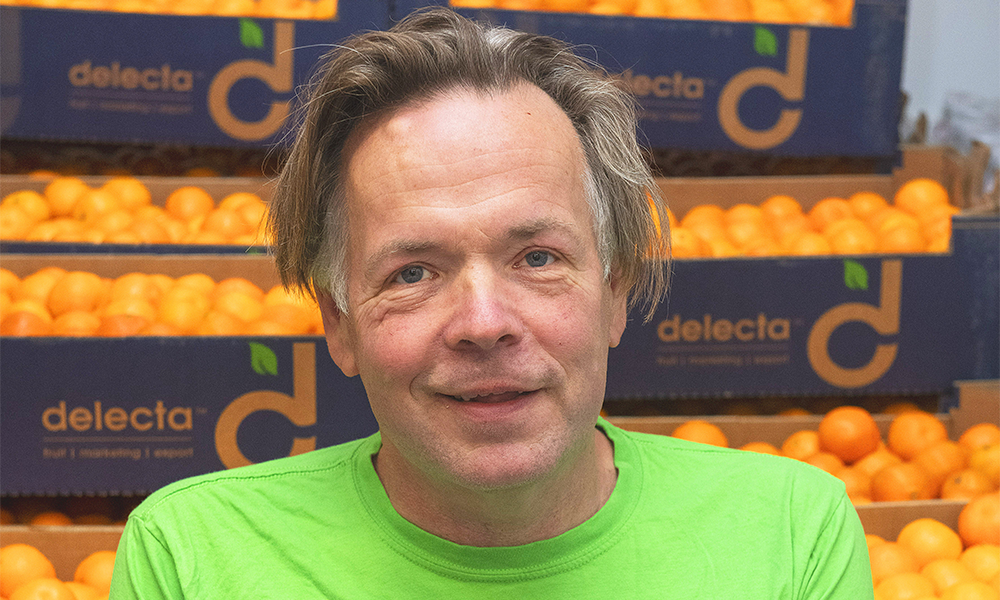
Head of Felix's Kitchen Leon Aarts
Head of Felix’s Kitchen Leon Aarts – image Matt Grayson

Take Leon Aarts, for example. Having “rolled into hospitality by accident” at age 19, the Dutchman became a chef, rising through the fine dining world to win Michelin stars before moving to London to start a high-end food wholesale business for top restaurants in the capital. 

A change of direction followed in 2008 when he decided to close that business and create a charity with an initiative that saw diners pay 15p extra in a restaurant to feed a child in a developing country. 

He went on to cook for thousands of migrants in the camps at Calais. 

Just before lockdown, he set up Compassion London to cook for those without food in the capital as the pandemic hit, eventually using Wembley Stadium to produce around 5,000 meals a day.

The team create meals out of donated food
The team create meals out of donated food – image Matt Grayson

Having joined up with The Felix Project, right now he’s in Poplar, cooking with 12 staff and a group of volunteers as head of Felix’s Kitchen – located next door to parent charity’s latest warehouse and distribution centre.

“It’s terrible that people live in food insecurity, but we can’t let anyone go hungry while those who have the resources are figuring it out – whether that’s the Government or companies,” said Leon. 

“I think we can solve this problem if we work together and it’s a disgrace that so much perfectly good food goes to waste.

“The Felix Project gets surplus food from more than 500 businesses, whether that’s small shops or Amazon, Hello Fresh and Ocado. 

“It’s really good produce, often close to its ‘use by’ or ‘best before’ date, which means you can’t sell it any more. But that doesn’t mean there’s anything wrong with it. It’s then distributed to almost 1,000 charities all around London who give it to people who live in food insecurity.

“For example, many workers just before Covid were made redundant – people who were living from pay cheque to pay cheque. 

“You can see, as you drive round east London, that so many people fall outside the system, and we allow it to happen – with ridiculous wages, not giving people any sense of security. 

“Many people in the capital get paid really, really, well, but a lot of people don’t – it’s almost impossible to live in London on a wage of £7 or £8 an hour.

“A few weeks ago I had a charity kitchen doing what we do here and, in talking with The Felix Project, we found funding to create this purpose-built kitchen in Poplar – we’re building up to do 6,000 meals a day, but it takes time.

“I have very experienced chefs, so they look at what comes in and they make meals out of it. We always try to do a variety – it’s crucial we do both nutritious and delicious meals.

“That’s very important to me because when people are not in a very good state, they tend not to eat so well – if you have mental health challenges, eating is not at the top of your list of priorities and they don’t even realise it, so we will be working with nutritionists to help us improve what we produce. We always make sure that there’s protein, whether meat, vegetarian or vegan.

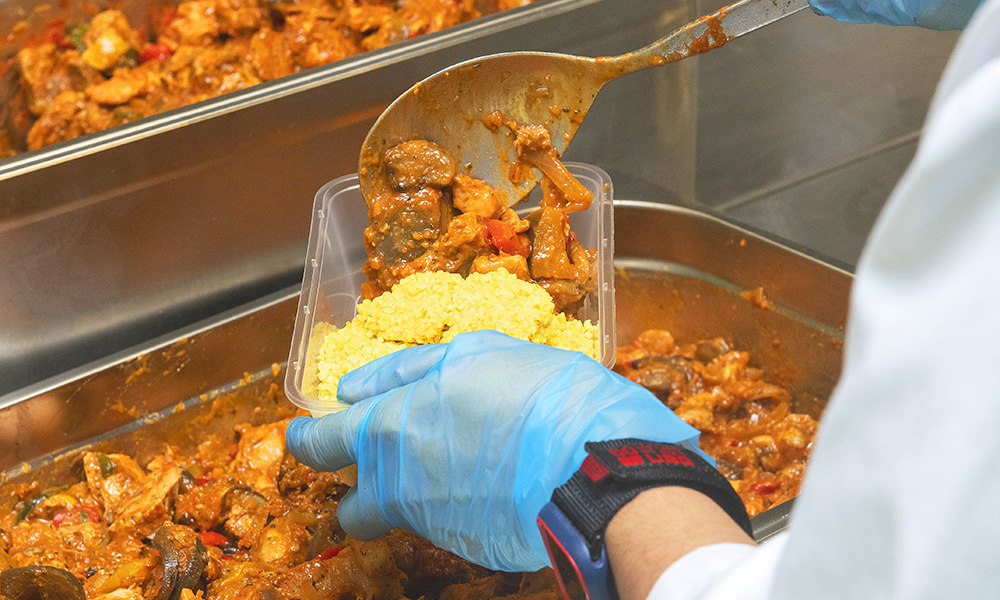
The meals are then distributed to charities
The meals are then distributed to charities – image Matt Grayson

“We’re also guided by the surplus we have – one of our remits is that no food should go to waste, which is a very interesting challenge.

“Right now we are actively looking for volunteers, especially local people, because we serve the local community.

“Also, if local companies have surplus food, then they should get in touch with us because we don’t want any food to go to waste

“We can put it to good use, re-purpose it and give it to the people who need it. We have the resources for that – warehouses, where we can collect the food, sort it and turn it into meals.

“We get black crates from Amazon, for example, that have all different things, and we separate it out. If you’re a small business, then give it to us rather than put it to waste.

“Bigger companies that produce food for supermarkets often have a lot of waste – often it’s not their own fault. For example, if it’s going to be good weather, a firm might make a lot of barbecue packs and then it rains and suddenly they don’t sell anything. But if they don’t put it in the bins and bring it to us we can do something with it. 

“We talk to our suppliers, of course, to ask if they have any of a particular ingredient but we’re especially short of staples – rice, pasta, tins of tomatoes – that sort of thing.”

The Felix Project was created in 2016 by husband and wife Justin and Jane Byam Shaw, inspired by the compassion of their late son Felix, who died suddenly from meningitis in 2014. 

You can find out more about the charity and volunteering in east London online at thefelixproject.org.

Read e-editions of Wharf Life’s print edition here

Subscribe to our regular newsletter here

Subscribe To Wharf Life