
Restoration of the Frederick Kitchen for use as the roof of a structure dedicated to local history involves detailed wood and metalwork
Subscribe to our free Wharf Whispers newsletter here
When Cody Dock’s Heritage Pavilion opens later this year, the exhibitions it displays will be sheltered by a tangible link to the area’s past.
The structure will use the fully restored Frederick Kitchen lifeboat as its roof, protecting visitors from the elements.
One of the last boats to be built at the Thames Ironworks, just downriver from its new home, the vessel’s story includes a period of three decades where it was used to rescue imperilled mariners off the coast of Wales.
We’ll be taking a deeper dive into the boat’s history later this year when the new facility opens on the banks of the Lea.
But before the paint goes on and it’s flipped over and hoisted onto the pavilion walls, we wanted to take advantage of this point in its history to celebrate the many different skills being used to restore and preserve the vessel ahead of that next chapter and feature the craftspeople engaged in the work.
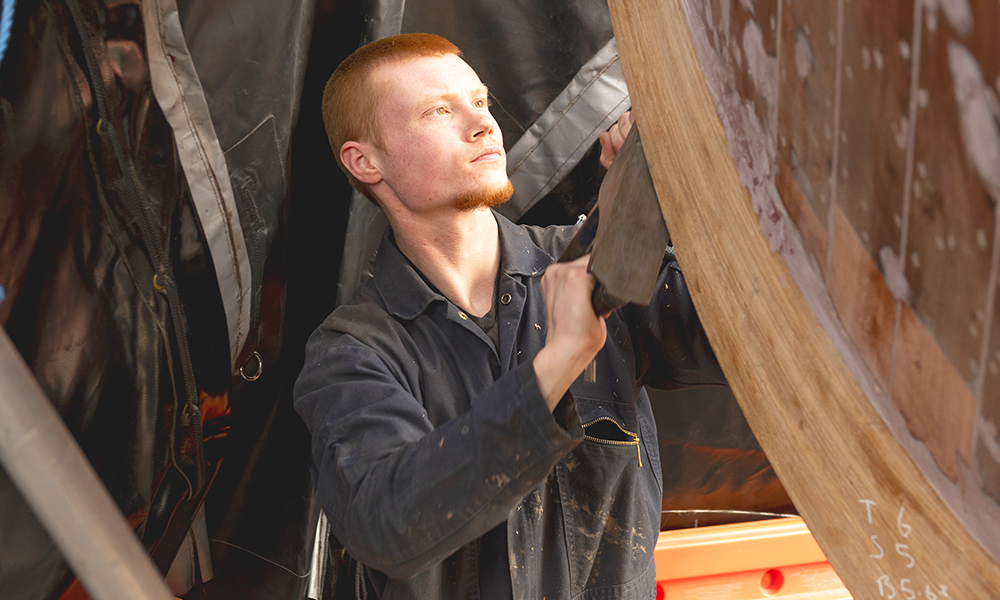
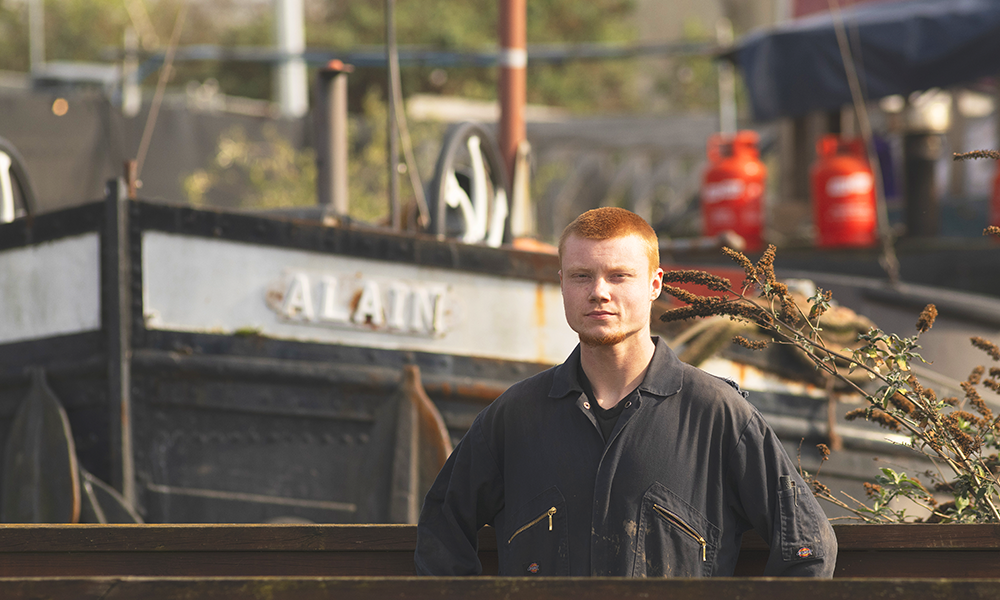
Tom Myers is overseeing the project as restoration manager and has been working on the Frederick Kitchen for two years.
“I grew up on an old Dutch barge in east London, moving between various waterways,” he said.
“When I was about eight years old, we settled in Canning Town at Cody Dock on the River Lea.
“Living on the water, I fell in love with boats.
“I got into woodworking and decided to become a carpenter when I left school – naturally I went towards working with boats and that’s what I’ve stuck with.
“Carpentry gives you a really good base for that – it helps you understand materials, how they should be engineered and used.
“I love working with timber and different kinds of wood.
“Over the past 18 months I’ve been working on the Frederick Kitchen full-time and it’s become my life – it doesn’t feel like a job, it feels like a thing I have to do.
“After I studied boat building, I had a lot of knowledge from my course, but not a lot of confidence.
“With this project, everything seemed really daunting at first, but I’ve just had to go for it and I’ve learned a lot.”
from shipwreck to a roof
Made primarily from a type of mahogany, the Frederick Kitchen was crafted at the absolute zenith of wooden boat building on the Thames and also features elm, oak and now Douglas fir in her construction.
Tom said: “This project isn’t about restoring it to put it back in the water – it was about taking a shipwreck and turning it into a viable roof for the pavilion.
“It had essentially been left to rot and was too far gone to bring back to sailing.
“You’d be better off just building a new boat.
“When we started, there were plants growing in its timbers and you could see daylight though parts of the hull.
“But this is how it can be preserved for people in the local area in a way that shows off how it was built, providing a direct link to history.
“There’s also an echo of the Vikings who once lived on this side of the Lea – they used to use their old boats as roofs for buildings.
“What we’re doing is using traditional boat building techniques to make a waterproof shell to protect the building beneath.
“When we’re finished, the boat’s exterior will look very much as it did when she was in service as a lifeboat, with red, white and blue paint and an RNLI badge.
“Inside you’ll be able to see the layers of history where we’ve revealed parts of the structure that would originally have been boxed off.
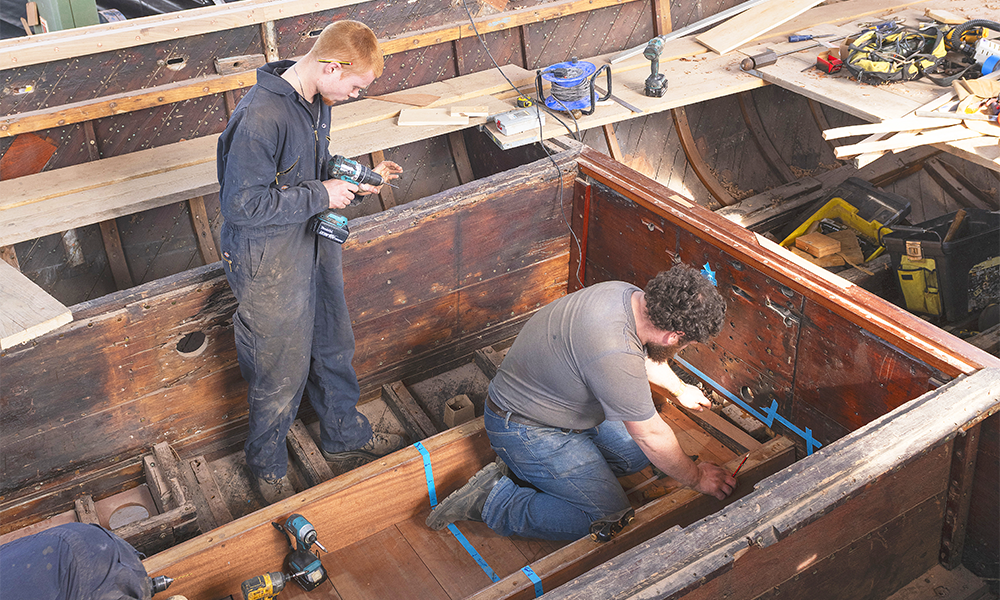
“For example, the boat has been built with two layers of planking for strength and to reduce weight, which we’ve revealed so people can see how it was put together.”
no right angles
Originally weighing around 10 tonnes, Tom and the team have removed the boat’s cast iron keel to drop the craft’s mass to a more manageable 4.5 tonnes, replacing the metal with a wooden replica.
Tom said: “We used Douglas fir to make a piece that only weighs about 120kg.
“It was probably my favourite part of the project so far.
“We ripped the tree right down the middle with a huge band saw, seasoned the two pieces then flipped them round and glued them together for extra strength.
“We also replaced the cutwater, which is at the front of the boat and helps it glide through the water.
“Traditionally you’d look for a piece of timber that had the right curve or use steam to bend a piece.
“I decided to build a mould in the right shape and then used oak structural veneers, laminated together, to create the shape.
“It was very difficult to do, but it’s also one of the most satisfying things I’ve done.
“Finding shipwrights like Laurie and Lucian to work on the project has also been great.
“The tools might be the same or similar, but their approach to working with wood is different.
“If you’re making a cabinet as a carpenter it’s all straight lines and perfect fits.
“But the Frederick Kitchen is all curves – there are no right angles anywhere.
“You can do as much maths as you like but in the end you have to learn the art of making things fit.
“We’ve been cutting out rotten planks and replacing them with new timber, scarf-jointed to the old wood. We’ve even made our own bolts from bronze.
“The techniques used to build the Frederick Kitchen originally were pretty much as good as it got in terms of using wood to make boats.
“But nobody thought people would want to see the construction – the interior would have just been grey all over.
“Restoring it can be tough. No matter what modern equipment you have, working on an old boat is challenging.
“They weren’t built to be restored. You’re going to hurt your knees, your back.
“It’s a physical task in some quite demanding ways.
“You’re squeezing into awkward positions and then having to do precise work – finding timber that looks OK and then discovering it’s rotten under the surface and there’s a lot more to do than you thought.
“Knowing when to stop is a big part of a project like this, but the whole process has been really enjoyable and, because it’s wood, it will always need maintenance, so I have a job for life.”
Scroll down to meet some of the other people helping with the restoration.
Visitors to Cody Dock’s forthcoming Spring Forward event on April 18, 2026, will also be able to catch up on the progress of its Heritage Pavilion project.
key details: Spring Forward at Cody Dock
Cody Dock’s Spring Forward event is set to take place on April 18, 2026, from noon-6pm.
The day will feature workshops, stalls, live music, performances, exhibitions, a plant sale, free bike repair and refreshments from the new on-site cafe and bar.
You can find out more here
restoring the Frederick Kitchen
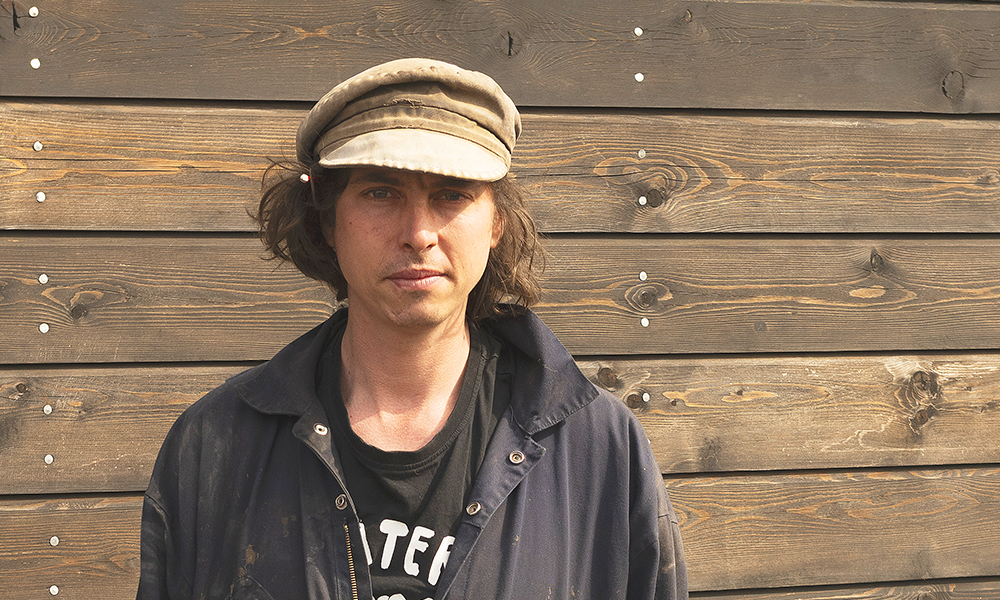
LAURIE WATKINS
shipwright
“I grew up in Essex on a little river with little boats,” said Laurie, who’s been helping to restore the Frederick Kitchen for a little under a year.
“Now I live in London on a barge, just upriver from Cody Dock.
“I generally work on Thames sailing barges and was refitting one in Kent prior to coming here. I didn’t always want to be a shipwright.
“My dad had a keen interest in boats through his dad and he encouraged me when I was a child.
“But, like most young people I rebelled against my parents a bit. I think I absorbed some things, though and came back to it.
“I didn’t go to college or do official training programmes, I just saw boats and would hassle the owners and builders to let me come and do mundane tasks so then they’d let me help with more interesting bits.”
Laurie’s extensive experience has seen him maintain and sail some of the Thames’ most iconic vessels including working on the Cutty Sark in Greenwich.
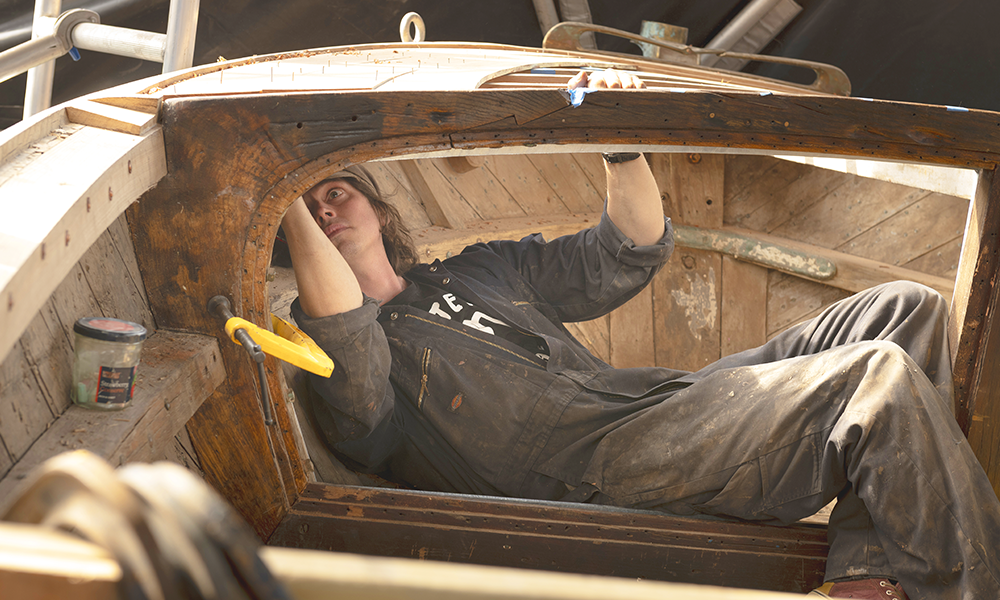
“We are lucky to rebuild these boats in an age when we have a lot of mechanical advantages, such as power tools,” he said.
“They relieve a lot of the strain and stress, which can be challenging.
“When I started at Cody Dock I was mostly repairing and replacing planks on the boat.
“The majority of it is still original and we’ve tried to retain as much as possible, but if you just patch things up now, you’d have to replace it in a few years.
“Nobody wants a roof that leaks.
“Because it’s not going back in the water we’re able to restore it sympathetically in line with how it would have been on the day it was built.
“We don’t have to worry about bringing it up to the regulations you need to sail a boat.
“We’re getting to the point where there are now more bits going back into the boat than there are coming out, which is good.
“Initially the shape of it didn’t look right to me but after months of working on the project I realised that the way it had been built was really quite clever.
“The knowledge they had when they were building these boats more than 100 years ago was vast compared with what we know today.
“If you make too many changes you’ll lose the way the boat was made.
“It’s about preserving all the weird little things in the original and working out why they were done that way.
“What I really enjoy is solving those puzzles from the past.
“The amazing thing about boats is that building and maintaining them is such a vast thing – there’s woodworking, metalworking, rigging and then sailing them or operating them using motors.
“It’s been great to welcome kids of primary school age to see what we’re doing, but I wish this sector was presented to more youngsters as a career option.
“It’s perfect for certain people.”
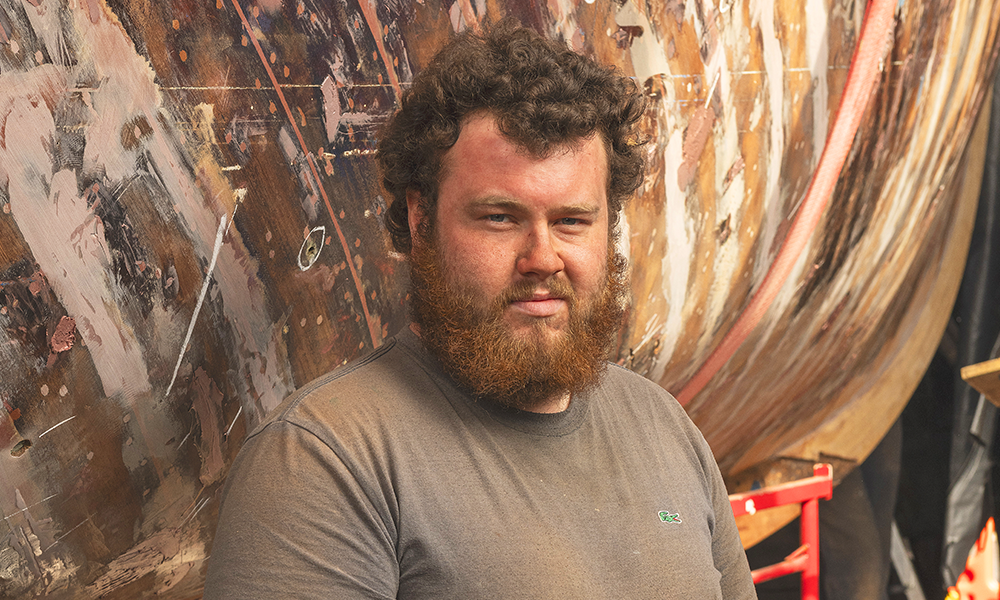
LUCIAN HAWKES
shipwright
“I was apprenticed for four years in Maldon, Essex– the town I was brought up in – learning the rudiments of the trade in a little boatyard there,” said Lucian.
“During that time, I spent some of it with Laurie, working on the Cutty Sark.
“Then, after my apprenticeship, I started working for myself, mainly in Essex and some in Kent.
“I’m now back in London, having a fantastic time working on this heritage vessel.
“I became a shipwright because of time and place.
“I’ve always been incredibly appreciative of Maldon and its strong involvement with the craft of looking after boats.
“We have our own Thames barges there and I fell in love with the romantic idea of playing with wood all day.
“I’ve been on this project for three weeks as I was aware there was a bit of a time crunch and the work has been very varied and most enjoyable.
“I was asked to rectify the aft deck where we have to reattach the remaining deck beams – oak for the most part.
“They are half-dovetailed in and now we’re onto the planking, which is a lovely member of the mahogany family called utile.
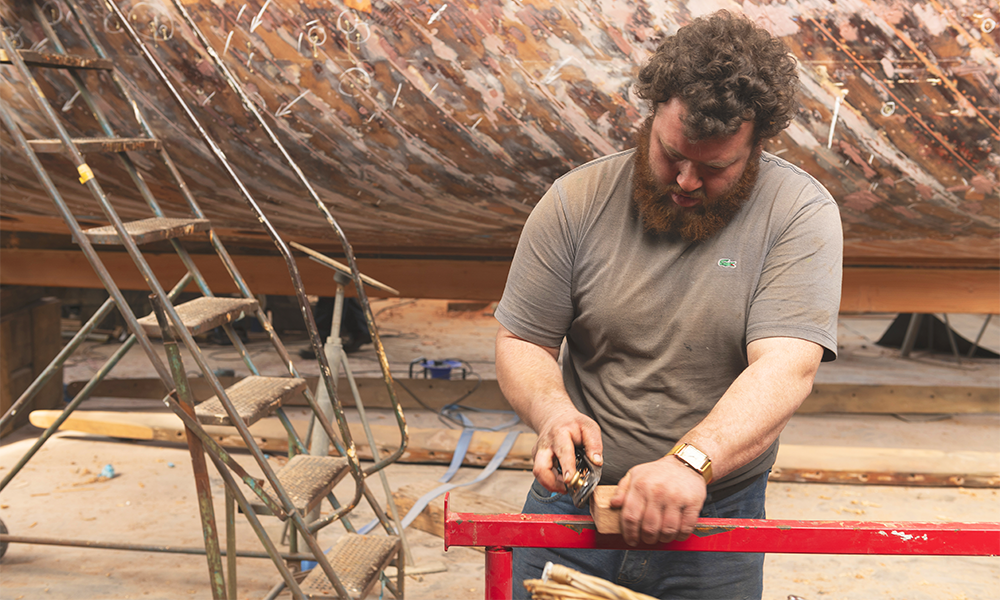
“It’s quite interesting, because, due to the sweep or curve of the planks, they render straighter as you go through, so you don’t have any which are short, meaning there are no weak points.
“I like the idea of helping to repurpose something that was used 100 years ago.
“It’s like a palimpsest – you can put layer on layer over each other, whether for practical or community purposes.
“When you’re doing a project like this you try to make it look as though you were never there.
“It’s not for the faint-hearted, but the preservation of these skills and trades can only be done from person-to-person.
“You can read every book under the sun, but you’re not going to be a shipwright at the end of it.
“There’s a great deal of knowledge here – that’s why I like working with Laurie.
“He’s ever so good at what he does and he’s very involved with boats in the local area.
“That does it for me.
“I would argue that the learning starts when you’ve got your qualification.
“It’s very interesting on a project like the Frederick Kitchen to try and work out how the people who built it did what they did.
“It’s important not to leave your own stamp on things too much because they had generations of experience and a bloody good idea of what they were doing.
“You find there was always a very good reason for doing it the way they chose to.
“I’d recommend this trade to anyone looking for a fulfilling way of life.”
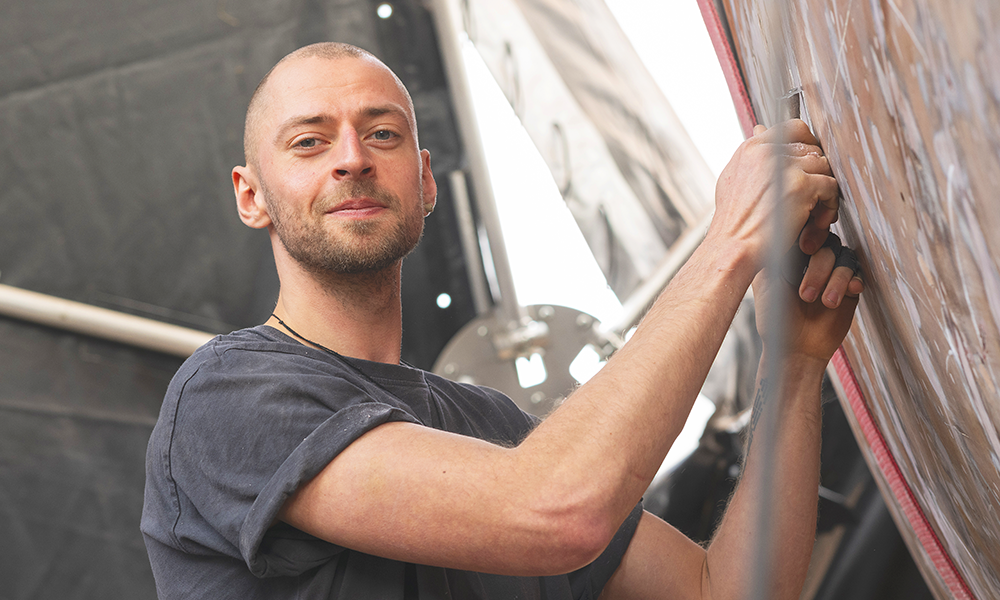
BEN BRADFORD
carpenter + caulker
“I first came to Cody Dock about eight years ago,” said Ben.
“I studied architecture at Central Saint Martins, which is where I first met architect Nicolas Henniger, who’s responsible for most of the buildings here.
“We worked together for a long time doing a lot of furniture and bespoke carpentry.
“When I learnt that the boat was coming down, I asked to join the project because I love this place.
“It’s really unique – there aren’t many places in London that have a story that is not being eradicated.
“I’m an artist, but realised it’s hard to make money, so teachers gradually pushed me into design and then architecture.
“While it was funnelling me into a precise field, I knew it was also a channel that would allow me to open up again.
“Perhaps architecture makes me better at carving wood somehow and understanding three dimensional forms.
“The people at Cody Dock had seen me working on the buildings here – I’m pretty adaptable.
“I think they like that I will do almost any job including soda blasting, which is the environmentally safe way we used to strip down the boat’s timbers.
“It’s similar to sand blasting.
“It gives you great feet – my boots would fill with baking soda every day, I’d go home and it would peel off the top layer of skin and I’d have the softest soles ever.
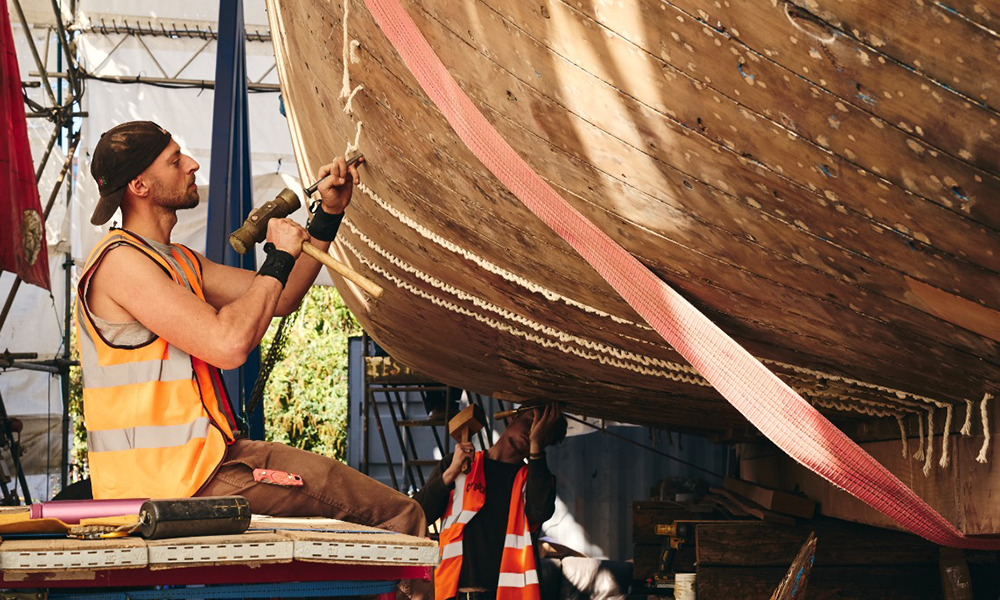
“I’ve also done the caulking on the boat, which is a traditional form of waterproofing where you force material into the gaps between the planks and seal it with resin. It’s a lost skill.
“If water does get in then it just seals itself.
“At first I was doing half a seam a day, but worked out that you don’t need to use the hammer that much and just a twist of a chisel gets the caulk into the groove.
“Then the speed was ridiculous and the quality was close to what it would have been originally.
“In the end I was doing six full seams a day, getting into the flow.
“I learnt that if you do all the seams and then compact them, you get a much more even displacement of the wood and a better seal.
“The wood constantly moves. If you’re sitting by the boat when the sun comes up, you can hear the cracks as it changes shape as the temperature rises.
“When you’re taking the boat apart and looking at it, you can see the decisions that were made, and you naturally want to do as good a job as possible.
“You definitely feel connected to the original builders even though we’re 100 years apart.
“I’ve absolutely loved it – it’s very rare to get a job that lets your mind really contribute to the work.
“I’m weirdly attached to it. I’ve lost sleep thinking about how it will finally be craned into place. It’s scary having put in all this work.”
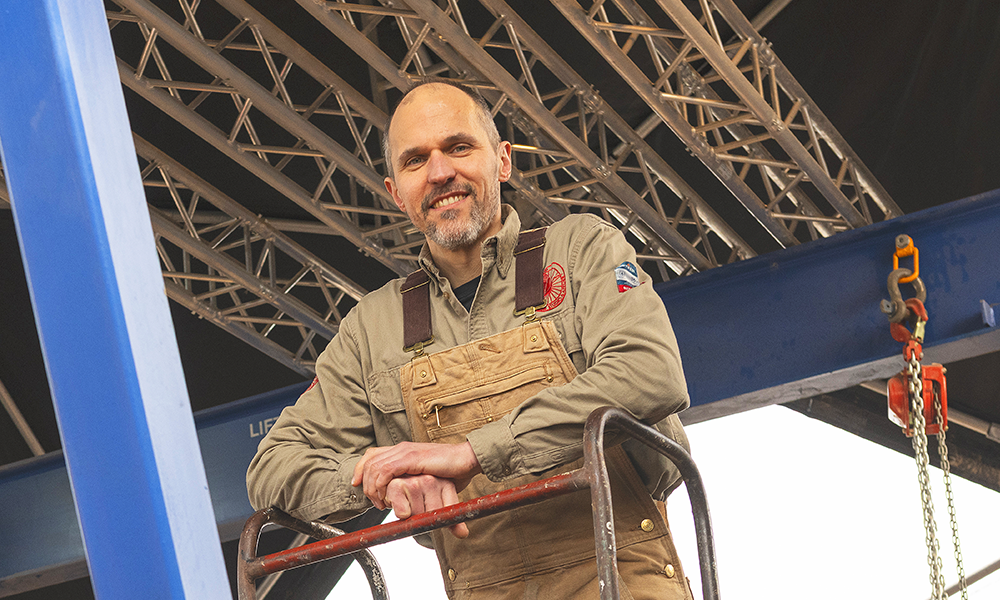
LAURENT AMANN
director, Storik Ltd
“I’m a coach-builder and fabricator, who initially trained as a designer in the automotive industry,” said Laurent.
“In 2013, I started my own business, having moved to the UK from France in 2007.
“We are a small team – three people – two directors (myself and my wife), and Stuart, who joined us over a year ago in the workshop.
“Metal is our medium and we use all types of material – copper, aluminium, brass.
“The biggest part of the business is working on classic vehicles.
“Tom approached us because there was some metalwork to do on the boat – quite intricate, specialised work, that not all fabricators can do.
“We’re installing copper cladding on what used to be the boat’s engine bay.
“Originally it would have protected the wood from oil spillages.
“The original parts had completely perished having corroded over the years.
“They asked us if we could do something about it, so we looked at it and thought we could produce something very close to the original design.
“It’s not too dissimilar from what we do with vintage cars, because it’s from the same era – right in the middle of the Edwardian period, the 1910s and 1920s.
“We’re using thin sheet metal to clad the timber bay, following the contours of the frame. The process is very much what a tailor or seamstress would do.
“We start with cardboard or paper templates, and then we use them to shape the metal to suit the boat structure.
“The pieces overlap and are pinned together to make everything as seamless as possible.
“Fitting it is a gamble and one of the reasons we make it in sections so it can be adapted on-site.
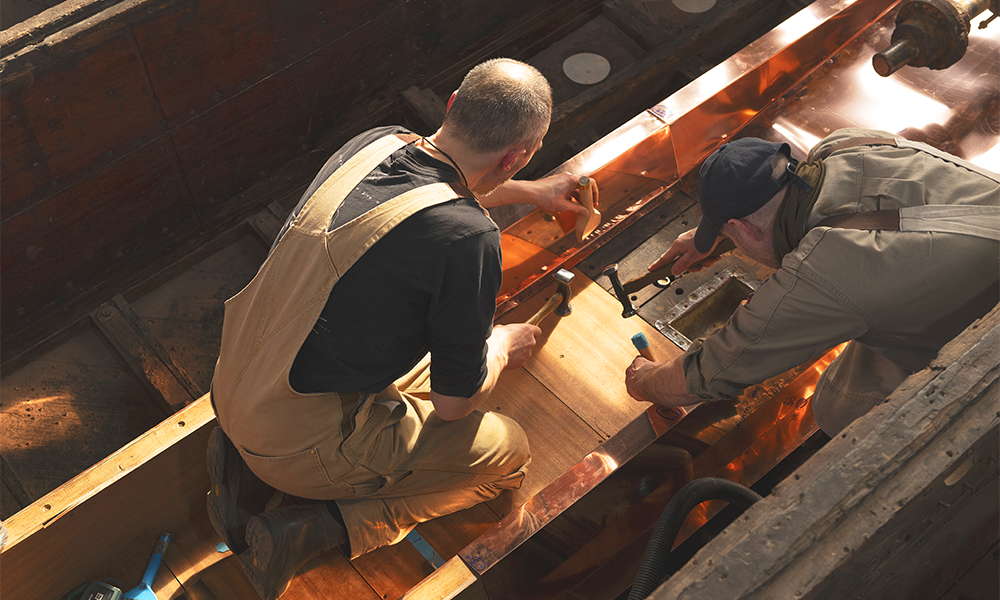
“We’re working remotely after measuring up so we only know how it will fit in reality on the day.
“Altogether we have nine pieces of metal to fit.
“Nothing on the boat is straight so we know we’ll have to adapt it to some extent.
“It’s not an exact replica of what would have been there but it’s a strong evocation of how it would have looked so people can see that.
“The fitting will be done by hand – we’ll be using hammers, mallets, caulking and chasing tools to make it fit nicely.
“Copper is very malleable, so we can work it fairly well, although it does harden over time. We’re really honoured, privileged and happy to be working on this project.
“There’s a nice energy at Cody Dock and the people are wonderful.
“It’s great to have the opportunity to meet people from other trades on a project like this.
“There are so many people out there recycling, recreating, transforming things, we need people with hand skills more than ever.”
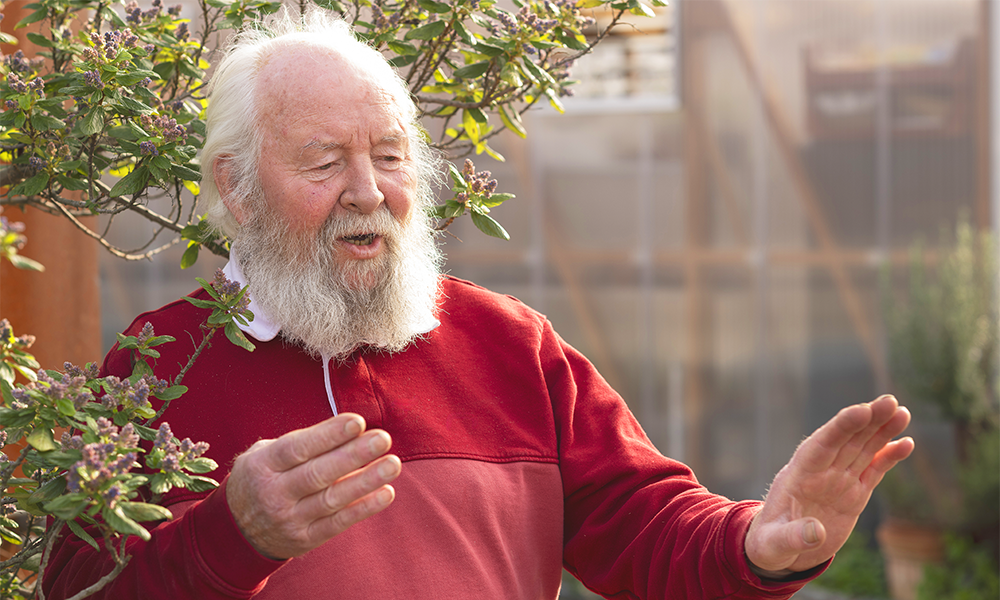
DANNY O’SULLIVAN
consultant + timber expert
Defining Danny’s role in the Frederick Kitchen project is tough, given the wide range of ways he’s contributed to Cody Dock over the years.
“I specialise in wood recycling in London and, before that, I was volunteer number one for the Brighton And Hove wood recycling project,” he said.
“I run Citywood Services, although officially I’m retired.
“Recycling wood is easy because it’s just there – slicing up old trees is my speciality.
“I have a special portable saw called a Wood-Mizer, which you can run a 4.5 tonne log through.
“When they’re doing the boat, if they can’t get the wood they need then I’m here to help.
“That’s my consultancy role.
“I grew up seeing my dad work wood for wheels – elm for the hub because of its stability. It’s my favourite timber, the pin-stripe of wood.
“It’s incredible when you look at it – my desk at Citywood I made from a large piece of oiled-up elm and it’s just amazing.
“It’s really strong and sturdy, which makes it great for building boats.
“In my life I’ve always wanted to help people who want to help themselves and Tom’s like that.
“Nowadays, people expect a mini-digger machine to come and dig the hole for them. In my day, you just asked for a pick and a shovel.
“When Tom asked, I told him I could get him a piece of Douglas fir long enough to make the keel of the boat.
“I’d found some for people restoring a windmill near Blackpool, so I took Tom to the same place– a sawmill in East Sussex – and asked them to treat him well.
“They showed him the tree they were going to cut it from and two weeks later it was ready. He asked me to cut it down the middle with the Wood-Mizer.”
Over the years, Danny has worked with artists, architects and builders.
He’s lived in squats, fought a campaign against the M11 and come to Cody Dock’s rescue on numerous occasions.
As a fixer he even helped out with moving the Frederick Kitchen to its current location, closer to the spot where the heritage pavilion is going to be built.
He said: “A date had been set to move the boat and a guy had said he’d bring a trailer to put it on and move it down the roadway next to the dock.
“The day before, Tom contacted me and said we couldn’t move it because the trailer wasn’t long enough.
“I told him I’d seen one down in Dartford and I managed to track it down and negotiate the hire of it.
“The tractor driver was 21 and he was so confident, really brilliant.
“I was revelling in the fact that it was these young people who had taken over and were making this happen.
“One day they were saying it couldn’t be done and the next day it was.”
Read more: Check out Choir Boy’s joyful story at Stratford East
Read Wharf Life’s e-edition here
Subscribe to our free Wharf Whispers newsletter here
