
St Anne’s Limehouse is celebrating a key moment in the area’s story with an exhibition examining the myths and realities of the East End communities
Subscribe to our free Wharf Whispers newsletter here
“Growing up in Singapore – a British colony – our image of Chinatown was very vivid in popular culture and it was never Soho,” said east London sculptor TienAn Ng.
“I was really disappointed to see there was nothing left of it when I moved here and found my house was just yards away from the epicentre of those former communities.”
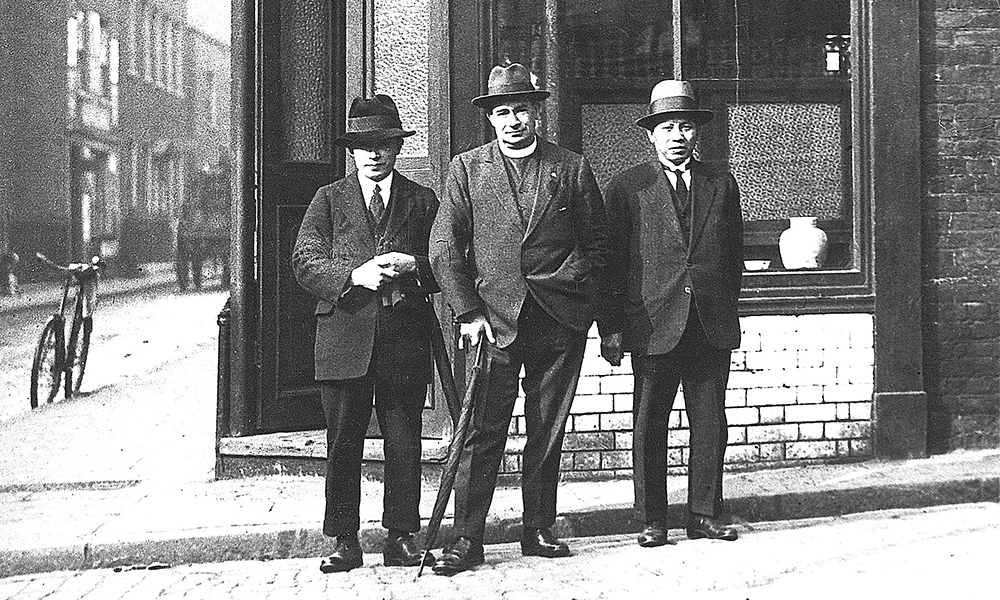
Outwardly, the Limehouse of today yields few traces of this remarkable period in its history, which began with Chinese sailors employed by the East India Company first staying in the area in the late 1700s.
With communities established – those from Shanghai living in Pennyfields, Amoy Place and Ming Street and people from southern China living along Limehouse Causeway and Gill Street – the migrants started businesses in the 1880s including restaurants, laundries, hostels and grocery stores to cater to the seafarers.
A combination of economic depression – resulting in a drop in trade between Britain and China – slum clearances in the 1930s and the Second World War saw those who’d settled in east London displaced resulting in the relocation of many to Soho and the almost complete disappearance of the community in east London.
Today, one of the only clues to the area’s past is a 1990s art installation near Westferry DLR station – Dragon’s Gate by Peter Dunn – although this has little to do with the people who once called it home.
It was funded by the London Docklands Development Corporation as part of its project to regenerate an east London suffering from the demise of its role as a port.
a story that needs to be told
“Very few people seem to know that London’s original Chinatown was here in Limehouse,” said Philip Reddaway, chair of Care For St Anne’s, a charity with a mission to conserve and celebrate St Anne’s Limehouse.
“We felt that it’s a story that needs to be told and told well.”
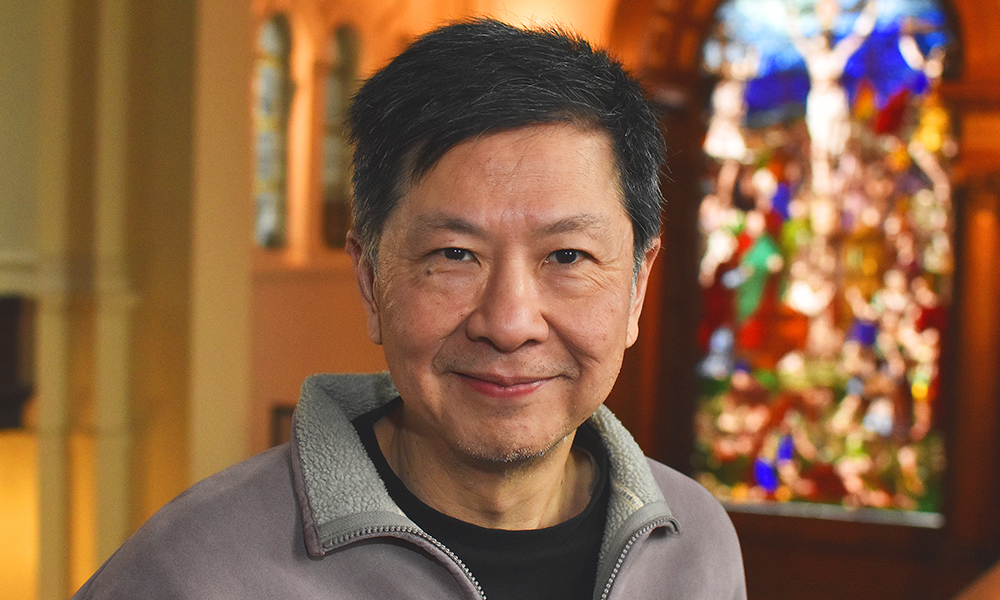
With exactly that aim, Philip, together with his wife Jude and TienAn, have co-curated Chinese Limehouse an exhibition at the east London church that will be on show until July this year.
“We wanted to deal both with the mythology and the reality,” said Philip.
“One of the first things that emerges when you mention the words Chinatown and Limehouse is the fictional villain Dr Fu Manchu and the demonetisation of the people who lived there both in literature and the national press.
“Local publications tended to be a bit fairer.
“It started with the Victorians. Dickens’ Edwin Drood opens with terrible scenes in an opium den.
“Conan Doyle’s Holmes came to Limehouse for the same reason.
“Oscar Wilde makes a similar reference in The Picture Of Dorian Grey.
“They set the scene for associating Limehouse, Chinese people and crime.
“We look at how the place was attacked in novels, music and movies such as Limehouse Blues, which starred Anna May Wong.
“She was the most famous actor of Chinese heritage to get involved in those films and actually visited Limehouse in the 1920s.
“This is the material people will see displayed along the north gallery of the church.
“The south deals with the realities rather than the myths.
“Jude has also contributed a whole section on Chinoiserie, and how that coloured the perception of all things oriental for hundreds of years.”
beyond myth to reality
TienAn said: “My brief was to deal with that historical reality.
“At the heart of this part of the exhibition are the stories of families who lived here.
“We thought, for this project, it was important to do something original.
“Chinatown had its heyday from about 1910 to 1925 – during that period maybe one in six people living in the area had an English name.
“Basically, the Chinese were there because they were cheap labour coming in on the ships.
“They were dumped in Britain and often had difficulty getting a return passage so they had to make a life here.
“Some did go back, some were deported after being convicted, but many stayed.
“They were quite successful economically – they ran a lot of businesses such as restaurants and laundries.”
The exhibition features oral histories, photography from the time and even a 2023 Barbie, produced to honour Anna May Wong.
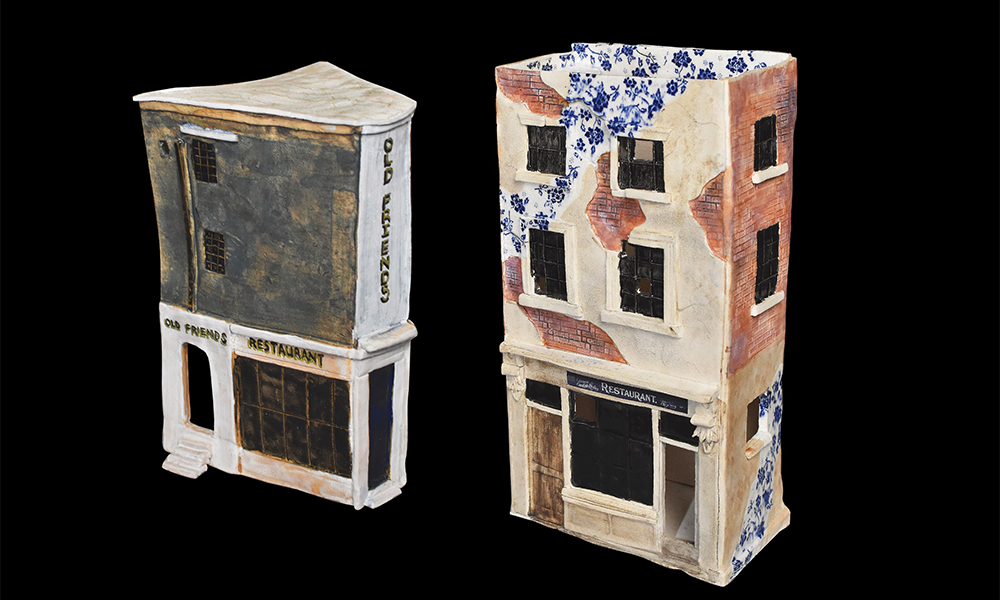
It also features a collection of ceramic works by TienAn, made to evoke the spirit of a lost place.
echoes of lost buildings
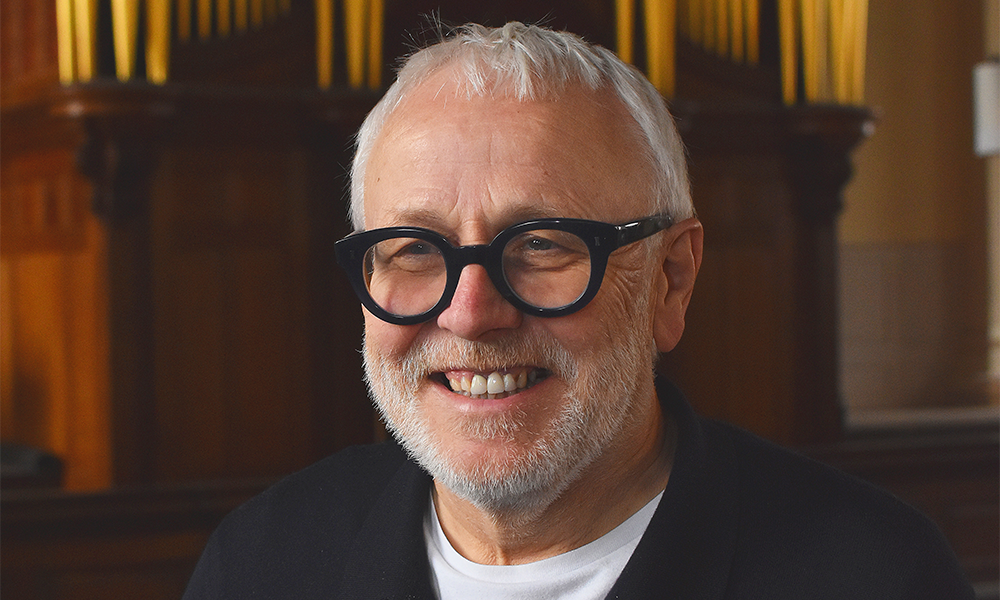
He said: “As I am a sculptor, I thought it would be a good subject for making things.
“Then I found there was a real connection between Limehouse and ceramics.
“There area was named after the lime kilns used for firing the pots.
“One of the earliest porcelain manufacturers in the country was on Narrow Street, just yards from where I lived.
“I thought I would monumentalise Chinatown by recreating houses and businesses from the area in ceramics, much as the Tang emperors used to do with terracotta armies and palaces.
“My work is a nod to these grave goods which remind us of a vanished world.
“I’ve had to do a lot of research and that’s been very useful for my work.
“I quite like the ‘mortuary houses’ I’ve created.
“The vernacular architecture of Limehouse is Georgian but, even though the Chinese elements are very superficial, they completely transform the ambience of the place.
“It’s amazing what a shop sign or a lantern can do.
“In some of my pieces there is a seam of porcelain running through the buildings.
“I wanted to contrast machine-made elements with the wonky construction of the old houses.
“Chinatown here was at least partly destroyed by the London County Council because the houses were condemned as unfit for human habitation – this was long before the Blitz in the Second World War.
“You have to question how true that really was because some of the properties that survive are now houses worth £1million or more with some owned by celebrities.
“There was a huge element of social reform to what happened in Limehouse and we do focus on the largely manufactured demonisation of a whole race as a pretext for those slum clearances.”
The exhibition makes a compelling case for this, showcasing the overtly racist attitudes of the day lapped up and amplified by the press.
With the vast majority of Chinese migrants being male, there were also clear attempts made to whip up moral panics around the supposed strategies used to lure women into marriage, a possible further motive for moves to break up the community.
“One of the more surprising elements for me was that this was a predominantly mixed race community,” said Philip.
“Ultimately that was another reason why it disappeared and dissipated over time.”
Today, Tower Hamlets has a new Asian community, attracted by the investment opportunities found in new-build housing on the Isle Of Dogs and in similar schemes across east London.
Restaurants, supermarkets and all kinds of businesses have opened in recent years to serve this emerging market not so very far from where London’s original Chinatown once stood.
Chinese Limehouse celebrates the outsize impact this part of the capital once had on culture – music, film, art and literature, echoing down the years to the present day.
Time will tell whether the more recent arrivals in east London will generate a similar legacy worthy of future exhibitions.
key details: Chinese Limehouse
Chinese Limehouse is on show at St Anne’s Limehouse in east London until July, 2026.
The exhibition is free to view on Fridays and Saturdays from 10am to 4pm.
No booking is necessary.
You can find out more about the exhibition here
Read more: Check out Choir Boy’s joyful story at Stratford East
Read Wharf Life’s e-edition here
Subscribe to our free Wharf Whispers newsletter here
