

Boisdale Of Canary Wharf

Grant Saw marks 175 years in Greenwich as law firm aims to grow

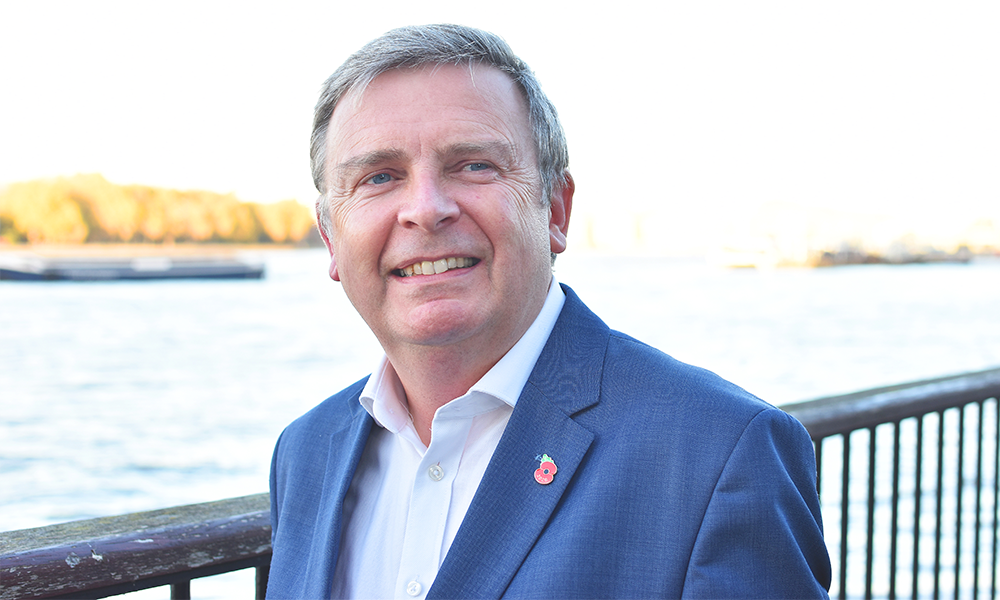
Managing partner Ray Crudgington, who has played a key role in the solicitors’ strategy over 30 years, talks past, present and future
Subscribe to our free Wharf Whispers newsletter here

In 1851, Queen Victoria sits on the throne, the Window Tax is abolished, the first submarine telegraph cable is laid across the English Channel, The Great Exhibition takes place in the specially built Crystal Palace at Hyde Park and the first international chess tournament is held in London.

In Greenwich, a young man named Samuel Saw – having qualified as an Attorney Of The Courts Of Queens Bench – decides to set up his own law firm and starts practising from his home at what was then Bexley Place. 

That business, located in what is now Greenwich High Road, was the start of a company that recently celebrated its 175th birthday, marking the anniversary with an update to its brand and a weather eye on the future.

Today, Grant Saw’s solicitors, operate across sites in Greenwich and Blackheath, with 60 employees including nine partners offering a wide range of services to their clients. 

growing over the years

“Samuel ran the firm for just over 60 years, bringing his sons Samuel Jr and Henry into the practice and changing the name to Saw & Sons before retiring in 1912,” said Ray Crudgington, Grant Saw’s managing partner. 

“Samuel Jr continued to run the firm until he retired in 1920.

“The next big milestone was when a young solicitor called Geoffrey Grant joined the firm in 1956.

“He’d been working for a local authority and didn’t enjoy it much.

“He liked his new practice so much, he took it over and it became Grant Saw & Sons in 1960.

“He took on partners over the decades and grew the firm.

“When he recruited me in 1997, the office was over a former bank, now a bookmakers in East Greenwich. 

“I’d qualified in 1991, trained at a major law firm and worked for five years at a small firm in Gray’s Inn Square in the City.

“Grant Saw, after an interview, offered me a job with a view to becoming a partner.”

a chance to help steer the ship

Attracted by the opportunity and the chance to shape a growing firm, Ray joined and became a partner 16 months later.

He has been heavily involved with the management and strategic direction of the firm ever since.

Grant Saw moved to Greenwich High Road in 2003 and merged with Hudgell Yeates in Blackheath in 2005 as it expanded its operation.

More recently, it acquired Lawbridge Solicitors in Sidcup and its Greenwich practice moved into new offices at Horseferry Place overlooking the Thames in 2019.

Ray said: “While we don’t do criminal law or high level financial law, we do a very wide range of contentious and non-contentious work including probate, insolvency, commercial and residential property, employment law, powers of attorney, wills, trusts and family law.

“We also have a slightly greater commercial bias than some firms, dealing with industrial sites and developers.

“While it’s important to be aware of the history, we have to live in the moment. 

“We have to think of what is the best thing to do now for our partners, our staff and our clients.

“There’s also a need to ensure succession, which isn’t an opportunity all firms have.”

from client work to management

Ray specialised in commercial property and company commercial work, but has moved into a non-practising leadership role at Grant Saw.

“I love both the law and management, but they are quite different and you can’t realistically do them at the same time,” he said. 

“If you try, you’ll find clients’ needs always come first so it’s better to step away.

“The management side is there to facilitate serving our clients and that’s very satisfying in itself.

“Good lawyers are successful because they understand and can apply the law, but that doesn’t necessarily make them good at business.

“When I talk to law students, I always say that their number one skill needs to be problem-solving and the second one is communication.

“Lawyers are trained to be cautious and think about all the problems that might arise in a given situation.

“Client work can also be quite reactive, whereas business and management need to be proactive.

“When I made the move, I had to learn quite a different skill set. I don’t think someone could do my job with a heavy case load. 

“While my other eight partners all do some management at the firm, what they really enjoy is working with their clients.”

taking Grant Saw into the future

Ray said that, broadly speaking,  during his 35-year career, neither the law nor clients’ needs had altered a great deal.

“The underlying principles don’t change, although there are some changes in legislation,” he said.

“But the processes are different now.

“Probably the biggest change has been in the handling of documents, which is now done largely electronically.

“Much of what I do is dealing with compliance to ensure we’re always delivering the best service possible.

“As a firm, we’re on the up – we’re finding new clients and new markets.

“We’re pretty busy. We have plans to grow and increase our turnover year-on-year in sustainable and profitable ways.

“We’ve welcomed new partners into the firm to help deliver that.

“We also always try to give clients a personal service and to create value for them.

“Many of our clients locally are wealthy and they really appreciate that.

“What we try to do is empower our clients’ decisions, giving them options.

“Now we’re looking at how to expand in areas where we’re already strong.

“We’ve just completed a rebrand, changing to navy blue from red and, as part of that process, we’ve enhanced our website.

“We’re doing lots of things to spread our net more widely and we remain very well connected with local accountants, estate agents, property agents, architects and surveyors as well as the Royal Borough Of Greenwich.

“I like to think that when the time comes for me to leave the firm, it will be in good hands.”

key details: Grant Saw

Grant Saw’s Greenwich offices are located overlooking the Thames at Horseferry Place. In Blackheath it’s based at Grant Saw House in Tranquil Passage.

You can find a full list of services offered by its solicitors on the firm’s website here.

Read more: Why Third Space is highlighting the benefits of resistance training

Read Wharf Life’s e-edition here

Subscribe to our free Wharf Whispers newsletter here

Subscribe To Wharf Life

Blackheath: Why Mohamed Mohamed isn’t sentimental about his sculpture Old News

Piece depicting Boris Johnson’s face in precisely sliced newspaper can currently be seen at Blackheath’s Millennium Circle

Mohamed Mohamed’s Old News, as it appears today on Blackheath

Subscribe to our free Wharf Whispers newsletter here

As we stand beside the head of Boris Johnson on Blackheath, a young spaniel scampers up and urinates on it.

After I mention to the four-legged critic’s owners that I’m with the artist who created the sculpture, they’re immediately full of apologies and dash off with the same nervous energy as their canine charge. 

Mohamed Mohamed, however, welcomes the act.

For him, Old News, is just that.

He’s already set fire to it at Speaker’s Corner and, having been made, run its course and suffered symbolic destruction, it has now returned to the streets of Greenwich like the discarded newspaper it started life as.

He’s not sentimental about it – surprising, perhaps, given the effort that went into creating it.

“I built my own machines so that I can physically sculpt things,” said Mohamed.

“I’ve been an industrial designer since the age of 14 and, after graduating from the London College Of Communication, I’ve worked for large format fabrication companies in their research and development departments.

“When the pandemic struck I’d just signed a lease on a workshop in Greenwich and then I was furloughed.

“With Old News, I had been developing slicing capabilities – how to accurately cut an object at higher and higher resolutions.

Old News shortly after completion – 6,277 pages of newspaper

“3D printing uses this technique and it’s similar to the idea of pixels in an image. 

“The first thing I made was using sheets of cardboard, then sheets of metal and then newspaper at 0.3mm per slice.

“The first Covid lockdown was kicking off and I collected newspapers.

“I had to remove the staples from every copy and iron each sheet. While I was doing that, I was thinking about what to make and Boris’ face was everywhere.

“I produced a digital version of him using photogammetry, which uses images from many different angles to create a 3D map.” 

Mohamed used this to cut some 6,277 newspaper pages, working in layers of five to precisely reproduce the former prime minister’s head in three dimensions – stacking them on a steel base plate with precisely calibrated bars holding them in place.

Artist and designer Mohamed Mohamed

“To iron the newspaper took a week, to cut it was three weeks, and to assemble it was me in a dark room for another three,” said Mohamed.

“There’s a level of dedication – of sacrifice to be able to make something honestly like that. Before I made my own pieces, I made work for lots of other people.

“If an artist uses a 3D printer or wields a violin themselves, that’s one thing. If you’re paying someone to do it for you, to me, that’s something else. 

“I’m not qualified to judge whether it’s better or worse, but for me personally, I have to physically feel the sweat on my brow, and that links me with my work – that I have physically done it.”

During our conversation, the topics of truth and process come up consistently. Both sit very much at the heart of what Mohamed does. 

“I have been making art as a way to sharpen my skill-set for as long as I can remember,” he said.

“It’s a gymnasium for my brain – you create geometry or a thing that doesn’t have to solve a problem – I just have to challenge myself to do it.

“In an art setting, you’re just expressing what’s inside you. 

Detail from Penny for Your Thoughts – Heads, 2023 – made with found pennies by Mohamed

“While I work, I pick up litter and that’s what my sculptures are made from. I’ve always been very much into environmental causes  and we’ve got a lot of stuff going into landfill.

“If you’re creative, you can turn those objects into something else.

“So I collect lots of things – I’ve picked up coins, a toothbrush and gambling pens on the way here – I have thousands of them in a bucket and I have lots of buckets of different things.

“I listen a lot to the Quran and I see the fineness of art in the world around me.

“The purest art would be the sunrise itself – then a painting of it, a scan of that printed out and so on. 

“I know I’m not going to be at the top of that hierarchy, but I can take secondary creations like empty bottles of beer and turn them into something else. 

“For me, it’s about taking objects which have been discarded – that someone felt were worthless – and giving them worth.

“I gather things then ask what skill level I’m at and what physics and technology will allow me to do.

Mohamed’s Cleave, 2020 -made with playing cards and a #7 clamp

“I use things like CNC machines or 3D scanners, but I’m not deluding myself – they are just tools, no different than a pencil.

“They allow me to produce what I want to create better.

“The beauty of it, for me, is the engineering element. Anthony Gormley is one of my favourite artists and I like how his pieces are made, how the magic is done, which no-one ever looks at.

“People might appreciate the message of a piece, but if an artist concentrates too much on that, they end up trying to sell you a message.

“Then what’s created is no longer art, it’s just decoration. 

“When I work, I am trying to distil my skill level – my entire life’s work – into a physical object and then move on.

“I’m not then sentimental about that piece – it’s made.” 

Mohamed, who has Palestinian roots and lives and works in Lewisham, uses the example of a tree.

While its trunk, branches, leaves and blossoms might appear impressive at any one time, he says he sees the whole growing process – the complete history of the entity.

He said people looking at his art were often considering the fruit of the tree, rather than seeing this story.

It’s one reason why those viewing his work may wish to be wary of interpreting his pieces as overtly political.  

“The fact Old News features Covid and Boris is irrelevant to me, but significant to others,” he said.

“The beauty of art is that it doesn’t have to mean anything to me – I’m just the vessel for the thing and other people analyse it.

“If I was making Old News today, it would be about the Palestine conflict – 10 years ago, it would have been about weapons of mass destruction.”

Detail from Rock Paper Scissors, 2021 – made with marble, dagger and money

need to know

Old News can currently be found at the Old Donkey Pit, also known as Millennium Circle, at 0º longitude on Blackheath. 

Find out more about Mohamed Mohamed here of find his work on Instagram here

Read more: How St James’ Bow Green development is at one with nature

Read Wharf Life’s e-edition here

Subscribe to our free Wharf Whispers newsletter here

- Jon Massey is co-founder and editorial director of Wharf Life and writes about a wide range of subjects in Canary Wharf, Docklands and east London - contact via jon.massey@wharf-life.com
Subscribe To Wharf Life

Blackheath: Why comedian Ed Byrne’s taking a hard look at himself in If I’m Honest

Comic talks Ed Venturing, small victories and parenting ahead of his show at Blackheath Halls

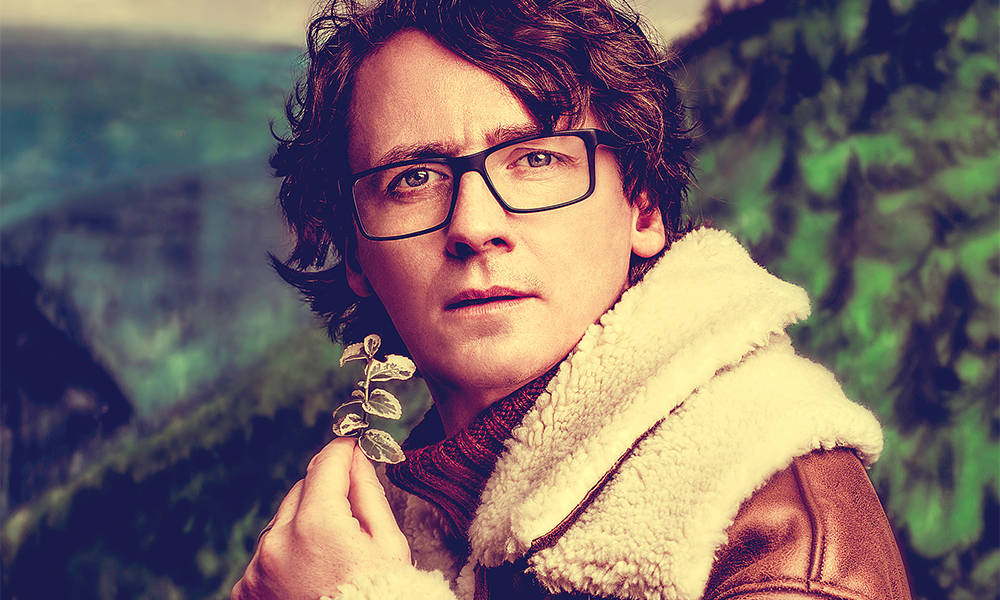
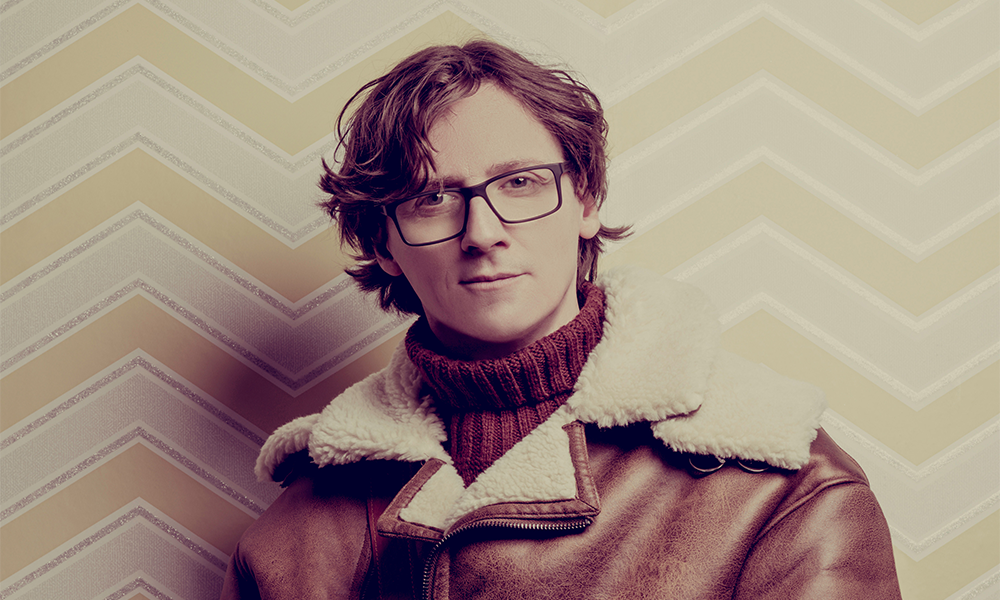
Comedian Ed Byrne is set to play Blackheath Halls
Comedian Ed Byrne is set to play Blackheath Halls – image by Idil Sukan

Subscribe to Wharf Life’s weekly newsletter here

Having been warned by his PR that I’ll have a maximum of 20 minutes to chat to comedian Ed Byrne, disaster strikes within minutes of him picking up.

After exchanging pleasantries, the line suddenly goes dead. Was it something I said? Is Byrne offend-Ed? I re-dial. Answerphone. 

For those who care about these things, Ed’s message is functional, polite and short. There’s not much material for an article here, no blistering one-liner to recount. I hang up and call again.

The second hand ticks round. He picks up. That sonorous Irish lilt is back in my ears.

“I’m sorry about that,” he says. “I think I may have somehow hung up on you with my face.”

Ed’s cheekbones aren’t the only sharp thing about him. Since his first gig, 28 years ago this November, the Irish comic has built a career skilfully dissecting his life and presenting its absurdities for the amusement of others.

Having been nominated for the Perrier Award at the Edinburgh Festival in 1998, he’s gone on to appear regularly on TV including on panel shows such as Mock The Week and game shows as a celebrity contestant while continuing to perform live across the country.

He’s set to perform his latest show – If I’m Honest – at Blackheath Halls on October 20. Although this comes as something of a surprise to him.

“Am I?” he says. “I must be. I think that’s a new venue for me, if I’m not mistaken. What threw me was that I was just in that part of London for the Greenwich Comedy Festival, which was a great laugh. I got the sunshine, I was lucky. It rained the next day.”

That Ed isn’t completely across his touring schedule feeds into the topic of the show he’ll be performing, which considers what traits, if any, he’d be happy to pass on to his kids.

“I haven’t tried to pass anything on,” he says. “But I’ve tried to drill out of them stuff that I know is innately coming from me.

“I’m very bad at being able to find things – my keys, my credit cards – and my older son is exactly the same, but there’s nothing I can say about it, because it’s my fault.

“I’m asking him if he knows where his water bottle is, and, if he had the wit, he’d ask if I knew where my sunglasses are.

“I have two kids, and nothing is more annoying than your children, because they are irritating in ways that you recognise in yourself.

“So I thought: ‘What about me am I happy to be passing on to these children, and what about me am I worried about passing on to these children?

“Ostensibly it’s about kids, but really it’s about me – I’m taking a long hard look at myself. I thought there was mileage in that, and indeed there is.

“I talk about stuff that the kids get from me, that I know I get from my parents – the desire to have the last word in an argument.

“I talk about the good things – I’m quite funny – and it also covers the skills that can’t be taught.

“For example, I’m pleased that since my mid-40s, I’ve become skilled in recognising when a cramp is going to happen and stopping it before it does. You feel it, leap out of bed and say: ‘Not today’, pat yourself on the back and go: ‘Ed Byrne, 1, insufficiently oxygenated muscle, nil’.

“It’s about finding those little victories in life. I tell a story about cutting myself with a knife recently, but being delighted because it’s a blade that I’d sharpened.

“You look for things to be proud of. Doing stand-up is a bit of a relief valve – you might be having a conversation and then later find a way to put the humour from it into a monologue.

“You can say things to an audience that you wouldn’t in real life – for instance, my kids might be really excited to get on a plane and all I want to say is: ‘This is shit, it’s Ryanair’, so I say that on stage instead, embellishing things slightly. 

“There’s going to come a point when they watch my stand-up and it will be like handing them the Allen key that dismantles my armour, because my comedy is full of my insecurities and particularly about my failings as a parent.

“I fear that day – when they do finally watch it, will they have respect for the fact that I stand up in front of people and do all these things and make them laugh, or will they say I sound like a loser?

“Talking about how soft my erections are and how bad I am at general life-skills.”

Ed's latest show is called If I'm Honest
Ed’s latest show is called If I’m Honest – image by Idil Sukan

Ed wrote If I’m Honest and began touring the show shortly before the pandemic hit. Having tweaked the material and performed his fair share of drive-ins and Zoom shows he says it’s delightful to be back in front of live audiences again.

“It’s been such a relief to be doing it,” he says. “We were having to make do. I likened it to really wanting a Mars bar when all you have is cooking chocolate. 

“That’s all there is so you make the most of it. Lockdown was miserable and then what we’ve had over the past 18 months has been miserable. 

“I think if I’d known at the start it was going to be so long it would have been more frightening.

“I did some other things, some TV and I’m very lucky because I’d been doing that stuff for years so I’d built up some equity – a lot of comedians I know had to go and get day jobs. It’s made me appreciate it all the more. 

“When I started out, there was a sense among the grown-ups that you needed something to fall back on. I was making a living out of stand-up in my early 20s, but I’d go home to my parents, and hear from them, friends and neighbours that I should have that.

“It’s a trade, a craft, it’s my job. Now it’s the stand-up I fall back on – I do other things such as acting and a bit of presenting.

“Then, 18 months ago, it was actually, finally taken away, and you go: ‘Shit. This career, that I’ve had for a quarter of a century, isn’t there anymore. It’s finally as unstable as people thought it might have been when I started.”

As a side project, Ed conceived Ed Venturing, a YouTube show launched in February where he interviews other comedians, having invited them to join him in his passion for hillwalking. 

“It’s very much in its infancy at the moment – there’s only four episodes up at the moment,” he says. “But there are two or three more in the can, and I’m hopefully going to record some more over the next month or two. So far we’ve released Rhod Gilbert, Stuart Maconie, Desiree Burch and Hal Cruttenden.

“I try to put off looking back as long as possible, until we’re at least 45 minutes into the walk. Then we sit down and talk about their career and how far they’ve come. It just suits the mood.”

Time for reflection is something of a theme with Ed, whether he’s working on new material or considering the view from a freshly conquered peak while consuming peanut M&Ms or a morsel of his homemade beef jerky.

So what does he think about the show he’s touring?

“I really want people to come and see it because this is genuinely in the top three stand-up shows I’ve ever written – it’s worth it,” he says.

“If you’ve not seen a lot of stand-up, then you should come to this show that I think is pretty good. I did one back in 1998, when I was nominated for the Perrier, which was called A Night At The Opera, and that was my break-through.

“Then I did one about 13 years ago – Different Class – which everyone agrees is the best show I’ve ever done. I feel this one is up there with those other two.

“It’s just typical that this was the one that got shut down. The routines feel good, it’s like singing a song, you know where the laughs are – I’m really enjoying it.”

Tickets for Ed Byrne: If I’m Honest at Blackheath Halls cost £25. The performance starts at 8pm. 

Read e-editions of Wharf Life’s print edition here

Subscribe to Wharf Life’s weekly newsletter here

Subscribe To Wharf Life