
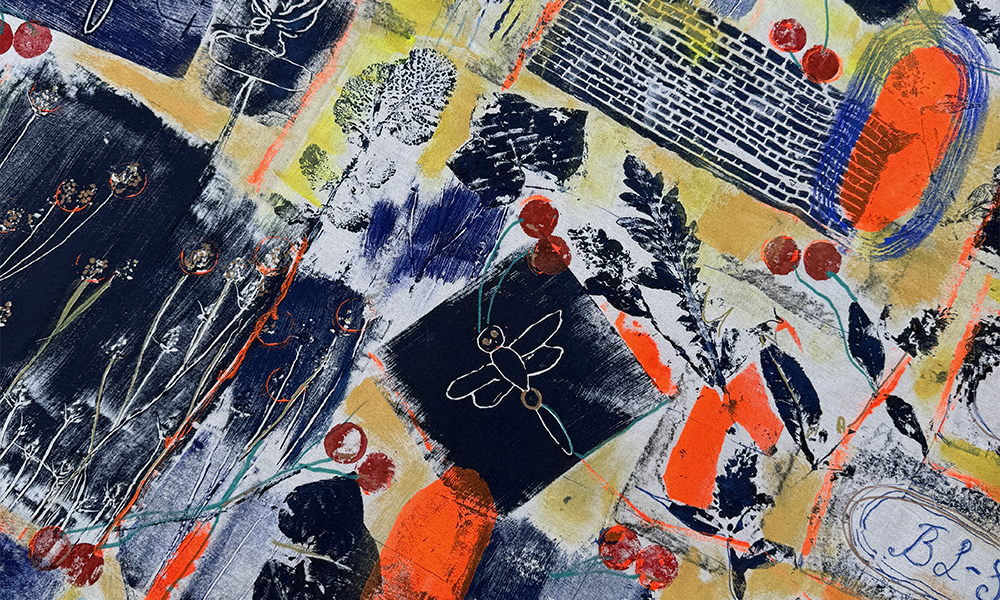
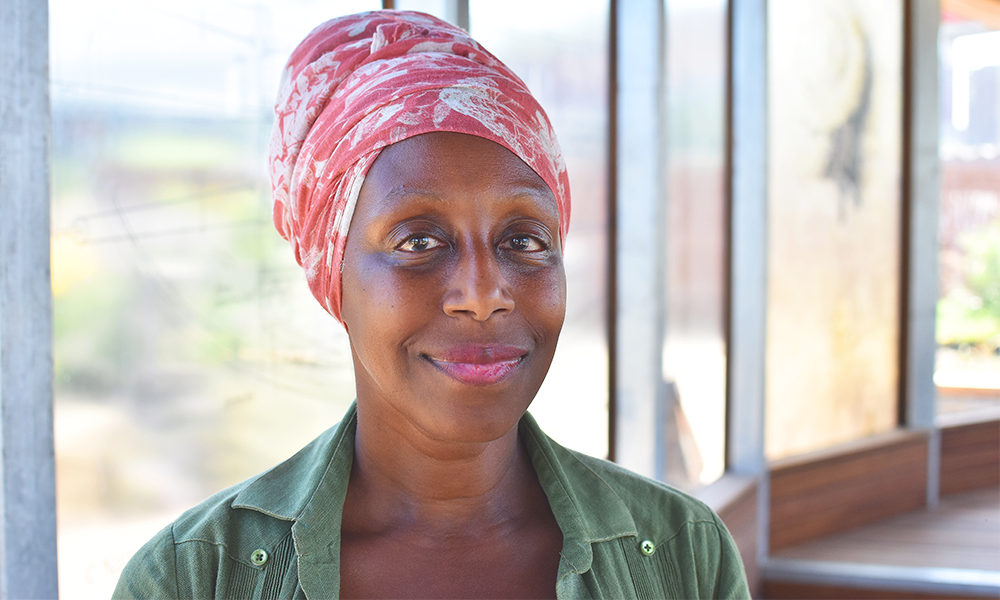
Artist and walker, Remiiya Badru, has spent a year researching, making pieces and hosting workshops to explore the history of calico and Prussian Blue
Subscribe to our free Wharf Whispers newsletter here
The areas that line the banks of the Lea are rich in history, the silt of time that’s built up around the waterway.
Watch the river’s tides rise and fall and it’s easy to imagine the currents connecting to the Thames and from there the oceans beyond.
One’s head can easily start spinning from the complexity and variety of those links.
Sometimes what’s needed is a way of fixing things, a scaffold to support the flow of ideas, themes and events.
To an extent, this is what artist and walker, Remiiya Badru’s, year-long collaboration with Cody Dock is all about.
Common Threads has seen her take up the position of artist-in-residence at the ecological regeneration project, to research, investigate and respond to two interrelated commodities and their history in the area.
The first is the woven cotton cloth, calico, and the second the synthetic pigment Prussian Blue, once made at the site.
“I’m an artist, but I’m also a walker and an educator and both of those things inform my practice,” said Remiiya.
“I also have a connection with rivers and bodies of water as well as maps with the work I create.
“Common Threads is about how we capture stories around the textile trade across the docks in east London.
“I see the threads as stories coming together, so I wanted to bring the community in and give people in this area the opportunity to share their tales.
“In this way these Common Threads are global narratives – they all come from somewhere and I wanted to look at how we could represent that visually in the context of the history.”
weaving stories together
When it comes to both the textile and the pigment, that past is a complex weave – different countries, creations and locations.
For Remiiya – an artist whose practice is characterised by curiosity and serendipity – it’s an irresistible jumping off point.
Having trained as an illustrator and then as a teacher – a useful skill that enabled her to take her art “out of the classroom and into museums and galleries” – she worked for a while in Bristol.
“That was at the Arnolfini Gallery with community groups and facilitating social engagement and I thought it was a very important part of my practice.
“That remains the case today, but I’m also very interested in the heritage of places.
“I hated history at school but I found a way of seeing the subject as an archive of real people’s stories.
“Geography is also a love of mine – how people and place connect and how cities shift and shape themselves. I really love maps and what they represent.
“These things come together when I’m walking.
“My practice is often intuitive – if something jumps out at me, I’ll go and research it.
“I’ve done many walks along the Thames and the Lea – I’m a bit of a nomad.
“I would say the river is the aorta of the city – it pulls in all those tributaries and the stories flow into it.”
In recent years, Remiiya has collaborated with the National Maritime Museum, making art and researching its collections to find women and people from diverse backgrounds.
She’s made a “living map” entitled Rhumblines, displayed at the Making Space in Aberfeldy Street.
She’s featured in Thames-focused documentary Time And Tide.
She’s led workshops, walks and meet-ups.
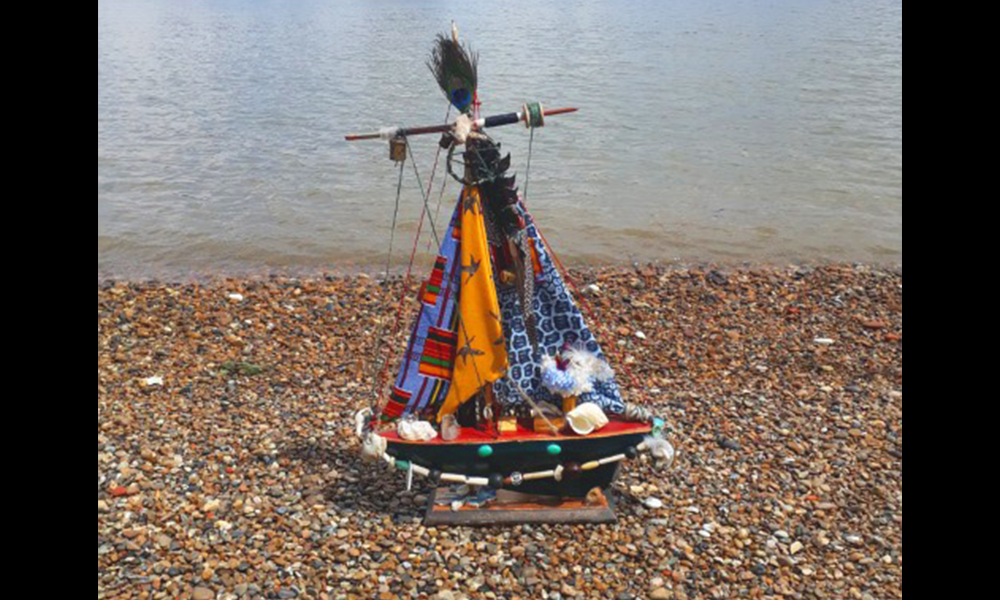
But perhaps most revealingly she’s built a model boat, the Timehri, named for the “art and craft of man” which she’s taken for walks along the river as a conversation starter and because the journey forms part of the artwork.
It’s been placed in Canary Wharf, on a beach on the Isle Of Dogs and on the plinth that once supported the statue of slaver, merchant and ship-owner Robert Milligan, who was the driving force behing the construction of West India Docks.
Such activities are indicative of Remiiya’s intuitive approach to the subjects she investigates – one that she’s carried over into Common Threads.
“Calico is a global cloth with a complicated narrative,” she said.
“It’s a strong cotton fabric that’s thicker than muslin, but not as thick as denim – today it’s often used to make tote bags.
“It was at the centre of an attempt to protect the British textile industry when importing it was banned.
“The fabric was often printed and Bromley Hall (which sits just across the Lea from Cody Dock on the A12) – a building with multi-layered narratives that go back to Henry VIII and beyond – was a major producer, using copper plates to create intricate designs.”
doing the research
These stories, coupled with extensive research in partnership with the V&A have all fed into a project that will be fully realised in September.
That includes making use of Prussian Blue, which was once manufactured on site at Cody Dock and was shipped worldwide from there by the Imperial Chemical Company.
“When people come to see Common Threads on September 19, I want them to appreciate all the elements of the history of this area,” said Remiiya.
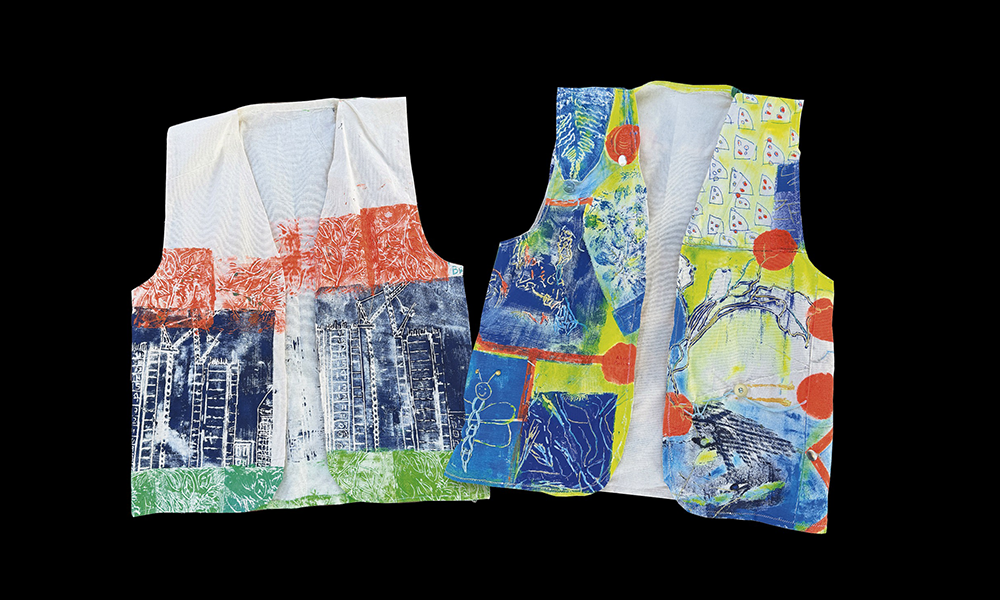
“I’ve worked with different community groups and schools to get them to think about what’s important to them and we’ve created a series of cloths.
“We’ve also made jackets in calico based on the high-vis ones worn at Cody Dock – again based on people’s personal connections to this area.
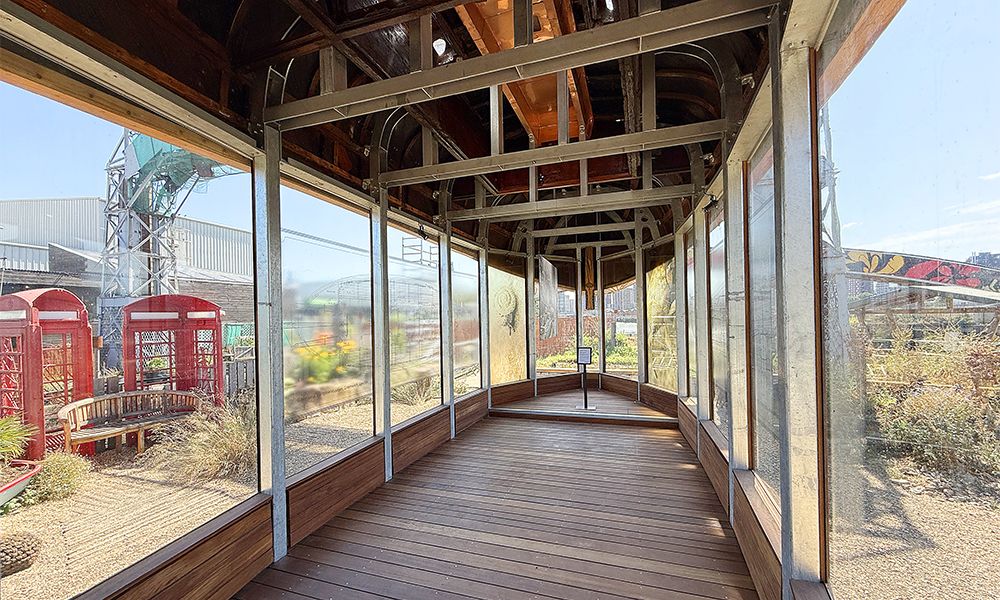
“We’re now working on a plan to display all this material across the site.
“I want people to discover Cody Dock – it’s off the beaten track, but it’s an oasis and there’s something here for everyone.
“I really like that the people here love and care for the spaces and that it’s a place where artists can hold up a mirror to history.
“Over the months I’ve been here, I’ve felt such freedom and autonomy to work on this project and there’s been so much support.
“It’s growing and expanding and that’s really exciting – let’s see where the threads take us.”
key details: Common Threads
Common Threads will be unveiled at Cody Dock on September 19, 2026, at the ecological regeneration project’s Lighting Up The Lea event – part of the Totally Thames Festival.
The open day, runs from 11am-6pm, and includes a mix of workshops, live performances, walks, talks and a chance to see the work produced for the project. Entry is free.
Find out more about Cody Dock here
Read more: Discover the extraordinary maps and prints at Frontispiece
Read Wharf Life’s e-edition here
Subscribe to our free Wharf Whispers newsletter here
