

IHRE26

Creative Virtual on why the firm believes human-curated AI is better

Founder and CEO of the Canary Wharf-based business, Chris Ezekiel, explains how his firm’s approach is proving attractive to larger organisations
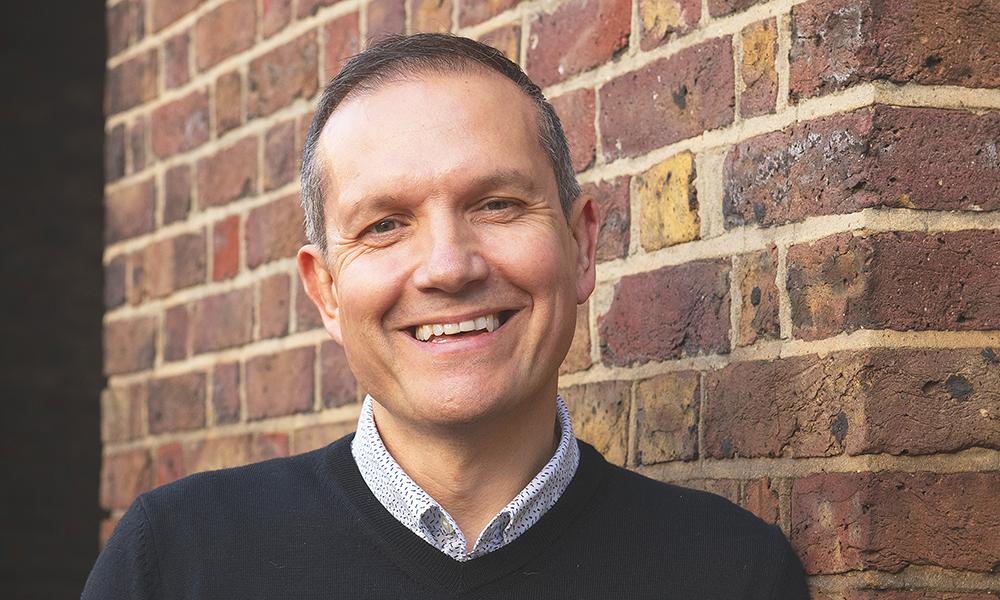
Creative Virtual founder and CEO, Chris Ezekiel – image by Jon Massey / Wharf Life

Subscribe to our free Wharf Whispers newsletter here

It feels like a big year for Chris Ezekiel.

Not only is he gearing up to become a father for the third time – a sibling is on the way for sons Matthew and Harry – but Creative Virtual, the company he founded on the Isle Of Dogs 22 years ago, recently went live with a hybrid human and AI system to help Australia’s largest mobile network better deal with its customers.  

“We think it’s a world first,” said Chris, who still lives locally despite running the global business as its CEO.

“Our project with Telstra sees a large enterprise using conversational AI and chatbot technology in a public-facing way – a hybrid approach with all the appropriate guardrails in place.

“There are other companies doing this with AI, but only on a small scale.

“We spent the best part of 2025 building the system and linking it in to all their operations.

“It’s all about knowing when to give a generative answer, something more structured or a combination of the two.

“Our system also does things like summarising, classifying and making all these decisions in real time.

“I’m very proud that we’ve displaced two of the world’s largest companies in this field – IBM and Salesforce – to deliver this solution.

“As soon as Telstra switched it on they doubled their containment rate, which means twice as many interactions have been automated rather than going through to a human in their contact centre.

“Now we have a road map to do much more over the course of the next 12 months.

“Our system is going to be the central point of communication for all their interactions with existing clients and potential customers – all with a clear escalation path for more complex queries or situations.

“There’s always going to be a need for that.”

beyond ChatGPT

Chris said that, while the arrival of ChatGPT in 2022 and the subsequent proliferation of large language models that generate responses had been significant for the sector that Creative Virtual operates in, many firms had done little in the way of implementing the technology.

“People have this perception that computers have to be 100% accurate, or the job they do is not acceptable,” he said.

“If a human makes a mistake, it often doesn’t get the same level of attention as a machine failing or given an answer that’s wrong.

“As a result, many larger organisations were paralysed when it came to putting new systems in place.

“During this time, we stuck to our guns and did what we’ve always done – tune into what organisations really want.

“That’s what’s brought us success. We’ve kept humans in the system to curate answers, working alongside generative AI and other technologies, meaning we can combine their talents when communicating with customers – something that’s reassuring to large organisations such as banks or telecommunications firms.

“With these clients there’s a large number of processes that their customers need to go through – billing enquiries or applications for accounts and credit cards, for example.

“These need high levels of curation and can’t be left to AI.

“That’s why clients like our approach. They can have very tightly controlled parts of the process alongside the simpler enquiries that can be dealt with by AI.

“Our tagline remains completely relevant today – we’re about the science of conversation and finding the best ways to automate those interactions whether that’s via chatbots, texts, WhatsApp or Facebook Messenger.

“We’re still doing that, but using the latest techniques.

“Our project with Telstra – all that hard work – has resulted in a big global showcase for Creative Virtual.

“We have built some bespoke systems for the client, but many of our standard techniques are ready to scale for other organisations.

“One of the most important elements is the expertise to  understand what this technology can and can’t do – what you can measure and how to set an organisation’s expectations.

“Having this blueprint as we go into 2026 is absolutely key for our business.”

designed to be flexible

Creative Virtual has built its approach to conversational interaction around the idea that it can rapidly and easily switch out AI systems to benefit its clients as the technology develops.

However, Chris believes that while the sector is showing advancement in several areas, it is important to recognise its limitations.

“There are some very clever people in the industry who claim that we’ll have artificial general intelligence very soon, that computers might even become sentient,” he said.

“But we don’t even understand human intelligence at this point.

“You have to take a step back and recognise all these new systems such as large language models are still based on silicon chips – ones and zeros – backed by incredible processing power, but a model that hasn’t changed since the invention of the computer.

“With quantum computing, biological systems or a combination of the two, it may be possible for AI to do a great deal more, but will it become self aware, will it be able to feel things? 

“I think its impossible to say that our existing computer models will take over the world.

“I’m not arguing that we haven’t seen advances in systems that can predict the next word or phrase or that these engines can’t simulate intelligence or awareness. 

“But that to have emotions the computers that run them will need more than ones and zeroes.

“I’m sceptical that artificial general intelligence is just around the corner, even if discussing it makes for a good story in the media.”

doing more and more jobs

One thing Chris is certain of is that AI technologies will be increasingly used to automate large parts of our lives.

“AI will do many of the jobs humans do today and robotics will come increasingly into play, such as self-driving cars,” he said. 

“It is going to be an exciting area and AI is already being used to help doctors with diagnostics and to process large volumes of data in many different fields.

“That’s how we use the technology, for customer services, training virtual sales people and bringing our systems into the retail experience. 

“There will be robots in stores capable of retaining far more information about products on sale than a human ever could, for example.”

That’s not to say AI is perfect or that the large companies involved in developing new models aren’t overly optimistic about the value of their creation.

“With all the billions being invested, there is, perhaps, a bubble – but AI is not going to go away as a tool, just as the end of the dot com boom wasn’t the end of the internet,” said Chris. 

“This technology is very much with us and it will be used to automate many things that are not automated at the moment.

“Overall, I think it will enhance our lives and it will encourage us to be more creative as people.

“Who wants to sit in a contact centre answering the same mundane questions day-in, day-out? We have to evolve our technology so the workforce can do more involving things.

“One of the key issues for firms is that, with so much AI generated content, everything will start to feel very similar. 

“That’s why I think our current approach is the correct one.

“Having humans work alongside AI has always felt to me like the perfect combination.

“We need human curation so that organisations are able to retain their voice and project their brand whether it’s an AI or a person talking to their customers. 

“That’s one of the attributes of our project with Telstra. Its strength has been in the testing we’ve put the systems through against real-life conversations – a way for our client to see our systems work and that gives them confidence. 

“We launched with them during the Black Friday and Cyber Monday periods and it was the best possible time to stress-test what we’d put in place.

“Organisations change their content all the time, so our system had to know Telstra’s products, offerings and sales information and deliver that to customers without error.

“It hasn’t been easy to achieve that, but the feedback from them is that this is the first product they’ve had in years that has been on time, on budget and on spec, which is pretty incredible.

“It’s already delivering real business results.”

key details: Creative Virtual

Creative Virtual is based in Canary Wharf’s Cabot Square and operates globally.

Find out more about its services here

Read more: Orbit Clipper begins carrying ferry passengers between Rotherhithe and Canary Wharf

Read Wharf Life’s e-edition here

Subscribe to our free Wharf Whispers newsletter here

Subscribe To Wharf Life

Creative Virtual offers flexibility for firms working with AI chatbots

How CEO and founder of Canary Wharf-based business, Chris Ezekiel is helping companies navigate the technology as it develops

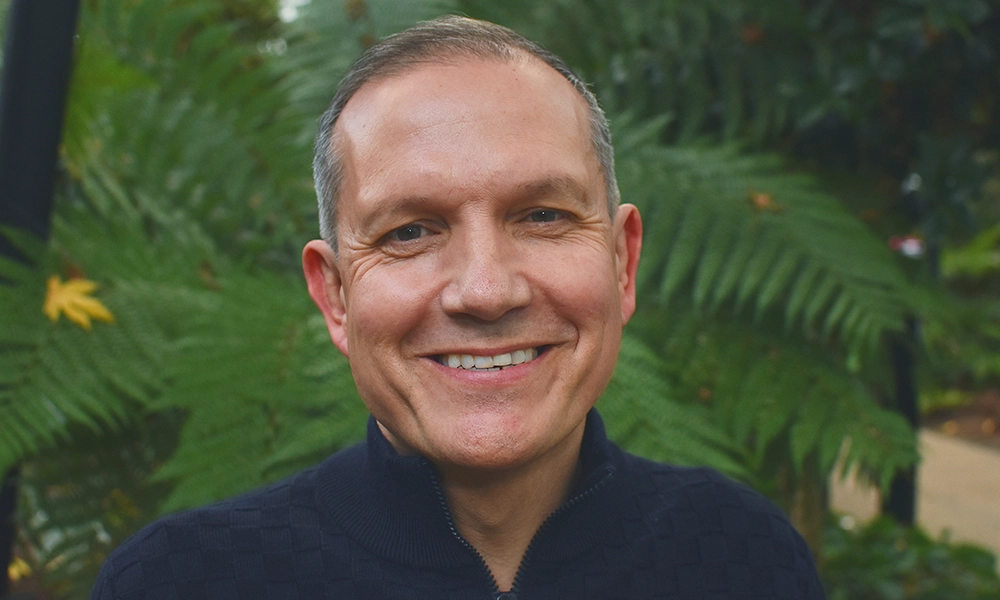
Creative Virtual founder and CEO Chris Ezekiel

Subscribe to our free Wharf Whispers newsletter here
Lego bricks are on Chris Ezekiel’s mind.

His son Matthew, three, is already a proficient builder, while younger brother Harry (one) is quickly learning the ropes with Duplo.

For Chris – CEO of Canary Wharf-based conversational AI firm Creative Virtual – the inspiring thing in their play is the way the boys use whatever materials are available to build exactly what they want.

“It’s now my kids who are giving me direct analogies for our approach,” said Chris, who founded the business on the Isle Of Dogs 21 years ago to provide customer service chatbot facilities for companies.

The firm has grown over more than two decades into a global operation serving customers around the world across multiple sectors in 23 countries and 40 languages but remains based in Canary Wharf close to where Chris grew up. 

In that time, perhaps the biggest change in the marketplace it inhabits came in 2022 with the emergence of large language model AI technology, typified by the arrival of ChatGPT. 

With the whole world seemingly abuzz and eager to get the most from the promise of this new tech, Creative Virtual stepped up, offering customers free proofs of concept showing how it might be deployed.

“It’s one of the best moves we’ve ever made,” said Chris.

“It was costly, of course, but in those two years companies were becoming very excited about generative AI and needed help to navigate the capabilities – advice on deploying them in a way that’s safe and can be trusted.”

With competitors in the field simply bolting on AI facilities to existing customer relationship management systems, Creative Virtual saw an opportunity.

“They were doing that almost as an afterthought,” said Chris.

“We’ve seen a real kick-back against it, with customers saying they don’t want to be tied into a single vendor.

“With the technology continuing to develop, we wanted a system where we could take the best conversational AI or best customer service system and plug them into each other – combining components.

“That’s where we’re having our biggest successes. 

“It’s like building those Lego models, you pick the pieces you want and make something that’s greater than the sum of its parts.

“You want to be able to select the best of the breed.”

Creative Virtual's platform allows firms to select what products they want and put them together like lego bricks
Creative Virtual’s platform allows firms to select what products they want and put them together like lego bricks

putting the pieces together

This idea of the “composable enterprise” is at the heart of the company’s approach, with its V-Person products and V-Studio platform allowing customers to choose and control the services they want. 

It’s a strategy that also gives Creative Virtual an advantage because the firm can quickly adapt its offering to meet its clients’ needs and the changing landscape of the sector. 

This flexibility is a strength in terms of allowing businesses to stand out too. 

“Since OpenAI released ChatGPT, larger companies have set up teams to handle their ethical response to the technology,” said Chris.

“So, while a business might be ready to go live with a project, the brakes might be applied to ensure compliance.

“The EU’s Artificial Intelligence Act has also come in, which affects how organisations operating in Europe can use the technology and so must be taken into account. 

“What we’ve done is to put appropriate safeguards – a really key word – in place  around the AI systems to control what they can do.

“This means that no matter what changes occur and where a company is going to deploy the technology, there’s support there.

“Organisations want to provide information that’s accurate and consistent in a trusted way. 

“They’re all trying to improve the customer experience and increase brand loyalty and this is the interesting part. 

“Although price is very important today, what we still see with most organisations is that the number one thing that differentiates companies from their competitors is customer experience.

“There’s a real danger here with AI, because businesses have been sold off-the-shelf solutions.

“When you go to a website or use a mobile app to contact a company, the experience is often very vanilla – some firms are not really thinking about the brand they should be delivering.

“What we’ve done with ours is to make it very easy to create a blend between human and AI-generated content – this is the cornerstone of our product.

“This enables organisations to do what my boys do with their Lego bricks – to build bespoke customer experience offerings that align perfectly with their brands.”

Coming on: This picture was created using Adobe’s AI image generator. While its attempt at “Lego bricks jumbled up” isn’t bad, there’s still a little way to go...
Coming on: This picture was created using Adobe’s AI image generator. While its attempt at “Lego bricks jumbled up” isn’t bad, there’s still a little way to go…

a tailored approach with Creative Virtual

Being able to embed that distinctive character in communications is an essential selling point for Creative Virtual as it continues to diversify into new sectors, whether its chatbots or voicebots are speaking to its clients’ customers or employees.

“We’re able to create a rich, brand-aware experience for users,” said Chris.

“We’re increasingly seeing marketing, digital and the customer contact centre come together in more forward-thinking organisations.

“One of our big growth areas is in retail to help companies offer sales advice and customer contact.

“Employee experiences are just as important and we’re also delivering solutions for HR departments and IT service desks, for example, whether that’s to access information on a self-service basis or to connect with a human.

“That’s one of the pieces that can get lost when considering AI – the human aspect is still key so when the computer isn’t answering the question, then there’s a human at the end of the line to pick things up. 

“All in all, we’ve got some really interesting projects happening in financial services, retail, travel, hospitality and government in different parts of the world.”

As for the future, Chris is excited by the rapid development of the technology and the benefits it can bring.

He said: “One especially interesting thing for me with AI is its ability to summarise information because we’re all overwhelmed at present. 

“It’s one of the less risky ways of deploying the technology and it’s interesting that only now Apple, the biggest company in the world is starting to explore this.

“One of the things  we’ve done as a company working with the technology is to put guardrails in place to constrain the large language models we work with and ensure they are only ingesting and answering questions on the correct material.

“We have a good solution for that, where when the AI is giving a generative answer, it gives a reference for the information.

“While everybody working in this space is interested in the development of general intelligence, for us there are two other areas that are particularly relevant.

“The first is voicebots.

“For years we’ve been able to talk to our devices and dictate messages – people are getting more used to that and it’s improved over the years but some of the technology we’re seeing now is able to have much more natural conversations with people.

“You can pause and interrupt, as though you’re talking to a person.

“We’re doing some beta testing of this for one of our customers around that. It looks promising, but it’s got a way to go.

“The other aspect is about bringing in other media to interactions.

“We’re already seeing AI systems that generate images and video, but soon they will be able to make sense of them, answer questions about them and adapt them.

“All this stuff exists today, but it’s going to accelerate quite quickly, and that’s going to be part of the mix.

“The model’s going to be about much more than text – serving customers and employees with all sorts of other media to help people have very natural conversations. 

“We are starting to work with customers on augmented reality, where they’ll create a customer experience in a virtual world.

“Augmented reality will plug into what we do, so that’s why it’s important to be working with customers now – we have to take a long-term view.

“As a company with no investment we’ve been able to do that over the past 21 years. 

“Our team is incredible, many of them have been with me on the whole journey – you don’t get many chances in life to create a new sector in business and be a global success.”

key details: Creative Virtual

You can find out more about the company and its products here.

Read more: How Dez Amore has smashed burgers and pasta together under one brand

Read Wharf Life’s e-edition here

Subscribe to our free Wharf Whispers newsletter here

Subscribe To Wharf Life

Canary Wharf: How Creative Virtual is taming large language model AI

Cabot Square-based global leader talks about conversational chatbot technology and ChatGPT

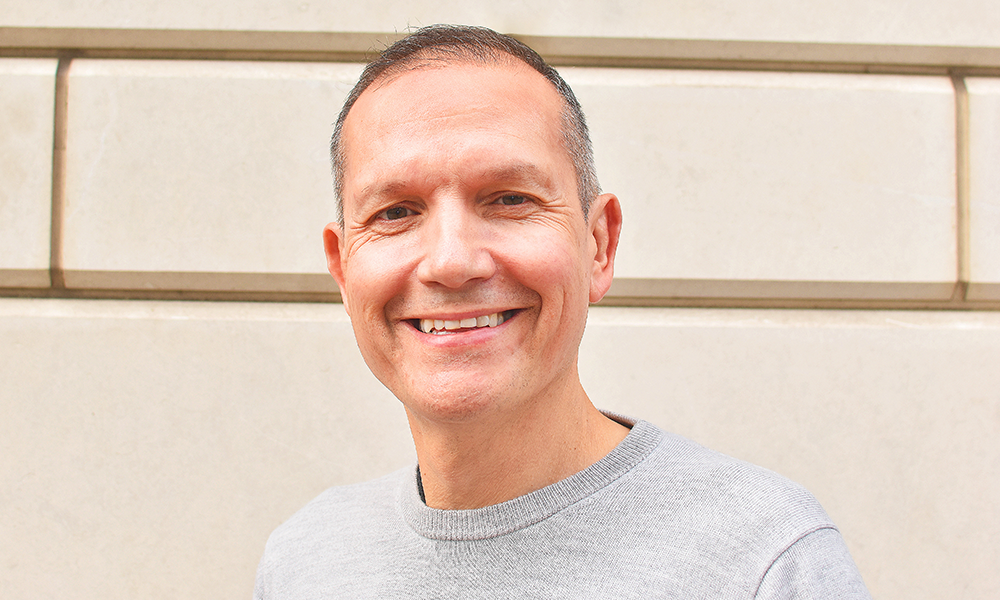
Chris Ezekiel of Canary Wharf-based Creative Virtual – image by Matt Grayson

Subscribe to our free Wharf Whispers newsletter here

Wharf Life newspaper was founded by Archant, a publishing company, to serve the area around Canary Wharf,” states ChatGPT 3.5, confidently, when asked who created this paper.

It sounds plausible, going on to say: “Archant is a well-established media company with a history of creating local newspapers and publications”.  

This demonstrates one of the issues inherent with AI large language models. They are prone to making things up.

Wharf Life was founded by Massey Maddison Ltd in 2019 and has no connection to Archant – a business that used to run the East London And Docklands Advertiser before it collapsed into administration and was subsequently taken over by US-owned media firm Newsquest.

Imagine, for a minute, that my question had been about something much more important than the vanity of asking about this newspaper – that the answer given might have serious consequences for me or the organisation I’m contacting through a chatbot. 

With AI finding its way into all sorts of areas of life – including Newsquest’s reporting, incidentally – trust becomes an issue that should be uppermost in the minds of those interacting with it, either as readers or customers.

It’s a topic that’s been on the mind of Chris Ezekiel and his team at Creative Virtual for some time.

He founded the conversational artificial intelligence company on the Isle Of Dogs 20 years ago, investing its profits to grow it into a global business that won the Queen’s Award For Enterprise in 2017.

Now based in Canary Wharf, the firm is considered a leader in its field, competing with the likes of Microsoft, IBM and Google in a sector that until 12 months ago was largely below the public radar.

That all changed in 2022 with the public release of ChatGPT – an event that sent the world giddy with the prospect of what large language models might be capable of.

“It’s been a seismic shift for our sector,” said Chris, who is based at 25 Cabot Square.

“We’d been looking at these models for about three years but everybody was surprised by the impact that this launch by OpenAI had.

“What’s been amazing has been the proliferation of other big companies coming out with their own competitive versions. 

“One of the things about running an independent company in the way we do is that you have to keep making profit to invest.

“This makes the choices you make as founder and CEO more critical.

Chris’ business is always looking to the future of organisations’ interactions with customers and employees

“There are always ups and downs when running a company – my role is to make sure there are more highs than lows. 

“However, our setup also means that we can take a longer term view when it comes to developing products, alongside the way we work with our customers and the commercial models we adopt.

“One of the things that’s been a massive success for us this year, strategically, is that we immediately offered all our customers completely free proof of concepts related to using this technology to serve their customers and employees – running large language models alongside our chatbot technology.

“It was about asking how they could be used and what the concerns might be.

“At launch, they were much more susceptible to getting stuff wrong and making things up with no way of telling where those errors came from.

“So it was about working with our clients to establish what the challenges were.

“Many had seen the models and thought they could save a fortune – writing stuff for them and answering their customers’ and employees’ questions.

“The business teams were focused on that but then they realised the risks associated with this technology and realised it would need to involve the legal and compliance teams.

“We literally saw companies developing solutions they wanted to deploy for real, while in parallel setting up ethical AI teams, who we were working with to address their concerns.”

Essentially, developing those proofs of concept meant Creative Virtual – which works with the likes of HSBC and Lloyds Banking Group – learnt a great deal about what it would take to make use of the things ChatGPT and other similar models were offering in large organisations.

“Three themes came out of this work – one is trust in the models and the content they create,” said Chris.

“The second is control – to use this technology, organisations need the ability to make sure they can override the models in certain cases.

“For example, if a customer wanted to replace a lost credit card, you need a very structured process that is compliant, trustworthy, accurate, reproducible and consistent – all of the things we’ve always provided as a company.

“There are ways to do this by training AI on the documents, policies, procedures and product information from a particular organisation.

“On top of that you can also create rules to override the model in certain circumstances.   

“The Gluon release of our V-Person technology offers a blended approach – AI created content from large language models and human-curated content, which is perfect for organisations which are trying to create accurate, trustworthy interactions.

“The third theme that came up was experience. As a 20-year-old company, we know what it takes to act as AI consultants.

“We’ve had to change our company to be aware of all the different models that are out there.

“Some of these large language models are good at some things, but not so good at others so it’s our experience that allows us to help these large organisations, who want to understand how they can be used and the benefits.

“We’re focused on delivering the control and trust they need through our products and the expertise of our people, to take full advantage of this technology.”

The emergence of large language models has also broadened Creative Virtual’s approach as it explores different sectors and applications for its products.

“It’s changed the company a lot,” said Chris.

“We worked with an accounting company in Australia – MYOB – to use generative AI to create content with a human in control to sign it off.

“They’ve just won a major customer experience award having followed through on a proof of concept with us to create a project.

“That’s the joy we get from this kind of innovation – working very closely with customers who realise the benefits of what this tech can offer.

“This type of AI can provide lots of solutions for sectors such as healthcare and government too – any organisation that has lots of documents.

“Historically we’ve mostly been focused on customer services and resources for employees but we’re now starting to deploy solutions in sales.

“A classic case is what we’re doing on the travel side.

“Currently, if you walk into a travel agent, the person there helping to advise on a trip might sometimes refer to their own or a colleague’s experience.

“There’s no reason a chatbot couldn’t be used to do something similar – using content to show what other customers’ experiences of a destination have been like – an advocate that’s scaleable.”  

Chris says companies are developing architecture to make interacting with multiple devices and services through AI possible – image by Matt Grayson

As for the future, Chris is excited by the prospect of further leaps forward too.

“I think the physical form of AI is going to be an interesting one, like having your own robot butler which interacts with the devices in your home, such as your fridge, to keep an eye on supplies, or your smart watch to monitor vitamin intake,” said Chris.

“I think that the future is joining up the AI to connected devices.

“People use the term hyper-personalisation, where organisations know lots of things about you.

“Even with issues of privacy, people often don’t mind revealing personal details if it improves their experience.

“In the future, you won’t even have to think about how you interact with the AI.

“People are already using their voices more to control devices. 

“Organisations will know the context of the conversation you’re having and will switch to different channels, so you can start off on the phone, then move to the web, with everything seamlessly connected together.

“We’re starting to develop architecture that will make this really easy to do.

“The big companies we work with talk about the composable enterprise, where we can slot all these different systems together.

“Organisations then don’t have to worry what’s coming from this company or that firm – they can select the technology that’s best of breed, and platforms which create an overall digital customer experience.”  

Find out more about Creative Virtual and its products and services here

Read more: How Level39-based WyzePay offers discounts at MMy Wood Wharf

Read Wharf Life’s e-edition here

Subscribe to our free Wharf Whispers newsletter here
- Jon Massey is co-founder and editorial director of Wharf Life and writes about a wide range of subjects in Canary Wharf, Docklands and east London - contact via jon.massey@wharf-life.com
Subscribe To Wharf Life

Canary Wharf: How Creative Virtual’s Gluon software is next level for chatbot tech

Founder and CEO of the Cannon Workshops-based company, Chris Ezekiel, talks global growth

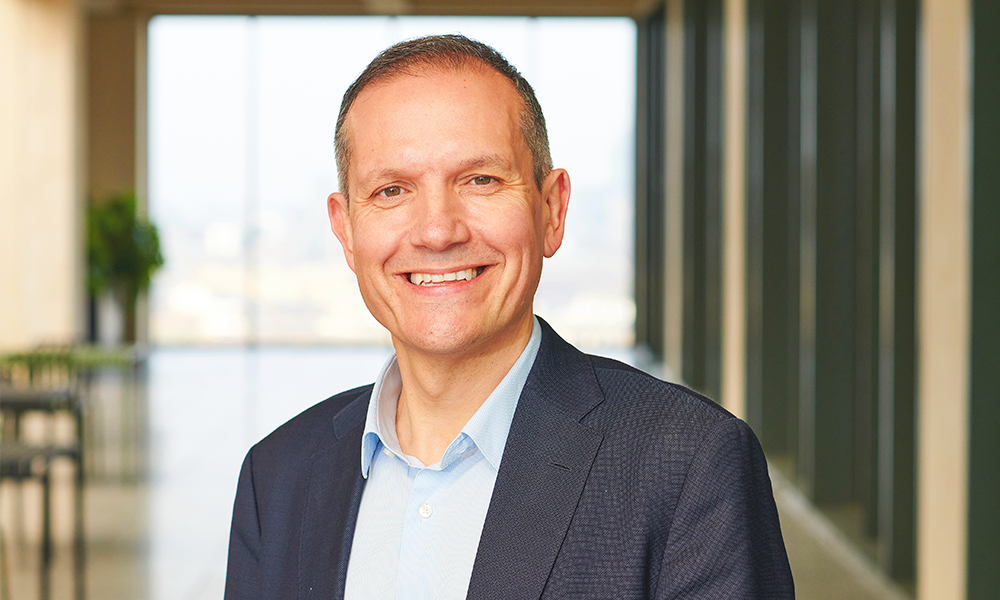
Creative Virtual founder and CEO Chris Ezekiel – image Matt Grayson

Subscribe to Wharf Life’s weekly newsletter here

All in all, 2023 is shaping up to be a big year for Chris Ezekiel and Creative Virtual – the company he founded on the Isle Of Dogs in November 2003. In 12 months time, he and his colleagues will be celebrating its 20th birthday.

But before that happens, there’s the small matter of becoming a father for the second time and – business-wise – the firm is set for a major release of its V-Person software, named Gluon.

The software is the platform that has allowed Creative Virtual to grow into a global concern, from its base next to Canary Wharf at Cannon Workshops

From there, housed in the honey brick of the Grade II listed former cooperage beside West India Quay, Chris and his team compete with the likes of Microsoft, IBM and Google in the field of conversational artificial intelligence (AI).

Together, they have built a business with global reach, servicing clients across the world including the likes of HSBC and Lloyds Banking Group – one of the firm’s first clients and still a customer today. 

In 2022, Creative Virtual has operations in the UK, the US, Europe, Australia, Singapore and in India. It’s a Docklands business trading with the world.

“We’re still independent, which is a bit unusual for a tech company in the fast-paced world of AI,” said Chris.

“I always started it for the long-term, and over the years we’ve had quite a few offers to purchase the company, which I continue to refuse.

“I’m just enjoying it and we’re competing in that area we’re operating in – conversational AI is all the rage now.

“For me, it’s about working with incredible people who are passionate about innovation, creativity and technology – some things are more important than money.

“We don’t have investors so what we do isn’t linked to their short term goals.

“While Elon Musk has recently bought Twitter, I reflected the other day that he could not buy Creative Virtual. It’s great to have that independence.”

The company’s position comes through its success developing and implementing chatbots for clients. 

These might be used by a firm’s customers, employees or its customer services personnel as a resource to assist clients.

Gluons hold quarks together at a subatomic level so they can become atoms and ultimately everything in the universe

With almost 20 years in business and numerous accolades – among them a Queen’s Award For Enterprise in 2017 – Chris said the company continued to prioritise innovation, investing its profits to grow.

“It was always the dream to become a global company,” he said. “But you don’t often get a chance to step back and consider what you’ve built.

“We pride ourselves on having a really quirky, passionate team – a really eclectic mix of individuals. It also allows us to be adaptable and to work in markets all around the world.

“Travelling to these different locations really brings it home and having the fantastic customers we do really helps. 

“Being able to explore creativity and innovation with those companies and partners has been amazing over the years. It’s what keeps us going.”

That ongoing drive has resulted in Gluon, which Chris said would be the foundation of Creative Virtual’s work for many years to come.

It’s aptly named after an elementary particle that holds quarks together to form subatomic particles such as protons and neutrons – the basis for atoms and ultimately everything in the universe.

It’s also a reflection of the Creative Virtual founder and CEO’s love of physics.

“I have a picture of Richard Feynman above my desk with his quote that you should not fool yourself and that you’re also the easiest person to fool,” said Chris.

“That’s something I always focus on because it’s really important to keep things in perspective, to keep them real.

“With Gluon we’re very excited because, while we do small software releases every month or so and major ones roughly every 12 months, this is the kind that only comes along once every four years.”

Gluon as software bears some similarities to gluon particles in that they both connect elements to create something of greater complexity and function.

Gluon is designed to work within the composable enterprise system

“First of all, the new software allows us to integrate our system with lots of other systems at a large enterprise,” said Chris.

“That might include CRM systems and data management systems, for example. 

“There’s a lot of buzz around AI and we’ve seen chatbots that use machine learning as a black box without any control over the responses the system is giving.

“We’ve always taken a different path, combining AI with humans overseeing the system, and Gluon will make that easier.

“The way we’re combining those two elements is unique in the industry and Gluon makes it super easy for organisations to use.

“The way it’s configured and the reports that come out of it make it really efficient and also controllable.

“There’s also a lot of interest in something called the ‘Composable Enterprise’ which is all about plugging systems together.

“Gluon fits perfectly into that to become a key piece of the jigsaw.

“We intend to launch in the early part of next year. We already have a test version available and have done 50 demonstrations so far.

“The feedback has been incredible. We sell direct to customers, but we also work through some partners in the world and everybody’s been unanimous in their positive responses.

“It’s a great way to develop, because the feedback is very specific.

“Taking our time is very important, because we’ve been able to listen to what people are saying while we are developing the software.

“We can be more flexible with our customers because we don’t have pressure from investors.

“It’s funny for me on a personal level, because people wondered whether having a 16-month-old now and another on the way in February would change my view about the company and whether it would be time to sell – but it hasn’t one little bit.

“I am often asked how difficult it is to separate the business from my personal life, but my view is that you should give up doing that because it stresses you out.

“If you’re an entrepreneur, you’ve got to build it into your life – it is your life and you have to find a way to do that.

“Having a supportive group of people around you, both inside work and outside, and having some hobbies and interests is essential. I snowboard and watch West Ham to relax.

“But at the end of the day business is business, you shouldn’t take it too seriously.

“That might sound odd from someone who has to pay all the bills and make sure the people who work for me can pay their bills – but knowing there are more important things in the world keeps me level-headed.

“It’s a balance and as long as you can say overall you’re happy with that balance, then you’re in a good place.

“That’s why I can’t imagine retiring.”

Read more: Discover the 2022 Greenwich Theatre panto

Read Wharf Life’s e-edition here

Subscribe to Wharf Life’s weekly newsletter here

- Jon Massey is co-founder and editorial director of Wharf Life and writes about a wide range of subjects in Canary Wharf, Docklands and east London - contact via jon.massey@wharf-life.com
Subscribe To Wharf Life