

Boisdale Of Canary Wharf

University Of Sunderland In London recruits for MNurse programme

Isle Of Dogs-based course features academic theory and plenty of practical experience for graduates seeking to become registered nurses

Alwin Puthenpurakal, associate head of pre and post registration nursing and public health at the University Of Sunderland In London - image by Jon Massey / Wharf Life
Alwin Puthenpurakal, associate head of pre and post registration nursing and public health at the University Of Sunderland In London – image by Jon Massey / Wharf Life

Subscribe to our free Wharf Whispers newsletter here

The University Of Sunderland In London has opened applications for its MNurse (Adult) programme, set to start in January next year.

The masters level course runs over two years, with those graduating obtaining the necessary qualifications to become a registered nurse with the Nursing And Midwifery Council.

It’s a pathway that can lead to careers in the NHS, the military, primary care, private healthcare, nursing homes, the prison service and more. 

“The landscape in UK healthcare is changing, as it is across the world,” said Alwin Puthenpurakal, the university’s associate head of pre and post registration nursing and public health. 

“A lot of people are thinking about diversifying their skill set – everyone’s talking about AI replacing jobs. Globally, the birthrate is low and the population is ageing.

“Japan has the oldest, Italy is second and the UK is catching up.

“As a society, we need people to care for those who are living longer, especially when they’re carrying the burden of ill health and living with conditions such as heart disease and lung disease.

“You need humans to do these jobs and that’s where this course comes into play – it provides skills of immense value to the healthcare sector.”

The campus boasts extensive facilities including a simulation ward - image supplied by the University Of Sunderland In London
The campus boasts extensive facilities including a simulation ward – image supplied by the University Of Sunderland In London

a pathway into nursing

Applicants for the programme need to have completed an undergraduate degree in any field and to have 600 hours of healthcare experience.

“This is a regulated programme for graduates who want to embark on a career as a registered nurse, perhaps who want to change the sector they work in,” said Alwin.

“We welcome people from all fields – what’s most important is dedication. Nursing, as a profession is human-centric. 

“What makes a student suitable for this programme is that they can demonstrate the ability to study at the right level, but also that they have the lived experience of understanding the needs of a patient.

“Each of our modules over the two years has three elements – there’s the theory and then clinical placements, so students can apply what they have learnt.

“Then there’s the opportunity to reflect on their experiences.

“We have lots of facilities at the university where we emulate what students will see in clinical practice.

“These facilities are about allowing people to make mistakes in a controlled environment where they have support and can learn from them.

“Simulation practice is a very valuable tool and part of how we give people the theoretical and practical knowledge they need to succeed.”

The University Of Sunderland In London is based at Harbour Exchange on the Isle Of Dogs - image by Jon Massey / Wharf Life
The University Of Sunderland In London is based at Harbour Exchange on the Isle Of Dogs – image by Jon Massey / Wharf Life

inspired by care and compassion

Alwin himself has an extensive background in both practical and academic healthcare.

“My mum was a nurse, now retired, and she was an inspiration,” he said.

“I learnt dedication and diligence from her when I was growing up – care and compassion for her were the most important things.

“She was a workaholic and I’m the same, I love what I do.

“Her dedication – sacrificing Christmas dinner to work in a care home – really rubbed off on me.

“If I manage to achieve a tiny part of what she did during her career in Manchester, then that will make it all worthwhile.”

After training, Alwin worked as an intensive care nurse in the NHS before embarking on a career in education, initially as a lecturer for London South Bank University and then in various roles for institutions including the University Of Greenwich and UEL.

He said: “There’s something special about the University Of Sunderland In London.

“Having researched its aims and history, I saw that it was an institution I wanted to be a part of.

“I’ve always had a love for learning and knowledge and I like helping others develop and build their skills.

“Whether in clinical practice or in education, my career has always been about supporting people. Now my focus is on our students.

“With the MNurse course, the skills you learn can be applied in all walks of life.

“Society keeps changing, but what makes us human is being kind to each other.

“Nursing has always provided that foundation for me to connect with other people, even in their direst need.

“It helps you to value life, individuals and it helps you fundamentally to value relationships.

“Now, I and my colleagues are stewards for the next generation going forward.

“With this qualification, the world is your oyster.

“So, if you are interested in becoming a nurse, then come and speak to us – we can help you understand whether its the right path for you.

“We also encourage people to speak to our alumni about their experience of the healthcare sector, our courses and how they’ve been able to give back to society.”

key details: MNurse (Adult) at the University Of Sunderland In London

Applications are now open for the University Of Sunderland In London for the MNurse (Adult) course that’s set to start in January next year.

You can find full details here or discover more at the institution’s open days on September 12 and November 26, 2026, at the Harbour Exchange campus.

Read more: How Bamboo Mat is set to bring Nikkei cuisine to Canary Wharf

Read Wharf Life’s e-edition here

Subscribe to our free Wharf Whispers newsletter here

Subscribe To Wharf Life

HCA Healthcare expands at Canary Wharf into 40 Bank Street

Chief operating officer Greg Bale talks engineering and patient-based design at the new facility

Image shows the lobby at 40 Bank Street in Canary Wharf
Patients access the facility from the building’s main lobby

Subscribe to our free Wharf Whispers newsletter here
Canary Wharf is constantly evolving.

Some changes are obvious, while others are hardly visible from the outside.

Take the first floor of 40 Bank Street, for example.

Looking at its exterior, few would guess that major engineering has taken place to reinforce a section of the building. 

This change was made to enable it to carry the 15 tonnes of weight associated with two state-of-the-art MRI scanners – both craned in through a gap in the wall on a single day. 

This retooling of office space has allowed private provider HCA Healthcare to significantly expand its presence in Canary Wharf.

Its recently opened facility now takes up the whole of the building’s first floor.

“It’s 20,000sq ft and offers full diagnostic and treatment facilities,” said Greg Bale, the company’s chief operating officer.

“We have GPs on site offering primary care appointments as well as secondary and tertiary level consultants providing special level care. 

“We also have imaging and diagnostic facilities, with MRI, ultrasound and X-Rays, alongside a range of treatment options.

“It’s a one-stop shop for patients – they can have their referral immediately from GP to consultant, then treatment if appropriate. 

“If they need more complex surgery, then there’s the backup of the wider HCA network.

“As a provider, we offer everything, right up to the most complex healthcare an individual might require, including cancer care, liver transplants, cardiac surgery and orthopaedic surgery.

“Anyone can access the outpatient services if they’re self-paying, but the majority will have private medical insurance.

“We estimate 75% of local employers provide cover and about 30% of the wider population will have this in place.

“Canary Wharf has been my pet project for the last two years and it feels incredible now that it’s open, having taken it through from concept to our first patient.”

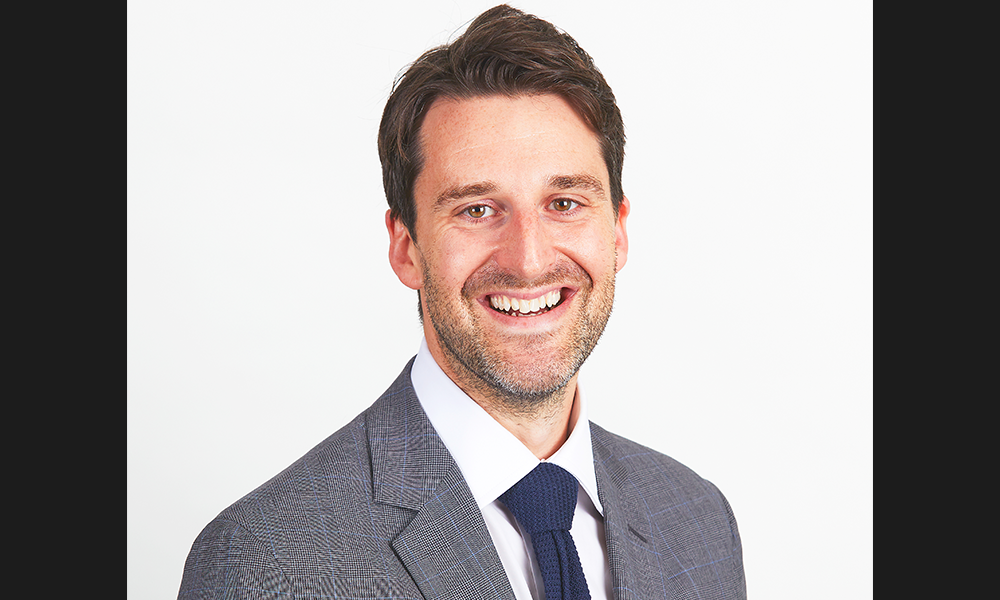
HCA Healthcare chief operating officer, Greg Bale – a man with short brown hair in a grey suit, white shirt and a blue tie
HCA Healthcare chief operating officer, Greg Bale

designed around patient need

Greg worked as a pharmacist at Great Ormond Street Hospital before continuing his career at HCA and then making a move into management.

He said he was especially proud of the Canary Wharf facility’s design.

“Involving the medical team throughout the process is the bit I’m most proud of,” he said. “It’s been built around the patients. 

“We’ve taken the lead from one of our other flagship facilities at The Shard, which has been really successful as a patient diagnostic centre.

“At Canary Wharf, we’ve taken all the learning from there, and our clinical team has looked at the patient and doctor experience and their requirements and tried to elevate it.

“I think we’ve done that incredibly successfully and the patient feedback we’ve received already – two months in – has reinforced this.”

Measures taken include ensuring waiting areas have plenty of natural light and calm views over the dock to minimise stress.

Treatment rooms each also have their own changing rooms so patients can dress and undress in a contained, coherent environment in privacy.

HCA has also been unafraid to do things differently, creating dedicated treatment facilities for specific procedures thereby opening up more time for the general treatment rooms to be used.

It’s a joined-up approach that streamlines the approach to diagnosis and treatment, ultimately meaning patients should wait less time for results and then any action that may be needed.

With breast cancer, for example, the centre boasts the latest in mammography scanning alongside facilities to biopsy suspect tissue that can potentially deliver a diagnosis in as little as an hour. 

Consultants are then on hand immediately to explain the potential implications and next steps.

Image shows the exterior of 40 Bank Street with foliage in the foreground
HCA Healthcare’s Canary Wharf facility is based at 40 Bank Street

strong demand for HCA Healthcare

“I hope patients will feel reassured and confident in the service we’re providing,” said Greg.

“I want them to walk away having had a very positive experience.

“Patients should receive whatever it is they were hoping to gain from the advice they’re given on the condition they came with.”

With such depth and quality in its offering, it’s perhaps little wonder that HCA’s Canary Wharf expansion is already proving popular with patients.

“It has exceeded our expectations,” said Greg. “In our first month, we welcomed more than 2,500 patients, which is a very strong start for a recently expanded facility.

“We’re projecting 50,000 patients will walk through our doors within the next 12 months.

“Patient feedback has been very positive too and, as people come back from their holidays, we anticipate more activity.

“At a steady rate, we’re expecting to see between 250 and 300 patients a day, although we have the capacity to increase that further.

“For us, this expansion has been driven by a number of factors.

“We see the City and Canary Wharf as the two most economically strong markets in the UK and feel that will endure. 

“For us, the Wharf is a second major hub.

“Tower Hamlets is a rapidly growing borough and the estate’s own strategy, of diversification to become the best residential, retail and corporate market, was key.

“HCA works closely with many major companies to provide health screening for their employee base and we pay a lot of attention to those clients.

“There really is nothing else like us that has the same comprehensive offering.”

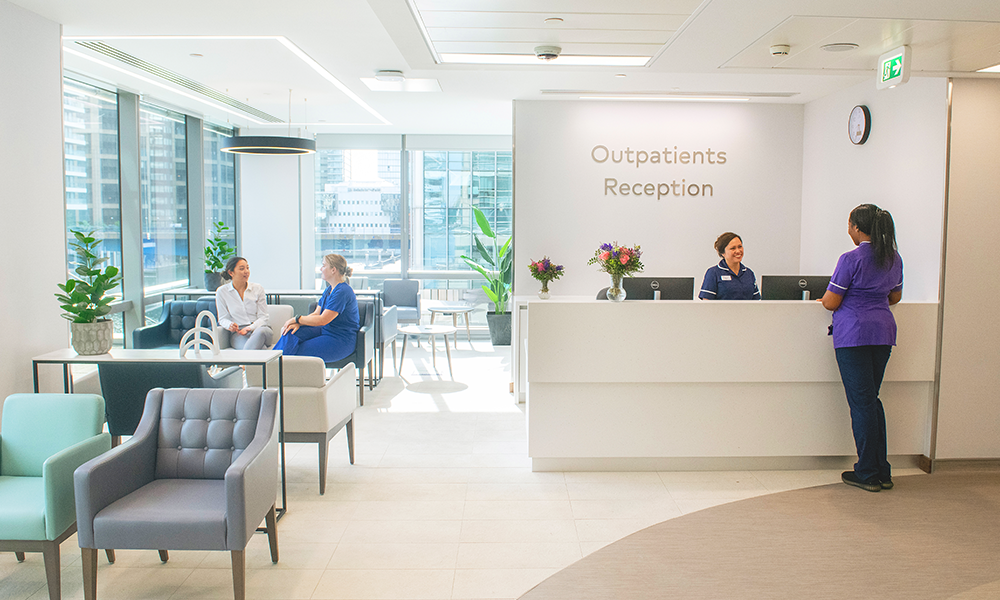
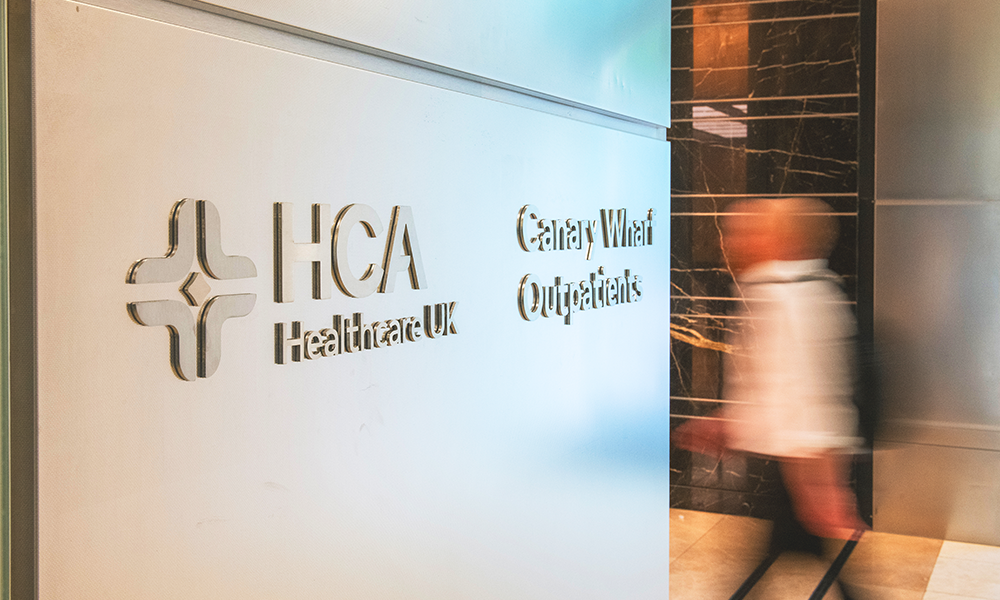
Image shows the outpatients reception area at HCA Healthcare in Canary Wharf
Waiting areas have been designed to promote calm

a one-stop-shop

“People know when they come to us that they will encounter experts in their field – whether that’s GPs or consultants.

“They will receive one-to-one care for whatever they have come to see a specialist about and they’ll know the diagnostic facilities are the best available.

“For example, we put two MRI scanners in – a 1.5T and a 3T.

“One isn’t better than the other.

“They have different magnetic field strengths so can be used for different things.

“We wanted to have both at our clinical team’s disposal.

“This approach leads to benefits for our patients.

“For instance, we represent a much younger demographic in the diagnosis and treatment of cancer than the average in the rest of the country.

“The reason for that is our detailed health screening, that patients have rapid access to a GP, can get a diagnosis quickly and then secondary and tertiary care.

“We hope that this results in better outcomes for them.

“It’s all about that one-stop shop – we’re providing patients with choice and building our services around their needs.

“Now patients don’t need to leave Canary Wharf for these services and why should they?”

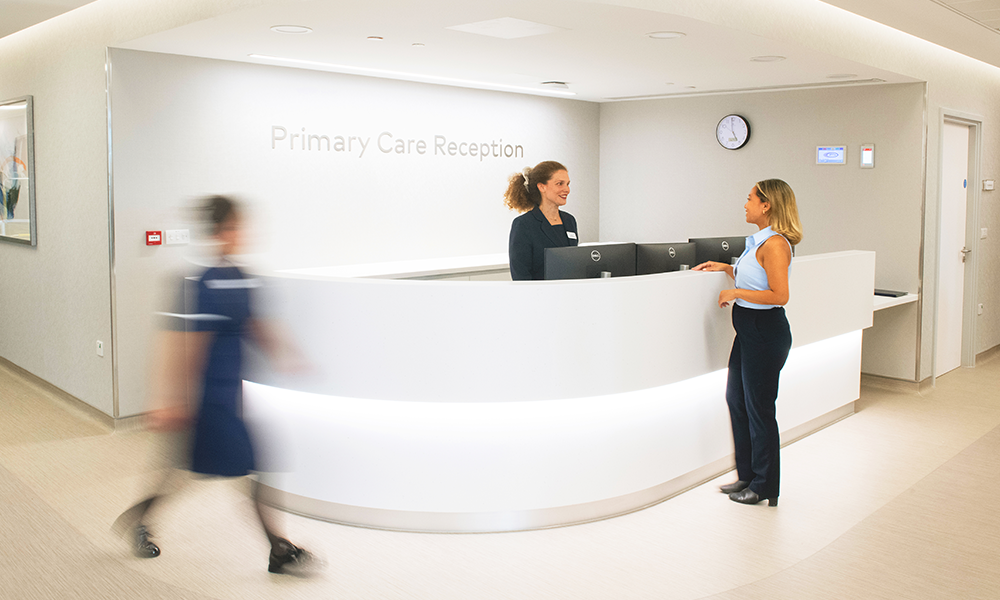
Image shows people interacting at the primary care reception desk at HCA Healthcare in Canary Wharf
Patients can attend GP appointments at HCA Healthcare

key details: HCA Healthcare

HCA Healthcare is located at 40 Bank Street on the southern edge of the Canary Wharf estate.

It offers primary care, outpatient consultation and treatments and a wide range of diagnostic services.

For a full list of what’s available here.

Read more: How Boat Sales By Aquavista offers residential moorings in east London

Read Wharf Life’s e-edition here

Subscribe to our free Wharf Whispers newsletter here
- Jon Massey is co-founder and editorial director of Wharf Life and writes about a wide range of subjects in Canary Wharf, Docklands and east London - contact via jon.massey@wharf-life.com
Subscribe To Wharf Life

Canary Wharf: How Randox Health’s Discovery package takes a bodily snapshot

What going to the brand’s Canary Wharf clinic is like for its £195, 150-data point assessment

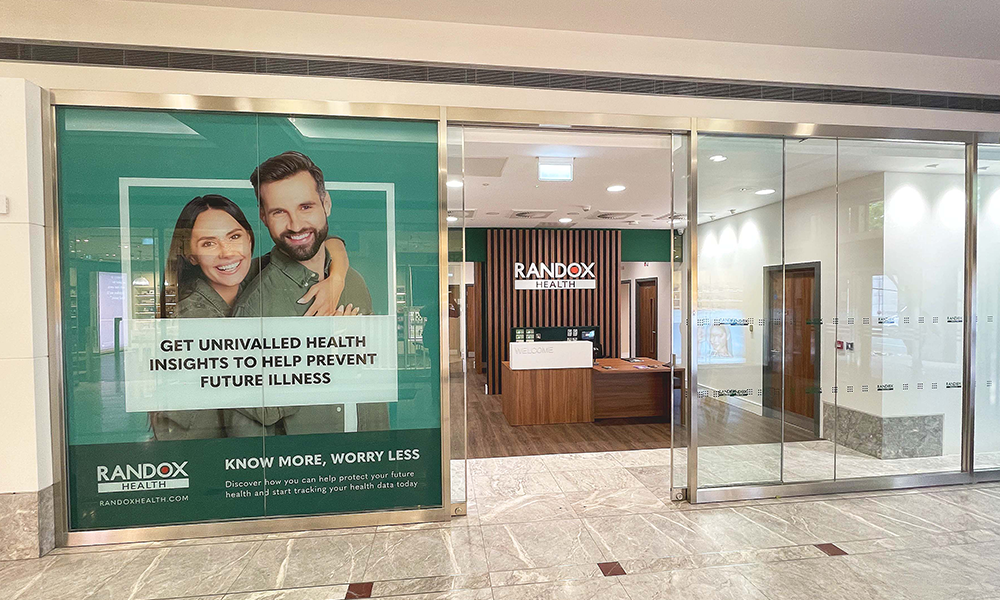
Randox Health in Canary Wharf

Subscribe to our Wharf Whispers newsletter here
“They say a little knowledge is a dangerous thing, but not half so bad as a lot of ignorance,” wrote Terry Pratchett at the opening of his 1987 novel Equal Rites.

There he was referring to a bumbling wizard keen to secure his magical legacy before his inevitable death, but the sentiment nevertheless remains broadly true.  

We are passengers in our bodies.

Whatever it is that passes for our consciousness, if handed full control, would last perhaps a few seconds before being overwhelmed by the astonishing complexities of breathing, pumping blood, interpreting nerve signals and digesting food before rapidly dying. 

To jump on the current cultural zeitgeist, Dr Robert Oppenheimer astutely pointed out in one of his Reith Lectures for the BBC that even the best of us, toiling for a lifetime, only manage to do one or two things really well. 

If faced with operating the systems of the body, the poor sentient parts of our brains would be next to helpless. 

That’s not to say, of course, that we can’t notice things that might help out or improve the way we work.

You don’t need to know how a combustion engine works to understand that putting oil in it lubricates the mechanism and tops it seizing.

Human life has steadily been getting longer precisely as the species has got better at preserving it through medicine, diet, health and safety measures and, generally speaking, killing one another less.

One of those ongoing, incremental revolutions is the rise of monitoring – the collection of data about ourselves, our health and the ways we might use that information to improve things.

While our phones measure our steps, the number of floors we’ve climbed and our sleep, it’s become increasingly commonplace to see people in the gym wearing heart rate monitors and patches continually measuring blood glucose levels.

The idea is that the mostly unseen secrets of our bodies could hold the key to radical benefits for our short and long-term wellbeing.

Who wouldn’t want to know, right? 

So, when Randox Health offered me the chance to sample its £195 Discovery package I jumped at the opportunity.

With branches across London, including one recently opened in Canary Wharf, the company is the consumer-facing arm of Randox proper, a Northern Ireland-based global health testing business with revenues in the hundreds of millions.

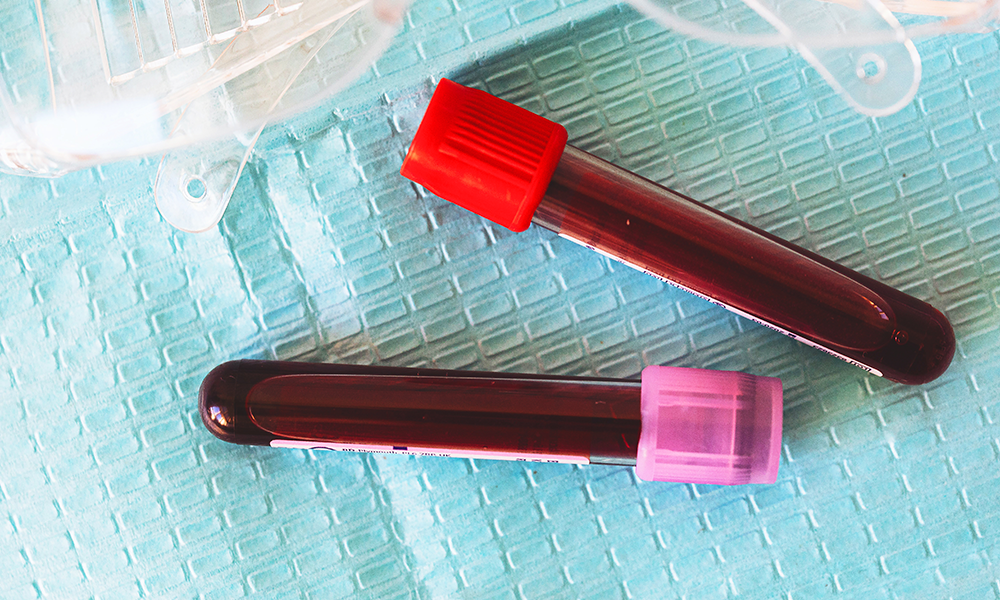
Six vials of blood are drawn during the Discovery appointment

The appointment arrived on a fresh July morning.

I hadn’t read the instructions properly – glancing through them in Third Space’s changing room, following an unusually strenuous morning Yoga session, I realised too late that I was supposed to have avoided exercise prior to the tests.

Having feverishly consumed about three litres of water in a desperate bid to rehydrate, I nevertheless marched into the Cabot Square clinic to be met with reassurance that we could still go ahead.

Clinical lead Patricia Veres then took me into a consultation room where I was quizzed on the general state of my health, my medical background and lifestyle choices.

The experience then split into three parts. 

First I was measured and underwent a body composition scan to assess muscle and fat quantities and ratios.

Next I was dispatched to do the awkward dance of the urine sample – somewhat welcome given my enthusiastic efforts to hydrate.

Patricia told me it should be mid stream, but did that mean I should stop or simply resign myself to a certain amount of splashing?

Suffice to say, pot filled and on to the next adventure.

The final act was the blood test itself.

Having been rejected as a plasma donor during the pandemic thanks to my deeply buried veins, I was dreading this part – but Patricia was the model of slick professionalism, delivering a minimal sharp scratch in seconds and rapidly filling six vials.

With my various liquids and measurements dispatched, ready to give me 150 pieces of information about my body, Patricia took time to answer every one of my questions. 

The feel of the whole business was medical but shot through with a welcoming warmth intended to relax and allay customers’ fears.

It worked, I left feeling reassured in the knowledge that in a few days I’d have some fresh insights land in my inbox.

What happens next is just that.

A little less than five working days later, I received a link to the various reports.

These come presented in three documents. The first a summary of any headline issues picked up during the tests, covering various systems in the body.

The second is a copy of the body composition scan which you get to see and discuss in the initial appointment and the third is the detailed results themselves.

Randox also sends out a paper copy of the latter, although quite why in 2023, is anybody’s guess.

Perhaps some people like to frame them.

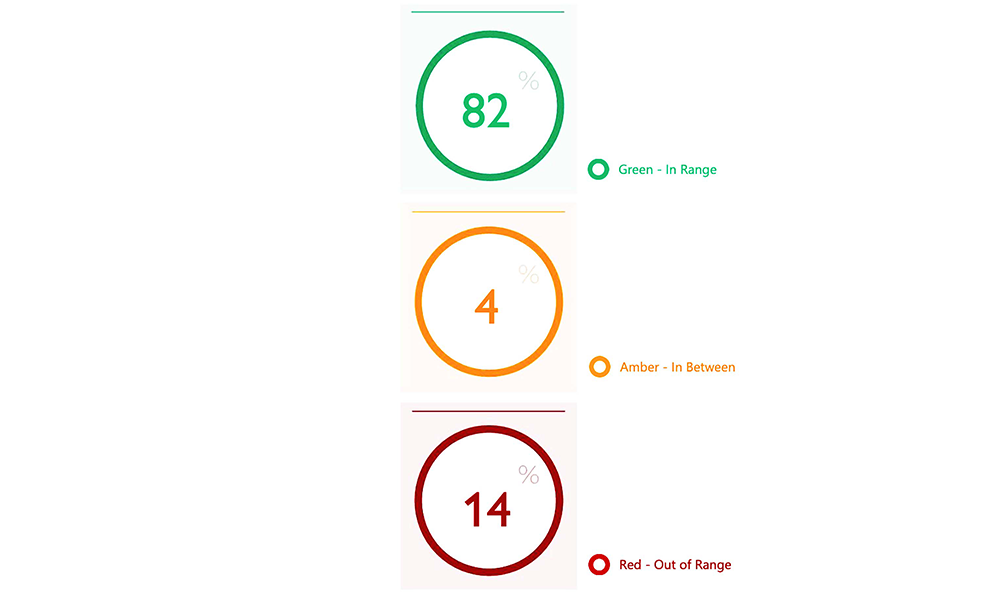
For want of a more technical explanation, my summary was fairly simple – 82% of the test results were normal or optimal, 4% were a little off and 14% were of some concern.

Some of the report’s conclusions were of little surprise. I’m clinically a bit overweight and could certainly do with shifting a few pounds. I knew that anyway.

But the value here is really in getting glimpses of what lies beneath.

There were bursts of relief – my prostate shows no signs of concern right now, ditto my liver and kidneys.

My diet is apparently working to provide adequate levels of almost all essential nutrients (vitamin D supplements are my secret, especially given the so-called summer we’ve had to date).

But then there’s my phosphorus levels, something possibly a bit questionable with my thyroid function, a bit too much bad cholesterol and an over-abundance of fat-carrying triglycerides in my blood. 

With the exception of the weight, I’m currently asymptomatic so none of these issues would likely have seen me beating down my GP’s door.

A summary of Jon’s Discovery test results

Now I know, however, I well might. 

It’s important to note that a Discovery report is not a diagnosis. The point is to deliver data that may allow people to take action to head off any issues that might be creeping up.

My thyroid function, for example, is completely normal at present.

But the presence of certain antibodies suggests that might not be the case in future so it’s worth keeping an eye on.

It’s also worth noting that a test on a single day is simply a snapshot of the body in a particular state at certain time.

It’s likely the harsh sweaty shapes I’d spent part of the morning bending my unwilling body into will have had some impact on the results – my triglyceride levels, for example.

But others are quite clear.

It’s reassuring to know that my diet is broadly delivering what it should albeit with a side of too much saturated fat. That’s an easy fix.

Tougher is finding enough phosphorus to eat.

After getting the report I later leave Waitrose with a basket overflowing with pumpkin seeds, kefir, mackerel and sardines.

My salted butter days may be behind me, but there’s no shortage of delicious alternatives that should help keep my skeleton in bones. 

I will also be seeking a phosphorus supplement, at least in the short term, because while my levels are catastrophically low, its a mineral you have to be careful not to top up too much.

In the end though, the proof will be in the pudding.

While Discovery offers a snapshot, Randox’s most popular packages are its Everyman and Everywoman offerings.

For £295, you essentially get two Discoveries six months apart to help track the impact of any changes you’ve made.

Just don’t go too radical – after all, a little knowledge can be a dangerous thing.

Read More: How Jon Hala in Canary Wharf became a family business

Read Wharf Life’s e-edition here

Subscribe to our Wharf Whispers newsletter here

- Jon Massey is co-founder and editorial director of Wharf Life and writes about a wide range of subjects in Canary Wharf, Docklands and east London - contact via jon.massey@wharf-life.com
Subscribe To Wharf Life