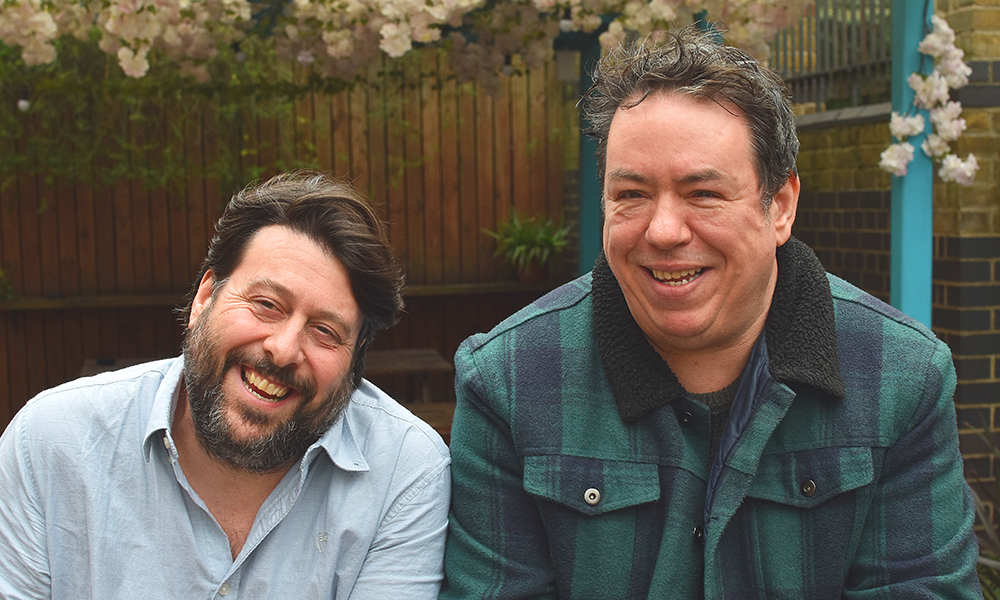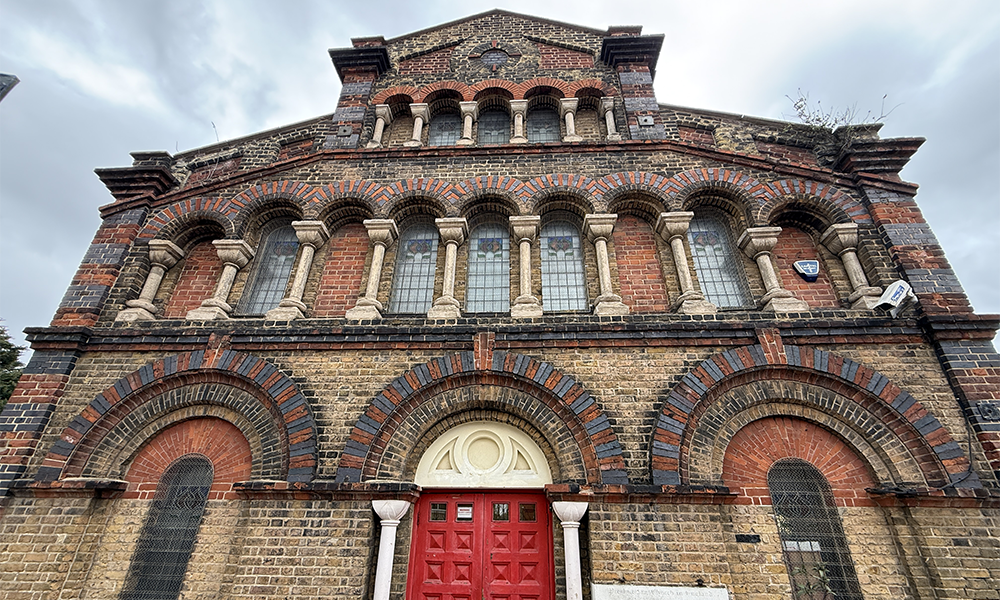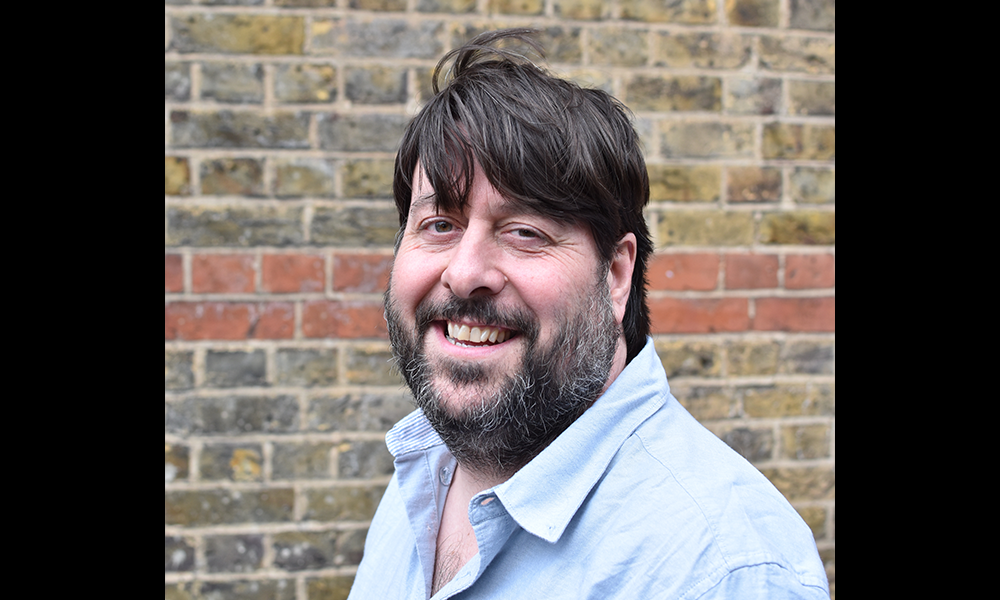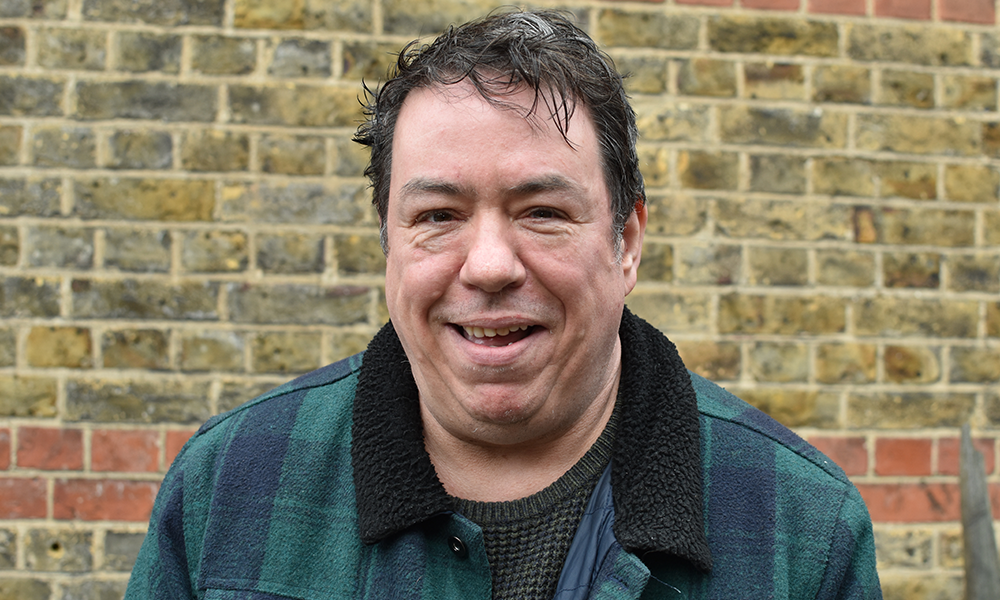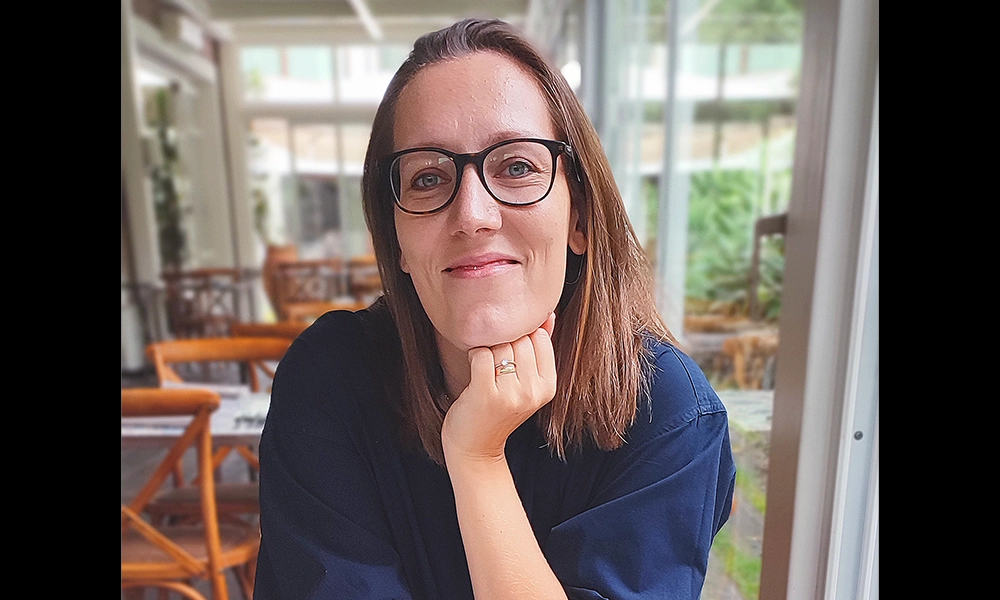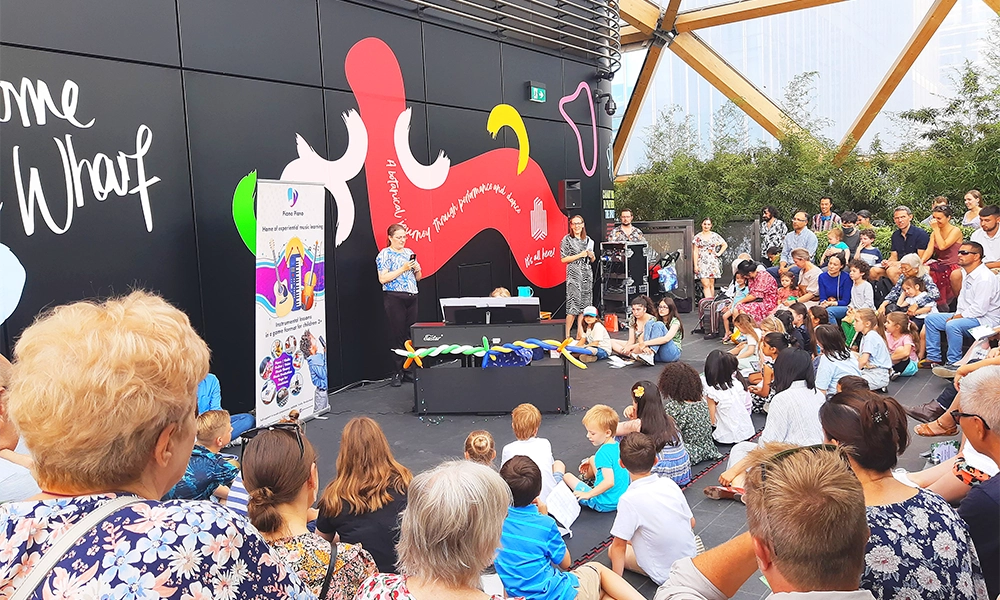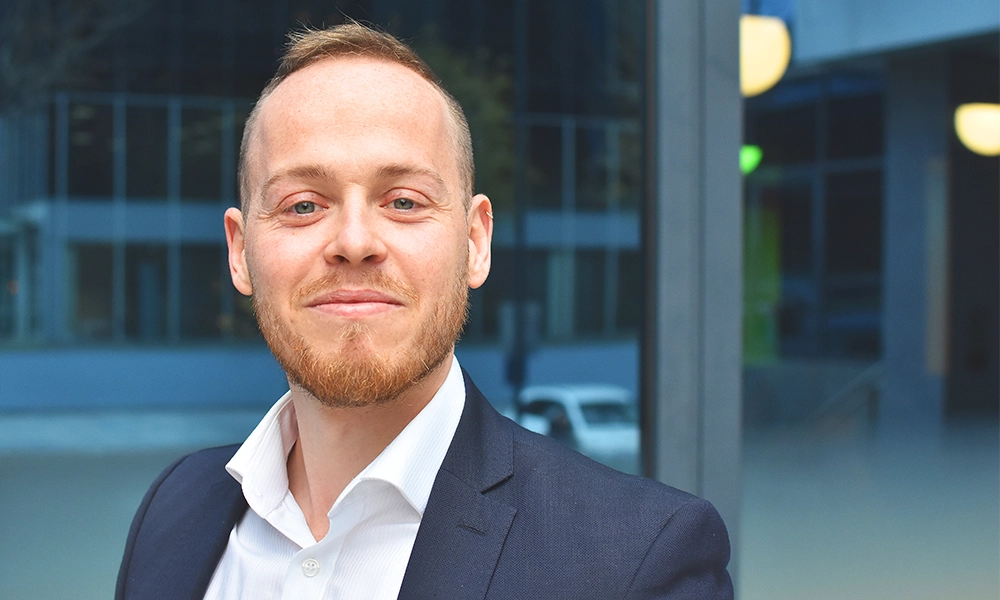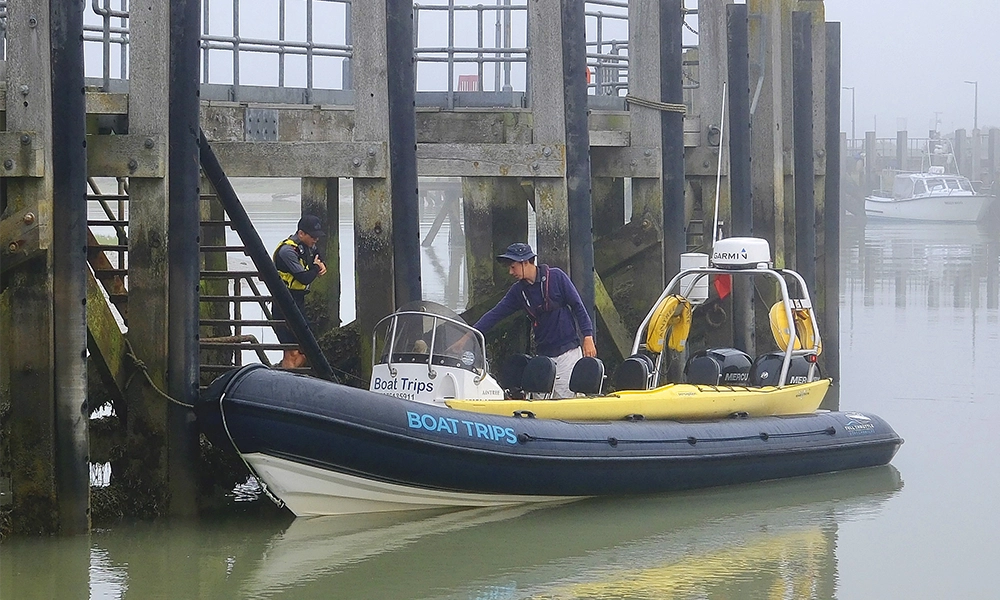


The work of the Modulus Quartet comes with significant, literal depth.
They’ve performed down mines and in natural caves as well as down Sir Marc Brunel’s Thames Tunnel shaft at the Brunel Museum in Rotherhithe and on floating nightclub Thekla in Bristol – taking newly wrought music out of concert halls and into unusual spaces around the UK.
“Our whole project is to champion composers who are writing for string quartet and want to get their music heard – that’s our core ethos,” said Craig Stratton who plays second violin in Modulus.
“We like to perform in unusual venues to keep that contemporary feel.
“We also feature film in our concerts, which accompanies much of the music and is specific to the pieces we’re playing.
“Rather than having programme notes in the audience’s hands, we also like to showcase the composers themselves on video describing their pieces.
“It gives people a personal connection with the composer – we like our concerts to really be a team event featuring the composers, the filmmakers and us.
“We rehearse the pieces with the composers before we play them and develop these collaborations and connections.”
Modulus Quartet are set to performa at Theatreship on the Isle Of Dogs – image by Theatreship
Modulus Quartet: a platform for new music
Modulus comprises Craig, Jonathan Truscott on violin, James Hogg on viola and nick Allen on cello, with the ensemble releasing its first album – 12 Seconds Of Light in 2017.
“The four of us have known each other for a few decades, having graduated from music colleges around the world.
“I was in Prague, John was in Romania, Nick was in London and I met James on a course in Vienna in the mid 1990s,” said Craig.
“We’ve all known each other in past endeavours and concerts, but I guess we formed Modulus because we all have a similar outlook.
“We thought: ‘There are plenty of quartets out there playing Beethoven and Mozart, why don’t we play music people haven’t heard?’.
“That way we’ve been able to showcase the work of budding composers and established writers who don’t get enough performance time on stage.”
more than a concert
Modulus are currently working on a second album, Evolutional, set to be released later this year, which includes pieces by Eliot Lloyd Short and Veera Lummi – composers whose work will also be played by the quartet during their first performance at Theatreship – Modulation #1 – on July 18, 2025.
This will also feature music by Nicholas De Carlo, Malcolm Lindsay and Siobhan Connellan.
“I’ve actually just interviewed Siobhan for the video that will be used as part of the performance and in promotional material in the run-up to the concert,” said Craig.
“We’ll be playing her piece August on the night.
“Another highlight will be a work by South African composer Eliot Lloyd Short – it’s in three movements and is really great, slightly minimalist but music that goes down well.
“Audiences can expect not just to sit down and listen, but to have an experience in an unusual venue with film and composer interaction.
“All your senses will be stimulated in what is an intimate venue – we like to talk to our audiences too.
“We want to build a community of composers and listeners that we hope will turn into something really interesting.
“We felt Theatreship itself would be a great venue for that and we’ll be doing at least two concerts there, this one in July and another in October.
“We have plenty of music to show the world and then we’d love to have an ongoing residence at the venue in the future.”
key details: Modulus Quartet at Theatreship
The Modulation #1 programme is set to be performed at Theatreship on the Isle Of Dogs by Modulus Quartet on July 18, 2025, from 8pm-9.30pm.
Tickets cost £23.66 and are on sale now. The second concert, Modulation #2, will take place on October 17, 2025.
For Jai Chan, growing up in Limerick, martial arts was an escape.
As the only Chinese person in her school, she was a target for bullies, but found empowerment by throwing herself into the discipline of Jiujitsu training as a teenager.
“My family came from Hong Kong and we moved to Ireland when I was eight months old,” said Jai, founder of Wutian Martial Art Institute, based at South Quay Plaza on the Isle Of Dogs.
“They were business owners running restaurants and takeaways – the usual stuff.
“I was always into martial arts because my dad’s side of the family were all policemen and they were all into self defence.
“I had a bit of a struggle, because they didn’t expect a girl to be interested in martial arts – my background was very traditional – but I really wanted to do it.
“I’d been doing a bit of Kung Fu at home and I didn’t start in a club until I was 13 – I took it seriously and paid for all my training myself.
“I even had to walk half an hour to get the bus.
“In martial arts, it doesn’t matter what culture you’re from, what your background is or whether you’re rich or poor.
“I found I had a talent for it – if someone showed me a move, I could repeat it immediately, so the instructors loved teaching me.
“It only took me two years to become an assistant instructor.”
A session at Wutian Martial Art Institute on the Isle Of Dogs – image by Wutian and Kidwise
the student becomes the teacher, then a founder
With instruction in Hong Kong mostly taking place on an informal basis in private apartments, Jai’s parents warned her against pursuing a career in martial arts, but by 15 she was already teaching children and adults.
A storied journey of training in multiple disciplines, competition and growth eventually led Jai to London with the aim of opening her own martial arts club.
However, her dream was initially deferred, as soon after arriving, she fell ill with Tuberculosis.
But Jai wasn’t ready to give up, taking on three jobs and launching her club, initially on a part-time basis.
Having successfully built her business over a decade, today Wutian is located on the Isle Of Dogs at South Quay Plaza.
“We offer kickboxing and Jujitsu sessions for children and adults and, when students reach higher levels, they also train with weapons,” said Jai.
“My instructor was the martial arts choreographer for the movie Ip Man and they have come over to help us with that sort of stuff too.
“We also offer a life skills programme to help children build confidence and develop their character.
“Parents love it because it deals with things like manners and cleanliness.”
Kidwise offers a wealth of activities for participants in its programmes to engage with – image by Wutian and Kidwise
creating Kidwise
However, this is not just a story about Wutian, there’s a second strand to the South Quay facility.
Having trained as a lawyer and developed a successful legal career, Jai’s business partner, Valerie Shao, had started to become more involved.
Feeling unfulfilled by the law, she decided to make a change, quitting without a concrete plan.
Then, inspired by the after-school clubs she attended growing up in Hong Kong, an idea came together.
“I always enjoyed them, perhaps more than school – learning music and art skills, for example,” said Valerie.
Working with business mentors in the US, the duo spent time developing their offering.
“We’ve created something complementary to the school curriculum,” said Valerie.
“Formal education is a framework where one size fits all, but we go beyond that.
“Our programmes for kids aged five-12 are not just about having fun, they’re also about learning new things.
“For example, we have a partnership with waterside market Canary Garden where the children can try running a stall to learn about business, understanding marketing and creating things they want to sell to parents and friends.
“There’s also the chance to specialise in sports including martial arts, dance, gymnastics, dodgeball, rounders, football and more and we employ specialist coaches to run those sessions – it’s essential they are high quality.
“Our approach is the same with other activities. I was a bit shocked to hear that arts and crafts at some camps were not well supported.”
“We are constantly surprised by how creative the kids are,” added Jai.
“One of the tasks is we give them lots of materials, put them into groups and challenge them to make boats that can hold marbles while afloat.
“In one session, the oldest team put everything together and it held about 20 marbles.
“The middle group only used tinfoil and elastic bands and their craft held 60.
“But the youngest kid built a boat just from folded baking paper only and it held 90.
“Not only was it a great design, but she was also able to convince her team that it would work and they should try it.”
Kidwise specialises in sport and physical activity – image by Wutian and Kidwise
equipping individuals with skills
And that’s really at the core of everything Wutian and Kidwise do.
The aim is to equip those attending sessions with skills they’ll be able to use throughout their lives.
But there’s fun to be had too, as well as lessons in how to conduct themselves.
“At Kidwise, children can earn free time to play board games, classic Gameboys or Nintendo through exemplary behaviour,” said Jai. “We call it cave time and we have a room filled with activities.
“If there’s poor behaviour, we always start with warnings – we never want there to be bullying in our sessions.
“Some children don’t know they are doing it and we help them understand the effects their behaviour can have on others.
“As someone who was bullied, I want to make sure all the children in our care are safe at both Kidwise and Wutian. That’s our first priority.”
Safety is the top priority for both businesses – image by Wutian and Kidwise
key details: Wutian and Kidwise
Wutian Martial Art Institute and Kidwise are based at South Quay Plaza on the Isle Of Dogs and offer a wide variety of services including date night childcare and birthday parties.
Opened in 1996, The Space has spent nearly three decades hosting theatre and arts performances on the Isle Of Dogs.
Born of a dream dreamt by the late Robert Richardson – who also had a hand in creating the Roundhouse in Camden – the venue spent 19 years under the care of Adam Hemming who took over the reins in 2005.
Now a new era has officially dawned.
Matthew Jameson has been named permanent artistic director and co-CEO of The Space, after a year as interim director following Adam’s departure.
With nearly six years at the venue, he brings with him a wealth of experience as deputy director.
Now he’s looking ahead.
The Space’s summer season is set to feature Lavvies, a play set in a ladies loo featuring former cast members of Grange Hill – image by The Space
a dream realised
“It’s always been a pipe dream of mine to run my own venue, but I never thought I would actually become attached to one,” he said.
“It’s the distance between a long-standing fantasy and reality.
“While getting to where I am hasn’t been like writing a goal down on paper and saying it would happen, looking back, I can see it’s the path I was going to take.
“It’s got me here and I’m really glad about that.
“My background is as an actor and performer who then fell into writing because there were things I wanted to see on stage that weren’t being written.
“Then I got into directing because people weren’t directing my work, so I thought I would give it a try.
“I came to The Space because it’s a wonderful place to be and I wanted to help others to work and make the opportunities for them that I’d had.
“I stayed with the venue and learnt all the things on the job which have got me to this position.
“I’m so grateful to have had this opportunity, it’s been like a lengthy apprenticeship.
“While I remain the custodian of The Space and the wonderful things that happen in this beautiful venue, there is a sense I’m no longer holding the fort.
“There’s a feeling of freedom and liberation – it’s great to take control and see what we can do in the future.
“There’s a certain giddiness in having the title of artistic director which goes beyond my functional role.
“I’m responsible for directing the art in this building and that’s a job that mingles with the the ghosts, the shadows and the memories of all the things I’ve seen in this room over the years.”
Snoligoster sees a Florida folktale transported to east London – image by The Space
embracing the roots
Among Matthew’s ambitions for the venue are two key pillars, ensuring its programme is accessible, enjoyable and relevant to a local audience and also a focus on presenting a varied offering.
“People are likely to see a return to the original roots of The Space,” he said.
“It was established as a multi-form arts centre that had room for all forms of expression with a particular focus on music.
“We already have a series of recitals and we’ll be looking to make greater use of our Steinway baby grand in future.
“We’d never want to lose our identity as a theatre, but looking at regional venues you see a depth and breadth of programming that’s pretty inspirational.
“There’s room for all sorts of things under this roof – cinema nights, our regular symphonic metal goth nights and things we’ve never tried before.
“Now seems like a fantastic time to try them.
“I think it’s interesting people yearn for communal activities – I don’t know what subcultures we’ll be welcoming but, in a place like London, if you build it, then audiences will come to you.
“Our patron, Sir Ian McKellen has called this one of his favourite performance spaces in the world and I agree with him.
“Even after three decades we’re still finding new ways to use the building. It’s grand enough to be epic and do the big things, and small enough to share profound intimacies.
“At The Space you’re never more than 10 metres from the performers, you get that connection with someone who is baring their soul in their performance and giving you something wonderful.
“I think the immediate thing for me is making sure we’re listening to the communities, to the people of the Isle Of Dogs and east London – ensuring we know what it is they want to see on our stage, and that we’re representing them.
“I’m very conscious that a lot of people at the moment, who may be sceptical or hesitant to come to the theatre, should see it as an art form that can be daft, silly, wonderful and cheerful as well as gloomy, dark and highfalutin.
“I’m not saying we shouldn’t present the more serious work, but there is a duty to remember the light, the hope and the positivity we can bring.
“I’m going to tease the word ‘panto’ – something we haven’t previously embraced, but traditionally its a genre that’s all about making local jokes and engaging people who live in the area.
“We’re going to do something bright, something fun.
“There might be something to think about too, especially for the parents, but it will be something joyful whether you’re a regular theatregoer or watching a show on stage for the first time.”
Lobster Pot is a play about domestic terrorism that’s also a comedy – image by the Space
summer season at The Space
Right now, Matthew and the rest of the team at the venue are simply looking forward to The Space’s summer programme.
He said: “I keep looking at it and thinking it’s a really wonderful mixture.
“There are things which are about the state of the nation and the world, plus stories I wasn’t aware of dealing with things like religious mania and indoctrination.
“The jewel in the crown of our artistic vision for this season is going to be The Yourspace Festival, which we’re hoping to turn into a regular fixture.
“We’re starting off with a weekend in July, turning The Space over to local community groups – people we’ve worked with before – and inviting them back to do whatever they want.
“One of my first acts as artistic director will be to give control of the stage to the people.
“Other highlights include Lobster Pot, which is a play about domestic terrorism that’s also a comedy and a show called Lavvies featuring cast members from Grange Hill who recently got back in touch and have collaborated on a piece set in a ladies’ loo.
“Then there’s Snoligoster, a folktale from the Florida swamps, captured and shipped to east London and so very many more.”
key details: The Space
The Space is located on Westferry Road and is easily accessed from Canary Wharf via D7, 135 and 277 buses, which stop right outside the venue. It’s a 10-minute walk from Mudchute DLR.
The performance hub features a packed programme throughout the year while The Space Bar to the rear of the venue serves up food and drinks daily to all-comers.
It’s currently open 5pm-11pm, Monday to Thursday, noon-midnight on Fridays, 10am-midnight on Saturdays and 10am-10pm on Sundays, with plentiful brunch options at the weekend.
Alan Hardie is, at least in part, powered by Irn-Bru.
The Glaswegian beverage famously “made in Scotland from girders” is an on-brand drink of choice for the man in charge of the University Of Sunderland In London for two reasons.
Firstly, the orange liquid fits neatly with the institution’s colour scheme.
Secondly, the ammonium ferric citrate that gives it its bright and fizzy hue recalls the steel necessary to make a success of launching a London campus – steel is an alloy rich in strength and flexibility.
And what a triumph the University Of Sunderland’s campus in the capital has been.
Since its launch in 2012 at a building on Marsh Wall on the Isle Of Dogs, the campus has seen more than 28,000 students pass through its doors.
The University Of Sunderland In London started off with four programmes, expanding over the years to 31.
It currently has around 6,000 students with an expectation to “grow significantly”.
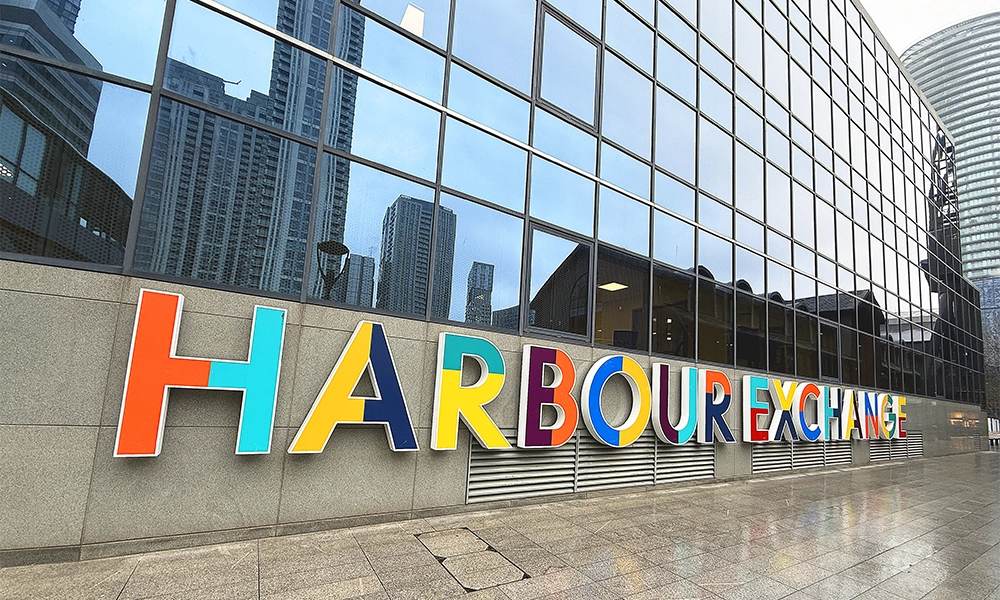
The new campus is located at Harbour Exchange – image by Jon Massey
a new campus
“We needed to move because our existing building was tired and it was time for a change,” said Alan, who is the university’s pro vice-chancellor for international office and branch campuses.
“The other thing was there just wasn’t the space for some courses and there was nothing else we could do to improve it.
“Those were the things driving us to do something better.
“We chose this location because it’s a great part of London with fantastic transport links and we already had thousands of students coming here – we didn’t want to say to them that we were making life more awkward by relocating somewhere else.
“I’m amazed at the facilities we’re now able to offer.
“I was able to take one of my deputy directors – Lynsey Bendon – away from her student role temporarily and the job she and the team have done on the new campus is outstanding.
“When I first saw it finished, I was genuinely blown away – we couldn’t be happier. It’s light, it’s funky and everything’s been done to a high standard.
“There are lots of areas for students to work together and on their own and a great staff area too.
“Hopefully it projects confidence, that we’re serious about what we’re doing.
“We’ve got the space to be even more successful – to prove ourselves – and I think we can.”
Based on the last 13 years, that’s an aim that seems eminently achievable, given the progress already made.
For Alan, the London campus’ growth has been a story of adaptability – being able to rapidly change course.
There are dedicated facilities for specific courses – image by University Of Sunderland In London
adaptability at the University Of Sunderland In London
”Here we always want the student to be at the heart of any decisions we make,” said Alan, who is originally from Newcastle and has a private sector background working in human resources.
“If that means paying for extra staff to make things more efficient, then that’s what has to happen.
“As we’re a smaller part of the overall organisation, we’ve managed to speed things up that would otherwise have to go through a committee for approval.
“What we’ve been fairly good at is taking time to understand our student demographic, which is different from some other universities.
“If people come through the door we should treat them really well and, in general, I think we do that.
“If you go into a supermarket, for example, they say they’re doing things for the customer, but the way the store is laid out is really in the company’s interests.
“We choose to operate the campus in a way that works for our students, many of whom are older and may be fitting their education round jobs and childcare.
“It’s important they don’t feel bounced around and that we run as a one-stop-shop.
“Over the 13 years, it’s been key that we’ve learned how to do things ourselves and change where necessary.
“We have a variable intake model, meaning we welcome new groups of students three times a year.
“We have people coming into the campus and leaving all the time with students at all stages of our courses.
“What that allows is for us to identify what is and isn’t working within a 12-week window three times a year, rather than waiting to assess things at the end of a full 12 months.
There are dedicated facilities for specific courses – image by University Of Sunderland In London
“It means we can quickly adapt and iron out any problems if necessary ready for the next intake.
“That’s been incredibly rewarding as a process and it’s relied on having a team of like-minded people.
“We’re 252 miles from the mothership and while the original idea was that the campus would run with a small group of staff with services provided remotely from afar, it became clear after a few weeks that wasn’t going to work.
“So we learned how to be more self sufficient and that’s been a theme during our time in the capital.
“We want to celebrate our students.
“We switched to using Southwark Cathedral for our graduation ceremonies, which is an iconic venue.
“Previously we used local hotels, but moving things takes us to another level, which is what we’re always trying to do.
“The question for us is always: ‘Why should students come here?’. It’s up to us to create the answers.
“We’re not for everybody. Some institutions have better programmes or a greater legacy – it’s our choice whether we want to challenge that by doing things differently.
“Initially when we opened with just 199 students there was a kind of modesty – a lack of confidence – for the first couple of years.
“But with support from our base up in Sunderland we’ve continued to grow and expand.”
With such stellar facilities now on tap, the university is clearly on a sure foundation to build on that even further.
Secretary of state for education, Bridget Philipson MP, opens the new campus in the presence of University Of Sunderland chancellor Leanne Cahill, vice-chancellor Sir David Bell, Alan, deputy directors of the University Of Sunderland In London, Lynsey Bendon and Geoff Paul and head of marketing, recruitment and admissions, Jelena Miljanic – image by University Of Sunderland In London
opening the university’s new campus
>> The University Of Sunderland In London’s new campus was officially opened on March 27, 2025, by secretary of state for education, Bridget Philipson MP.
She said: “As a Sunderland MP, it does give me such pride to see the university going from strength to strength.
“The investment here is the stepping stone to even more growth, excellence and opportunities for people to study.
“I know the impact the university has for local economies, for driving growth both in the north of England and in London.
“It’s more important than ever that our universities are financially sustainable and that means stepping up, as Sunderland has, to drive forward growth, opportunities and productivity – that dynamism that the sector can bring.
“I think we all know we have to do more to narrow those gaps where it comes to inequality and educational opportunity.
“The University Of Sunderland has always been at the forefront of driving that forward and I’ve seen that impact, not just for young people, but for all the adults who have had the chance to go back into education and get on and everything that means for them and their families as well.
“That’s what the university is doing with this new building and I’m so excited to see it put to such good use.
“We can all feel what that means in terms of possibilities for those who come to study here from overseas and also from local communities.”
The new campus boasts a multitude of breakout areas – image by University Of Sunderland In London
key details: University Of Sunderland In London
The University Of Sunderland In London is based at Harbour Exchange on the Isle Of Dogs and offers courses in business, finance, management, tourism, hospitality, events, engineering, project management, nursing and health as well as postgraduate research.
Proposals are being worked up to redevelop 77 Marsh Wall.
Currently office block Sierra Quebec Bravo sits on the plot, occupying the corner of Millwall Cutting and West India South Dock.
It’s also home to street food market Canary Garden and provides access to arts venue Theatreship.
Areli Developments, together with architects Patel Taylor, are currently engaged in a public consultation on their ideas to demolish the existing building and replace it with a tower.
While plans are at an early stage, the mixed use scheme could include a blend of co-living space, an aparthotel and apartments for private rent as well as affordable housing.
The mix of tenures will allow residents to stay for any length of time, whether that be one night, two years or more”.
Occupation will, however, be on a rental basis with no mention of apartments for sale in what will likely be the latest tall tower to arrive on the strip of land south of Canary Wharf.
900 residential units to rent
The consortium says its vision includes providing 900 residential units, offering flexibility for those moving in and aimed at attracting a range of inhabitants.
Alongside the accommodation, it promises to provide leisure amenities, green spaces, a lounge, gyms, shops, cafes and bars.
Early sketches show three connected towers set on a communal plinth that will have spaces for “residents’, community and public use”.
Public space will be partially sheltered, allowing people to spill out of the building at street level without getting wet.
The developer says the plans will create a new waterside destination on Marsh Wall, provide jobs both during construction and in the future, deliver opportunities for a programme of activities including a market and community events and deliver new cafes and restaurants.
The scheme aims to create “a place for people at all stages in life – for families, couples or individuals”.
Many developers have turned away from building homes for sale in recent years in favour of build-to-rent.
The advantage is these projects are often easier to finance with the promise of steady returns.
However, they can also lead to more unstable communities with people having less security over whether they remain in a property long-term.
key details: 77 Marsh Wall consultation
The public consultation on 77 Marsh Wall ends on March 31, 2025.
Interested parties are invited to have their say on the proposals via an online survey.
You can also email your thoughts to 77marshwall@kandaconsulting.co.uk
Without getting too technical, the IMO is an independent agency that sits under the United Nations and is tasked with creating regulations for global shipping – including those related to safety, security and environmental performance.
Currently, moving stuff around the world by boat accounts for about 3% of humanity’s total CO2 emissions thanks to the heavy fuel oil burned in the vast majority of ships’ engines.
Then there’s the methane, nitrous oxide, sulfur oxides, nitrogen oxides, plus soot and particulate matter belched out by fossil fuel engines.
Some are directly contributing to the warming of the planet. Others are simply nasty pollutants.
With more and more goods being moved by sea, it’s a growing problem – so what to do?
The IMO’s 2023 Greenhouse Gas Strategy is for international shipping to reach net-zero by about 2050.
However, there’s disagreement about exactly how to do that.
Green Pioneer is designed to convey a message – image by Jon Massey
considering the solutions
Liquefied Natural Gas (LNG) is easy to handle with existing infrastructure, but as a fossil fuel, it’s only 25% better than what we already have carbon-wise and also emits methane, a gas that’s worse than CO2 for warming the planet.
Biofuels – in theory – are carbon neutral, but require land and resources for production, a process that can also emit greenhouse gasses such as methane and nitrous oxide.
Methanol is easy to handle and use in existing engines, but the technology and infrastructure to capture the CO2 and make hydrogen using renewable resources are not yet available at scale.
Hydrogen will likely play a part thanks to high energy density, but it’s a flammable gas that requires special training to handle and needs to be stored at cryogenic temperatures so would require the industry to invest in significant retrofitting of vessels.
The message from the Green Pioneer and her parent company is very much that ammonia is the way to go – indeed, she’s been created as a proof of concept designed to advance that cause.
Fortescue believes speed is of the essence.
Head of green shipping at Fortescue, Andrew Hoare – image by Jon Massey
the message from Green Pioneer
“We’re here to show that the technology for ammonia is here – it’s not a new fuel, it’s an old fuel – and everybody needs to get behind it,” said Andrew Hoare, head of green shipping at Fortescue.
“We believe LNG doesn’t work – the industry hasn’t been very open and honest about methane emissions – and that if we’re not ready for ammonia, there will be a delay in decarbonising emissions.
“That’s why we’re pushing this project out now, because many things have to happen in parallel.
“You have to make sure you’ve got the infrastructure, the supply and people to handle the fuel. We can’t work on a sequential basis.
“That’s why we’re taking this vessel around the world – we know that in every port we visit there will be another discussion.
“Cities in the UK have been very welcoming so far because they want to make sure they are ready for this.”
Fortescue engine specialist, Tim Abetz – image by Jon Massey
a step on the journey
Green Pioneer is not a ship primarily fuelled by ammonia, but rather a step on the journey to that reality.
She’s equipped with four engines, two of which have been converted to dual fuel, burning a combination of diesel and ammonia.
“When we’re running on that mix the engine is designed to burn 30% ammonia, which means our carbon emissions are nearly a third down,” said Tim Abetz, engine specialist at Fortescue.
“That was our initial target but during tests on this system we’ve pushed as much ammonia in as we could and we’ve got up to 50%.
“The way this system is designed, we don’t have the pressure to go further than that but we’re confident we can get a lot higher in future.
“Realistically, we can get to 95% ammonia. As a fuel it’s harder to burn than diesel, which has its challenges but these can be overcome.
“Diesel combusts at 210ºC, while it’s 650ºC for ammonia.
“That means you need something in the cylinder to start the fire as a pilot fuel.
“During testing, the best option we had was hydrogenated vegetable oil, but the hope is there will be a greener solution for this too in the future.”
While ammonia emits no CO2 when burnt, that doesn’t mean it’s completely emission-free with nitrous oxide (N2O) – a highly potent greenhouse gas – and nitrogen oxides (NOX) produced in addition to the risk of ammonia itself making it though the engine without combusting.
Green Pioneer’s systems have been built as a test bed to measure these emissions in the field and find ways to minimise them.
Tim said: “Every combustion engine makes NOx but that’s largely due to the temperature at which the fuel burns.
“When burning ammonia the temperature is a little lower, so we make some N2O.
“If we heat it up we make NOx instead, which we know we can tackle using scrubber technology so that’s the next step – we’ve found the issue and it’s solvable.”
That’s really the point of the project. Green Pioneer isn’t the finished article, it’s a floating laboratory to show how things might be done.
One of the other issues she aims to address is the safe handling of ammonia, a corrosive, toxic gas.
Engineering manager for Fortescue’s Green Pioneer, Anthony Smith – image by Jon Massey
safe handling aboard Green Pioneer
“Ammonia is new as a fuel, but it’s old news on ships because ammonia carriers have been around a long time – vessels take it from terminal to terminal for fertiliser and so on and fishing boats use it in their refrigeration systems,” said Anthony Smith, engineering manager at Fortescue.
“We’ve got a fuel preparation room, where we can condition the ammonia for clean and efficient combustion, and at the back end we have what we call the scrubber – a kind of backstop or goalkeeper – if we need to purge any of our lines to prevent any ammonia escaping.”
While Green Pioneer isn’t designed for full-scale ammonia use, the shape of its systems is intended to demonstrate that the fuel can be safely handled and contained on ships going forward.
Anthony’s tour of the various systems is heavy on remote controls, leak sensors and pipes with double walls so any escape can be detected, contained and fixed without risk to the environment or crew.
While all the gubbins necessary to run these things safely isn’t an easy retrofit for existing vessels, it may well be a effort worth making to combat damaging emissions in the industry.
It’s worth noting Fortescue has a vested interest in ammonia as a producer of the fuel.
But we are in a climate emergency and its “gunboat diplomacy” in bringing the Green Pioneer to London makes a strong case for ammonia being part of the mix.
key details: Green Pioneer
Green Pioneer is currently moored at West India South Dock at the top of the Isle Of Dogs.
At present, as a working vessel, she’s not accessible to the public, however that may change.
Care and honesty sit at the heart of Kelsey Bailey’s business – something that should come as little surprise given her career.
Born and raised in Poplar, she spent nearly a decade and a half as an NHS nurse much of it on the Royal London Hospital’s Acute Assessment Unit ward in Whitechapel.
“AAU is chaotic,” she said. “It’s where patients go while we figure out what we’re going to do with them – where they will be sent for further treatment.
“It’s a stressful environment and staff often don’t last long there, but I loved it. I was there for nine years.
“I had two kids during that time and it got to the point where I needed to start thinking about what I was going to do because of the long hours and the shift patterns.
“I moved into practice nursing in 2019 at Aberfeldy Village and went from being on my feet all day to sitting in an office.
“That felt more like organised chaos, but I had this feeling the whole time that I wanted to do something.”
KB Aesthetics London started as a side hustle in 2022, with Kelsey offering medical grade beauty treatments in rooms rented through other salons.
“It was all word-of-mouth, but I could feel the momentum,” she said.
“My husband, Ricky, could see I had some energy built up inside me that I needed to get out – I really wanted to try something.
“I knew it would be a risk and it took about six months to make the decision to leave nursing. What if it didn’t work?
“I wouldn’t have that security blanket any more. I felt conflicted, but I needed to take the risk – if I didn’t try, I’d never know.”
Kelsey’s clinic offers a full range of services from premises on South Quay – image KB Aesthetics London
taking KB Aesthetics London to the next level
Kelsey took the plunge and built her dream – a facility with multiple treatment rooms on South Quay, just over the dock from Canary Wharf.
With help from Ricky, it’s a space she’s filled with soft brushed gold, warm whites and neutral tones, drawing on her passion for design and, of course, aesthetics.
“I wanted a calm environment – coming to a clinic like this can be nerve-racking and I just wanted everything to be chilled,” said Kelsey, who lives on the Isle Of Dogs.
“I’m very relaxed in my approach and I wanted everyone to be comfortable so they are happy telling me the truth about themselves rather than telling me what they think I want to hear.
“I’ve always liked looking after people. For every single person who comes through the door, we do a free consultation, which includes a skin scan.
“It may be that their skin is actually really good and they just need some retinal rather than Botox. We always talk about a journey.
“It’s important not to pay too much attention to one thing.
“For example, a woman in her 30s might see a line and focus entirely on that.
“But if she treats her skin as a whole with a really solid regime, the individual line might well not bother her any more.
“It’s about setting the bar lower in terms of what and how much you want to do.
“The trick with having aesthetic treatments is a light touch, which is a skill in itself. If someone has had Botox, they shouldn’t look as though they have.
“People should just be saying that they look well.
“I want people to understand that it’s not scary when you age.
“You might look in the mirror and see things that start to bother you, but it’s all right. It’s not about just getting loads of fillers.
“You can’t stop ageing, but there are things we can to do to make you feel better about yourself and those don’t have to cost a fortune and they don’t need to be invasive.
“Sometimes, if someone has a good skincare regime, all they need is the reassurance to carry on doing what they’re doing and some advice.
“Wherever possible, the natural side is the way to go.
“Our approach is holistic. I’ve known a lot of my clients for a long time.
“We’re really trying to do something different in the industry.”
Kelsey and husband Ricky have worked together to decorate the space
forging a team
Joining Kelsey on that mission are Louise Mitchell, R-Marni Aguilar and Trudi Gibson who bring a wealth of experience to the clinic.
Having grown the business largely through word-of-mouth, the plan is now to make a bigger splash and build on that solid foundation.
“It’s really down to my clients that I’ve come this far,” said Kelsey. “They’re the ones who helped give me the confidence to take that risk.
“Since we’ve put up our signs, people now know we’re here and it feels great. I’ve trained the other three on the team and we’ve really grown together.
“Before this I’d never owned a business – I’m a nurse – and starting a company on your own as a woman can be difficult.
“I wanted to do it with people who get me and that’s made it enjoyable for all of us.
“That connection means we all put more in for each other.
“As a business, we’re a bit more relaxed and that’s good for the team and clients.
“People often say it’s like a spa when they come here, which it is, but it’s built on a strong medical foundation.
“The aesthetics industry is not regulated at the moment and I always make sure people know about our medical training and the standards we set.
“Our approach is about keeping people safe – we always start with the client.
“First of all, my advice is to not spend money on things that aren’t bothering you.
“It would be wrong for me to find stuff you should be bothered about – it should never be about what I think a person needs.
“Often, following a good skincare routine will yield the best results.
“There may then come a day when you need something sorted out and then we can look at treatments and options. Then it’s about your needs.
“It’s important to keep up with what’s happening in the industry.
Kelsey wanted to create a calm, welcoming environment for her clients
“We’re not a clinic that’s machine-led – in this business it’s definitely possible to get too much stuff.
“I currently have one skincare machine – the Sofwave – which I’ve been working with for a couple of years and is non-invasive.
“I regularly attend conferences to see what’s out there and listen to the evidence and the claims.
“But for me it’s equally important to talk to people in the industry to find out what they actually do in practice.
“My clients are real people with busy lives. They don’t want there to be down time after they come for an appointment.”
Kelsey said running her own business full-time had been an opportunity for personal growth, alongside professional expansion.
“It’s been life-changing,” she said. “I never thought I’d have my own business and it’s an emotional roller-coaster.
“You have to have stamina, but I love it.
“I remember going to Canary Wharf as a kid – it’s so different now – but I really feel a part of it now and I almost can’t believe that.
“With all my family here and having grown up in the area, I feel like I’m getting the best of both worlds.”
key details: KB Aesthetics London
KB Aesthetics is located at Parker House in Admirals Way on South Quay at the top of the Isle Of Dogs.
The clinic’s full range of services is available online.
Lebanese restaurant Byblos Harbour has a long history of serving up colourful, flavourful dishes on the edge of Millwall Inner Dock.
The establishment serves a cuisine described by owner Aboud Grimesty as similar “to Turkish food” thanks to 400 years of occupation by the Turks, “but more refined” from a period of French influence and control from the early 20th century.
It’s been attracting diners to the Isle Of Dogs since opening its doors in 2008.
“We had a good plan and the financial crisis hit, but things got better until Covid came,” said Aboud, who lives in Canning Town.
“However, we carry on and we’re in good shape.
“When we opened, there was no authentic restaurant serving proper Lebanese food in east London, so I thought I’d give it a try.
“It’s a varied cuisine – after the occupation by the Turks, there was huge poverty so there’s lots of vegetarian food – people had to do a lot with a little.
“The menu is compact to keep things under control – you can order a range of starters and then a main course.
“My personal favourite is the mixed grill with chicken and lamb.”
Restaurateur Aboud Grimesty
a new look for Byblos Harbour
It’s clear when I pop in to interview Aboud that his connection to his customers is paramount.
The consummate host, he’s unfailingly attentive and frequently stopping to chat to regulars and newcomers alike.
On leaving, he presses a bottle of Lebanese red into my hands, telling me the country has the best wine in the world – how does he know?
It’s where Jesus pulled his infamous party trick with the water.
This closeness with his customers and the importance of his homeland sit perfectly in explaining the reason for my visit.
The restaurant has been refurbished recently
To cap off Byblos Harbour’s refurbishment, which has included the construction of a covered, heated and sheltered terrace for diners and shisha enthusiasts, Aboud called on a regular for some assistance with the interior of the restaurant.
“I came here about six months ago, and Aboub showed me his empty walls,” said Kyrsten Perry, an artist and Isle Of Dogs resident.
“He said he wanted to celebrate Byblos – the city from which the restaurant takes its name – so I asked him what the stand-out features of the city were and we went from there.
“It’s a port that’s been operating for about 7,000 years.
“I researched the history, found out all about its connections to the Egyptians, the ancient Greeks, the Phoenicians and its Roman ruins.
“These include an amphitheatre overlooking the ocean, but there’s also a 5,000-year-old pier with many restaurants nearby, which inspired Aboud initially.
“That’s how the collaboration began.”
Stuffed vine leaves at Byblos Harbour
creating the paintings
Kyrsten set about creating a series of watercolours from images of Byblos, with the collection recently unveiled at the restaurant.
“I wanted to capture what it must have been like in Roman times,” she said.
“Initially I thought I’d do a semi-aerial view, but it didn’t look right.
“I also didn’t want to do one of those big murals.
“It was really a collaboration. I’d send Aboud images and he’d like some and not others.
“We talked extensively about how the culture of the country has affected the food, the people and the whole atmosphere.
“To me, it was something uplifting and joyous.
“There have been so many awful things happening in that part of the world, I thought it would be great to create something positive.
“Aboud supports multiculturalism – people coming together.
“It’s been a real privilege to work with him because I can see what he’s trying to do.
“He brings people together with good food, good wine and good times.”
Isle Of Dogs artist Kyrsten Perry
inspired by the water
Born in Cornwall, Kyrsten was brought up in Australia before returning to the UK, gravitating to the Isle Of Dogs after a stint running a venue in Islington.
In addition to her full-time job working for a Labour MP, the former Tower Hamlets councillor is a practising artist working from a studio in Roman Road.
“During the day we deal with a lot of people who are acutely desperate and in need of support,” she said.
“The art is a good counterbalance to that.
“Some friends and I share the studio and I’m absolutely in my element when I’m painting.
“I’ve really enjoyed the process of working with Aboud – I trust him and he’s got really good taste.
“When you’re in that creative process, trying something new, that’s really important.
“I’ve done lots of things in the past – I have two art degrees – but I’ve only really taken it seriously in the last couple of years.
“I’ve been doing the art class at the Shadwell Centre in Whitechapel and that’s how I met the friends I share the studio with.
“Something happens in that creative space which is very precious and I’ve felt that doing this project with Aboud.
“I’m certainly up for more commissions as I’ve finally got my website and Instagram sorted.
“I’m definitely looking for more opportunities to collaborate, but I’ll be doing my own thing as well.
“I really have to take my hat off to Aboud.
“Byblos Harbour is always reliable – my mum, who is originally from Streatham loves coming here with her friends when she visits from Australia.
“You know you’re getting good quality food and that it will be a fabulous day.
“Aboud has had to be creative over the years, to reinvent his restaurant but always with what the customer needs and wants in mind.
“I’ve known him for 10 years and I’ve always loved the food – having been a councillor, I know how much restaurants struggled over the pandemic and the cost of living crisis, so it’s fantastic that he’s adapted and is still delivering that quality.
Another of Kyrsten’s paintings for Byblos
key details: Byblos Harbour + Kyrsten Perry
Byblos Harbour is open Monday-Saturday, from noon to 11pm and on Sundays from 1pm to 10.30pm.
Takeaway options include Deliveroo and Uber Eats for those who prefer to dine in their homes, although you’ll be missing out on the artwork.
“I’d always been attracted to the law because of my parents’ belief in equality and justice,” said Zahira Razaq.
“I absorbed their advice about finding a career in something like finance, law or medicine – one of the professions.
“It’s very hard to get a job in the law when you’re starting out and it just so happened my first job was as a paralegal working in immigration.
“I didn’t think there was much to this particular area before that, but when I got into it, I could see the impact the work has.
“It’s about helping to change people’s lives for the better.”
It was those first experiences that set Zahira on her path, progressing in the profession to become a trainee solicitor after six months and then a solicitor.
This year will be her eighth in the legal world, having joined the immigration team at Kidd Rapinet Solicitors’ Canary Wharf branch at Harbour Exchange in August.
You don’t have to sit with her for long to understand that her passion for the work burns fiercely.
Zahira discovered a passion for immigration law early in her career
a passion for immigration
“I’m old-school when it comes to hard work – I come in first thing to do my research because I never want to be the person giving bad advice – I always go above and beyond for my clients,” said Zahira.
“It’s my responsibility to prepare for everything and to be honest.
“I’m always upfront to the point that if I don’t see any merit in a client’s case then I won’t pursue it and waste their funds.
“I understand money is hard to earn and, if someone is in a position where they are struggling to pay for legal representation, it’s essential they get the very best service possible.
“Often my job is about changing a judge’s mind after the Home Office has turned down an application by showing how a client meets the criteria on compassionate grounds.
“I think it was really seeing the effect on clients that drew me deeper into this area of the law.
“There was one man who had five kids and was the sole breadwinner for his family.
“He was doing every kind of job available just to support them.
“I referred him to the British Red Cross and food banks just to help him survive.
“We went back and forth with the Home Office for ages, but eventually I managed to get him leave to remain.
“Seeing the gratitude on the faces of his family was amazing.
“It gave him a lot of security and was a whole new start for them. I’m not sure what would have happend to them had we not succeeded.
“The satisfaction of doing things like that is what makes the job so worthwhile – you can’t really measure it.
“It’s about fighting for justice and equality.
“I hate things that are unfair with a passion.
“What I want for myself is what I want for everybody else – situations where someone’s liberty has been taken from them or they’ve been denied justice without a fair hearing really get to me.”
Kidd Rapinet Solicitors offers free phone consultations on immigration matters
services at Kidd Rapinet Solicitors
Kidd Rapinet offers a comprehensive selection of immigration services for individuals and businesses from its base on the Isle Of Dogs, apt perhaps given the area’s history as a locus of international trade.
“We’re a one-stop-shop for people or companies who want to talk about immigration in any context,” said Zahira.
“A very hot topic is compliance – not all organisations understand things like work visas and right-to-work checks but there can be substantial penalties for those in breach of the rules.
“One of the things I’m especially keen to do here is to reach out to businesses and universities – students will have the qualifications to become skilled workers, but they need the work experience to go with that.
“Businesses often hire students because they are cost effective and can be moulded to specific roles, but a failure to do the right-to-work checks could see firms liable for fines for anyone employed illegally.”
The law is crucial when it comes to immigration.
It establishes whether those who come to this country through both legal and illegal routes can legitimately stay here, for how long and what they are allowed to do while resident.
“It’s always going to be a hot political topic,” said Zahira.
“Governments tighten rules for businesses and educational organisations to bring legal migration down.
“I would advise any migrant coming to the UK, either as a student or on a work visa, to try to obtain legal advice first.
“We can talk to them about how to remain after completing their studies and advise businesses and individuals on compliance when it comes to being employed and employing those from overseas.
“You want a solicitor who knows the law and who will be willing to fight your case if that becomes necessary.
“It’s very important because migrants contribute a lot to the UK economy. Many of my clients have really well paid jobs – that’s true of students who want to remain here after studying too.
“Immigration is an ever-changing field within the law and one that’s not just about what’s in the rules and regulations, but an area that’s based on arguments from other cases that apply to individual situations.”
for those seeking advice
The team at Canary Wharf has more than 25 years of experience helping people and businsses with immigration issues.
These include those who wish to visit or stay in the UK as a partner or child, a student, an investor, an innovator or to work at or start a company.
The firm can also help with permanent residence, indefinite leave to remain, British citizenship and UK Passport applications.
“Whatever issue it is, regarding immigration, then come and talk to us,” said Zahira. “We’ll be able to tell you whether we can help with your case.”
The firm’s expertise include immigration, conveyancing, wills and probate, employment law, commercial property, family law and an extensive list of services for businesses of all sizes.
Kidd Rapinet offers free, no obligation phone consultations with lawyers on immigration matters. Call 020 7205 2115.
From a very young age, it was clear Pauline Suarez would be a teacher.
“Even at three years old, my mum remembers me lining up my teddies and teaching them how to read and write,” she said.
“However, they were very poor achievers.
“It was something in me – I knew what I wanted to do. I’ve always had a passion for nurturing people and I really wanted to help the world.”
Having grown up in “a very small village in Canada”, Pauline studied education at the University Of Saskatchewan before seeking a position overseas.
She interviewed for a role in Mexico, but only found out she’d got it by letter 12 weeks after she’d already started teaching in London.
“I came to be a supply teacher in primary schools,” she said.
“I actually didn’t take it all that seriously.
“I really wanted the Mexican job and I think London was probably the worst interview of my life.
“But I got the job, I loved it and I thrived.
“My first job was at De Beavoir school in Hackney – the toughest, roughest school I had ever seen.
“The kids were on the tables, totally out of control.
“I called my mum in the first week and told her it was awful and that I was moving home.
“But that was in 2000, it’s 2024 now and I’m living and working in Canary Wharf.
“London is like a woman and you either love her or hate her.
“I’m madly in love with her. This is an amazing city – it just has everything.”
born of experience
Working initially in Southwark before moving to Tower Hamlets and a stint in South Africa, Pauline’s career has see her accrue a great deal of experience in inner-city education.
Before embarking on a new venture, she worked extensively at Malmesbury Primary School in Mile End and most recently at Harbinger Primary School on the Isle Of Dogs.
“I was a phenomenal teacher,” said Pauline.
“But teaching 30 children each day and working long hours left me more and more disillusioned with the education system.
“It was about having everything written down rather than adapting to the child’s needs.”
Having initially started tutoring while still teaching, she decided to leave the classroom in 2022 and try something different.
“I wanted a change,” said Pauline.
“It was a time in my life when I couldn’t get assurance of regular work as a teacher – they would just call when they needed someone, a bit like a zero hours contract.
“I felt like a swan – calm on the surface but frantically paddling under the water.
“So I decided to take on a franchise with tutoring company Conexus.
“Only around 16% of businesses in London are owned by women, so that’s one reason I wanted to do this.
“I started the franchise for the Canary Wharf area in January and I’m so grateful for the support I’ve had – everyone has wanted to help.”
Conexus Tuition Canary Wharf: Isle Of Dogs sessions
“It was started by a woman called Sharon Cawley – a teacher who had a breakdown, a broken marriage and was living with two kids in a council flat on benefits.
“She realised she could tutor to make a living and discovered that teaching them in small groups worked really well.
“That’s backed up by the research from the Education Endowment Foundation, which found that this kind of environment allows children to learn more over the course of a year than one-to-one.
“Sharon was teaching English and found out that many of her students were also going to see a maths tutor.
“She decided to hire one herself and that’s where Conexus was born.
“The company provides small group learning from top quality tutors.
“Each knows their subject really well – we only hire specialists because you need that in-depth knowledge.”
Pauline’s franchise offers online sessions from £20 or in-person classes from £23 on Tuesdays and Thursdays after school.
the benefits of tuiotion
She said: “I don’t believe there’s a child on the planet who wouldn’t benefit from having a tutor.
“Tutoring embeds learning and allows your child to get to grips with their education.
“The school system is overloaded.
“There’s too little money and, in a traditional classroom, the average student might only be spending three minutes with a teacher during a lesson. Tutoring is an investment.
“If a child is top of their class, they often need a push to achieve their potential.
“Equally, if they’re struggling, then they need support. It’s being able to adapt to the child’s needs.
“One small thing can affect them and a tutor has the time to find out what that is and deal with it.
“Children can be terrified of saying the wrong thing or making a mistake.
“I had a child two weeks ago who had been over-tested in school.
“She came in, started learning and she seemed fine, and then she had a panic attack.
“I got her to breathe so that she could calm her nervous system down and then she cried and cried.
“I asked her why she was so upset and she said she’d failed a test in school. I explained to her that as her tutor it was me that had failed if she didn’t know something.
“Now she has the biggest smile and wants to come to our sessions because she knows there’s no judgment.
“In school there’s an exorbitant amount of pressure on these children, and they’re not handling it well.
“We can take away that pressure and we can help them learn. That’s our promise.
“I’ve had phone calls from parents fearful that their child would fail exams and I’m always confident we can get them through.
“One of the mums cries when she sees us – her daughter was failing but ended up getting fours and fives at GCSE and is now training to be dental nurse.
“It feels amazing when you can really change the course of someone’s life – it’s my true purpose.”
key details: Conexus Tuition Canary Wharf
Conexus Tuition Canary Wharf delivers group tutoring sessions at the Barkantine Community Centre each week.
One-to-one and online sessions are also available in children’s homes by arrangement.
Conexus is a member of the Tutors’ Association and is committed to safeguarding with all staff DBS checked every term.
Pauline is also about to launch specialist 11+ Core Classes aimed at helping children in Years 4 and 5 pass entrance examinations for selective secondary schools.