The housing association is offering up to £5,000 cashback on selected apartments, a discounted reservation fee and free gifts
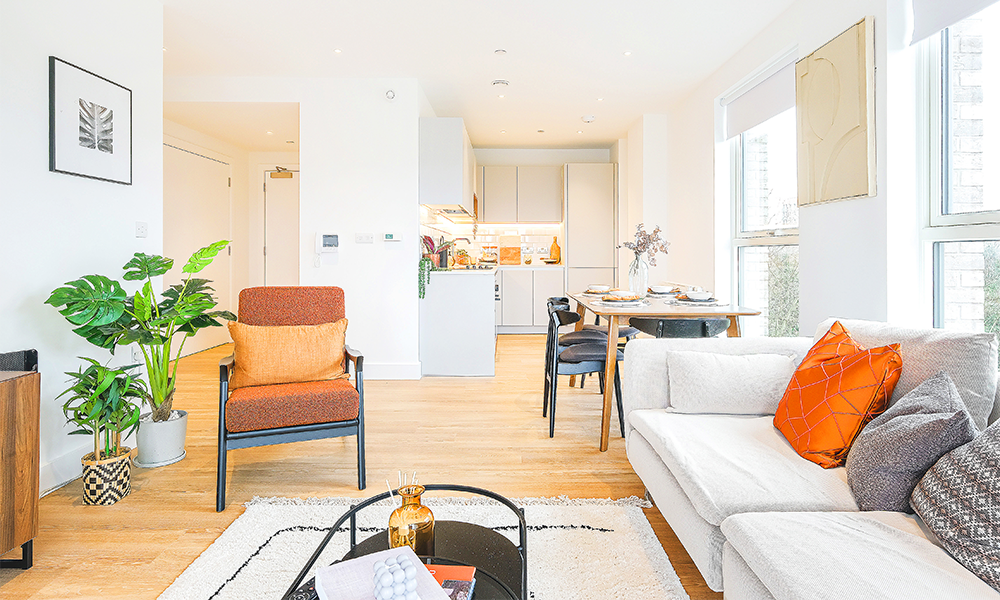
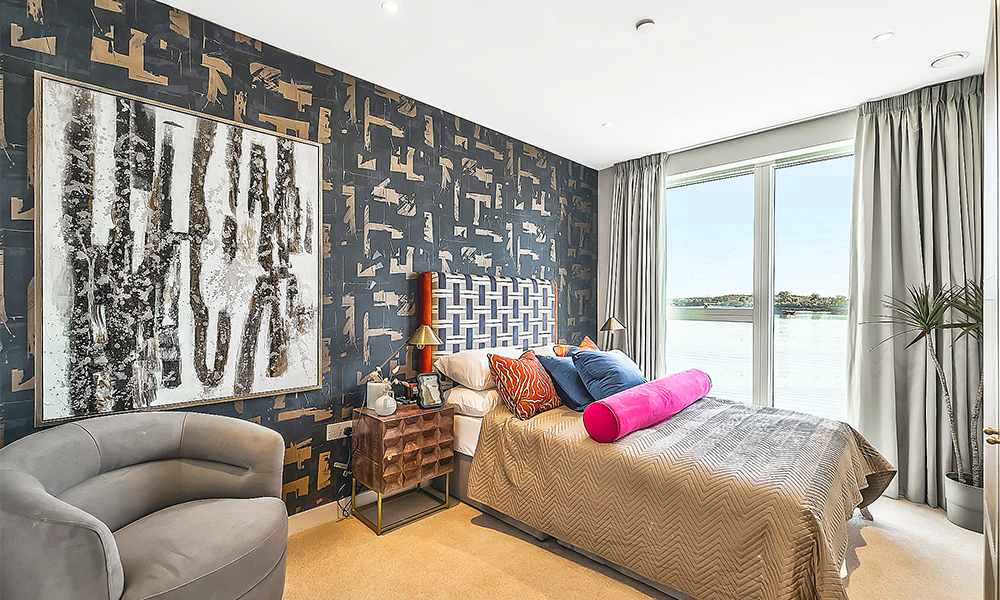
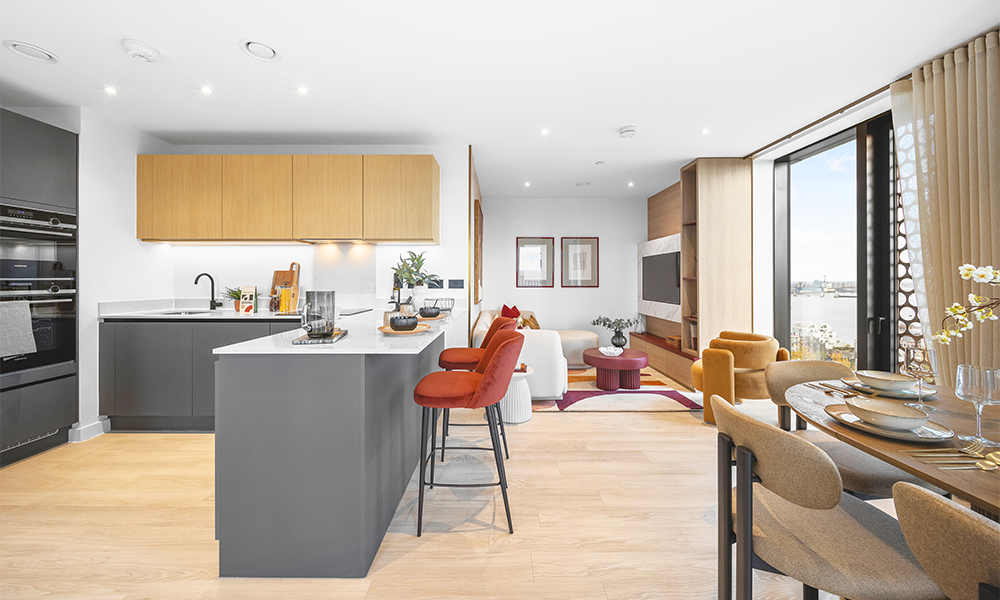
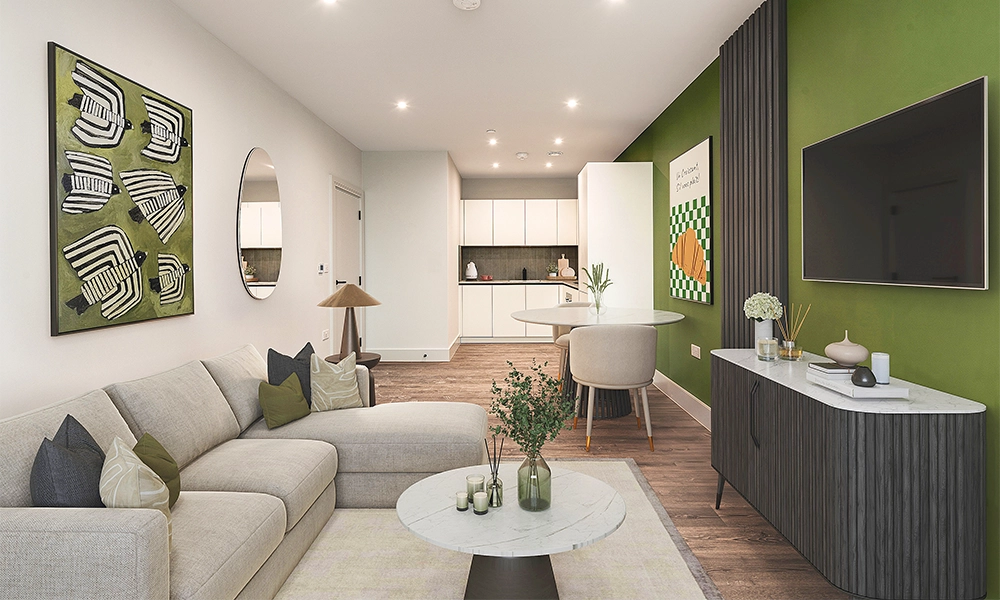
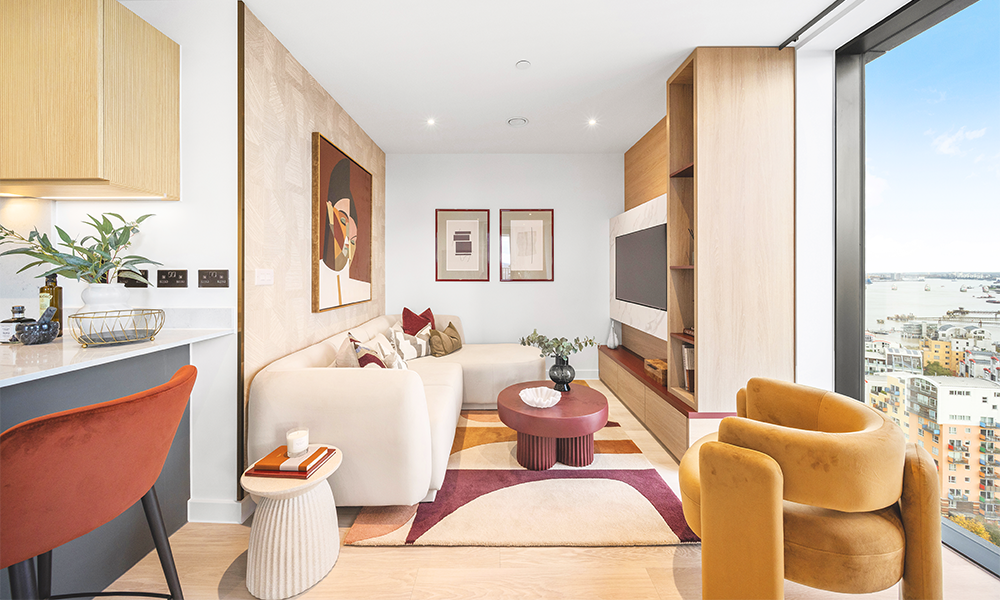
A show home at Kidbrooke Square – image supplied by NHG Homes
Winter is a wonderful time for making plans and focusing on the future,” said Diana Alam, director of sales and marketing at NHG Homes.
“We’re delighted to provide seasonal support to help make those home-buying plans a reality.”
The housing association has come up with a trio of incentives designed to tempt prospective purchasers across five developments during the festive season.
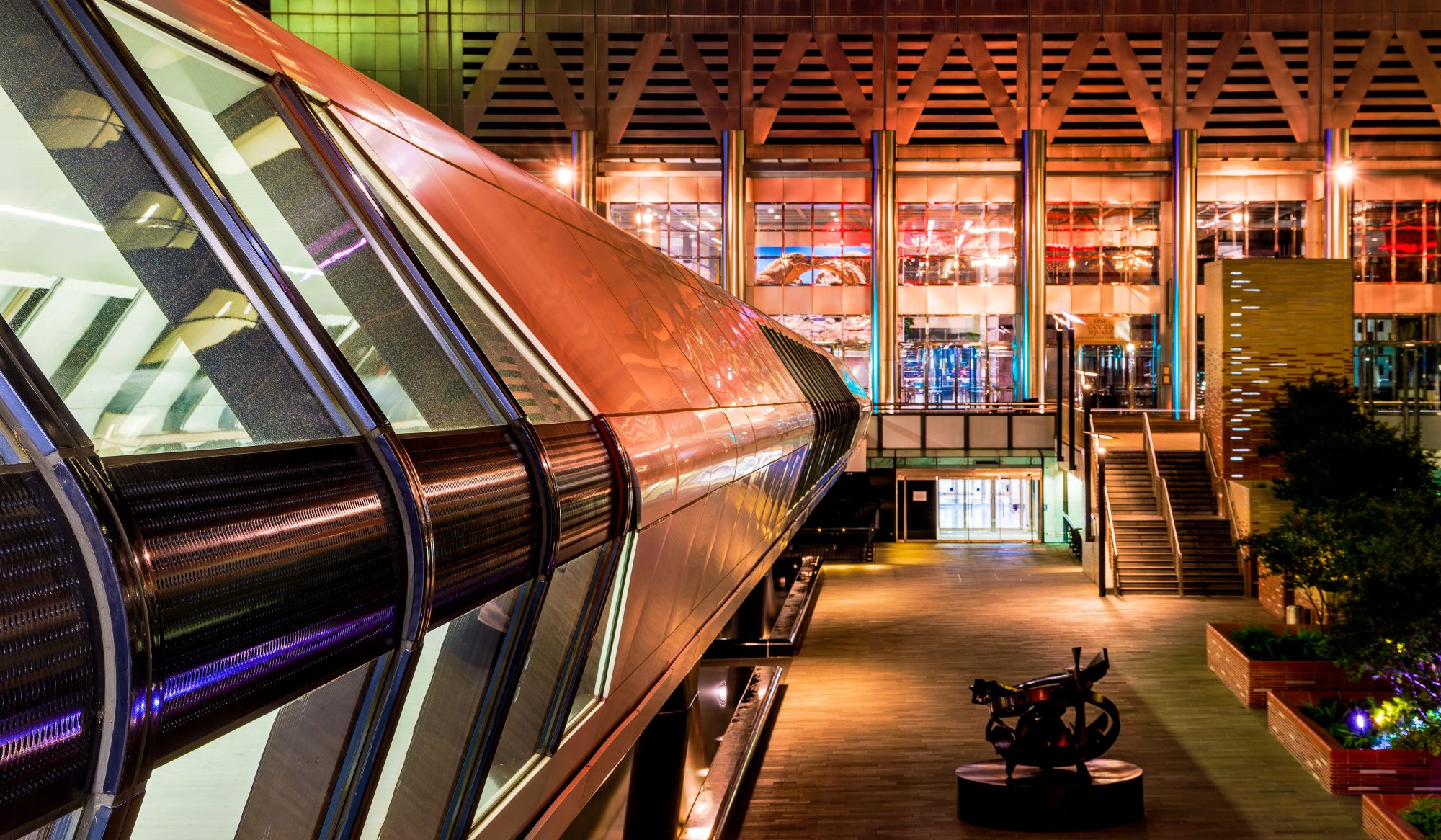
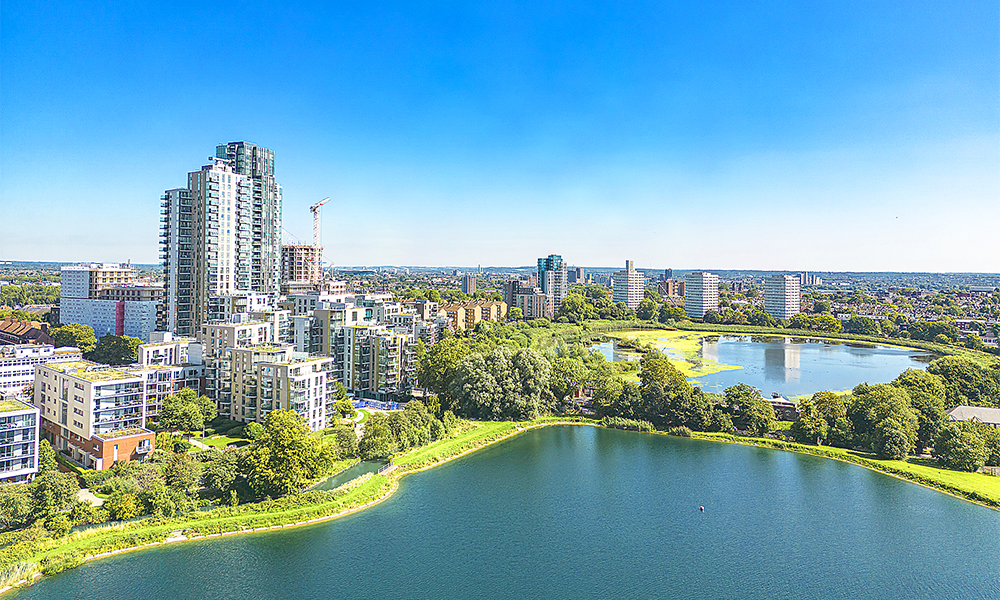
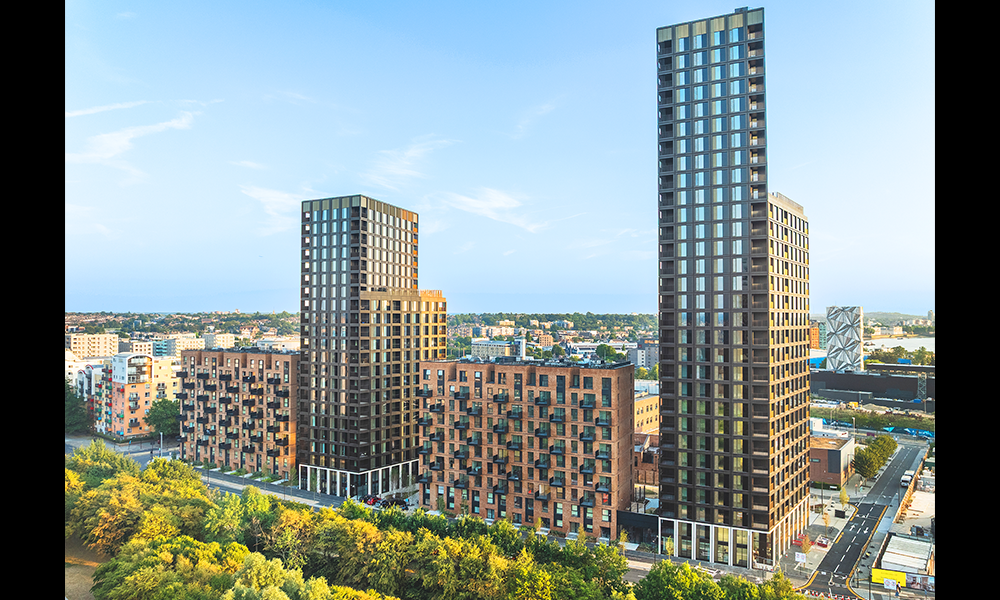
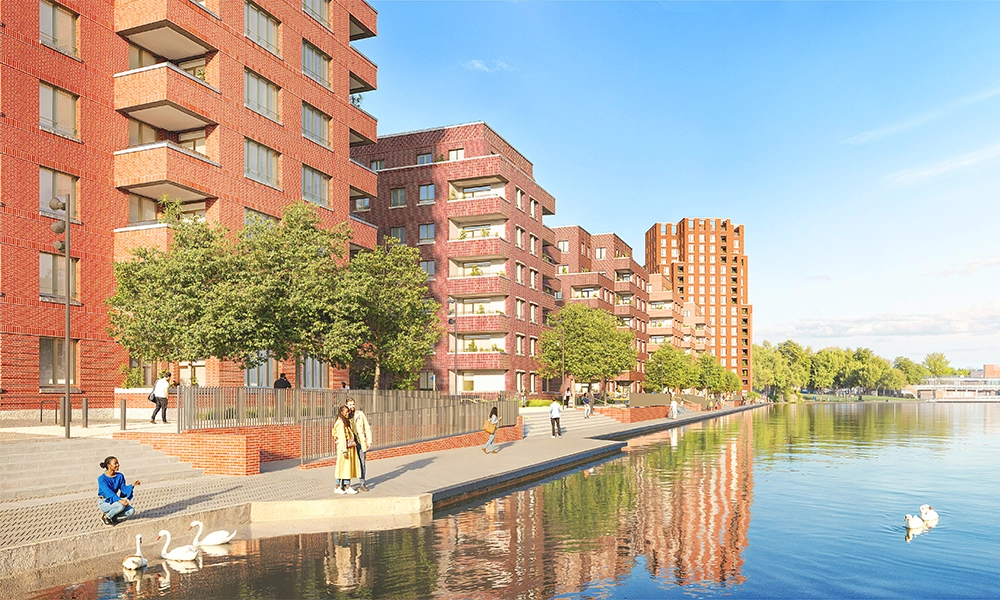
Royal Albert Wharf is located in east London’s Royal Docks – image supplied by NHG Homes
The money can be used to boost an existing deposit when taking out a mortgage, to cover the first few months of loan repayments on a purchase or as a discount on the price of the share purchased though the deal.
Terms and conditions apply and the incentive is only available on selected homes with a minimum of a 25% share bought.
Reservations can be made now and purchases must complete by March 31, 2027.
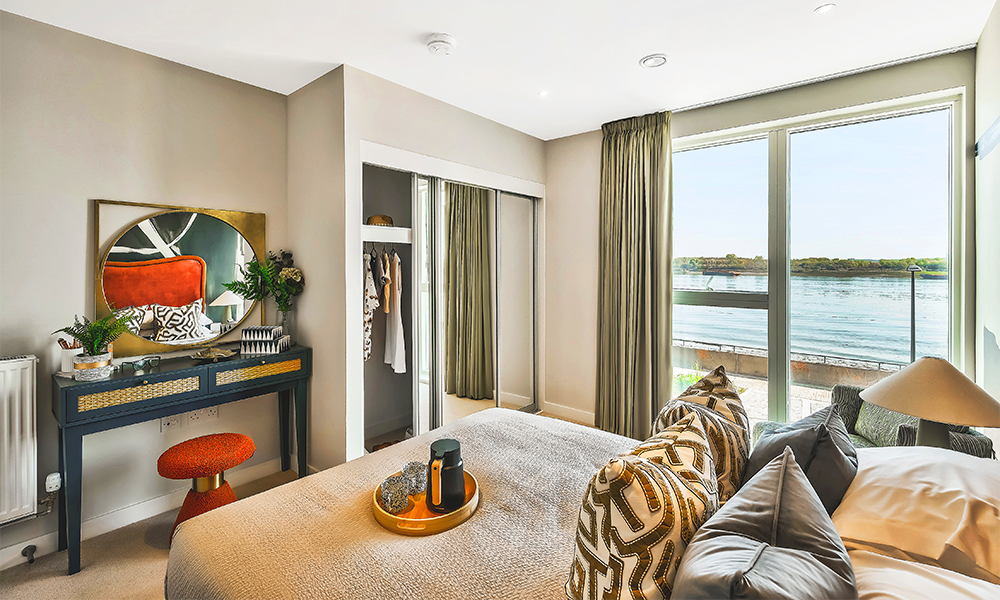
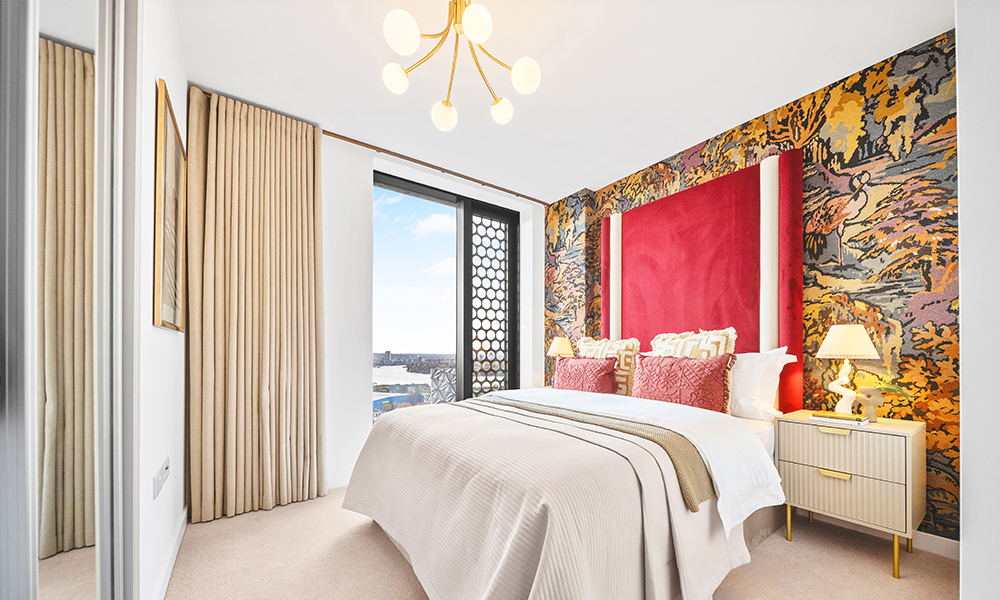
Shared ownership apartments are available at The View At Aspect – image supplied by NHG Homes
and the other two?
Throughout December, NHG Homes will be reducing its reservation fee to £50 to help decrease buyers’ costs.
It will also be hosting Christmas Open Days across six of its developments on Saturday, December 5, 2026, with those attending given the chance to pick a special gift from the schemes’ Christmas trees.
The events will run from 10am-5pm and pre-registration online for those intending to attend is essential.
Royal Albert Wharf is a 15-year regeneration project – image supplied by NHG Homes
where do the incentives apply?
Buyers have a wide choice of developments to explore with NHG Homes:
The View At Aspect in Croydon offers one, two and three-bedroom shared ownership apartments with views across London, open-plan design and floor-to-ceiling windows. The homes are available to move into now.
Kidbrooke Square in Greenwich is a minute’s walk from Kidbrooke Station and offers buyers access to residents’ facilities including landscaped podium gardens, a private gym and a concierge service.
Royal Albert Wharf in Royal Docks presents apartment hunters the chance to be a part of an award-winning, 15-year regeneration project with the last few two-beds available through shared ownership.
Each property at this scheme comes with stone worktops, integrated appliances and ceramic feature tiling.
Gadwell Quarter, four minutes’ walk from Woodberry Down Wetlands Nature Reserve in north London, offers one-bedroom apartments surrounded by lush greenery in Zone 2.
The last few shared ownership homes also benefit from reduced rates, further bringing the cost of owning a home down.
Finally, Heybourne Park is a long-term regeneration scheme in north London that’s set to deliver more than 2,000 homes and a wealth of amenities.
Features include private outdoor space for all apartments as well as a communal garden.
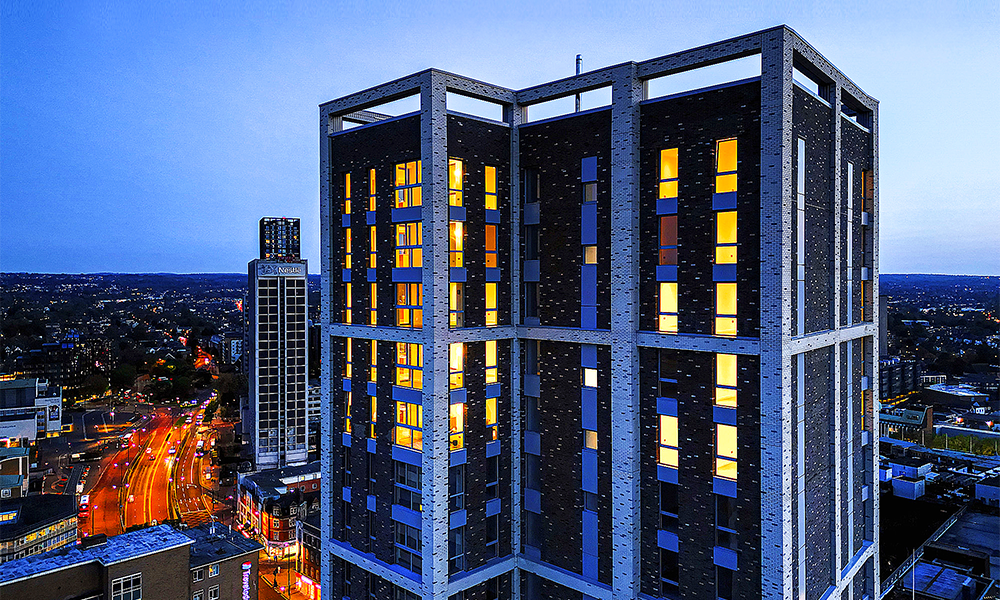
Gadwell Quarter is a few minutes’ walk from Woodberry Down Wetlands Nature Reserve – image supplied by NHG Homes
something extra
As well as the offers at the developments above, NHG Homes is offering up to £1,000 cashback for buyers of selected new homes at its ParkSide scheme in Southwark.
It will be hosting a Christmas Open Day at this development as well as at recently launched Saxon Wharf in Greenwich, which boasts a new collection of one and two-bedroom homes on the edge of Deptford Creek, close to Greenwich Station.
There is no cashback offer on homes at the latter scheme, as it’s new to the market, but buyers will be able to pick up a free gift when visiting either on the open day.
key details: NHG Homes’ Christmas Open Days
You can find full details of prices and incentives as well as sign up to attend the Christmas Open Days on December 5, 2026, from 10am-5pm on NHG Homes’ website here.
It was the first day after the initial lockdown had ended that Andy Savage was run over by a car – the first time he’d left his house in three months.
His injuries left the serial entrepreneur and passionate climber completely immobile for 18 months, before more than two years of painstaking physiotherapy saw him gradually learn to walk again.
“I’m now at about 80% of where I was before the accident and half of that loss is due to age anyway, so I consider myself on the luckier end of the spectrum,” he said.
As part of his rehabilitation, the Bermondsey resident was eager to get back to the hobby he loved and became a regular at The Arch Climbing Wall in Surrey Quays Shopping Centre, as soon as he was given the all clear by his doctors.
“I was kind of nervous the first time I went back, but I soon remembered how much I liked it,” said Andy.
“It’s a close community and I chose this wall rather than a larger one because I thought it would be cosier and it was.
“At first I was a bit disheartened as I’d lost mobility and strength – I hadn’t done it for five years and I had to start at the beginning again – but in climbing you’re only competing against yourself and I pushed on.
“I’d been coming here about a year before they announced it would be closing.”
Having started his first business aged 18 at university, Andy has enjoyed success as an entrepreneur as well as some “utter failures”.
However, you don’t have to spend long in his company to see his appetite for opportunity is undimmed, so his decision to create a Community Interest Company to reopen the climbing wall when The Arch closed in 2025, has probably come as little surprise to those who know him.
Gantry Climbing founder Andy Savage – image by Jon Massey / Wharf Life
driven by resilience
“I became an entrepreneur through stubbornness and optimism,” he said.
“Even when I couldn’t move after the accident, I was thinking of business ideas.
“I’m not sure I can actually stop doing that.
“Before Covid, I’d tried travelling for six months – I enjoyed it, but I didn’t feel remotely fulfilled.
“I actually offered to take the wall over on the day it closed, but the company had gone into liquidation and everything had to go through the administrators.”
Gantry Climbing has now launched, a year on from the closure, and is welcoming climbers with a new, improved offering.
“We’ve got 6,000sq ft of space here offering a whole range of climbing challenges across a range of bouldering walls including slabs, a feature arch and a training board,” said Andy.
“We’re very local and family-oriented – it’s a nice community vibe.
“We have a dedicated children’s wall, which not all centres offer, and problems that are suitable for absolute beginners.
“We also have a small gym area so people can combine their workouts with climbing.
“We offer monthly memberships and day passes, so there’s flexibility.”
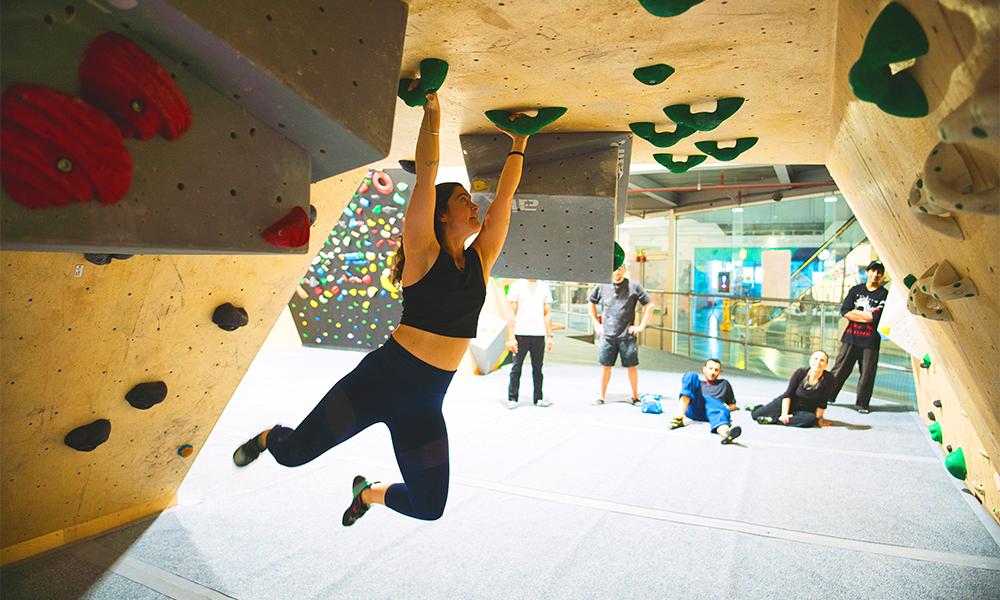
A climber explores the cave – image supplied by Gantry Climbing
spreading the joy
While much of the infrastructure remained in place, the opening of Gantry Climbing has involved an extensive programme of deep cleaning and updating the facilities.
“The biggest joy for me with this business is to introduce people to this fantastic sport,” said Andy.
“Just seeing their smiles at the end of the sessions and then hearing them say they want to do it again, is very rewarding.
“We recommend that adults do an hour’s course when they first come in, and then they can climb until we close.
“We make sure people learn the right techniques and that they’re safe. We’re doing beginner sessions at the moment, but we also want to offer improver sessions.
“We’re currently working with schools, devising programmes for them and then we’ll be getting the kids in.
“We’re also going to be offering corporate rates, but this is first and foremost a community venture. The medium-term goal is to have enough members to justify a move to a new unit when the shopping centre is redeveloped.
“Right now, I’m just happy that people are able to keep climbing here. So much hard work has gone into getting this far and to see it all come to life, with the place buzzing with climbers again, has made every late night worth it.
“We want it to belong to the community. Whether you climbed here for years, have always fancied giving it a go or just live locally and are curious, come down and say hello.
“You don’t need any experience or your own kit. We’ll sort you out with shoes and chalk, then show you the ropes.”
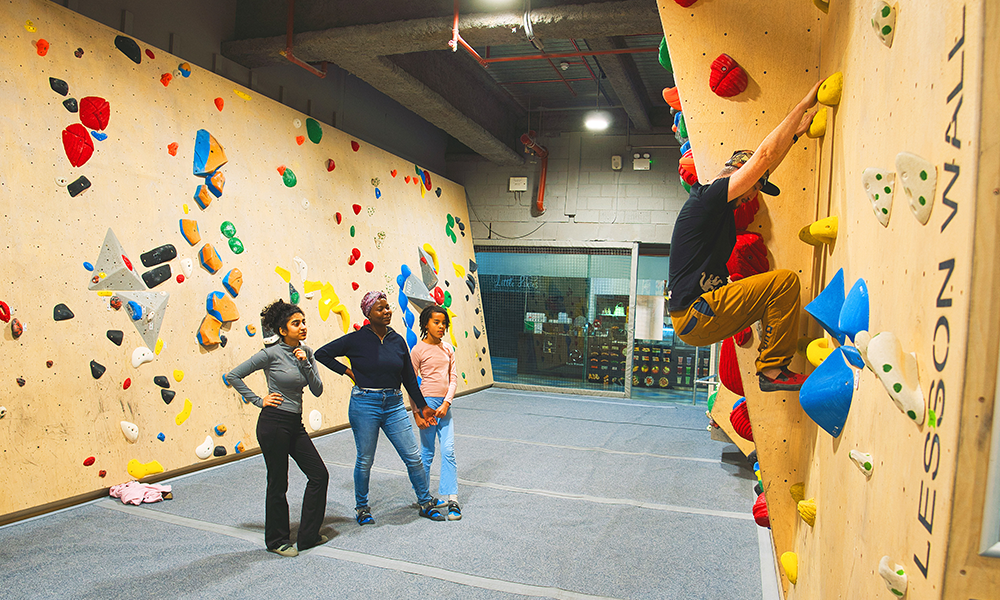
The centre features a dedicated kids wall – image supplied by Gantry Climbing
In 1851, Queen Victoria sits on the throne, the Window Tax is abolished, the first submarine telegraph cable is laid across the English Channel, The Great Exhibition takes place in the specially built Crystal Palace at Hyde Park and the first international chess tournament is held in London.
In Greenwich, a young man named Samuel Saw – having qualified as an Attorney Of The Courts Of Queens Bench – decides to set up his own law firm and starts practising from his home at what was then Bexley Place.
That business, located in what is now Greenwich High Road, was the start of a company that recently celebrated its 175th birthday, marking the anniversary with an update to its brand and a weather eye on the future.
“Samuel ran the firm for just over 60 years, bringing his sons Samuel Jr and Henry into the practice and changing the name to Saw & Sons before retiring in 1912,” said Ray Crudgington, Grant Saw’s managing partner.
“Samuel Jr continued to run the firm until he retired in 1920.
“The next big milestone was when a young solicitor called Geoffrey Grant joined the firm in 1956.
“He’d been working for a local authority and didn’t enjoy it much.
“He liked his new practice so much, he took it over and it became Grant Saw & Sons in 1960.
“He took on partners over the decades and grew the firm.
“When he recruited me in 1997, the office was over a former bank, now a bookmakers in East Greenwich.
“I’d qualified in 1991, trained at a major law firm and worked for five years at a small firm in Gray’s Inn Square in the City.
“Grant Saw, after an interview, offered me a job with a view to becoming a partner.”
a chance to help steer the ship
Attracted by the opportunity and the chance to shape a growing firm, Ray joined and became a partner 16 months later.
He has been heavily involved with the management and strategic direction of the firm ever since.
Grant Saw moved to Greenwich High Road in 2003 and merged with Hudgell Yeates in Blackheath in 2005 as it expanded its operation.
More recently, it acquired Lawbridge Solicitors in Sidcup and its Greenwich practice moved into new offices at Horseferry Place overlooking the Thames in 2019.
Ray said: “While we don’t do criminal law or high level financial law, we do a very wide range of contentious and non-contentious work including probate, insolvency, commercial and residential property, employment law, powers of attorney, wills, trusts and family law.
“We also have a slightly greater commercial bias than some firms, dealing with industrial sites and developers.
“While it’s important to be aware of the history, we have to live in the moment.
“We have to think of what is the best thing to do now for our partners, our staff and our clients.
“There’s also a need to ensure succession, which isn’t an opportunity all firms have.”
from client work to management
Ray specialised in commercial property and company commercial work, but has moved into a non-practising leadership role at Grant Saw.
“I love both the law and management, but they are quite different and you can’t realistically do them at the same time,” he said.
“If you try, you’ll find clients’ needs always come first so it’s better to step away.
“The management side is there to facilitate serving our clients and that’s very satisfying in itself.
“Good lawyers are successful because they understand and can apply the law, but that doesn’t necessarily make them good at business.
“When I talk to law students, I always say that their number one skill needs to be problem-solving and the second one is communication.
“Lawyers are trained to be cautious and think about all the problems that might arise in a given situation.
“Client work can also be quite reactive, whereas business and management need to be proactive.
“When I made the move, I had to learn quite a different skill set. I don’t think someone could do my job with a heavy case load.
“While my other eight partners all do some management at the firm, what they really enjoy is working with their clients.”
taking Grant Saw into the future
Ray said that, broadly speaking, during his 35-year career, neither the law nor clients’ needs had altered a great deal.
“The underlying principles don’t change, although there are some changes in legislation,” he said.
“But the processes are different now.
“Probably the biggest change has been in the handling of documents, which is now done largely electronically.
“Much of what I do is dealing with compliance to ensure we’re always delivering the best service possible.
“As a firm, we’re on the up – we’re finding new clients and new markets.
“We’re pretty busy. We have plans to grow and increase our turnover year-on-year in sustainable and profitable ways.
“We’ve welcomed new partners into the firm to help deliver that.
“We also always try to give clients a personal service and to create value for them.
“Many of our clients locally are wealthy and they really appreciate that.
“What we try to do is empower our clients’ decisions, giving them options.
“Now we’re looking at how to expand in areas where we’re already strong.
“We’ve just completed a rebrand, changing to navy blue from red and, as part of that process, we’ve enhanced our website.
“We’re doing lots of things to spread our net more widely and we remain very well connected with local accountants, estate agents, property agents, architects and surveyors as well as the Royal Borough Of Greenwich.
“I like to think that when the time comes for me to leave the firm, it will be in good hands.”
key details: Grant Saw
Grant Saw’s Greenwich offices are located overlooking the Thames at Horseferry Place. In Blackheath it’s based at Grant Saw House in Tranquil Passage.
Prime Point on Greenwich Peninsula presents prospective buyers with a compelling proposition.
Located overlooking the area’s Central Park, the development is set within Brickfields, part of the area’s wider 150-acre master plan.
For those considering a purchase, it’s an opportunity to participate in an ongoing regeneration story that began at the turn of the Millennium.
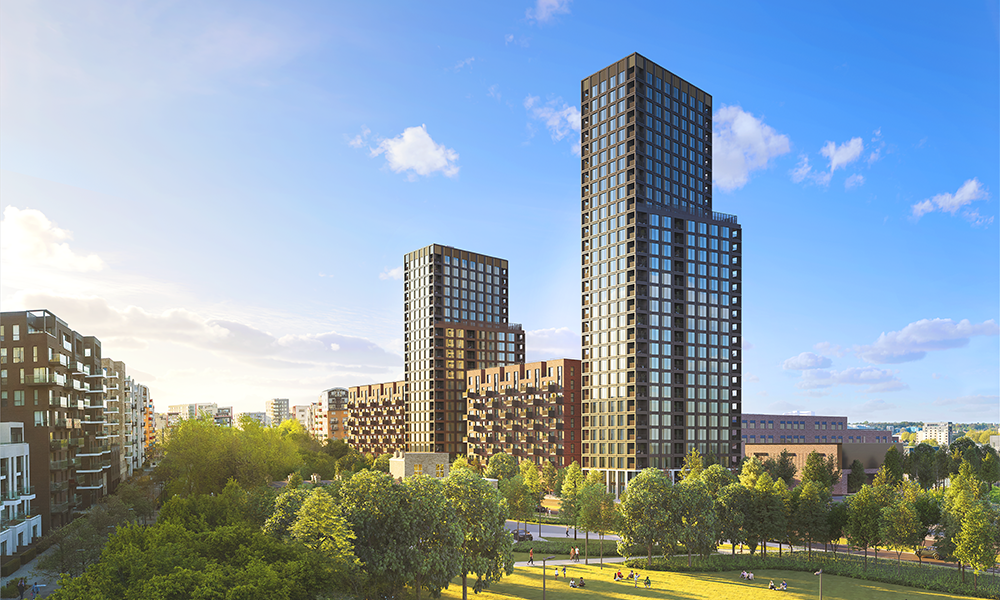
L&Q recently unveiled its latest collection of studio, one, two and three-bedroom apartments at Prime Point’s Woodget Heights.
Building on high demand for homes in the scheme’s first release, the latest properties are contained within a 30-storey tower that features views towards Canary Wharf and the City skyline beyond.
Residents at Prime Point enjoy access to landscaped gardens, a concierge service, lounge areas and a rooftop terrace.
An artist’s impression of Prime Point on Greenwich Peninsula – image supplied by L&Q
stepping through the door at Prime Point
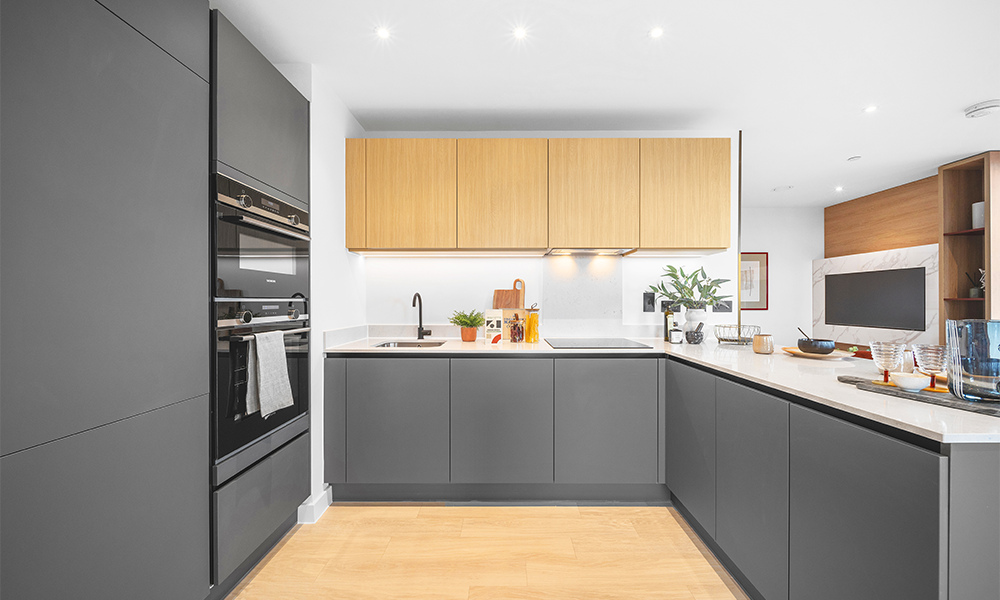
Inside, the apartments boast open-plan living spaces that feature fully fitted kitchens with handleless units, quartz worktops and integrated Siemens and Bosch appliances.
Bathrooms include white sanitaryware, heated towel rails and matte tiling to wet areas, while living spaces have Karndean flooring.
Each apartment also includes a private balcony.
Equally important to buyers, however, will be the scheme’s location.
Over more than two and a half decades Greenwich Peninsula has been on a journey of redevelopment.
Today it’s home to one of the world’s most successful entertainment venues – The O2 – creative businesses at Design District, a golf driving range, Ravensborne University and even an indoor skydiving facility at iFLY London.
There are a wealth of cafés, bars and restaurants including notable spots such as The Dial, sports screenings and microbrewing by Meantime or Caspino offering coffee, natural wines and cocktails.
Further cultural heft is also set to arrive in the area with Troubadour Greenwich Peninsula Theatre expected to open in 2027 housing a pair of auditoriums and Secret Cinema already in the process of setting up its first permanent site.
The latter will be home to Disney’s Pirates of the Caribbean: The Immersive Adventure from February.
One, two and three-bedroom apartments are available – image supplied by L&Q
the attraction of Greenwich Peninsula
It’s one of the reasons why buyers such as Shu Ming are drawn to the development.
“I absolutely love North Greenwich” said the 27-year-old, who purchased a studio apartment at Prime Point after years of renting in London.
“There are so many green spaces, and I love cycling. I can jump on a rental bike and cycle along the river whenever I want.
“It feels like you get the best of both worlds, you’re close to central London, but there’s so much outdoor space to enjoy too.
“The commute is brilliant. It’s only one stop on the Jubilee line to Canary Wharf, so getting to work couldn’t be easier.
“I can spend less time travelling and more time enjoying where I live.”
In addition to the Tube – an eight-minute walk away – Prime Point is well served by local bus routes and the Uber Boat By Thames Clippers river bus service.
Greenwich Peninsula is also directly connected to Royal Docks by the London Cable Car across the Thames.
Those reserving a shared ownership home before October 31, 2026, can enjoy £4,000 towards buying costs. Terms apply.
Apartments feature bathes and white sanitaryware – image supplied by L&Q
key details: Prime Point
Shared ownership homes at Prime Point on Greenwich Peninsula start at £85,625 for a 25% share, based on a full market value of £342,500.
Apartments available for private sale start at £380,000 for a studio.
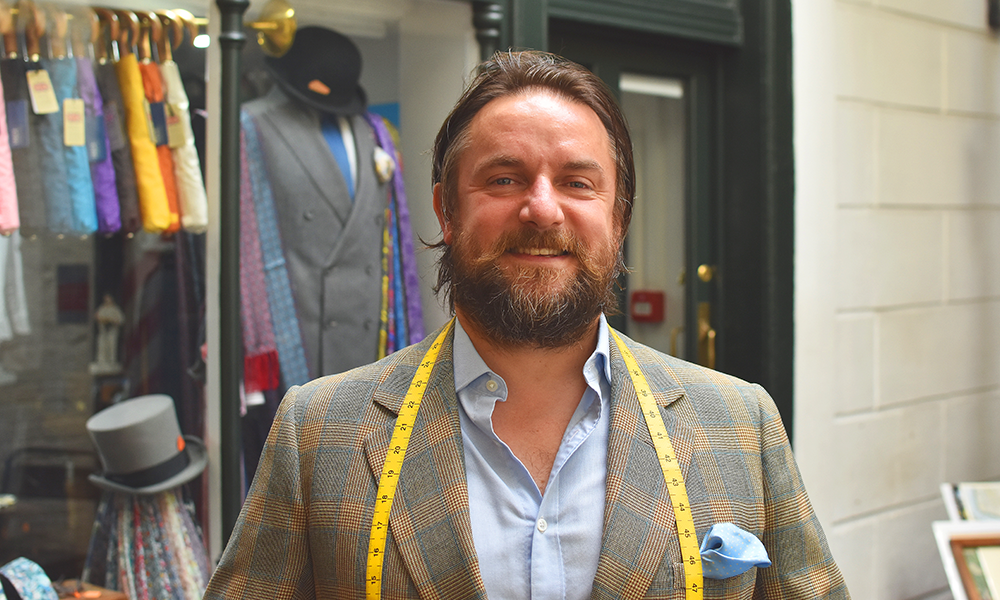
“My mother was a dressmaker, who also did alterations and worked for companies,” said Philip Chalk, tailor and co-owner of the Greenwich Collective.
“Until I started school at the age of five, I’d sit beside her, tinkering.
“We’d make things and play with sewing machines.
“My family in Portugal were tailors, shirt-makers and so on, there was skill there.”
Almost absent-mindedly, while we’re talking, Philip has noticed a loose button on his jacket and – without breaking conversation – cuts it off and sews it neatly back on, all without removing the garment from his shoulders.
It’s a small detail, but then there’s a feeling that the Greenwich Collective is all about paying attention to those.
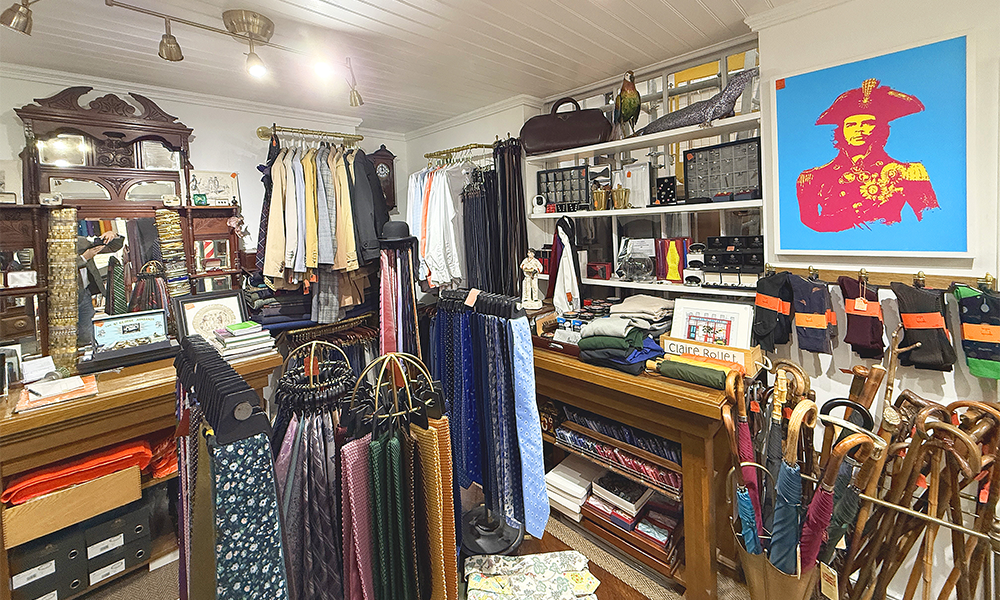
The shop, which Philip owns with his business partner Wayne Carter, is – at first glance – a glorious melange of menswear.
There are rails hung with suits and shirts, vibrant displays of ties, canes, umbrellas, socks and cuff-links.
Some are for sale, some are works in progress for clients. Everywhere there are antique pieces, artworks and curios.
This is no loosely connected bric-a-brac, though. Like the fine clothes created within, everything has been chosen.
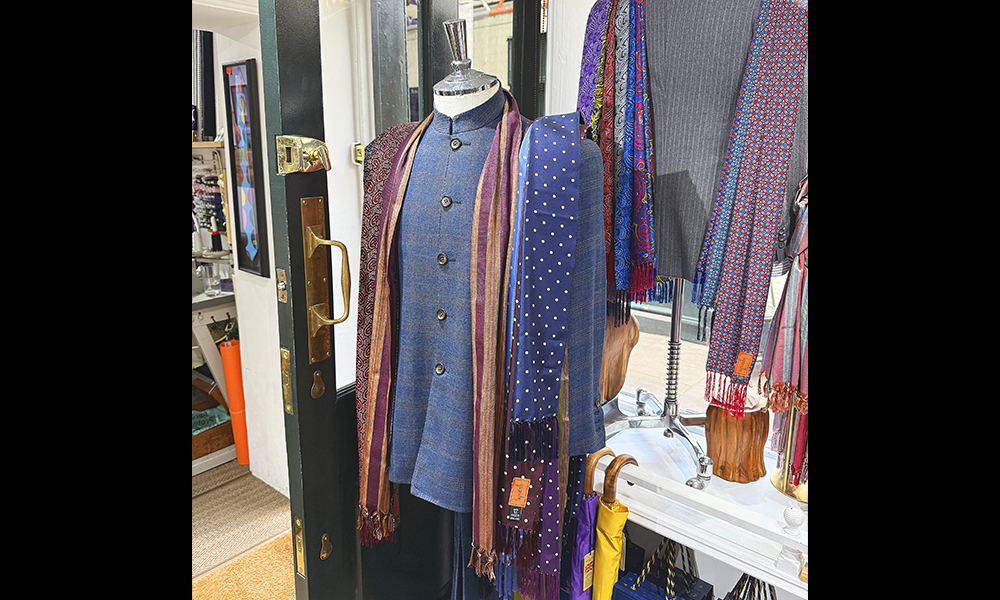
Inside, the store is filled with menswear, curiosities and antiques – image by Jon Massey / Wharf Life
a passion for retail
Philip has an extensive history in the industry, evidenced perhaps by the stacks of swatches in innumerable sample books stacked neatly along one wall,
In addition to studying at the London College Of Fashion and working as a bespoke tailor, he’s spent time at Ted Baker, TM Lewin, Thomas Pink and once bought a shoe shop from David Moss (of Moss Bros) – learning a considerable amount about selling footwear in the process.
His is a history of Jermyn Street, floral shirts, Soho, kosher tailoring, Docklands, Whitechapel, riotous nights out and making clothes for classical composers.
Now, the shop in Greenwich is something of a labour of love – the display window for an operation employing around 29 people.
“I’ve always loved the retail side of the business and at this stage I’m bored with the idea of purely trying to make money,” said Philip.
“We offer the best alterations, we’re the best tailors in the country and possibly the best shirt-makers in the world.
“I do the tailoring and Wayne does the shirts. It’s hard, but we enjoy it – I’ve run lots of different kinds of businesses and it’s about wanting to do something you’re interested in.
“Our pieces are bespoke and made the way our customers like, generally with our stamp on them.
“Everything is considered, every detail.”
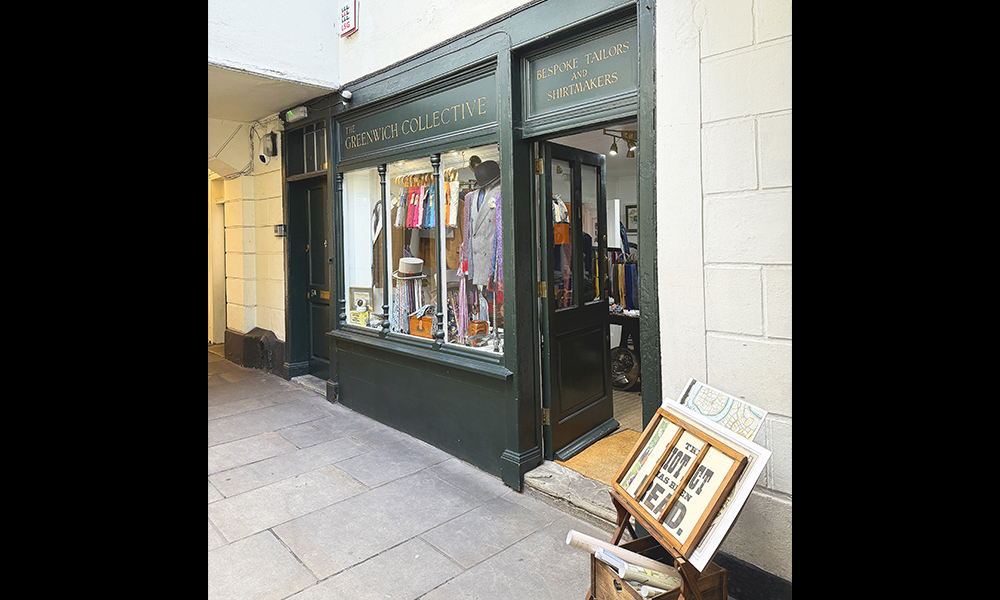
Greenwich Collective is located at the southern end of Greenwich Market – image by Jon Massey / Wharf Life
establishing the why
Prices at Greenwich Collective start at around £2,400 for a bespoke two-piece suit and £275 for a shirt.
Customers can choose from a wide range of fabrics and styles with details to meet every requirement.
“People come into the shop, we sit down, have a drink and see what’s doable,” said Philip.
“We often talk finance as early as possible to understand what can be done.
“They say no-one knows you as well as your doctor or your tailor and it’s so true.
“As for the latter, they should be asking what a customer wants a suit for?
“Is it for a career, are they looking for promotion, to get noticed?
“Is it for a date, just to look cool or will they be dancing in it or travelling?
“When it’s for a wedding there’s a lot to consider – the shirt, tie, socks and the shoes. I tend to do masculine tailoring, I dress clients to glide.
“Most people want to look like James Bond or Cary Grant, so that’s what we try to achieve.
“I generally put my clients in better cloth than you’d expect for the price.
“We have dozens of swatch books from all kinds of factories, but there are a few suppliers I advise people to deal with over the others because they offer high quality that’s great value.
“I’d rather put people in a really good suit so they feel at their best.
“If you went to Savile Row, you might find yourself paying £10,000 for a suit made from the same cloth.
“So long as we cover our costs and our risk, we’re happy to offer the prices we do.”
Philip, Wayne and the team offer ready-to-wear products as well as bespoke clothing – image by Jon Massey / Wharf Life
connected to the community
Greenwich Collective has been trading for close to five years, but has a timeless feel about it.
As we’re chatting, Philip is constantly waving to people through the window, pointing out artists and singers that he knows.
It’s clear there’s connection and community here, which is part of the attraction.
“We get involved with stuff – the Greenwich Historical Society, pub crawls, the other traders on the market,” he said.
“I enjoy it. Everything in the shop is for sale, but it’s not.
“Some things I can’t part with. I have a lot of stuff and I enjoy it – I must have 20,000 pairs of cuff-links, 8,000 ties.
“I go to a lot of auctions and buy things – old surveyor’s sticks, tripods, antiques – I take pleasure in them.
“Some things we sell are new, others are old. I’m passionate about vintage clothing too.
“A great thing to do is to buy a vintage piece for the quality and then have us alter it to fit.
“Sometimes it’s equally hard to part with the clothes we make.
“If you’ve spent 200 hours making something, it can be hard to say goodbye to it, but you know the customer will take real pleasure in it.”
Shoes for sale at Greenwich Collective – image by Jon Massey / Wharf Life
key details: Greenwich Collective
Greenwich Collective is located in Nelson Arcade at the southern end of Greenwich Market.
Drop into the shop, call 020 3795 4328 or email gc@thegreenwichcollective.uk to book an appointment or make and enquiry.
Greenwich Market is easily accessible from Canary Wharf via the DLR to Cutty Sark and a short walk.
Alternatively visitors can take the Uber Boat By Thames Clippers or walk via the Greenwich Foot Tunnel.
The labels on the bottles of wine Vagabond makes itself come decorated with ink sketches of a fox.
As to why, Christobell Giles said the species was a good fit for the brand – curious, adventurous and able to thrive in unexpected places.
“It’s also an animal that’s come from the countryside into the city and flourished, which is similar to what we’re doing with our new urban winery in Canada Water – taking grapes grown in the UK and turning them into wonderful wines in London,” she said.
The facility is the brand’s second winemaking site in the capital, but it’s on a bigger scale than the Battersea Power Station operation and, along with a forthcoming return to Canary Wharf, feels part of a newly energised expansion.
Originally conceived as a wine shop in 2010, the business evolved into a series of bar and tasting venues with self-serve machines enabling guests to sample an extensive range of bottles in small measures or by the glass.
The pandemic wasn’t kind to the operation, however, and the company collapsed into administration in 2024, battling debts built up over Covid and rising costs.
It appointed Christobell – who’d joined Vagabond in 2023 as operations director – to the role of managing director to oversee the chain’s growth.
Vagabond managing directo, Christobell Giles – image by Jon Massey / Wharf Life
bitten by the hospitality bug
“I have to pinch myself sometimes,” she said. “I studied law at Birmingham University, specialising in French law.
“I did a year in Bordeaux – I didn’t even like wine before I went, but the students there said they would get me into it and it was amazing.
“You could jump on a train for €5 and take the free tram around the vineyards – a day out in one of the best wine regions in the world.
“That’s where it started for me.”
Bitten by the hospitality bug, she joined Mitchells And Butlers and spent 20 years in the sector working with brands such as Megan’s and Wagamama.
“I loved operations – being out and about and seeing people,” she said.
“It was a constant change of scenery and always new problems to deal with.
“At its heart, Vagabond has always been about connecting people to wine.
“Just as offering food was a natural evolution of what it was doing to start with, the next step was asking whether we should be bringing the production closer to our customers so they can see how what they are drinking is made.
“London has been a wine trading centre for centuries, so allowing people to touch the process, to see it in the city, felt natural.
“Vagabond started making wine in 2017 but, in the last couple of years, we found we were running out of what we were bottling and selling.
“That’s why we started looking for a new site.
Vagabond winemaker, José Quintana – image by Saltwick Media
“José Quintana, our winemaker, and I had this vision of a beautiful, bright, airy space with big windows – somewhere with a warehouse feel that was still at the heart of a community.
“We imagined people coming down from their flats and buying bottles of wine to take away, or maybe coming to enjoy a rosé made in London on the benches outside.
“This was before we even started looking – we were making the space up in our heads.
“We were working with British Land at Broadgate in Liverpool Street and were invited to take a look at Canada Water.
“When we saw the space in the Dock Shed building, it was everything.
“It had high ceilings, we could put a mezzanine in where people could sit and see the wine being made.
“There was space for a big wine tasting table and plenty of room for all the equipment – it was exactly what we wanted.”
Launched in December, the 6,000sq ft venue is hitting its stride, realising the potential of its 100-tonne cellar, extensive winemaking facilities and its drinking and dining spaces.
It offers more than 100 wines by the glass as well as a menu of nibbles, sharing plates and platters of cheese, charcuterie or both.
The winery itself offers tours, tastings and masterclasses (some of which also feature cheese) and is available to hire for parties, celebrations and even weddings.
The urban winery boasts a wide range of equipment and facilities – image by Saltwick Media
extending production
“Expanding our operation here feels like the right step,” said Christobell.
“We’re going to be doing some really cool stuff over the next 12 months.
“This September will be the first harvest we’ll process here since we moved in.
“We’re also experimenting with how we make wine, because we want to be at the forefront of urban vinification.
“We already have a beautiful concrete egg, which gets lots of attention, and José has his mind set on bringing in all sorts of other vessels – clay, or a barrel with a glass lid so people can see the wine fermenting – to help us show how English grapes are turned into wine and to find out how they respond to different methods.
“Our general rule for sourcing grapes is that they are grown within two hours of London and we’ve worked with vineyards in Oxfordshire, Kent, Sussex, Suffolk and Norfolk.
“The nice thing about not having our own is that we can source different areas of the country and decide what wines we want to make – we’re not limited to one particular soil type.
“Hopefully we’ll be making lots of award-winning wines here for many years to come.
“We sell all of our wines through our bars and our website, so producing in London works on a business level for us, but we think it’s so important to be able to present the grape-to-glass journey for people in the place that they live.
“My favourite is our Solena (£35 per bottle online) – it’s a really interesting orange wine that’s made from Ortega grapes using a system where you blend newer wine with older vintages to get the taste you want.”
Vagabond’s bars offer an extensive range of wines by the glass via self-serve machines – image by Saltwick Media
expanding the brand
Vagabond closed its Cabot Square bar in 2024, but the brand is set to return to Canary Wharf with a new branch in Water Street later this year.
The new opening will be located in the unit recently vacated by Mildred’s and will feature two floors of wine machines and plenty of outdoor seating.
Wharfers will be able to purchase and enjoy wines made just one Tube stop away when the venue is fully up and running.
Released under the name Waterside, the apartments are already proving popular with buyers with 11 reserving properties over the launch weekend.
One, two and three-bedroom homes are currently available through the scheme, with prices starting at £82,125 for a 25% share in a one-bed.
Buyers can expect balconies and larger properties that are both dual aspect and feature views over either the London skyline or Southmere Lake.
Kitchens come with integrated Bosch appliances and white units, while bathrooms are clad in grey porcelain with black hardware and white sanitaryware.
Peabody says shared ownership properties can be secured with a deposit of as little as £8,312 with projected monthly outgoings of £1,175.
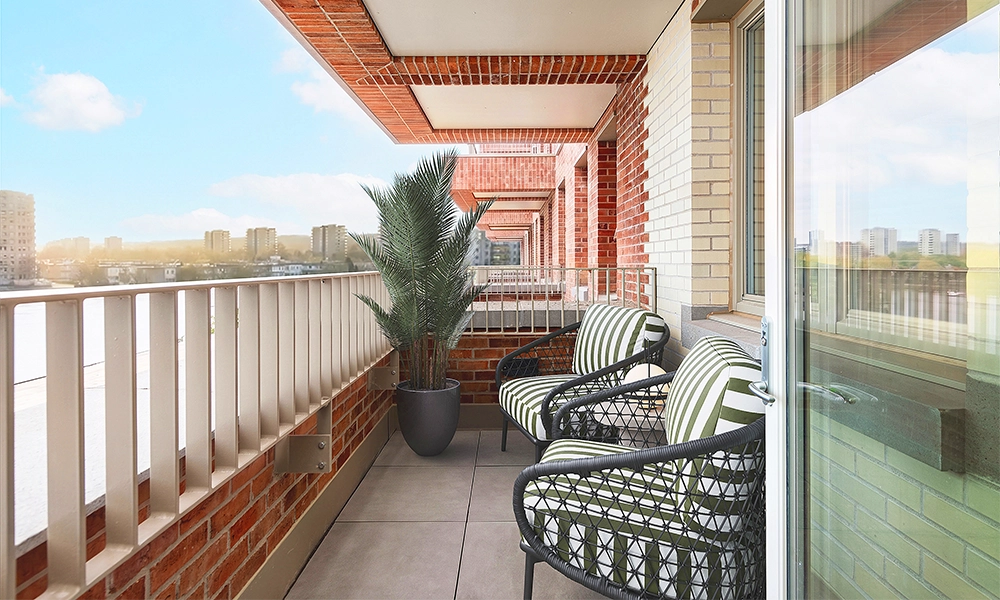
The properties feature private balconies – image supplied by Peabody New Homes
a tranquil focus
“We are excited to have launched our new Shared Ownership collection at Southmere, designed to make aspirational waterside living more accessible to prospective homebuyers,” said Raquel Soares, assistant director of sales strategy, intelligence and compliance at Peabody New Homes.
“With Southmere Lake providing a tranquil focus for the area, our Waterside collection at Southmere places buyers at the heart of this growing neighbourhood.
“Close to exciting new amenities, exceptional transport links and extensive greenery, Southmere delivers the benefits of buying in one of the capital’s most dynamic regeneration areas.
“We encourage potential buyers to register their interest as soon as possible to be among the first to find out more.”
Abbey Wood is still near the beginning of a massive regeneration project that will see the area completely transformed.
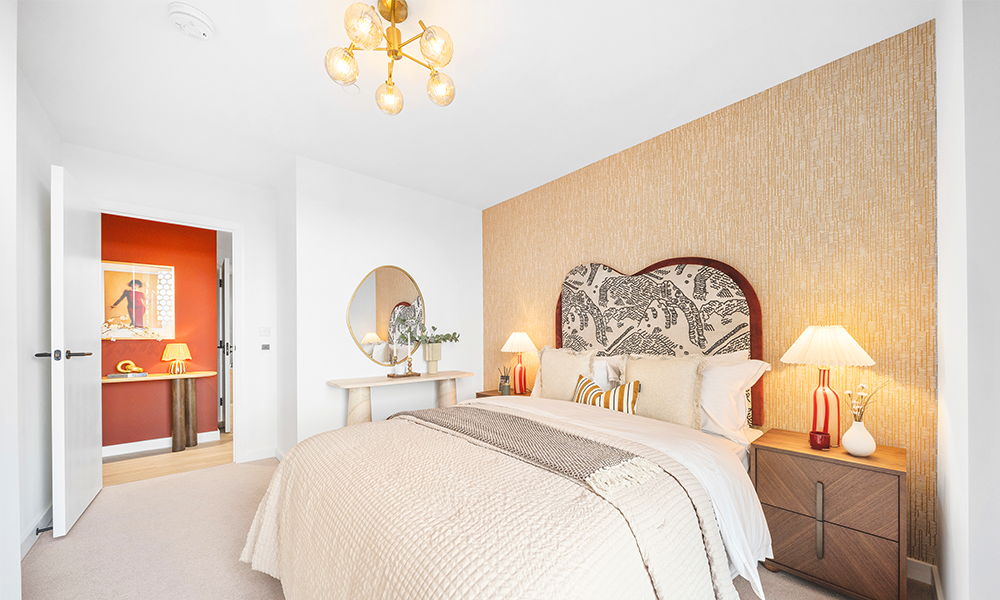
A show home interior at Waterside in Peabody’s Southmere scheme – image supplied by Peabody New Homes
connections to Southmere
The arrival of the Elizabeth Line places it within 12 minutes of Canary Wharf. The area also benefits from rail services and a DLR extension to North Thamesmead has been proposed, to further boost connectivity.
Right now, however, new local amenities have already come on stream.
Part of the Southmere scheme, Cygnet Square hosts monthly markets and events while residents are also able to access The Nest Library And Community Space.
The Lakeside Centre, also on the lake, hosts artists studios operated by charity Bow Arts and the Thamesmead Social Cafe.
The area has a striking amount of green space to explore, extending to some 240 acres with Thamesmead home to a further four lakes and at least 7km of canals as well as a river path along the Thames.
key details: Southmere
Pricing for homes in the shared ownership collection at Southmere start at £83,125 for a 25% stake in a one-bedroom apartment, based on a full market value of £332,500
Buyers considering a move to Greenwich Peninsula have, in many senses, got everything laid out before them.
The area is home to the The O2 – the world’s most successful indoor arena, as measured by ticket sales – and it’s exactly these kinds of local facilities that make it an increasingly attractive place to put down roots.
Homes are currently on sale at Prime Point – a development by housing association L&Q located on West Parkside between Mary Magdalene All Through School and Central Park.
The scheme includes two bronze towers with the largest topping out at 29 storeys as well as lower rise brick-clad buildings.
Inside properties range from studios to three-bedroom apartments with prices starting at £399,950.
Buyers can expect floor-to-ceiling glazing, private outdoor space for all apartments and fully fitted kitchens with integrated Siemens and Bosch appliances.
The development also boasts a private roof terrace with views over the surrounding area, a lounge and a concierge service.
Located on Greenwich Peninsula, the homes are surrounded by an ever-growing complement of amenities – image supplied by L&Q
Prime Point has been ‘well received’
“We’re delighted to be delivering more new homes in Greenwich Peninsula – an exciting, fast-growing destination neighbourhood,” said Claire Brenlund, L&Q sales and marketing director.
“Sales at Prime Point have been well received and we expect continued strong demand here.
“Residents will have everything they need right on their doorstep, with many enjoying spectacular views of the City and beyond – making this the perfect place for a mix of local people, city workers and professionals to call home.”
There are multiple ways to secure an apartment at Prime Point, with L&Q offering those who reserve a property before May 31, 2026, a contribution of up to £29,750 towards stamp duty and £10,000 towards buying costs.
The housing association also offers a Rate Reducer scheme aimed at bringing down monthly mortgage costs.
Perhaps the greatest incentive to consider an apartment at Prime Point, however, is the location itself.
Well connected, the development is about eight minutes’ walk from North Greenwich Tube station, offering rapid connections to Canary Wharf, Stratford and the City via the Jubilee line.
The Peninsula is also well served by Uber Boat By Thames Clippers’ river bus services and the IFS Cable Car which takes passengers over the river to Royal Docks.
As the regeneration of the area continues, residents will benefit not only from the entertainment, shopping and drinking and dining venues in The O2, but a succession of other venues.
Design District delivers on street food and workspace alongside recent arrival The Dial, a microbrewery that’s seen Meantime return to making beer in the borough.
Other notable local attractions include luxury hotel complex Intercontinental The O2, cultural hub the Firepit Gallery and sailing venue the Greenwich Yacht Club.
The development also benefits from plentiful open space with multiple pathways, parks and locations to explore, all bounded by the Thames with views across to Royal Docks, Blackwall, the Isle Of Dogs and Canary Wharf to enjoy while out and about.
Buyers can expect fully fitted kitchens with integrated Siemens and Bosch appliances – image supplied by L&Q
key details: Prime Point
Homes at Prime Point on Greenwich Peninsula are on sale now through L&Q. Prices start at £399,950 for a studio apartment.
Growing up in Cumbria – three miles from the nearest village – Plant And Person founder, Will Daltrey, became accustomed to chatting with the neighbouring cows for company.
“If you stand at the gate of a massive field and wait about 10 minutes, you’ll find they all come over to you slowly,” he said.
“My dad left when I was quite young, although still lived nearby, but it was quite lonely, so I shared much of my upbringing with them.
“You can definitely sense what they’re thinking and I knew they were interested in me because they’d keep on coming over.”
Each is treated to Will’s gentle advice and guidance. Some tell tales, other ask earnest questions.
Patiently, he dispenses suggestions and answers.
Slowly it dawns on me that this steady flow of patrons serves very much the same purpose as his bovine mates of old – the warmth of community.
Having studied computer science at Newcastle University, an institution he and his friends described as “a place of drinking with a learning problem”, he became a teacher, relocating to London to train and then work.
He spent 15 years in the profession when the pandemic prompted a change.
“In some ways, lockdown was a good time because we were looking after the wellbeing of the children – teaching them values for life,” said Will.
“But then it felt like the plug was pulled and we were back teaching to the tests again.”
Will had grown up around his parents’ gardens and vegetable plots but had “never realised” he liked gardening until the pandemic provided an opportunity.
“I have a large balcony and, with that extra time, I started growing plants on it,” he said.
“I created a real jungle – tunnels, waterfalls and plants all along the railings and trained over the ceiling. There’s even a grape vine.
“I really enjoyed learning about the different species and looking after them, seeing the cause and effect of my actions and how they responded to it.
“I could spend hours just dead-heading – it was very mindful.
“What was in my head at the time was the idea that the plants were looking after my mental health.
“That’s really the idea behind the name Plant And Person.
“Initially the big idea for the business was about doing workshops to make terrariums – miniature gardens in glass containers.
“My wife also started selling them and found out there wasn’t much money to be made doing that.”
Plant And Person runs terrarium building workshops at Corner Corner in Canada Water – image by Plant And Person
helping others build tiny gardens
But the creativity persisted and Plant And Person has also branched out into retail with Will selling plants from a stall at Canada Water and at Wapping Docklands Market on Saturdays, just across the river.
“We’re currently running workshops at Corner Corner in Surrey Quays Shopping Centre in partnership with British Land,” he said.
“People come from all over London and they really get the wow factor when they arrive here.
“We set everything out on long tables. There’s a tutorial and everyone gets 90 minutes to build their terrarium.
“There’s loads of different materials to choose from, with different sizes and colours of stones.
“Then we have a variety of soils and mosses as well as trinkets.
“The price includes three plants, so I need 90 for a class, but I bring about 500 so everyone gets exactly what they want.
“That’s only workable because I can sell the ones that are left over on the stall.
“I never do a demo because then people would copy it, but you see everyone collecting what they want to use and taking inspiration from each other.
“They come up with some amazing ideas.
“I do miss being a teacher, so I really value the opportunity to get up in front of people and talk about something I’m interested in.
“Selling plants on the stall is really lovely when it’s the summer and the weather is good. It can be more of a slog in winter, of course.
“But you get to know all the people locally and that’s absolutely wonderful. I’ve been doing it for three years and I’ve made loads of friends.
“It’s also really lovely to be approached by strangers and then to see them come back over time.”
Will’s favourite plant is the Prayer Plant, Maranta Fascinator, available from Plant And Person for £7 – image by Jon Massey / Wharf Life
selling plants in east and south-east London
Will sources his plants from Holland, Belgium and the UK, offering a wide, ever-changing variety.
In addition to the succulents and small plants used in the terrariums, he sells much larger specimens.
On the day of our interview, the stall is a riot of early summer colour with pots of vibrant flowers and plants sporting exotic-looking foliage.
There are fuchsias, a relative of the jasmine and lavenders already starting to come out.
“My favourite is the maranta fascinator or prayer plant with its beautiful green and pink leaves,” he said.
“It’s really the species that got me into decorative foliage and house plants and it’s absolutely stunning.
“The most important thing for me though, is that the plants I sell work for the people I sell them to and fit what they’re looking for.
“If people are looking for something that’s easy to care for I’ll often recommend the snake plant – dracaena trifasciata – which is a really popular choice and very low maintenance.
“Another really good option is a zamioculcas or ZZ plant, which are really easy to care for because it’s happy in all sorts of conditions indoors.
“It can even go without water for a while.
“I’m always learning myself, but I love when people ask for advice or suggestions so I can help them find the plants that work for them.”
A low maintenance option, the Snake Plant, Sansevieria Trifasciata, available from Plant And Person for £12 – image by Jon Massey / Wharf Life
key details: Plant And Person
Plant And Person’s next Terrarium Building Workshop is set to take place at Corner Corner on May 26 at 7pm.
You can find Will selling plants and dispensing advice at Deal Porter Square in Canada Water most weekdays and at Wapping Docklands Market on Saturdays.
“For me, food is tradition, community, family – something that brings people together,” said Adam Abadi, operations manager at Harvest London.
“It can be something that’s lost nowadays where everyone’s at desks on their phones or screens, not looking at or engaging with others.
“We can lose that connection with our food and each other.
“What we’re doing here in Canada Water is an opportunity to change that.”
Stood in the company’s facility at Corner Corner at Surrey Quays Shopping Centre, the very placement of the farm is part of that mission.
The south-east London venue recently celebrated its first birthday and every single visitor to the venue over the past 12 months will have seen its plants basking under their LEDs through the facility’s glass walls.
But the tightly sealed space is much more than a brightly-lit backdrop to Kerb’s street food, drinks at the bar, beats from the DJ booth and free live music from the stage.
Broadwick’s emerald green refurb of a retail space that once housed The Range includes this fully functional agricultural operation where a staff of five tend to a wide variety of crops.
Better still, the produce can be sampled on-site via cocktails and dishes on sale from Corner Corner’s vendors – food metres rather than food miles.
“I’ve been working in vertical farming for the past six years across London, having got into agriculture in Australia where I was looking at how plants actually grow and the different ways of doing that closer to the consumer,” said Adam.
“I was born and raised in London and the way we use water, pesticides, herbicides, shoot animals and erect fences on farms was a bit of a shock to me.
“We’re so used to going down to Tesco or the local corner shop and buying sandwiches wrapped in plastic, we don’t tend to think about how those ingredients are grown or where they come from.
“We don’t consider the processes, people, businesses and logistics involved in growing them and getting them to our plates.
“As an urban farmer, that’s why I want to engage with people to help them understand why we do what we do and what it means for urban populations.”
The vertical farm is located at the heart of the venue behind glass walls – image by Jon Massey / Wharf Life
expanding Harvest London
Harvest London was founded by Chris Davies and Matt Chlebek in 2017 and launched its Corner Corner facility in 2025.
But what does it actually produce?
“The farm operates all year round, 24-hours a day,” said Adam.
“We’re about 190sq m of space and within that we’re able to make use of about 400sq m of growing space because of our vertical design.
“One of the key questions is how much you can grow in the smallest space possible. One name for what we’re doing is ‘environment controlled agriculture’.
“It means we work with technology to grow our crops.
“The plants need a perfect environment to grow efficiently and effectively.
“There’s a lot of precision involved, a lot of accuracy.
“The farm is around 22ºC and about 60% humidity – it’s like a really perfect day in Tuscany.
“With traditional farming, a lot of the time you’re guessing – pouring water and fertiliser here or there.
“With the kind of vertical farming we’re doing, you can see the exact amount of water we need to use.
“As a result we can use fewer resources – typically about 90% less water and 75% less fertiliser as well as considerably less land.
“Our irrigation system sends water full of nutrients right to the plants’ roots and then it comes back into the tanks so it can be re-dosed and recirculated.
“We save as much as possible.”
Controlled environment agriculture can be used to grow a wide variety of produce – image by Jon Massey / Wharf Life
growing food for the capital
Harvest London is also able to grow its plants without pesticides or herbicides.
Ahead of our tour, we don hair nets and shoe coverings before entering the space.
Tightly controlling the farm helps protect the plants from unwanted contaminants and pests, meaning chemical intervention isn’t needed.
The business has grown more than 100 species of plants in its facilities since launch with popular products including basil, mustard greens, kale, parsley, coriander and Peruvian black mint.
Its clients include the likes of Pizza Pilgrims and Ole And Steen as well as local businesses such as The Pear Tree and Pizza 1889, also based at Surrey Quays Shopping Centre.
“The process differs slightly depending on what we’re growing,” said Hari Sasidharan, farm manager at the Canada Water facility.
“We plant our seeds on jute – there’s no soil used at any point during the process. Sometimes we use a machine to help distribute them.
“Then we wrap the trays and keep them in darkness until they have germinated.
“Then we place them under the lights. Sometimes we manually re-plant the seedlings.
“Some plants need more space to grow – we leave gaps in the trays of basil, for example, so they have plenty of room.
“Usually the plants develop more or less at the same speed as they all get the same treatment.”
At every level, the farm is verdant with life, making it simple to see why chefs and brands view the produce as an attractive option.
We taste a few leaves and are rewarded with the rich pungency of basil, the spice of its Thai cousin, the zing of mustard and the unexpected delicacy of baby kale.
Plants can be grown two or three times faster using Harvest London’s approach – image by Jon Massey / Wharf Life
rapid quality
“All the plants we grow are premium quality,” said Adam.
“Generally we’re able to produce them two or three times faster than traditional outdoor environments.
“The lighting they are under is a combination of daylight and red light to encourage growth – each species has its own recipe.
“The fact we can turn them over more quickly means they spend less time in our system and so we use less power and fewer resources to nurture them.
“It’s very exciting to be part of the vertical farming industry, especially over the last five to 10 years.
“A lot of investment is going into the sector and it’s entering its next phase.
“Everyone is coming into it with really good intentions – growing crops closer to consumers.
“Companies like ourselves, having been in business for nearly a decade are still going and we’re still expanding.
“We’re seeing more farms pop up.
“It’s not a silver bullet for every problem in the food industry, but my opinion is having more farms like this, bringing people back to more sustainable food and showing them where those ingredients come from is an important thing.
“A lot of the time agriculture is hidden out of sight, which is a shame.
“I think that having this kind of farming into public spaces is special, especially in urban environments like Corner Corner.”
Basil at Harvest London destined for Pizza Pilgrims – image by Jon Massey / Wharf Life
key details: Harvest London
Harvest London is located at Corner Corner in Canada Water in Surrey Quays Shopping Centre.
The Canada Water venue, a short walk over Asif Khan’s sweeping red bridge from the station, boasts deep green walls and a chunky event space, formerly home to the underwhelming “immersive” take on Minecraft.
In addition to Harvest London, it’s also a live music venue, home to a regular series of DJ performances and a drinking spot with food from two vendors operated in partnership with Kerb.
There are comfy sofas, creamy plywood and plenty of chairs and tables.
The vibe is of a market hall, even if there are only a duo of traders on offer.
That’s not to say, of course, that the food’s not worth a visit.
Its Thai Chicken Salad with herbs, I believe, from the vertical farm, is a steal for £10. Generous, juicy tenders sit atop a crunchy bowl of shredded carrot, mooli, beansprouts and spring onion.
While initially it looks a little stingy in size, the sheer density of this nutrient-rich offering turns out to be the ideal portion, generously doused in Nahm Jim Dressing, Sriracha Sour Cream and crispy shallots.
On our visit, the events space was hosting a market by Playing Outside, a welcome, vibrant collection of makers and traders selling art, clothing, scents and jewellery. Alongside the free live music, this is a place worth visiting.