
Boisdale Of Canary Wharf

Frederick Kitchen begins new chapter as roof of the Boat House

The last vessel to be commissioned and built at the Thames Iron Works has come full circle back to the River Lea as part of Cody Dock’s heritage pavilion
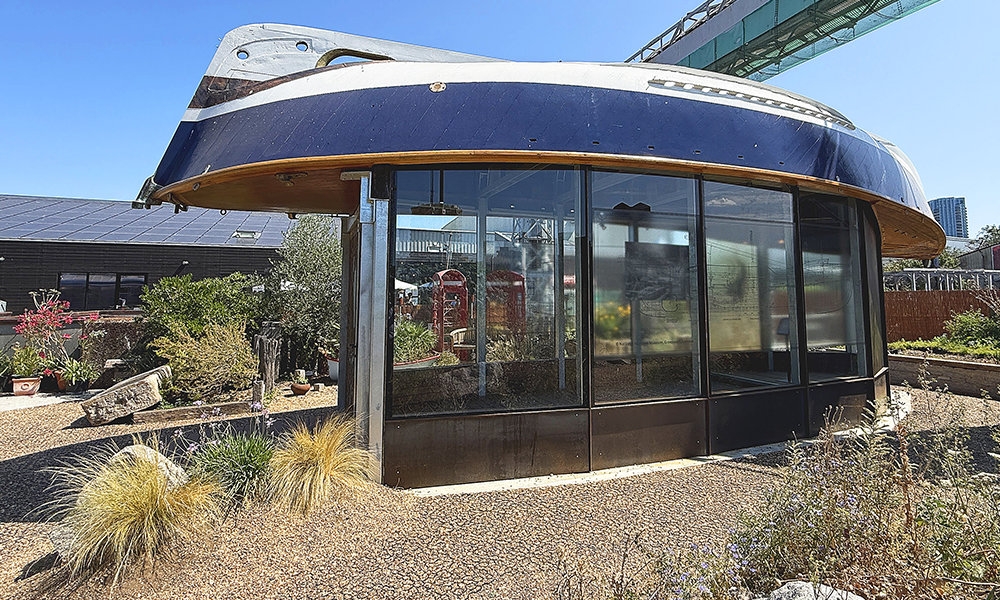
The Boat House at Cody Dock featuring the fully restored Frederick Kitchen - image by Jon Massey / Wharf Life
The Boat House at Cody Dock featuring the fully restored Frederick Kitchen – image by Jon Massey / Wharf Life

Subscribe to our free Wharf Whispers newsletter here

A visit to the Boat House at Cody Dock isn’t just a chance to experience what’s on show within.

The structure’s roof is itself an exhibit – the Frederick Kitchen is a former lifeboat that’s been extensively restored and flipped over to protect the heritage pavilion below from the elements.

It has an extraordinary story to tell.

The last boat to be commissioned at the Thames Ironworks, just down the River Lea from Cody Dock, it’s carried royalty, saved lives in Wales, been refitted for fishing, turned into a houseboat, sunk and has now returned to east London.

Thanks to research by Julia Briscoe and David Scott at Cody Dock, we can relay some of its journey here.
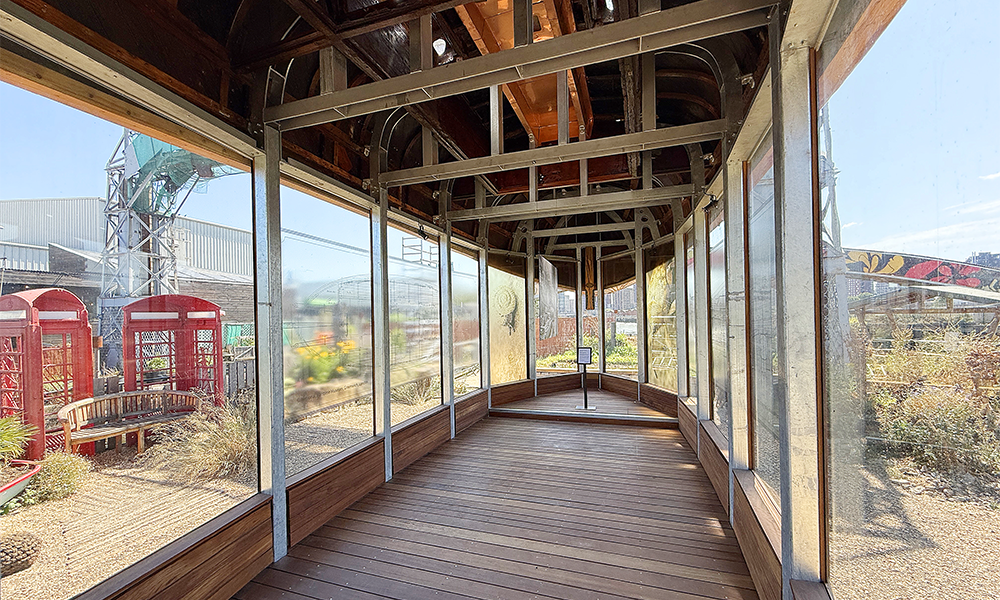
The interior of the Boat House showing the support structure and the finished vessel - image by Jon Massey / Wharf Life
The interior of the Boat House showing the support structure and the finished vessel – image by Jon Massey / Wharf Life

a generous gift

Frederick Kitchen, the man the boat was named for, played an important part in its story.

Born in Liverpool in 1852 – the son of a cabinet maker and joiner – he initially worked as a painter before going into business and becoming a corn merchant, eventually rising to the post of chairman of Pelling, Stanley And Company.

The firm was an importer of John West Salmon and one of the founding businesses of Unilever.

His success led him to accrue significant wealth in Liverpool before moving to the small village of Trefriw in 1901 on the river Crafnant, living there with two servants and becoming chairman of the parish council in 1904, before his death a year later.

A lifelong bachelor, his closest relative was his brother, Captain James Kitchen.

In his will, he left more than £2million in today’s money to various bodies including the RNLI, specifically to fund “the purchase of a motor-lifeboat to be placed on the west coast of England”.

The institution, having received £2,400 – the bulk of the cash – by 1908, duly commissioned the Thames Ironworks in east London to build a 43-foot Watson Lifeboat, fitted with a 60 horsepower petrol engine, capable of seven knots when motoring but also able to of use sails.

It was designed by Glaswegian George Lennox Watson, who was born in 1851 and was attracted to yachts as a boy during holidays on the Clyde. 

Apprenticed as a shipwright, he became interested in the role hydrodynamics played in their design and had established his own company by the age of 22, going on to design hundreds of successful racing vessels.

In 1887 he became the RNLI’s chief naval architect and, while he died in 1904, the lifeboats he designed continued to be used into the 1950s.   
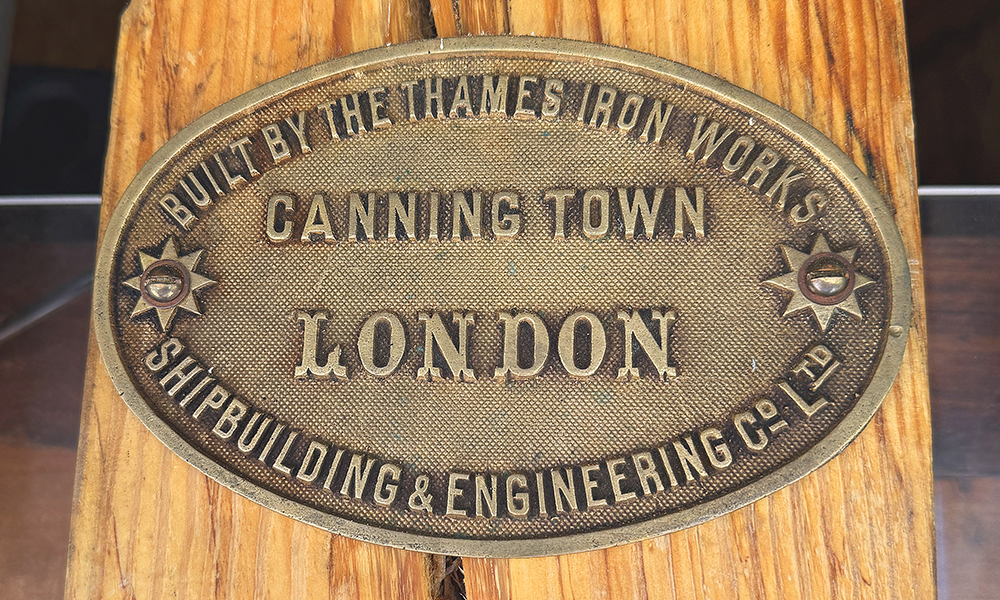
The brass plaque indicating the boat’s origin on display – image by Jon Massey / Wharf Life

built on the Lea

Founded in 1837, the Thames Ironworks And Shipbuilding Company had its main yards at Leamouth and Canning Town, with operations on both sides of Bow Creek. 

It was a titan of Victorian industry, building warships and liners as well as marine engines, cranes, parts for massive engineering projects and even motor cars.

Notably, HMS Warrior was built by the company as the first armour-plated, iron-hulled warship, leading to a slew of orders from governments around the world.

In the 1890s, the firm came under the control of managing director Arnold Hills, a philanthropist, footballer, vegetarian and champion of eight-hour days at a time when industrial workers were more commonly expected to work 10 or 12-hour shifts.

He was also involved in establishing Thames Ironworks FC, which would later become West Ham United.

However all did not remain well. Orders from the Royal Navy dried up by 1911 and the business closed in 1912.

The Frederick Kitchen was the last vessel to be commissioned and built by the company in Canning Town.

Constructed primarily from mahogany, with a heavy cast iron keel for stability in stormy seas, its design and fabrication represented the absolute zenith of skilled wooden boat building on the Thames.

Its completion also marked the end of an era.
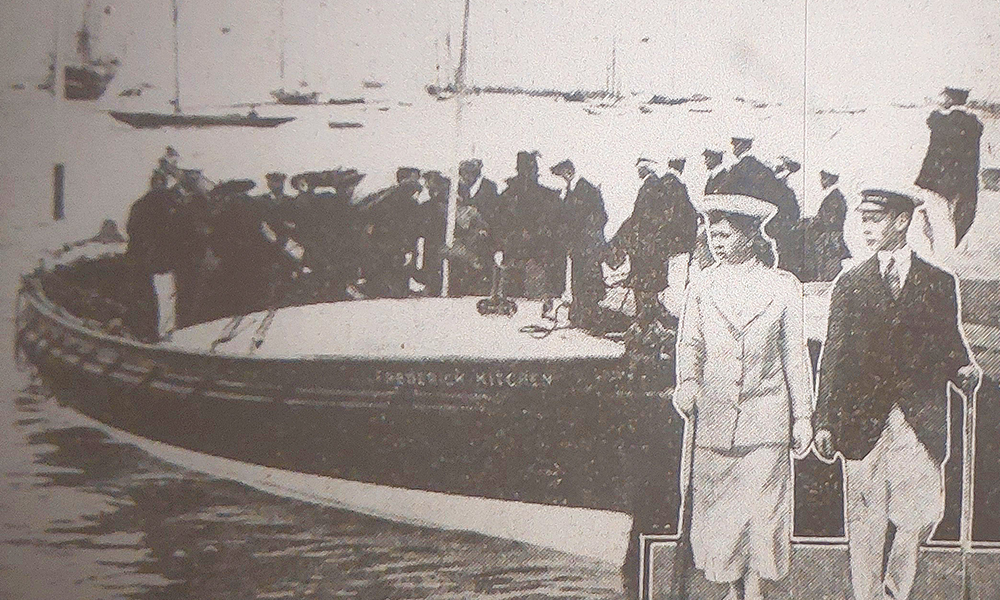

A composite press photo marking King George V’s visit to the vessel, as featured in The Weekly Dispatch - image by The Weekly Dispatch
A composite press photo marking King George V’s visit to the vessel, as featured in The Weekly Dispatch – image by The Weekly Dispatch

a Royal encounter

Following sea trials off Harwich with the RNLI, the Frederick Kitchen made an appearance at the 1913 Cowes Regatta.

Attendees included most of the Royal Family as well as Prince Henry of Prussia – brother of Kaiser Wilhelm II – one year before the outbreak of the First World War.

During the festival, the royal yacht Britannia beat Prince Henry in the Kaiser’s yacht.

King George V also took an interest in the Frederick Kitchen, which had stopped at Cowes on its way to Beaumaris in Wales to serve as the town’s lifeboat.

He, along with senior members of the RNLI, took a trip in the vessel “during which every detail of the boat’s construction was explained” including its celebrated Gardner No. 4 reverse gear, according to the November 1913 edition of The Lifeboat magazine.

Causing quite a stir, the same article lists a succession of dignitaries who then went on to visit the boat.
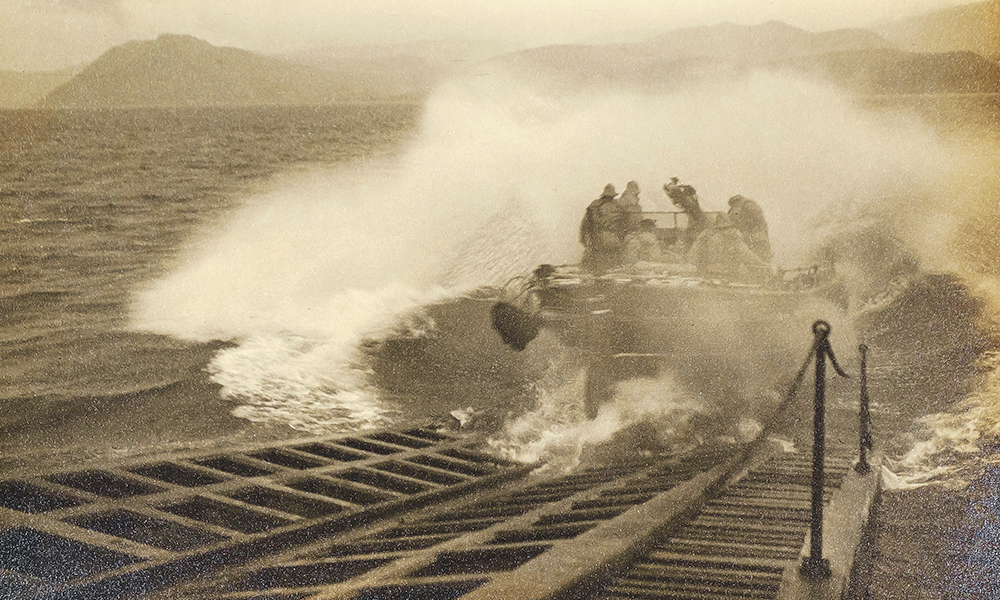
The Frederick Kitchen is launched at Beaumaris - image by the RNLI
The Frederick Kitchen is launched at Beaumaris – image by the RNLI

saving lives in Anglesey

The Frederick Kitchen travelled from Cowes to begin its intended role as the Beaumaris lifeboat, protecting mariners from the small town at the mouth of the Menai Strait on Anglesey.

The completion of a new lifeboat station in 1914 allowed the vessel to enter service and she was duly dedicated with prayers from the Bishop Of Bangor and the smashing of a bottle of wine by Mrs James Kitchen – wife of her namesake’s brother, who was also present to formally hand over the boat to the RNLI. 

Crewed by eight volunteer sailors, the vessel served from 1914 until 1945 and was then held in reserve until 1948.

During the First World War and into the 1920s, the RNLI only made brief information about its lifeboats’ activities public. 

However, we do know the Frederick Kitchen was launched 35 times on rescue missions – equating to about once per year – with five leading to lives and boats being saved.

Over 31 years of service, 46 people were rescued and two vessels were recovered.

  • One notable mission in 1920 was when the schooner Jane And Ann of Carnarvon, carrying a cargo of mining pit props, broke anchor at Llandudno and drifted. The Beaumaris lifeboat was launched and initially rescued the crew, although the captain (described in the log as “an old man”), refused to leave. 

He was later removed and the schooner anchored, but strong winds saw the ship break away a second time and drift across the Mersey estuary, eventually becoming a wreck.

  • A year later, the Frederick Kitchen was in action again, dispatched to answer distress signals from another schooner, the Pandora of Fraserburgh, loaded with coal. 

Caught in a heavy north-west gale off Anglesey, the ship had broken away from its anchor and was drifting towards the Dutchman Bank when the lifeboat caught up and rescued its crew of four before it too was wrecked.

  • In March 1931 the Beaumaris lifeboat saved three young men and their yacht, the Bluebell, in fierce rain squalls and blinding snow after they lost their sails.

Led by 21-year-old JT Chitty, the son of a master at Eton College, there was much worry locally about the three inexperienced sailors with the Llandudno lifeboat also launched, although it’s help wasn’t needed as the crew of the Frederick Kitchen were able to rescue both the young men and their vessel. 

Incidentally, three months later Mr Chitty again had to be rescued from Bluebell after it broke free from its moorings and its motor failed on the River Mersea. He and a 16-year-old friend were pulled from the upturned yacht by police and harbour staff. 

  • In 1936, the Beaumaris lifeboat once more saw significant action when called to rescue the seven crew members of the schooner Flying Foam.

The 200-ton vessel had dragged her anchor having stopped to make repairs to a sail and was drifting when the Frederick Kitchen came alongside to take Captain Roy Jackson, Lorna his wife and their two cats to safety along with the rest of the people on board.

Abandoned, the Flying Foam ran aground on the west shore of Llandudno with much of its cargo of coal later salvaged via horse and cart.

It was the last sailing schooner to be wrecked in Conwy Bay, with its remains, visible for many years at low tide, becoming a tourist attraction. 
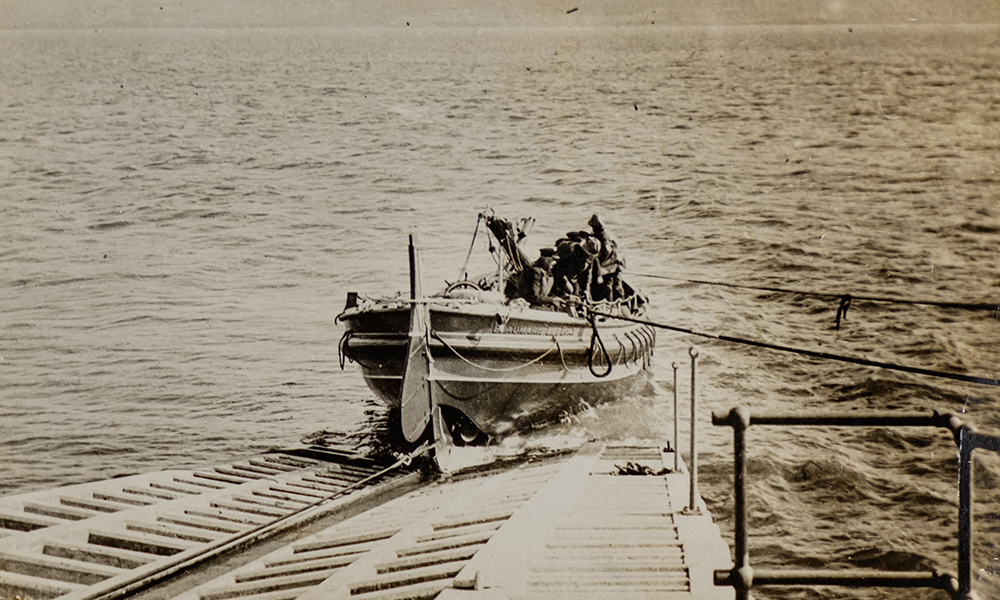
The Frederick Kitchen was launched 35 times on rescue missions - image by the RNLI
The Frederick Kitchen was launched 35 times on rescue missions – image by the RNLI

returning to London

According to National Historic Ships, the Frederick Kitchen continued to lead a colourful life after being sold to a succession of boating enthusiasts.

A cabin was added to the vessel, which was renamed the Lady Pat in 1950 and then later the Jackie Maxwell.

In 1997 the boat was restored in Blyth with the aim of using it for fishing under the new name Herring Queen. 

In 2004 it became the Ballyheo Dream with an extended cabin to allow it to act as a houseboat, but sank at its moorings before being rapidly raised and returned to Blyth.

A spell at the Fish And Duck Marina in Ely followed before the Frederick Kitchen was acquired in 2013 by the Thames Ironworks Heritage Trust, which returned the vessel to east London.

Ownership passed to Cody Dock, which embarked on an extensive restoration project to bring this piece of living maritime history back into public use.

Everyone visiting the newly created Boat House will be sheltered by timbers that were worked by some of London’s finest craftspeople, helped save lives off the coast of Wales, were trodden by King George V and will now be in service protecting and showcasing local history for many years to come.

key details: the Boat House at Cody Dock

The Boat House is located at Cody Dock on the River Lea and is free to visit.

You can find out more about the boat house and the programme for the structure via the ecological regeneration project’s website here.

Read more: Find out more about Common Threads, coming to Cody Dock in September

Read Wharf Life’s e-edition here

Subscribe to our free Wharf Whispers newsletter here

Subscribe To Wharf Life

Cody Dock set to create heritage centre for Newham on the Lea

Grant of £1.6million will see historic boat refurbished and used as the roof of a glass-walled structure

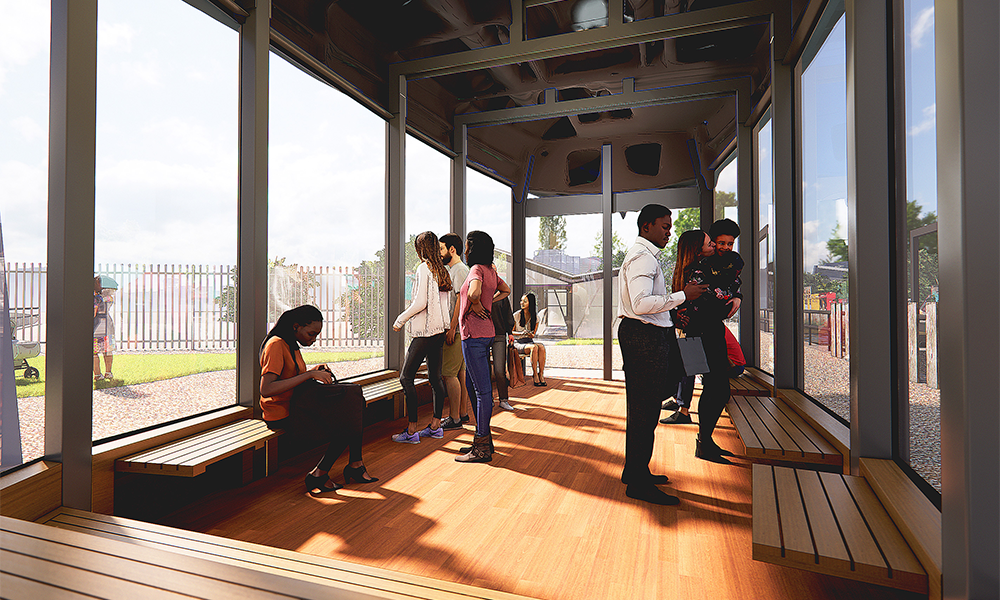
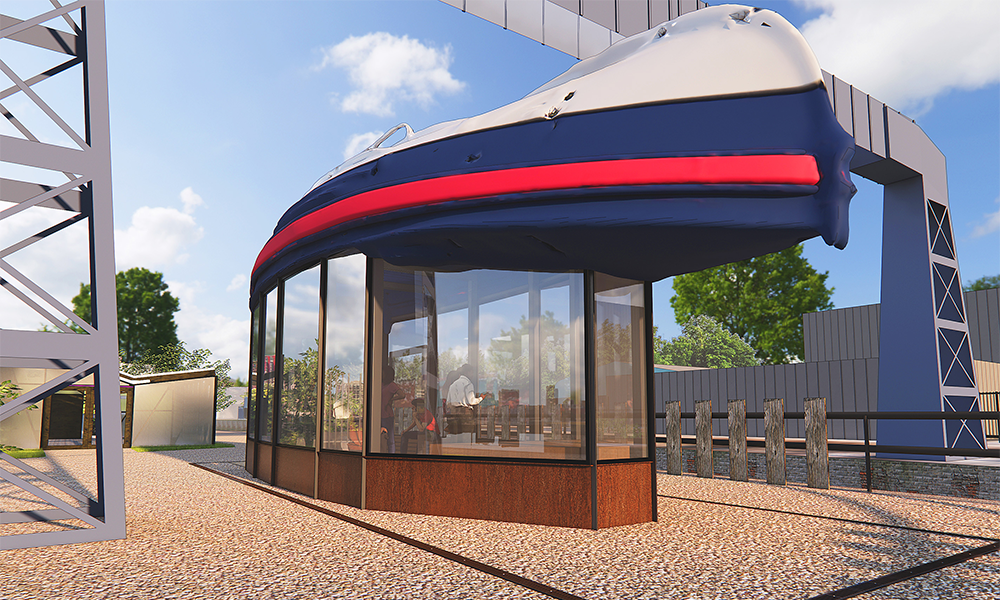
Computer generated image shows a glass walled structure with a blue and red boat as its roof - Cody Dock's planned heritage centre
An artist’s impression of the new heritage centre at Cody Dock

Subscribe to our free Wharf Whispers newsletter here
The Cody Dock project has many facets to it.

Central to its plans are the twin aims of returning what was an abandoned industrial wasteland to community use alongside efforts to boost and study the local ecology.

But there’s also Gasworks Dock Partnership’s mission to preserve and celebrate Newham’s rich heritage – a project that recently received a massive shot in the arm.

In 18 months’ time, walkers along the River Lea cutting through Cody Dock will find a singular structure in front of them. 

Beside the rolling bridge and The Growing Space – now used to rear much of the project’s plant life – a new heritage centre will be created.

Lighting Up The Lea has won a £1.6million grant from the National Lottery Heritage Fund, which will see a glass walled pavilion built on the site covered by a rather unusual roof – a former Welsh lifeboat.

The vessel is not, however, just a convenient lozenge of timbers and iron to protect visitors from the elements.

It boasts a remarkable, historic link to Newham, making it perhaps the most appropriate of structures to help protect the history of the area.

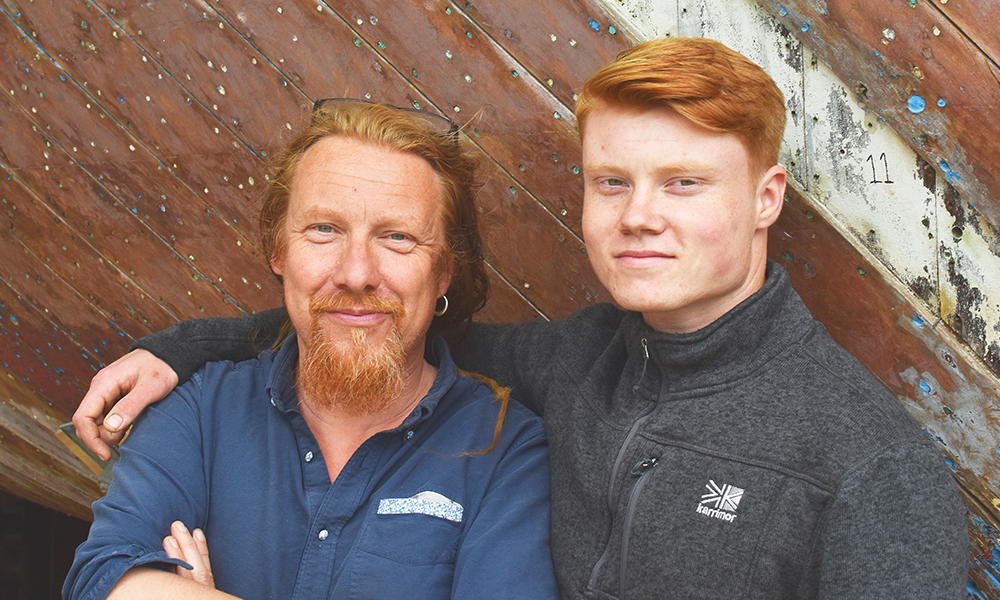
Image shows two men with red hair in front of the mahogany panels of the Frederick Kitchen at Cody Dock
Simon Myers, left, with son Tom who is leading the restoration of the boat at Cody Dock

arrival at Cody Dock

“Just before the Olympics in 2012, we were approached by a bunch of West Ham football fans who knew that the club was going to move to the London Stadium in Stratford,” said Simon Myers, Gasworks Dock Partnership and mastermind of the Cody Dock project. 

“They knew the club originated at the Thames Ironworks, which once owned land at the mouth of the River Lea when its managing director, Arnold Hills, helped found a football club to help improve the health of its workers.

“The fans had bought a boat that had been built by the company, thinking that the London Legacy Development Corporation would agree to use it as part of a museum next to the new stadium dedicated to the history of West Ham and the Ironworks.

“However, they weren’t successful in securing funding or a site – even though it was a good idea – and they approached us initially just to store the boat.

“Years passed and nothing really happened except a second boat turned up that in an even worse state than the first.

“Eventually they offered them to us for scrap.”

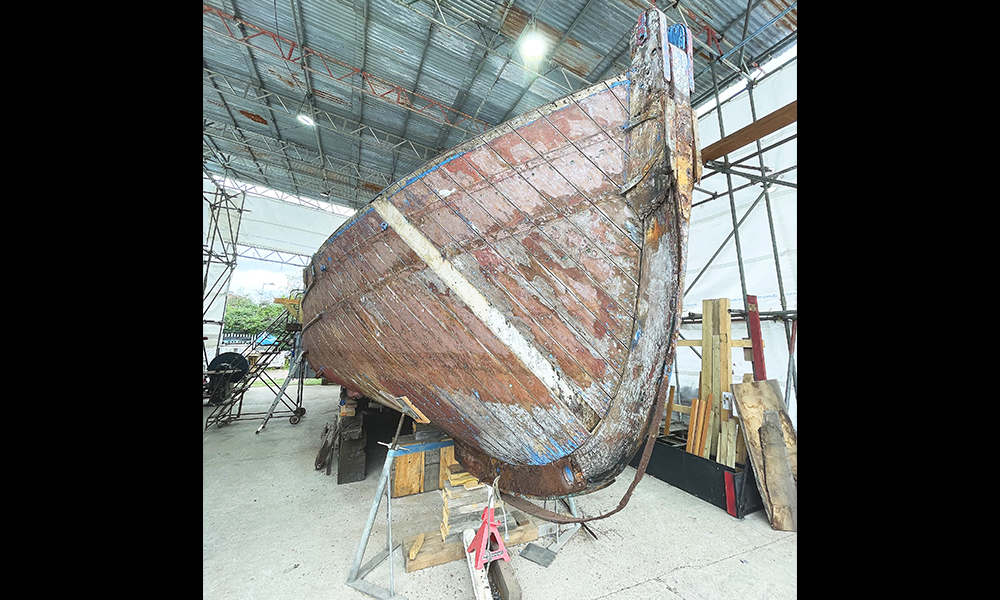
Image shows the Frederick Kitchen, a stripped down wooden boat sat on supports, as work continues
The Frederick Kitchen, part of the way through her restoration

scrap, or something else?

However, Simon and the team were not about to simply discard the craft. Instead, a plan was slowly hatched to show off at least one of the craft in all its glory and preserve it for future generations.

“My thought was that, if we’re going to do something with these boats, it’s because we want to tell their story,” said Simon. 

“It’s not about getting them in the water – we’ve got plenty of boats here for that. So why not restore one, turn it upside down and use it as a roof of a structure with glass walls?

“That way people will get to see the exterior of the boat from outside and the interior when inside.

“You’ll have this beautiful cathedral ceiling and see all of the internal structure.”

The Frederick Kitchen, named in honour of a former lifeboat master, is not just an elegant architectural solution.

Having won funding to carry out a feasibility study – a precursor to the £1.6million award – the Gasworks Dock Partnership engaged in an extensive programme of research into her history.

It turns out, she may have been the very last vessel to leave the Ironworks, which closed in 1912.

A computer generated image of people in a glass-walled building with the boat as its roof
An artist’s impression of the interior of the heritage centre

an important history

“There’s a glass plate image owned by the National Maritime Museum in Greenwich that shows her sitting in a dry dock all by herself in 1913,” said Simon. 

“We think she may have been the last to leave – we do know she was one of a string of five boats that weren’t finished when the works closed, although she was completed and became a Watson class lifeboat stationed at Beaumaris from 1914 to 1945.

“The closure marked the end of major shipbuilding on the Thames.

“Her hull is made from Honduran mahogany with a steam-bent interior frame of oak with a keel of solid iron that runs along her entire length and weighs as much as the rest of her put together.

“She’s really the pinnacle of timber shipbuilding – designed at the crossover between pulling and sailing vessels and motorised craft, so she has some adaptations including an encased propeller to avoid it being fouled by nets and rigging, which wouldn’t want if you were engaged in a rescue.

“A few years after she was launched, new technologies came in with the use of plywood and then fibreglass and plastic.

“She was the last of her kind.”

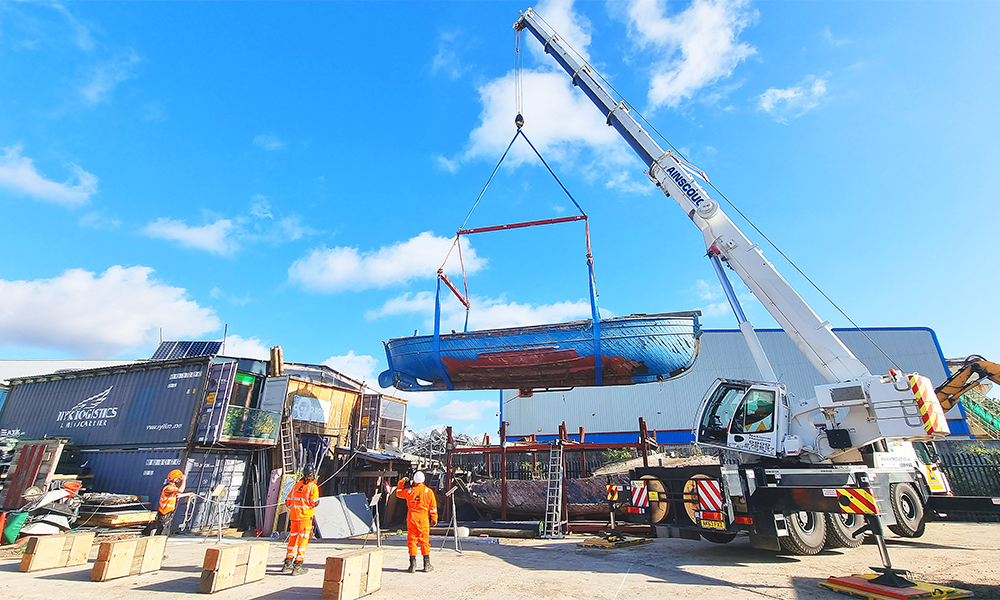
A crane holds the former lifeboat as she is moved to a special shed for refurbishment works
The boat is brought into a special shed, ready for refurbishment

a grant for Cody Dock

The full grant will be used over three years, with 18 months to prepare the ground for the new structure and restore Frederick Kitchen to her former glory – the latter project being headed up by Simon’s son, Tom.

The money will also cover a rolling programme of events centred around Newham heritage  with the space eventually used to host quarterly exhibitions.

“For a long time now, in addition to the ecology, which is really special, we’ve felt that one of the selling points of this area is the heritage of the Lea,” said Simon.

“One of the things that’s always struck us is that, apart from the House Mill, Newham doesn’t have any museums – certainly not ones that reflect the wider heritage of the area.

“There’s such a rich seam of history here, whether it’s the Lea as a boundary between the Danes and the Saxons or how the land on the east bank was part of Essex rather than London and all the implications of that.

“Then there’s the arrival of industry, which saw the local population increase from 4,000 to around 250,000 in about 50 years.”

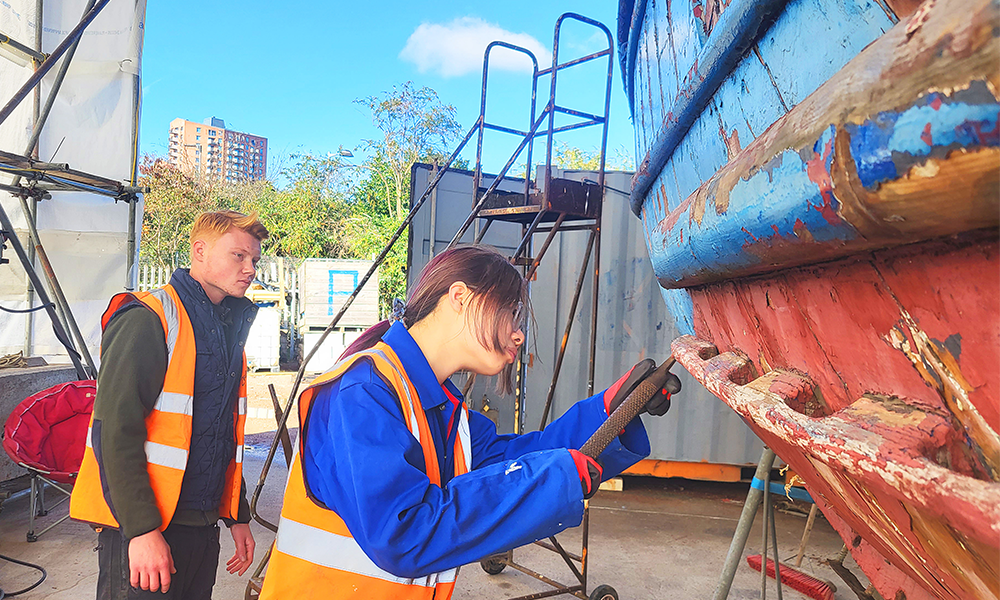
Two people work on the woodwork of the Frederick Kitchen
Tom supervises as renovation work continues

a rich seam of exhibitions

“Frankly we would need an Amazon-size warehouse to cover all the heritage we have and we reckon we could go for 30 years without repeating a topic with quarterly exhibitions in our multi-functional, multi-purpose structure,” added Simon.

“The likes of West Ham and Tate & Lyle have fantastic archives that are not on show to the public so it would be amazing to feature pieces from those collections.

“We have so many plans. It will take 18 months to restore the boat and we’ll be re-landscaping the site of the building at the same time.

“We’ll be doing outdoor exhibitions for Lighting Up The Lea during that period as well as working with the community and participants on our education programmes to gather more stories and local history.

“When our heritage programme launches, our plan is that one quarter will be dedicated to ecology, one to social heritage, one to industrial heritage and the last to miscellaneous aspects of history.”

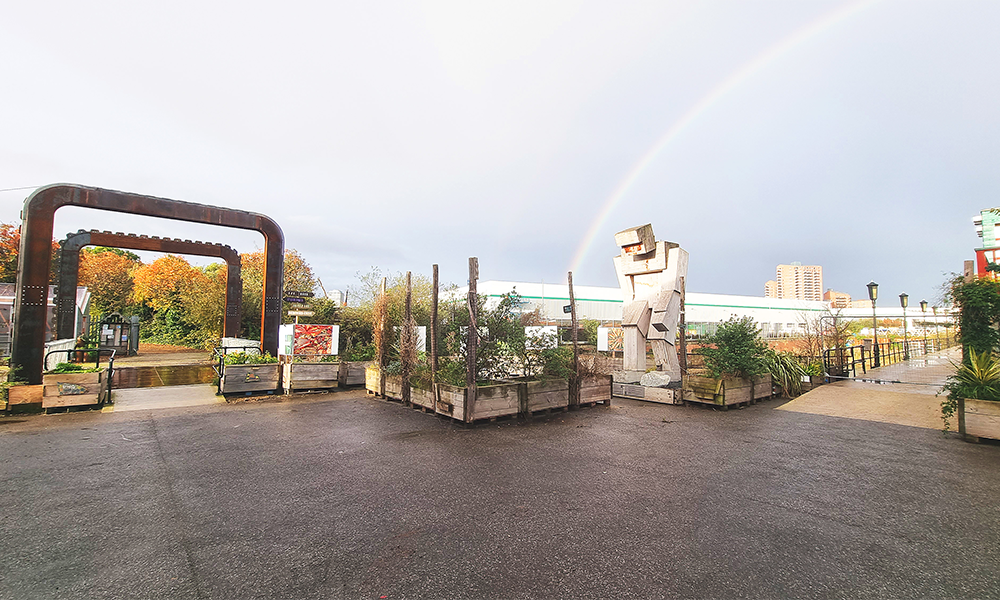
Image shows a general view of Cody Dock on the River Lea under a rainbow with a toothed rolling bridge made of iron and a large wooden sculpture of a figure
Cody Dock boasts myriad facilities including a rolling bridge

key details – Cody Dock

The Cody Dock project has a wealth of opportunities for volunteers to get involved, with activities including the restoration of the Frederick Kitchen, cleaning up the River Lea and studying the area’s ecology. 

Find out more about the project here

Read more: How Third Space has expanded its offering at Canary Wharf

Read Wharf Life’s e-edition here

Subscribe to our free Wharf Whispers newsletter here
- Jon Massey is co-founder and editorial director of Wharf Life and writes about a wide range of subjects in Canary Wharf, Docklands and east London - contact via jon.massey@wharf-life.com
Subscribe To Wharf Life