
Boisdale Of Canary Wharf

The Boat House at Cody Dock is the work of many hands together

How the Canning Town ecological regeneration project has, with the help of Nicholas Alexander and many others, delivered a heritage pavilion
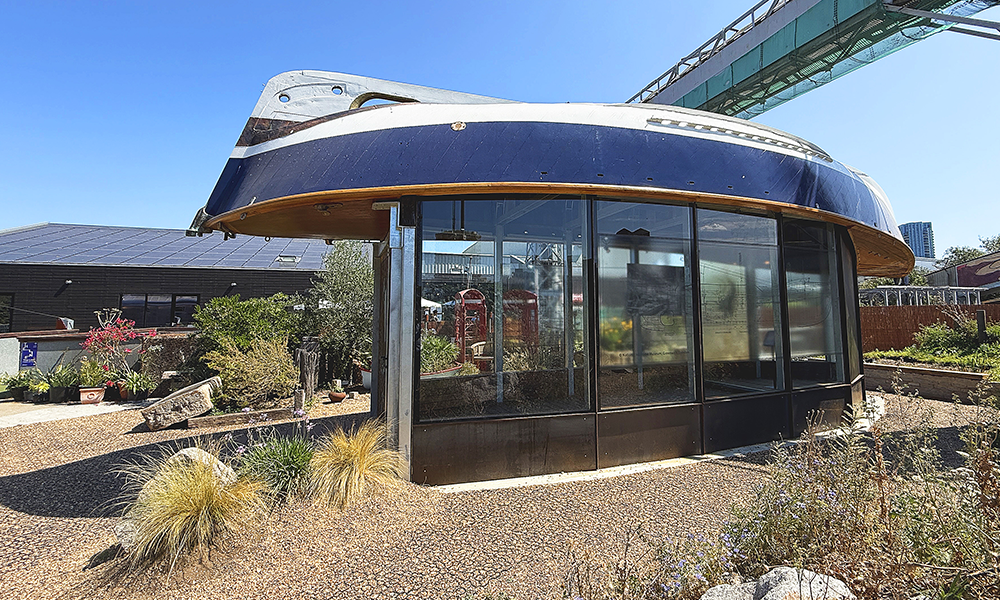
The Boat House makes use of the restored Frederick Kitchen as its roof at Cody Dock - image by Jon Massey / Wharf Life
The Boat House makes use of the restored Frederick Kitchen as its roof at Cody Dock – image by Jon Massey / Wharf Life

Subscribe to our free Wharf Whispers newsletter here

“I think The Boat House is probably the best thing I’ve done – of all the things I’ve worked on, this project has been the most complete process,” said Nick Runeckles, founder and director of Nicholas Alexander.

“I’ve been lucky enough to have been able to see it through from concept to being on site and sweeping up after the installation.

“I’ve done every bit with my team, all two of us, plus a couple of part-time staff.

“Usually in the built environment, design is kept quite separate from fabrication, but I’ve never seen it like that.

“For me, they are two sides of the same coin – making the structure informs the design.

“You can’t really say you’ve finished designing something until you’ve figured out how it works in practice.”

Nick won the contract from Cody Dock on the banks of the River Lea to come up with a way of using a restored, historic former Welsh lifeboat built on the Thames as the roof of a heritage pavilion, then turn it into a reality.

Already familiar with the ecological regeneration project near Canning Town, he’d previously worked with University Of Westminster architecture students to create The Growing Space on site – an angular building for horticultural propagation and workshops made from Douglas fir.

The Boat House project, however, presented a new kind of challenge for Nicholas Alexander, a business known for its creative construction projects.

Over more than 25 years, Nick has produced everything from a giant statue of Jeff Goldblum to machines that blend whisky on demand or serve expertly mixed cocktails, not to mention sensory experiences to showcase Tesco’s Devour range.

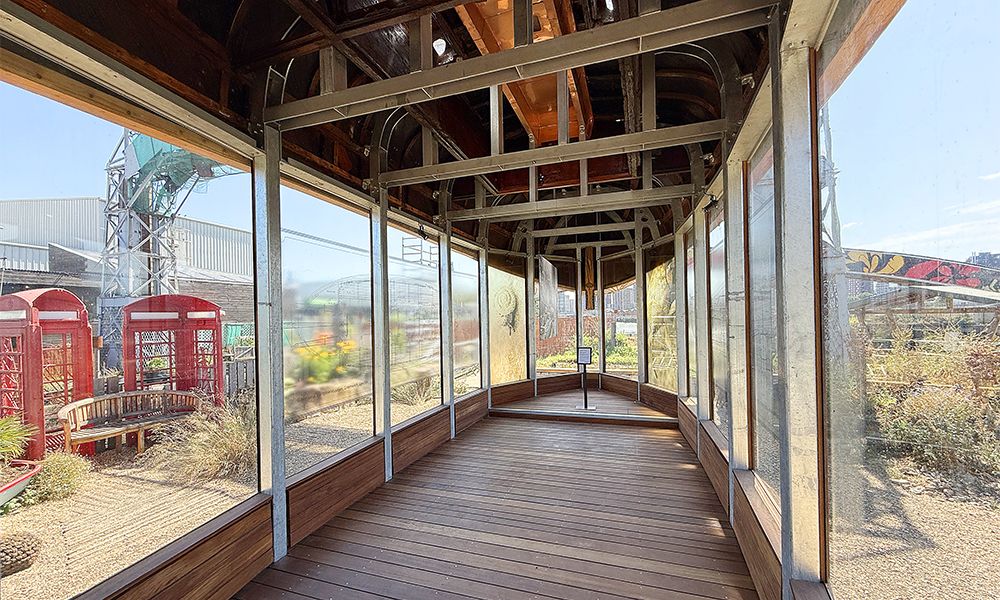
At Cody Dock, though, the task was to create a frame capable of supporting the 4.5-tonne Frederick Kitchen to form a glazed, multi-functional space for exhibitions and events that sensitively placed the boat in the environment without blocking the view of the Lea.
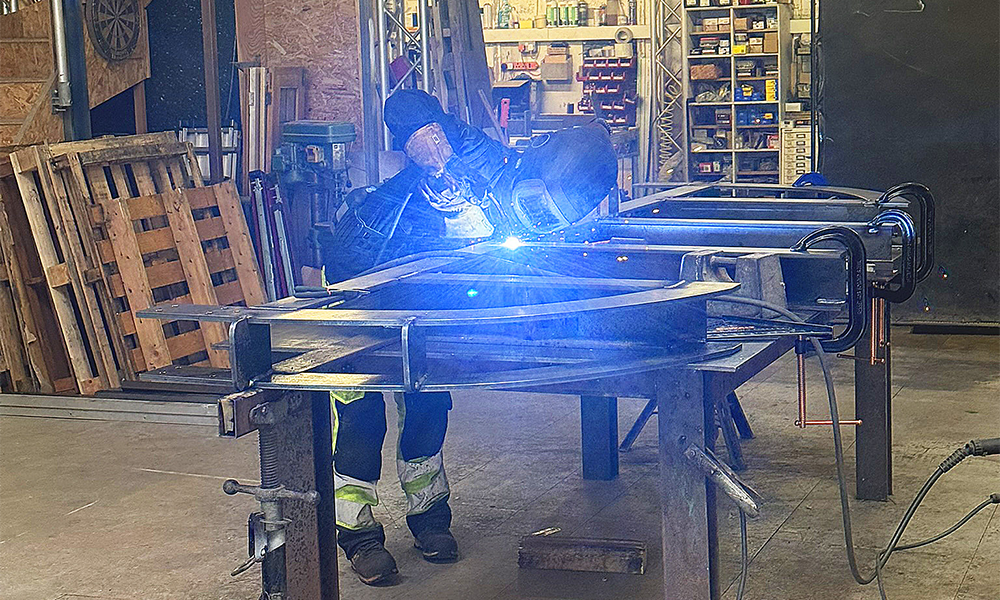
Making the steel frame the boat rests on - image by Alexander Nicholas
Making the steel frame the boat rests on – image by Alexander Nicholas

combining design, fabrication and installation

“We put this opportunity out to tender and selected Nicolas Alexander because of Nick’s unique combination of experience and ability,” said Simon Myers, CEO and co-founder of the Gasworks Dock Partnership, which has been transforming Cody Dock from an industrial wasteland into a functional community space for the last 16 years.

“Bringing together design, fabrication and installation is very rare and this was a company that was happy to set ego aside, really consider the materials used and deliver a structure to our brief that does everything we want it to.”

Funded through the National Lottery Heritage Fund’s support for Cody Dock’s wider Lighting Up The Lea project, Nick worked alongside the team restoring the Frederick Kitchen to realise The Boat House.
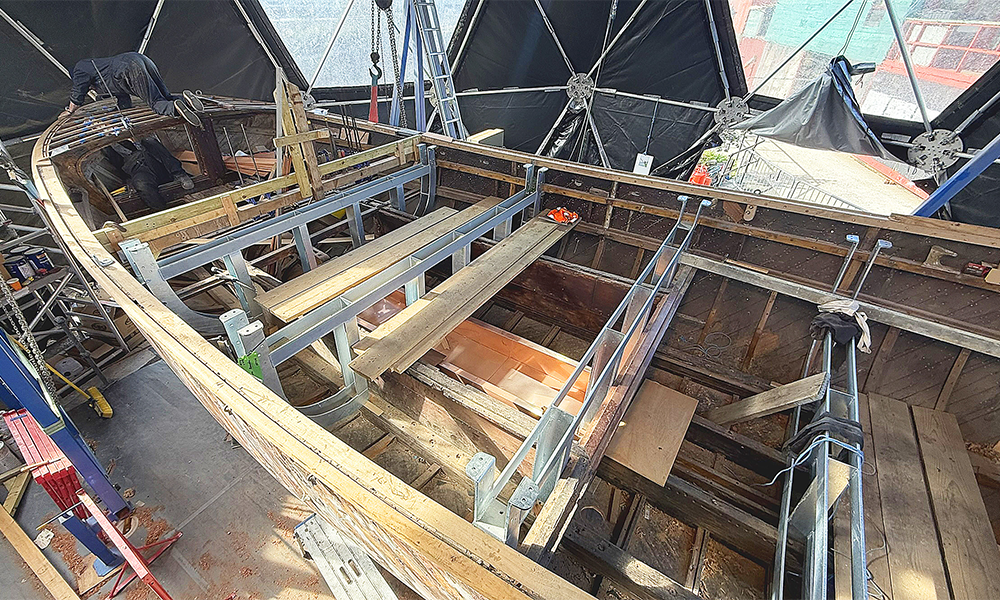
Sections of frame are installed in the boat ready for the vessel to be flipped over - image by Nicholas Alexander
Sections of frame are installed in the boat ready for the vessel to be flipped over – image by Nicholas Alexander

from scans to realisation

“The first thing we did was to scan the boat so I could have something to work with digitally,” he said.

“With a vessel like this you can’t just measure it up because there are no straight lines, no reference points.

“I needed to understand the process of construction and that, for me, means drawing it first and then working with materials. 

“The central idea was that the Frederick Kitchen was a really beautiful working boat, so what we needed was to create a structure to support it physically, but also to reflect that.

“The space we’ve created underneath it is both literally and figuratively the working envelope that the vessel offered to people on board when it was sailing.

“One of the challenges for us was that the Frederick Kitchen’s construction is actually pretty modern, it’s a very lightweight design for its size that uses cross diagonal planking in mahogany. 

“It doesn’t have heavy ribs so there wasn’t a lot of structure to work with and we’ve had to create a frame that distributes the weight as evenly as we can.

“We divided it into seven sections to split up the load.

“The most scary part of the whole process was the pinch point, the day of the crane when we had to move the boat 100 metres and connect it to the frame on a windy day.

“There was a big responsibility to Simon’s team, everyone who’d worked on the boat and the stakeholders – it was that moment that was responsible for delivering what Cody Dock had said it was going to use the funding for.
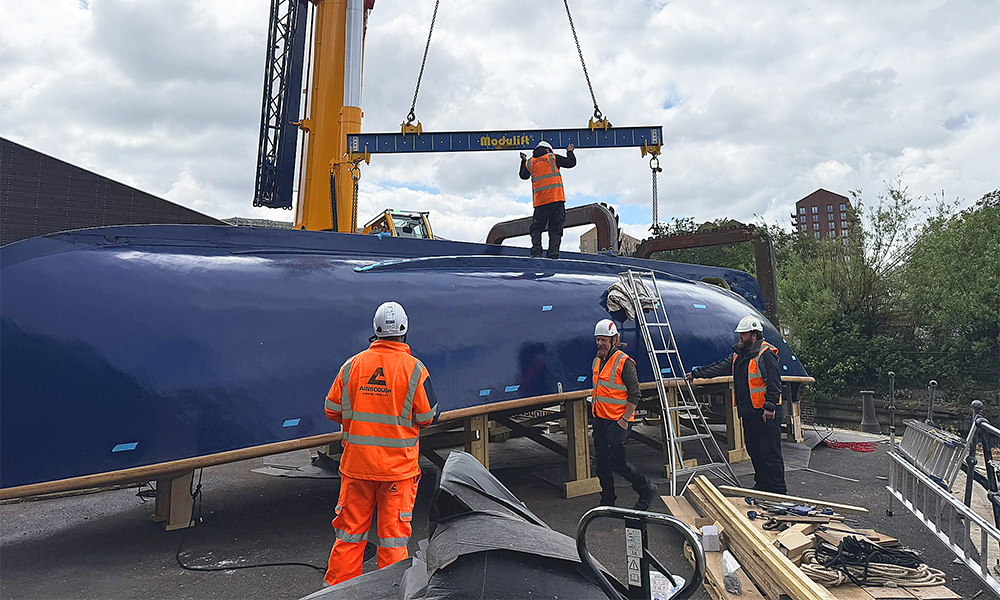
The boat is prepared for craning into place - image by Nicholas Alexander
The boat is prepared for craning into place – image by Nicholas Alexander

“I’d allowed maybe two millimetres of clearance so it was a very small target for a very big boat.

“But one of the things we’d done through the whole project was work together. I’d shown them the drawings and asked what they thought.

“One of the things we decided was to mount the boat on single pivot brackets to allow the whole thing to move – the polyurethane bushes enable it so shift as the wood swells and contracts.

“The core of this project was to deliver a space that really works for Cody Dock and I think we’ve achieved that.

“The building has to have a good relationship with the boat to allow passive ventilation to keep the timbers in good condition, but it also has to function as an exhibition space.

“We also have fold-down seating for events, workshops and talks.

“I think we’ve hit that brief.”
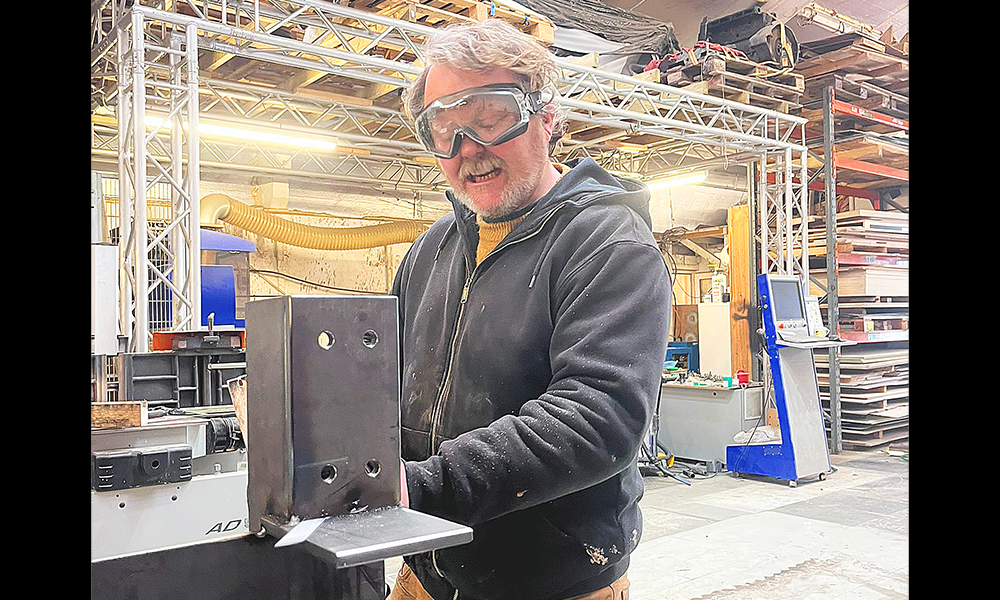
Nick Runeckles at work on the project - image by Nicholas Alexander
Nick Runeckles at work on the project – image by Nicholas Alexander

come and see it…

Now finished, The Boat House is set to be the centrepiece of Cody Dock’s forthcoming Lighting Up The Lea festival on September 19, 2026. 

The free community event will include the unveiling of Remiiya Badru’s Common Threads, a year-long art project inspired by the local history of calico and Prussian Blue, some of which will be displayed in The Boat House.  

Intended as a structure that will bring people together by showcasing local history and creativity, it’s apt that so many will have played a part in its construction.

In addition to the team restoring the Frederick Kitchen, Cody Dock’s staff and Nick’s operation, more than 100 volunteers excavated the land for the pavilion’s foundation.

“We decided it would be too disruptive to bring a digger onto the site, so Cody Dock enlisted teams of volunteers to dig it out by hand,” said Nick.

“With lots of people these things really are doable. It’s amazing what can be achieved.

“It’s also been important to include the history in what we’ve created.

“The castings we needed, for example, have been done by James Hoyle And Sons, an offshoot back in time from the Thames Ironworks which originally built the Frederick Kitchen.”
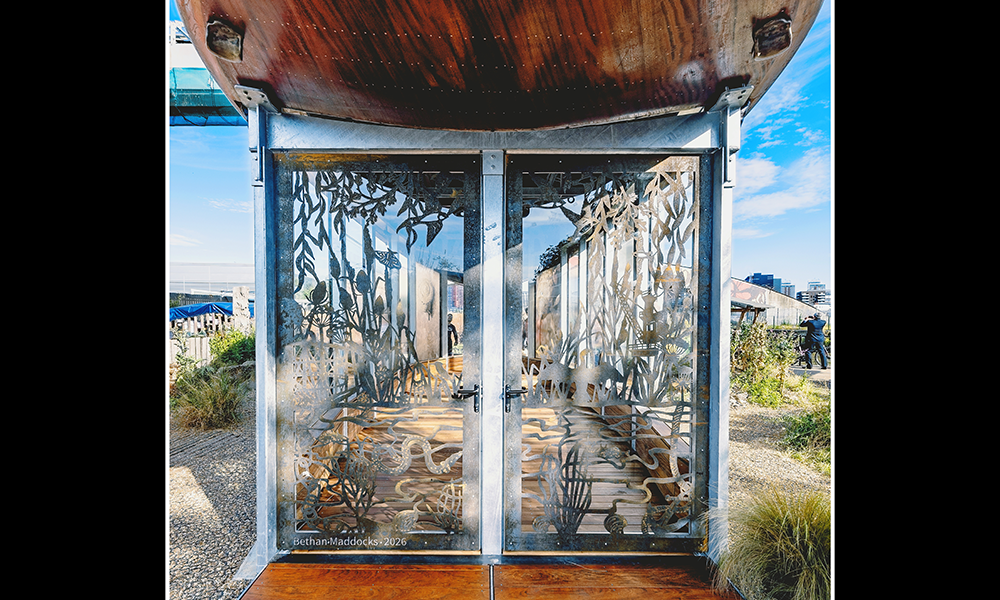
Bethan Maddocks' doors to the pavilion - image by Madeline Griffin
Bethan Maddocks’ doors to the pavilion – image by Madeline Griffin

care and detail

Another local link are the metal doors to The Boat House.

Artist Bethan Maddocks – known for her intricate paper cut-outs – was commissioned to make a work inspired by the wildlife found along the River Lea and at Cody Dock, with the final design rendered in steel. 

Elements like this, even the fact that the boat drains rainwater into a specially installed pond for plants and creatures to thrive in, are testament to the level of detail, thought and care taken with the pavilion’s creation.  

“It’s a real privilege to be a part of something like this,” said Nick. “I’ve probably done more drawings for this project than any other, but it’s difficult to see on a computer screen just how beautiful an object that boat is – kudos to Tom Myers and his team for all their work over the two years that has resulted in making it so.

“I’m often working with brands on marketing campaigns, so it means something to have my name associated with this.

“My family came to the opening, which was really nice and I’d like to express my eternal gratitude to Simon and everyone at Cody Dock.

“I feel we’ve built something really good together and that’s the best reward of all.” 

Projects like this don’t come about by chance.

The Gasworks Dock Partnership has taken what was once an industrial dumping ground, polluted with all sorts of foulness and has turned Cody Dock into an increasingly vital community asset. 

With its rolling bridge, visitors centre, growing space, cafe and bar in place, the momentum is there and recognition should go to those with the foresight and imagination to fund such projects, not least the National Lottery.

Stuart McLeod, director, England – London And South at The National Lottery Heritage Fund, said: “We are delighted to support the creation of The Boat House at Cody Dock, an inspiring project that brings together heritage and community. 

“Thanks to National Lottery players, the remarkable story of the Frederick Kitchen and the wider history of the River Lea will be preserved and shared in an engaging and meaningful way. 

“This new space offers people the opportunity to connect with Newham’s industrial and maritime heritage, ensuring it is valued, understood and enjoyed for generations to come.”
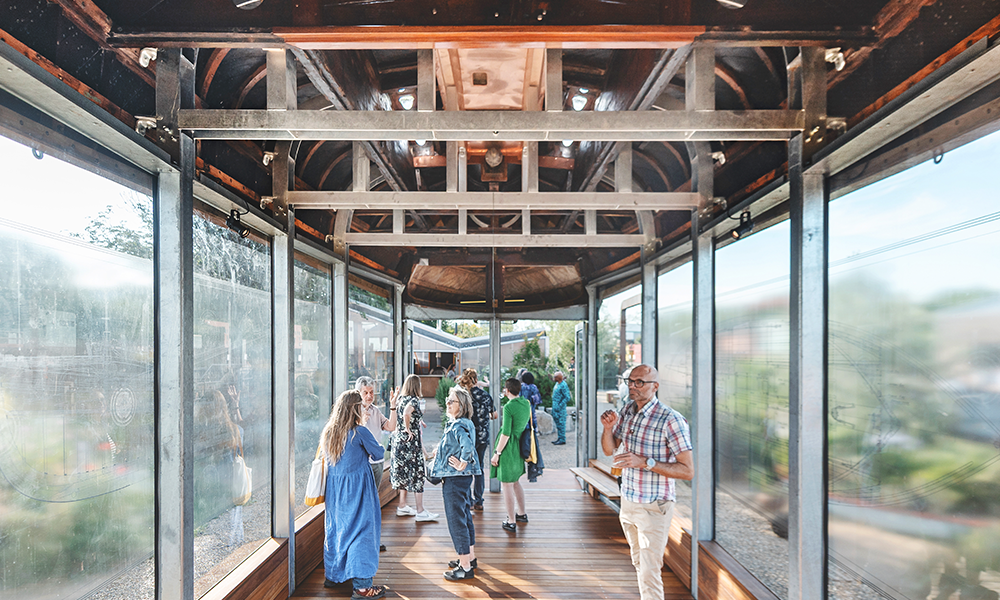

The Boat House will be at the heart of the Lighting Up The Lea festival - image by Madeline Griffin
The Boat House will be at the heart of the Lighting Up The Lea festival – image by Madeline Griffin

key details: Lighting Up The Lea at Cody Dock

Cody Dock’s Lighting Up The Lea festival is set to take place on Saturday, September 19, 2026, from 11am-6pm and is free to attend.

You can find out more details here.

Read more: How Bamboo Mat is set to bring Nikkei cuisine to Canary Wharf

Read Wharf Life’s e-edition here

Subscribe to our free Wharf Whispers newsletter here

Subscribe To Wharf Life

Common Threads set to be exhibited at Cody Dock in September

Artist and walker, Remiiya Badru, has spent a year researching, making pieces and hosting workshops to explore the history of calico and Prussian Blue

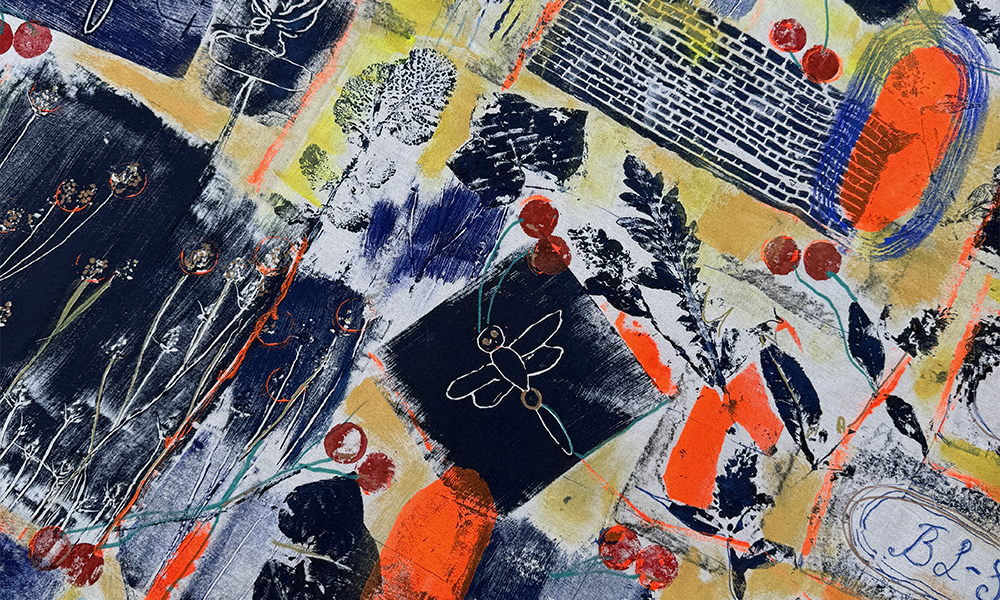
Detail from work created as part of Remiiya Badru's Common Threads project - image by Jon Massey / Wharf Life
Detail from work created as part of Remiiya Badru’s Common Threads project – image by Jon Massey / Wharf Life

Subscribe to our free Wharf Whispers newsletter here
The areas that line the banks of the Lea are rich in history, the silt of time that’s built up around the waterway.

Watch the river’s tides rise and fall and it’s easy to imagine the currents connecting to the Thames and from there the oceans beyond.

One’s head can easily start spinning from the complexity and variety of those links.  

Sometimes what’s needed is a way of fixing things, a scaffold to support the flow of ideas, themes and events.

To an extent, this is what artist and walker, Remiiya Badru’s, year-long collaboration with Cody Dock is all about. 

Common Threads has seen her take up the position of artist-in-residence at the ecological regeneration project, to research, investigate and respond to two interrelated commodities and their history in the area.

The first is the woven cotton cloth, calico, and the second the synthetic pigment Prussian Blue, once made at the site.

“I’m an artist, but I’m also a walker and an educator and both of those things inform my practice,” said Remiiya.

“I also have a connection with rivers and bodies of water as well as maps with the work I create.

Common Threads is about how we capture stories around the textile trade across the docks in east London.

“I see the threads as stories coming together, so I wanted to bring the community in and give people in this area the opportunity to share their tales.

“In this way these Common Threads are global narratives – they all come from somewhere and I wanted to look at how we could represent that visually in the context of the history.”

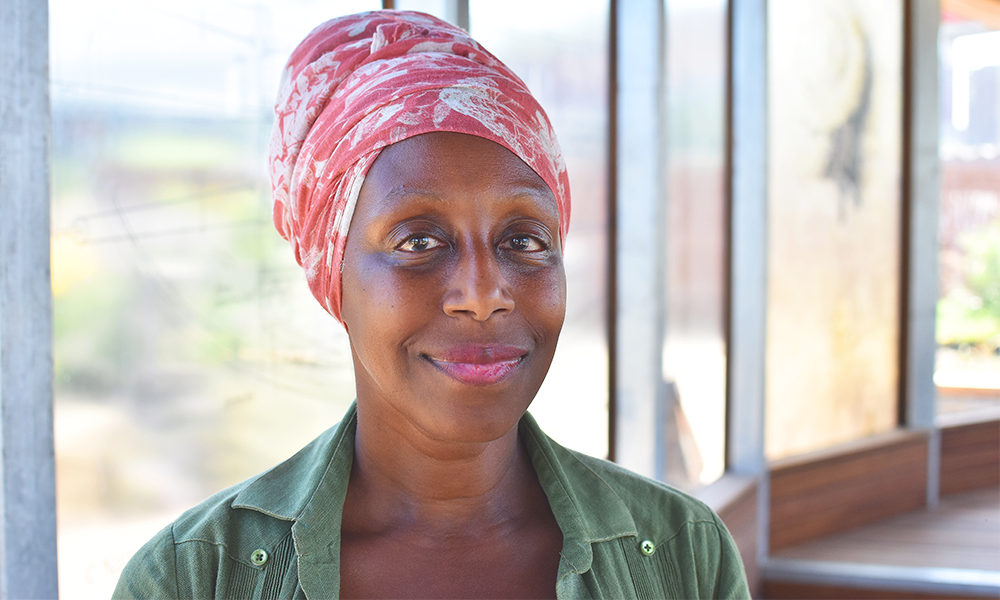
Artist and walker Remiiya Bardru has spent a year working at Cody Dock - image by Jon Massey / Wharf Life
Artist and walker Remiiya Bardru has spent a year working at Cody Dock – image by Jon Massey / Wharf Life

weaving stories together

When it comes to both the textile and the pigment, that past is a complex weave – different countries, creations and locations.

For Remiiya – an artist whose practice is characterised by curiosity and serendipity – it’s an irresistible jumping off point.

Having trained as an illustrator and then as a teacher – a useful skill that enabled her to take her art “out of the classroom and into museums and galleries” – she worked for a while in Bristol.

“That was at the Arnolfini Gallery with community groups and facilitating social engagement and I thought it was a very important part of my practice.

“That remains the case today, but I’m also very interested in the heritage of places. 

“I hated history at school but I found a way of seeing the subject as an archive of real people’s stories.

“Geography is also a love of mine – how people and place connect and how cities shift and shape themselves. I really love maps and what they represent.

“These things come together when I’m walking.

“My practice is often intuitive – if something jumps out at me, I’ll go and research it.

“I’ve done many walks along the Thames and the Lea – I’m a bit of a nomad.

“I would say the river is the aorta of the city – it pulls in all those tributaries and the stories flow into it.”

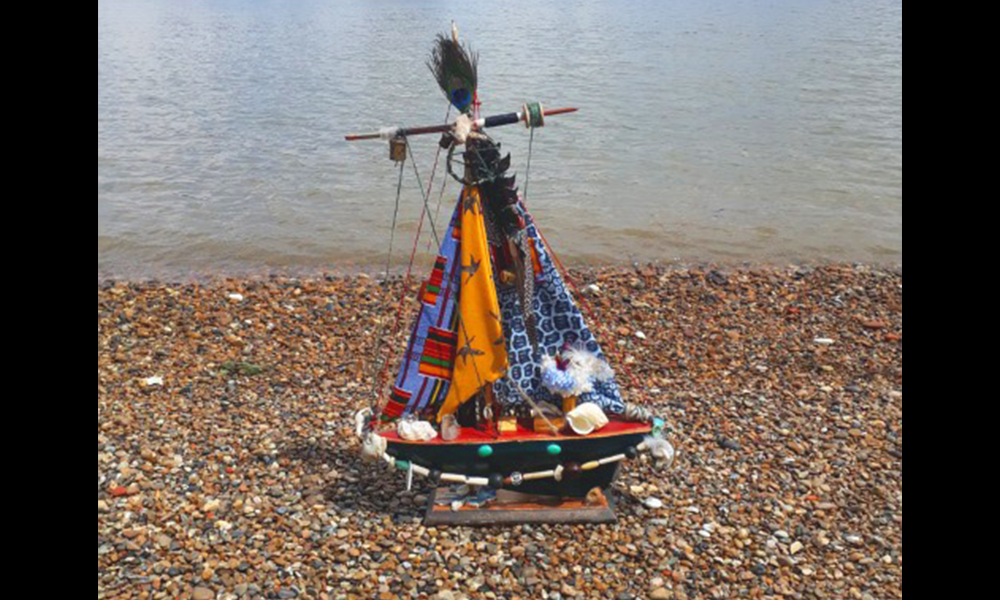
Remiiya's model boat, the Timehri on a beach on the Isle Of Dogs - image by Remiiya Badru
Remiiya’s model boat, the Timehri on a beach on the Isle Of Dogs – image by Remiiya Badru

In recent years, Remiiya has collaborated with the National Maritime Museum, making art and researching its collections to find women and people from diverse backgrounds.

She’s made a “living map” entitled Rhumblines, displayed at the Making Space in Aberfeldy Street.

She’s featured in Thames-focused documentary Time And Tide.

She’s led workshops, walks and meet-ups. 

But perhaps most revealingly she’s built a model boat, the Timehri, named for the “art and craft of man” which she’s taken for walks along the river as a conversation starter and because the journey forms part of the artwork. 

It’s been placed in Canary Wharf, on a beach on the Isle Of Dogs and on the plinth that once supported the statue of slaver, merchant and ship-owner Robert Milligan, who was the driving force behing the construction of West India Docks.

Such activities are indicative of Remiiya’s intuitive approach to the subjects she investigates – one that she’s carried over into Common Threads.

“Calico is a global cloth with a complicated narrative,” she said.

“It’s a strong cotton fabric that’s thicker than muslin, but not as thick as denim – today it’s often used to make tote bags.

“It was at the centre of an attempt to protect the British textile industry when importing it was banned. 

“The fabric was often printed and Bromley Hall (which sits just across the Lea from Cody Dock on the A12) – a building with multi-layered narratives that go back to Henry VIII and beyond – was a major producer, using copper plates to create intricate designs.”

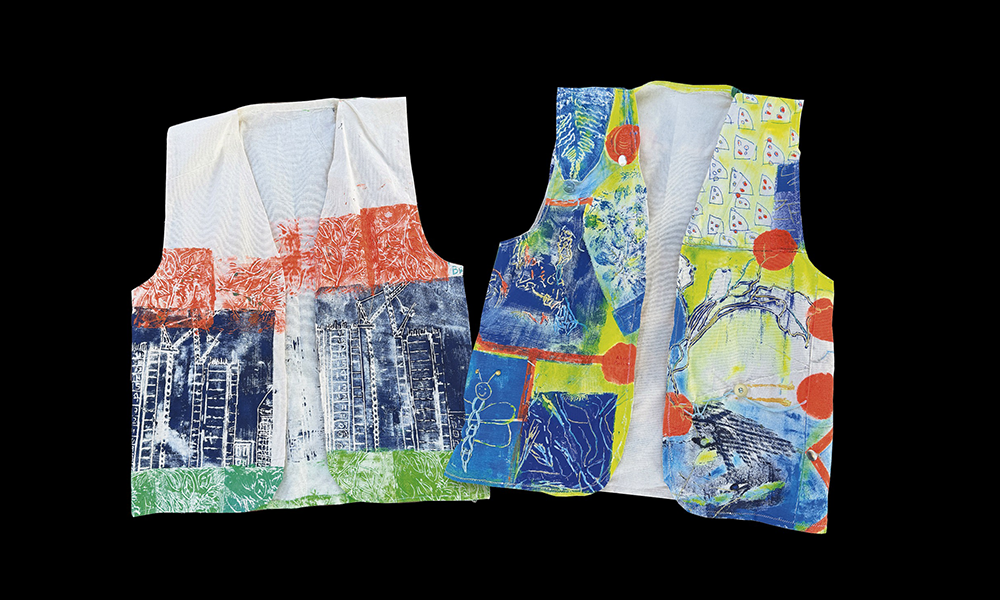
Hi-vis calico jackets created from the September exhibition - image by Jon Massey / Wharf Life
Hi-vis calico jackets created from the September exhibition – image by Jon Massey / Wharf Life

doing the research

These stories, coupled with extensive research in partnership with the V&A have all fed into a project that will be fully realised in September.

That includes making use of Prussian Blue, which was once manufactured on site at Cody Dock and was shipped worldwide from there by the Imperial Chemical Company.

“When people come to see Common Threads on September 19, I want them to appreciate all the elements of the history of this area,” said Remiiya. 

“I’ve worked with different community groups and schools to get them to think about what’s important to them and we’ve created a series of cloths.

“We’ve also made jackets in calico based on the high-vis ones worn at Cody Dock – again based on people’s personal connections to this area.

“We’re now working on a plan to display all this material across the site.

“I want people to discover Cody Dock – it’s off the beaten track, but it’s an oasis and there’s something here for everyone.

“I really like that the people here love and care for the spaces and that it’s a place where artists can hold up a mirror to history. 

“Over the months I’ve been here, I’ve felt such freedom and autonomy to work on this project and there’s been so much support.

“It’s growing and expanding and that’s really exciting – let’s see where the threads take us.”


Common Threads will be the first exhibition to make use of Cody Dock's newly opened Boat House heritage pavilion - image by Jon Massey / Wharf Life
Common Threads will be the first exhibition to make use of Cody Dock’s newly opened Boat House heritage pavilion – image by Jon Massey / Wharf Life

key details: Common Threads

Common Threads will be unveiled at Cody Dock on September 19, 2026, at the ecological regeneration project’s Lighting Up The Lea event – part of the Totally Thames Festival.

The open day, runs from 11am-6pm, and includes a mix of workshops, live performances, walks, talks and a chance to see the work produced for the project. Entry is free.

Find out more about Cody Dock here

Read more: Discover the extraordinary maps and prints at Frontispiece

Read Wharf Life’s e-edition here

Subscribe to our free Wharf Whispers newsletter here
Subscribe To Wharf Life