

Boisdale Of Canary Wharf

Common Threads set to be exhibited at Cody Dock in September

Artist and walker, Remiiya Badru, has spent a year researching, making pieces and hosting workshops to explore the history of calico and Prussian Blue

Detail from work created as part of Remiiya Badru's Common Threads project - image by Jon Massey / Wharf Life
Detail from work created as part of Remiiya Badru’s Common Threads project – image by Jon Massey / Wharf Life

Subscribe to our free Wharf Whispers newsletter here

The areas that line the banks of the Lea are rich in history, the silt of time that’s built up around the waterway.

Watch the river’s tides rise and fall and it’s easy to imagine the currents connecting to the Thames and from there the oceans beyond.

One’s head can easily start spinning from the complexity and variety of those links.  

Sometimes what’s needed is a way of fixing things, a scaffold to support the flow of ideas, themes and events.

To an extent, this is what artist and walker, Remiiya Badru’s, year-long collaboration with Cody Dock is all about. 

Common Threads has seen her take up the position of artist-in-residence at the ecological regeneration project, to research, investigate and respond to two interrelated commodities and their history in the area.

The first is the woven cotton cloth, calico, and the second the synthetic pigment Prussian Blue, once made at the site.

“I’m an artist, but I’m also a walker and an educator and both of those things inform my practice,” said Remiiya.

“I also have a connection with rivers and bodies of water as well as maps with the work I create.

Common Threads is about how we capture stories around the textile trade across the docks in east London.

“I see the threads as stories coming together, so I wanted to bring the community in and give people in this area the opportunity to share their tales.

“In this way these Common Threads are global narratives – they all come from somewhere and I wanted to look at how we could represent that visually in the context of the history.”
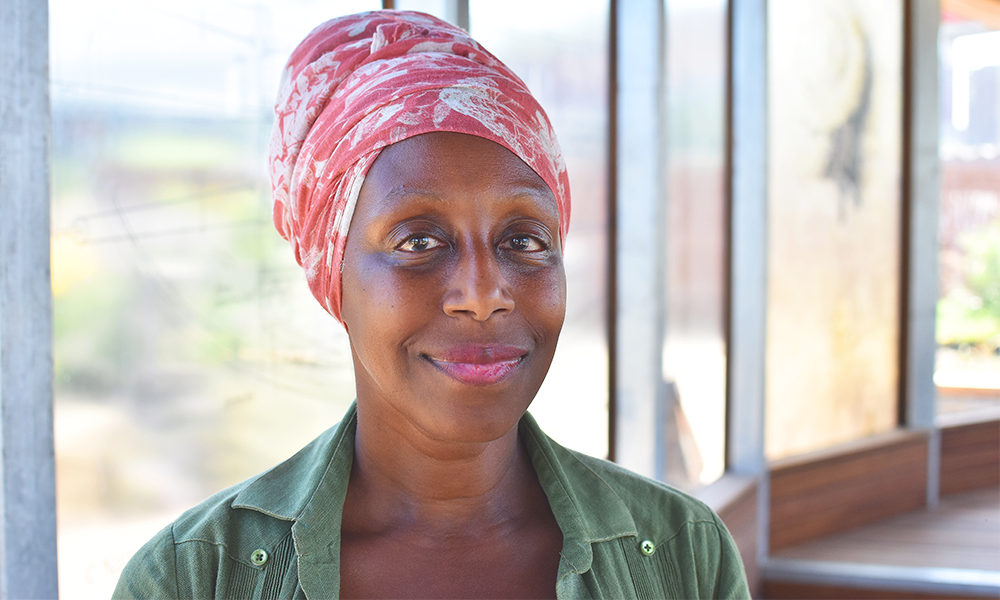
Artist and walker Remiiya Bardru has spent a year working at Cody Dock - image by Jon Massey / Wharf Life
Artist and walker Remiiya Bardru has spent a year working at Cody Dock – image by Jon Massey / Wharf Life

weaving stories together

When it comes to both the textile and the pigment, that past is a complex weave – different countries, creations and locations.

For Remiiya – an artist whose practice is characterised by curiosity and serendipity – it’s an irresistible jumping off point.

Having trained as an illustrator and then as a teacher – a useful skill that enabled her to take her art “out of the classroom and into museums and galleries” – she worked for a while in Bristol.

“That was at the Arnolfini Gallery with community groups and facilitating social engagement and I thought it was a very important part of my practice.

“That remains the case today, but I’m also very interested in the heritage of places. 

“I hated history at school but I found a way of seeing the subject as an archive of real people’s stories.

“Geography is also a love of mine – how people and place connect and how cities shift and shape themselves. I really love maps and what they represent.

“These things come together when I’m walking.

“My practice is often intuitive – if something jumps out at me, I’ll go and research it.

“I’ve done many walks along the Thames and the Lea – I’m a bit of a nomad.

“I would say the river is the aorta of the city – it pulls in all those tributaries and the stories flow into it.”
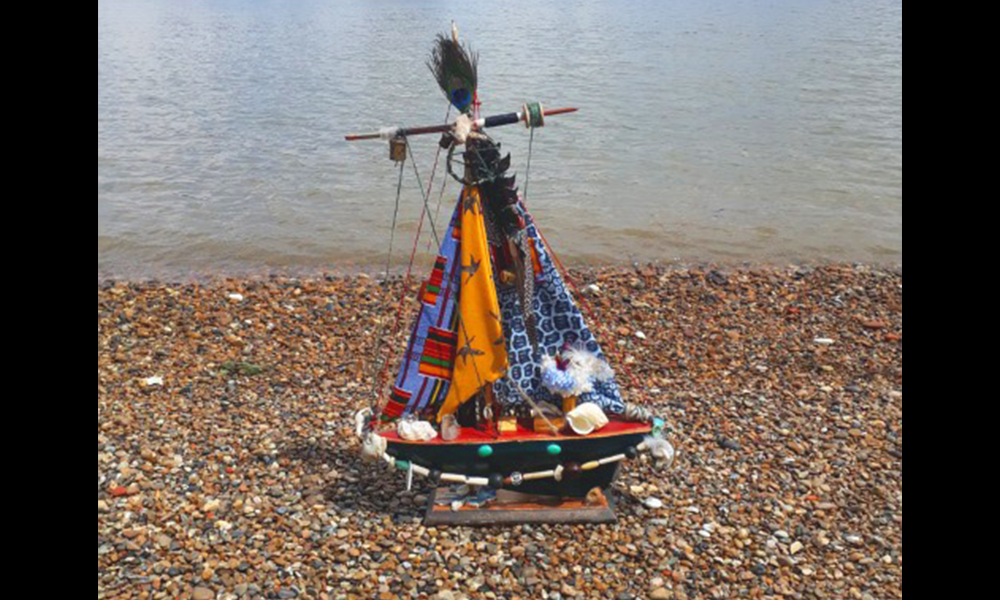
Remiiya's model boat, the Timehri on a beach on the Isle Of Dogs - image by Remiiya Badru
Remiiya’s model boat, the Timehri on a beach on the Isle Of Dogs – image by Remiiya Badru

In recent years, Remiiya has collaborated with the National Maritime Museum, making art and researching its collections to find women and people from diverse backgrounds.

She’s made a “living map” entitled Rhumblines, displayed at the Making Space in Aberfeldy Street.

She’s featured in Thames-focused documentary Time And Tide.

She’s led workshops, walks and meet-ups. 

But perhaps most revealingly she’s built a model boat, the Timehri, named for the “art and craft of man” which she’s taken for walks along the river as a conversation starter and because the journey forms part of the artwork. 

It’s been placed in Canary Wharf, on a beach on the Isle Of Dogs and on the plinth that once supported the statue of slaver, merchant and ship-owner Robert Milligan, who was the driving force behing the construction of West India Docks.

Such activities are indicative of Remiiya’s intuitive approach to the subjects she investigates – one that she’s carried over into Common Threads.

“Calico is a global cloth with a complicated narrative,” she said.

“It’s a strong cotton fabric that’s thicker than muslin, but not as thick as denim – today it’s often used to make tote bags.

“It was at the centre of an attempt to protect the British textile industry when importing it was banned. 

“The fabric was often printed and Bromley Hall (which sits just across the Lea from Cody Dock on the A12) – a building with multi-layered narratives that go back to Henry VIII and beyond – was a major producer, using copper plates to create intricate designs.”
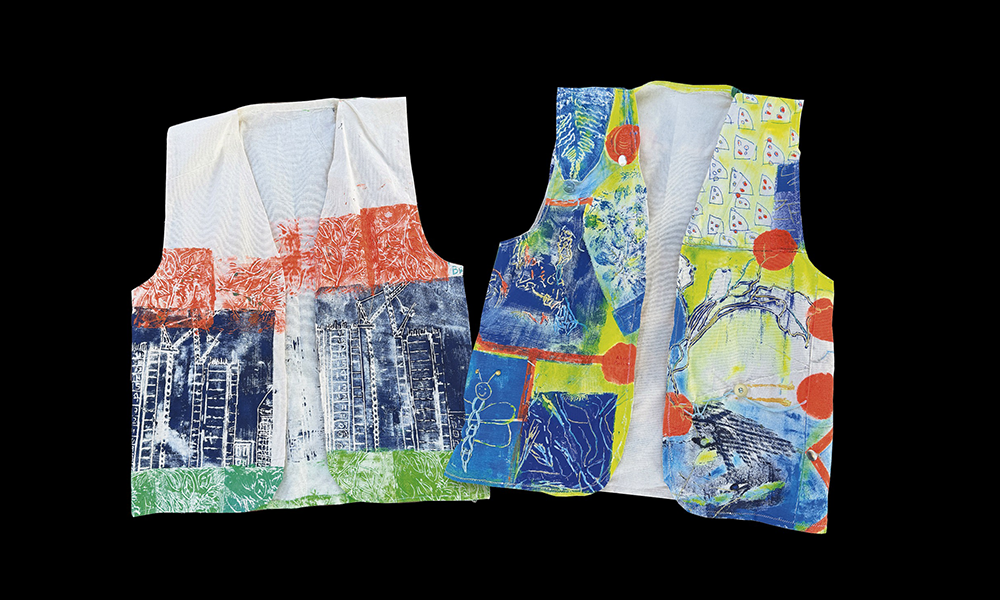
Hi-vis calico jackets created from the September exhibition - image by Jon Massey / Wharf Life
Hi-vis calico jackets created from the September exhibition – image by Jon Massey / Wharf Life

doing the research

These stories, coupled with extensive research in partnership with the V&A have all fed into a project that will be fully realised in September.

That includes making use of Prussian Blue, which was once manufactured on site at Cody Dock and was shipped worldwide from there by the Imperial Chemical Company.

“When people come to see Common Threads on September 19, I want them to appreciate all the elements of the history of this area,” said Remiiya. 

“I’ve worked with different community groups and schools to get them to think about what’s important to them and we’ve created a series of cloths.

“We’ve also made jackets in calico based on the high-vis ones worn at Cody Dock – again based on people’s personal connections to this area.

“We’re now working on a plan to display all this material across the site.

“I want people to discover Cody Dock – it’s off the beaten track, but it’s an oasis and there’s something here for everyone.

“I really like that the people here love and care for the spaces and that it’s a place where artists can hold up a mirror to history. 

“Over the months I’ve been here, I’ve felt such freedom and autonomy to work on this project and there’s been so much support.

“It’s growing and expanding and that’s really exciting – let’s see where the threads take us.”
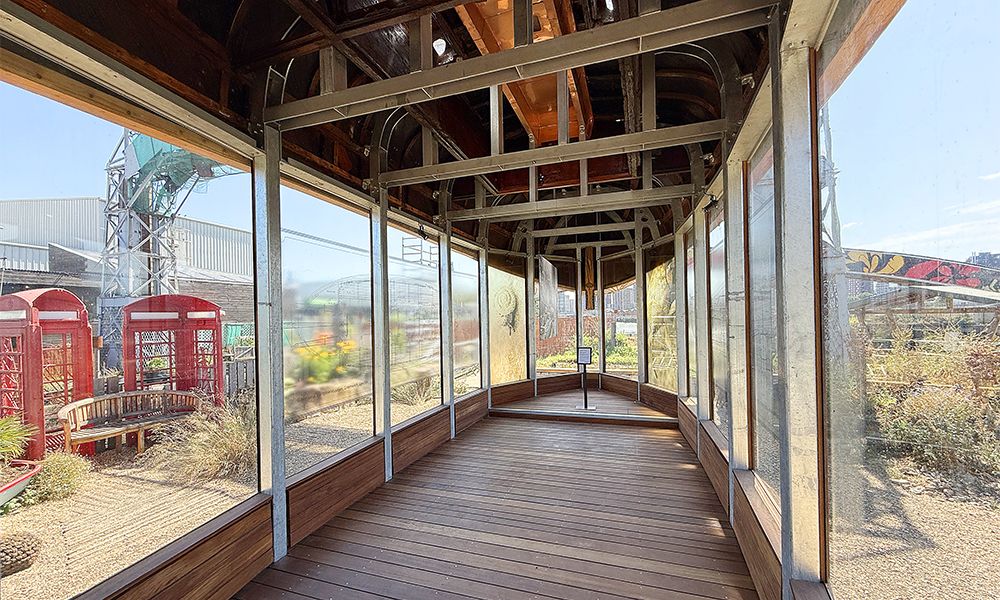

Common Threads will be the first exhibition to make use of Cody Dock's newly opened Boat House heritage pavilion - image by Jon Massey / Wharf Life
Common Threads will be the first exhibition to make use of Cody Dock’s newly opened Boat House heritage pavilion – image by Jon Massey / Wharf Life

key details: Common Threads

Common Threads will be unveiled at Cody Dock on September 19, 2026, at the ecological regeneration project’s Lighting Up The Lea event – part of the Totally Thames Festival.

The open day, runs from 11am-6pm, and includes a mix of workshops, live performances, walks, talks and a chance to see the work produced for the project. Entry is free.

Find out more about Cody Dock here

Read more: Discover the extraordinary maps and prints at Frontispiece

Read Wharf Life’s e-edition here

Subscribe to our free Wharf Whispers newsletter here

Subscribe To Wharf Life

Kitchen Jam on how to play the riff to David Bowie’s Rebel Rebel

Music school offering guitar and bass lessons in Canary Wharf and Stratford on the classic track’s east London links and how to handle the hook


Sit down with that six-string and get strumming - image by Jon Massey / Wharf Life
Sit down with that six-string and get strumming – image by Jon Massey / Wharf Life

Subscribe to our free Wharf Whispers newsletter here


In the first of a series of regular collaborations with Canary Wharf’s guitar school, Kitchen Jam, we take a look at the history of a track with a local link and deliver some tips on how to play it


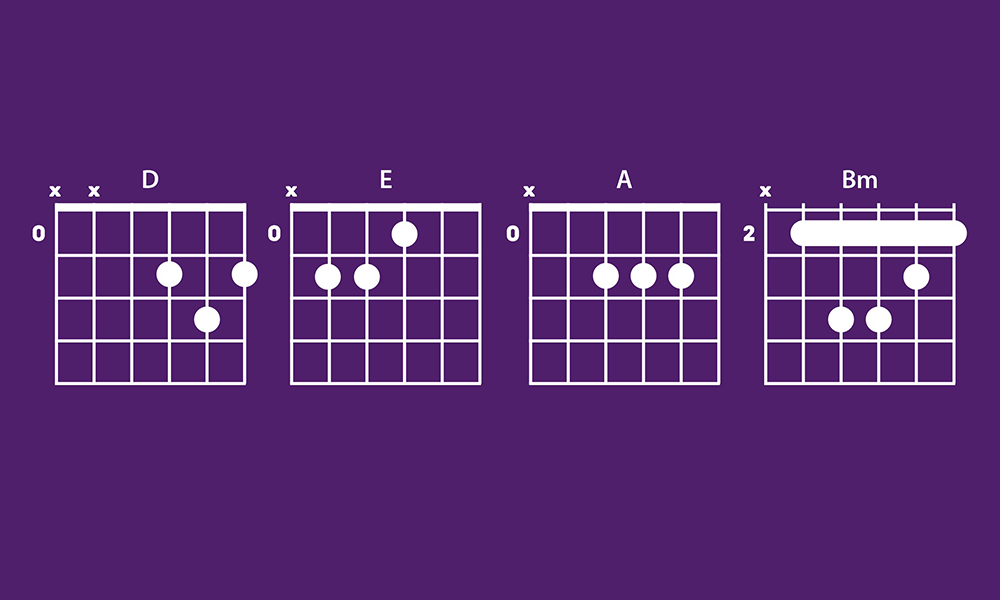
All the chords you'll need to play Rebel Rebel by David Bowie - image by Wharf Life
All the chords you’ll need to play Rebel Rebel by David Bowie – image by Wharf Life

looking back on the history of the track and its link to Docklands

BY ZAINAB HASSAN

Picture this – it’s early 1990, and David Bowie has just announced the Sound+Vision tour, a series of gigs where he’d play his biggest hits live for the very last time. 

Rather than choose the setlist himself, he handed the decision to his global fanbase through telephone voting.

Dial 1-900-2-BOWIE-90 on your landline, and you were taking your chances at getting your favourite track onto the bill. 

As calls flooded in from every corner of the globe, Bowie built the setlist from a mix of UK votes, American votes, and requests from everywhere else in between.

It was a truly global selection, curated to reflect what the world wanted to hear.

echoing on the island

For three nights that March, the tour landed in the capital at the London Arena, an indoor venue on the Isle Of Dogs that held up to 15,000 fans. 

Demolished in 2006, the landscape is markedly different to when Bowie’s genre-shifting hits were last played, but the echoes of his riffs still resound in the hands of guitarists to this day.

glam rock swagger

The Sound+Vision tour setlist was shaped with deep cuts standing shoulder to shoulder with Bowie’s biggest hits. 

One such song, Rebel Rebel, came early in the setlist. Salvaged from a scrapped Ziggy Stardust musical, it was the lead single for 1974 album Diamond Dogs and was the last of Bowie’s singles to swagger with true glam rock bravado. 

Deceptively simple, yet roaring with a Rolling Stones-esque ferocity, the main riff loops around three chords – D, A and E – and an unrelenting descending melody that’s as instantly singable as it is impossible to shake.

the end of two eras

As a swan song to glam rock, Rebel Rebel was the end of an era for Bowie. 

The Sound+Vision tour was the end of another, as he retired the hits from his live sets for good. 

Two farewells, made decades apart, overlapped for three nights at the London Arena. 

But all these memories remain in music. Just listen to that rebellious opening riff – it all comes flooding back.

  • For those who’d like to know more, east London is also now home to the David Bowie Centre in Stratford. 

Based at the V&A East Storehouse, the collection includes more than 90,000 items from the artist’s archive and is free to visit.

key details: Kitchen Jam


Kitchen Jam offers guitar lessons rooted in musical connection and community from its studios in Canary Wharf and Stratford.

Follow this link to find out how to book a free trial session 

Read more: Discover the extraordinary maps and prints at Frontispiece

Read Wharf Life’s e-edition here

Subscribe to our free Wharf Whispers newsletter here
Subscribe To Wharf Life

V&A East Storehouse to bring something fresh to museum sector

V&A deputy director and COO Tim Reeve on the institution’s ambitions and plans for the Here East site

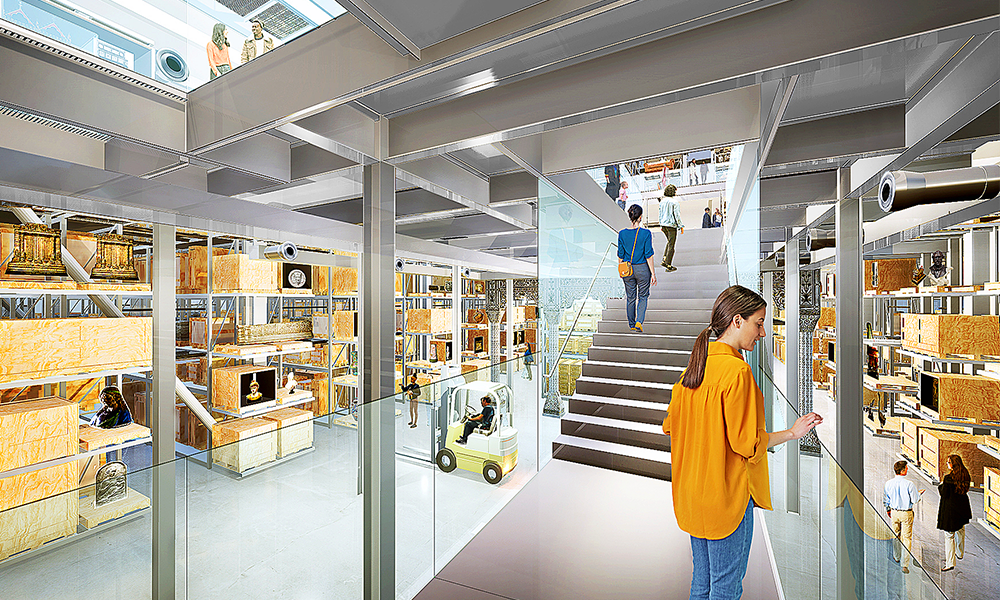
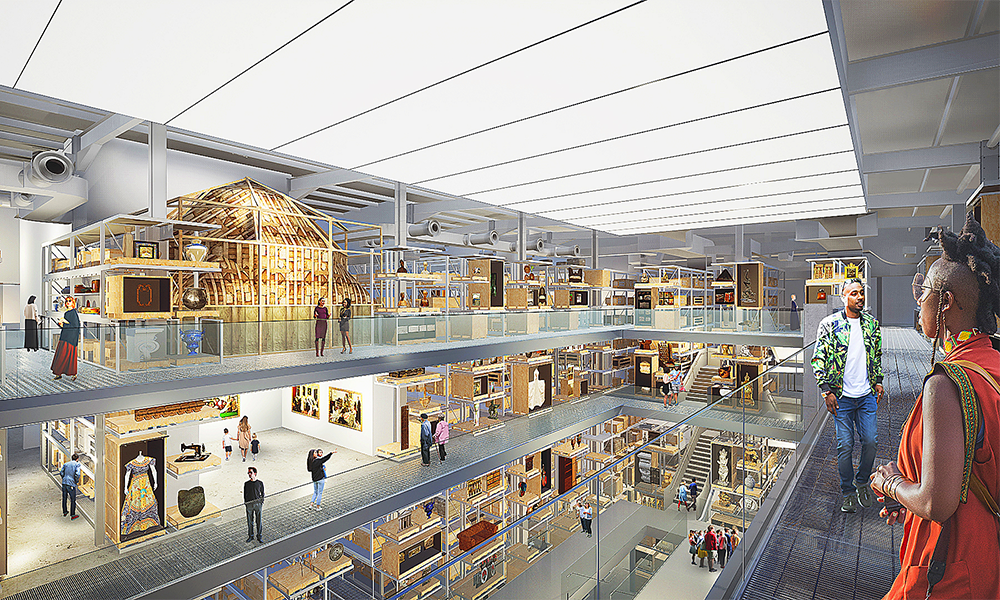
An artist's impression of V&A East Storehouse - image Diller Scofidio + Renfro
An artist’s impression of V&A East Storehouse – image Diller Scofidio + Renfro

Subscribe to our free Wharf Whispers newsletter here
“I hope it will feel welcoming, but I also really like the idea of visitors wondering if they’re really allowed access to all these space, that maybe they’re somewhere they shouldn’t be,” said Tim Reeve, deputy director and COO of the V&A and chair of the East Bank Board.

We’re talking about the first of two sites that the museum is set to open in Stratford as it expands its offering across the capital.

V&A East Museum is set to launch in spring 2026 at East Bank and will celebrate making and the power of creativity to effect change in the world.

V&A East Storehouse, however, goes far beyond conventional displays and promises something entirely new.

Housed at Here East about a 10-minute walk across the Queen Elizabeth Olympic Park from East Bank itself, the V&A is creating a vast publicly accessible facility where its diverse non-display collection and archives can be looked after for the next century. 

Spread over some 173,000sq ft, it is set to arrive first, opening its doors to the public on May 31, 2025.

V&A COO and deputy director Tim Reeve - image Jon Massey
V&A COO and deputy director Tim Reeve – image Jon Massey

a second site

“While we were engaged in the process of working out what V&A East Museum would be – how it would be distinctive and reflect the local geography and demographic of the people around East Bank – we were also talking to the Government about the future of Blythe House,” said Tim.

“That’s the place in West Kensington where we stored all our non-display collections – about 250,000 objects, 350,000 books and 1,000 archives.

“It was made clear to us, along with the Science Museum and British Museum – which also use it as  store – that we needed to leave because the building was to be redeveloped.

“That was a pain, because you don’t want to be moving a collection of our sort more often than you have to, due of the delicacy of the objects and the expense.

“However, it was also a clarifying moment for the V&A East project with the idea that we could find a place for our Blythe House objects, books and archives and that we could create two sites in east London.

“We just needed to find a space big enough and close enough to East Bank to make sense. Looking at the two sites together, you get a complete 360-degree view of the contemporary museum world.”

An artist’s impression of V&A East Storehouse – image Diller Scofidio + Renfro

tucked away: V&A East Storehouse

While V&A East Museum, with the dramatic angles of its purpose-built home at East Bank, will be the more visually striking, in content it will probably feel the more familiar of the two with galleries, exhibitions, a cafe and a shop.

Somewhat tucked away in the former Media And Broadcast Centre built for the 2012 Olympics, V&A Storehouse is deliberately radical.

Storehouse will be a place where our objects live and where we look after them,” said Tim. “We know people want to see what they’ve been told they can’t – where the magic happens.

“So V&A East Storehouse has been created to facilitate people’s exploration of the bit of our organisation that would normally be hidden – a visitor experience that’s self-guided and free every day of the year.

“We have an absolutely enormous, amazing space, where we can fit everything in, with some space to spare as the collection grows.

“We’re building some of our showpiece objects into it such as architectural fragments from the Robin Hood Gardens estate and we’ve come up with a public network of spaces intertwined with the collection. 

“That will be a 60 to 90-minute, self-guided tour of exploration as people burrow their way up through the building and arrive in this incredible atrium.

“From there you can keep exploring and see how far you can get – it’s been designed to allow visitors to get as far as possible.

“Moving all our stuff from Blythe House is incredibly expensive, so we thought we might as well create a new world with it and that’s what we’ve done at Storehouse.

“The idea is you will breathe the same air as the objects we hold.

“A visit is the start of a journey and we hope people will come back when they realise they can browse as much as they like.

“Here East is a warehouse, an industrial building – not a marble-clad museum. It’s humble and we want as many people as possible to visit. 

“It’s also a source to be mined and returned to, constantly changing as it’s also a working building with objects going out on loan or for conservation.”

A section of the Robin Hood Gardens estate is installed at Storehouse
A section of the Robin Hood Gardens estate is installed at Storehouse – image by V&A

east London influence

Designed by architects Diller, Scofidio + Renfro, Storehouse will be home to an extensive and varied collection including creative works from The Glastonbury Festival Archive, PJ Harvey and Elton John’s costumes, vintage football shirts, Dior and Schiaparelli haute couture, Roman frescos, samurai swords, mid century furniture and the iPhone.

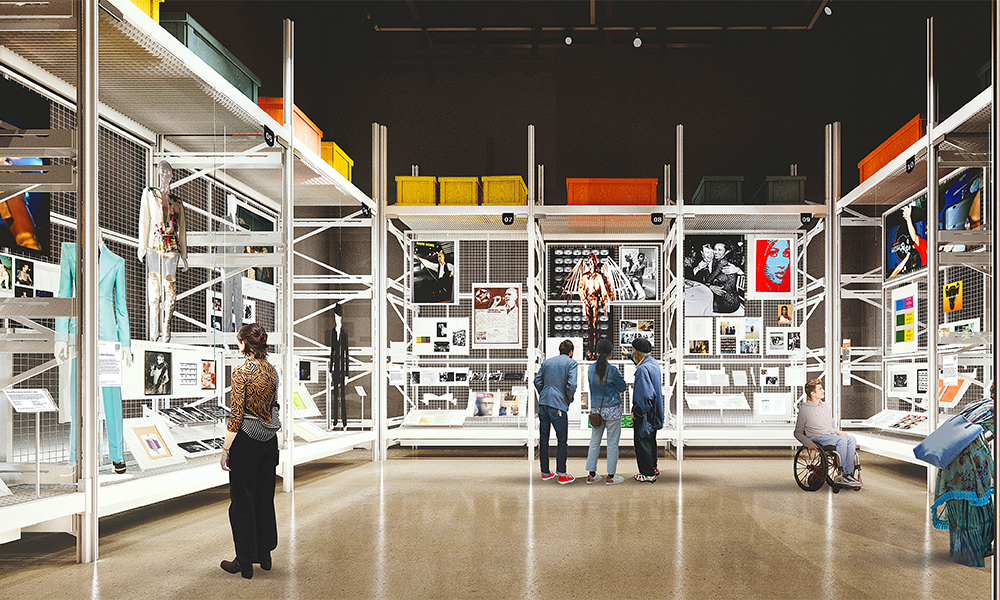
A dedicated David Bowie Centre will showcase artefacts from the musician and performer’s archive with rotating displays set to open in September.

More than 100 miniature displays on the ends of storage systems will highlight specific exhibits including those relating to this part of the capital.

 “There will be lots of east London influence in the way we’re displaying and interpreting the collection,” said Tim.

“Our piece of Robin Hood Gardens was the first thing we installed here because it’s so enormous.

“It’s one of the first things visitors will see when they climb the stairs. 

“Our collection is international and so we want to bring out its full splendour, depth and range and there are some really wonderful east London stories we want to showcase, drawing inspiration from the connections with the local community we have built. 

“I think walking in on opening day will be a really emotional moment. 

“Colleagues across the institution have poured so much time and energy into it, through some really tricky moments, of which we’ve had more than our fair share.

“It’s the most important thing I’ve done in my professional life, and will probably be the most important thing I ever do.

“I feel I’ve been really lucky to be involved in creating such a project since 2013. 

“You have a light bulb moment and think what it would be like to see it happen – to be around from beginning to end.

“There were moments when it felt like it might never happen.

“But as an institutional lift, it doesn’t get any better.

“And we are here for the long term.

vWe have a 100-year lease at Here East and 200 at East Bank.

“One of the biggest treats for us is seeing people who were here before the Olympics realising that these things are being created for their benefit.

“The interplay between the different types of organisations at East Bank make the future very interesting – a special destination.”

An artist's impression of the David Bowie Centre - image by IDK
An artist’s impression of the David Bowie Centre – image by IDK

key details: V&A Storehouse

V&A East Storehouse is set to open on May 31, 2025, at Here East on the Queen Elizabeth Olympic Park.

Entry will be free. The David Bowie Centre will open on September 13.

V&A East Museum will launch in spring 2026 at East Bank in Stratford. 

Find out more about the openings here

Read more: Will you take on the Santa Stair Climb in Canary Wharf?

Read Wharf Life’s e-edition here

Subscribe to our free Wharf Whispers newsletter here
- Jon Massey is co-founder and editorial director of Wharf Life and writes about a wide range of subjects in Canary Wharf, Docklands and east London - contact via jon.massey@wharf-life.com
Subscribe To Wharf Life