

Kew Bridge Rise

Zopa bank expands to Canary Wharf with office at 20 Water Street

Head of people experience Emily Dickens talks career, ambition and creating spaces for its staff that embody the bank’s aims and values
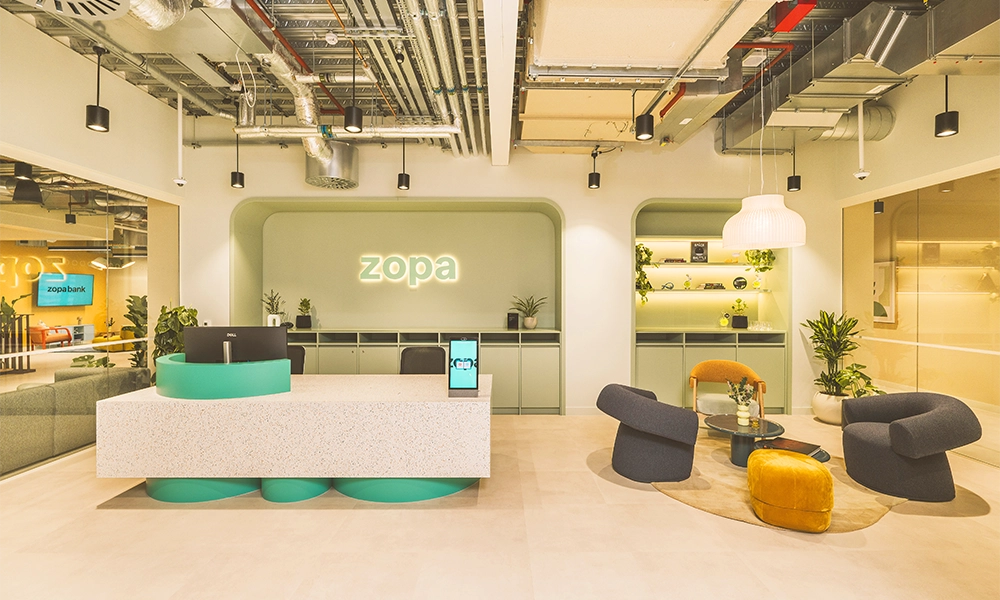
Challenger bank Zopa has moved into new offices at 20 Water Street in Canary Wharf's Wood Wharf - image supplied by Zopa
Challenger bank Zopa has moved into new offices at 20 Water Street in Canary Wharf’s Wood Wharf – image supplied by Zopa

Subscribe to our free Wharf Whispers newsletter here

Emily Dickens’ career began, as many do, with a desire to move to London.

Having studied archaeology, her initial interest lay in the museum sector.

But a friend from university had found a job at what was then peer-to-peer lender Zopa – a startup that was looking for staff.  

“I contacted them, went in for an interview and, an hour later, was looking for a flat in London,” she said.

“That was the pace the business moved at back then and I think we still approach that today. 

“At the time, I remember my mum saying I should wait for a better opportunity but I thought it was the right choice. I wanted to move to London and see what was out there.”

Today, Emily is head of people experience at Zopa, now a profitable challenger bank that recently relocated to 20 Water Street in Wood Wharf. 

She’s among the individuals featured in Canary Wharf Group’s Where Ambition Lives campaign, which aims to tell the stories of remarkable people working on the estate that go beyond the stereotypes associated with the area.

So how did Emily go from  working as a collections administrator – calling people up who’d missed payments on their loans to help them manage their debts – to working in a role at Zopa that she conceived and pitched to the company?

Zopa head of people experience, Emily Dickens, on one of the bank's rooftop terraces - image by Jon Massey / Wharf Life
Zopa head of people experience, Emily Dickens, on one of the bank’s rooftop terraces – image by Jon Massey / Wharf Life

a career from the ground up

“After six months, I quickly moved into customers services and then on to managing that function,” she said.

“I had a brilliant manager at the time to learn from and I continue to use what she taught me about running teams in my work today.

“When I started at Zopa, we were a business of about 30 people. Now we have 1,000 employees in multiple locations including Canary Wharf.

“I’d gone straight from university into work and hadn’t taken a gap year.

“I wanted to travel so I did that, visiting Australia, New Zealand and Bali – seeing a bit of the world on a sabbatical.

“While I was away, my boss rang me up and asked me to come back and set up an HR department at Zopa.

“So, I returned and, in the first year, did everything in HR you can imagine – the full employee life cycle.”

With Zopa deciding to launch a bank, Emily continued to build her career alongside the operation before doing something a bit unusual.

“I decided to pitch my dream role to the business after my boss left,” she said.

“I’d spent so much of my early career in HR, I got to figure out what I really loved and also the things I wasn’t so good at.

“Systems operation and data are not my bag – they are not where I excel and it’s not where the business gets the best from me.

“But I was also able to identify the things I loved and pitch them as the basis for the role of head of people experience to my new boss.

“She shared my vision that this was the right direction and started me off as people experience lead. I was then promoted to my current role after a year.

“While people experience is a relatively new concept, it enabled me to come to work every day feeling like I’m adding maximum value to the business. 

“My latest boss has also supported me with my dream and vision – much of which has been focused on building this new workspace for Zopa in Canary Wharf.”
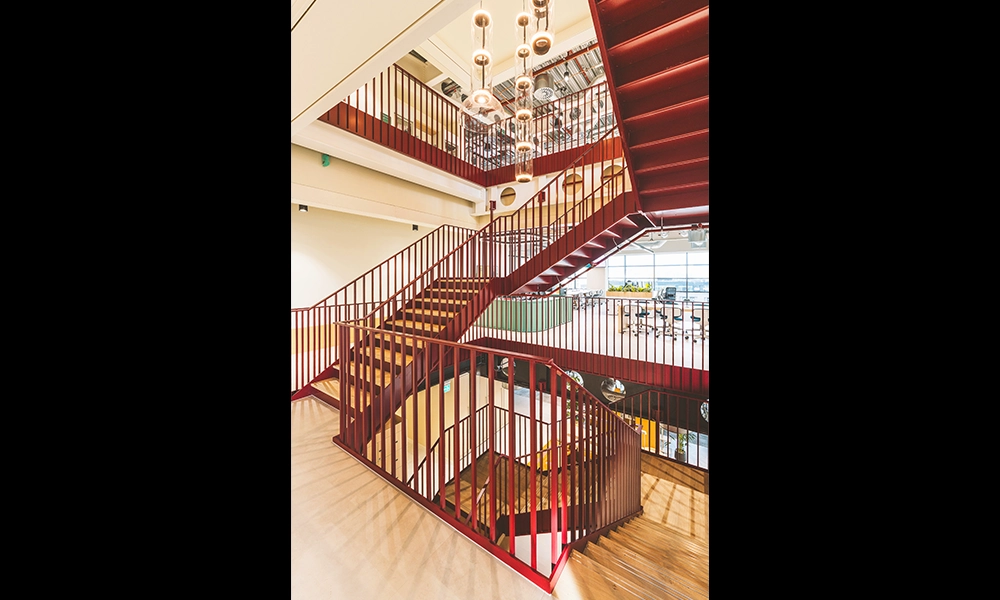
Zopa's floors are connected by an internal stairwell - image supplied by Zopa
Zopa’s floors are connected by an internal stairwell – image supplied by Zopa

a new space for Zopa

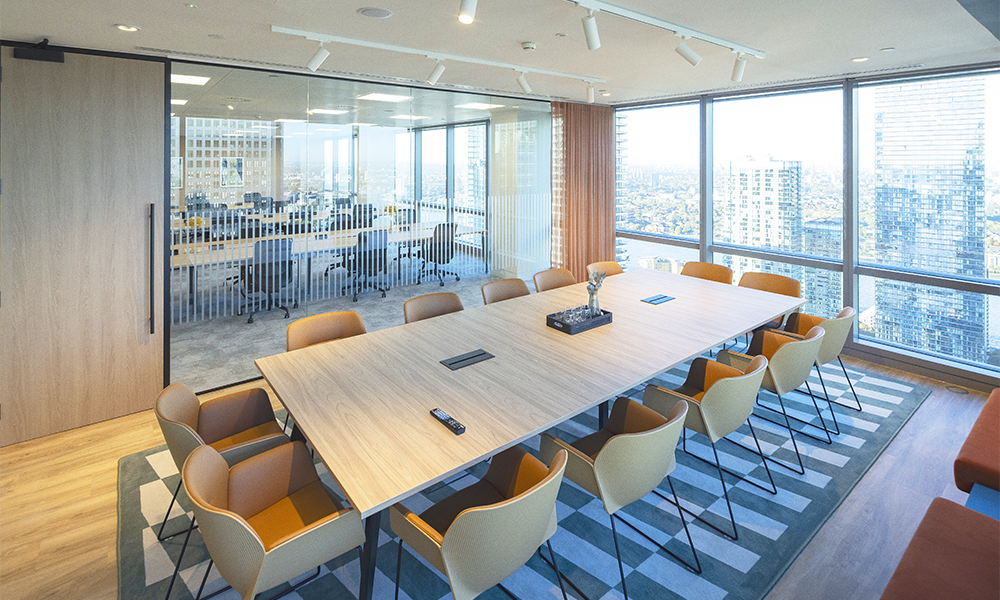
Arranged over the building’s upper levels, the bank has fitted out 45,000sq ft of space with facilities fit for its Zopians. 

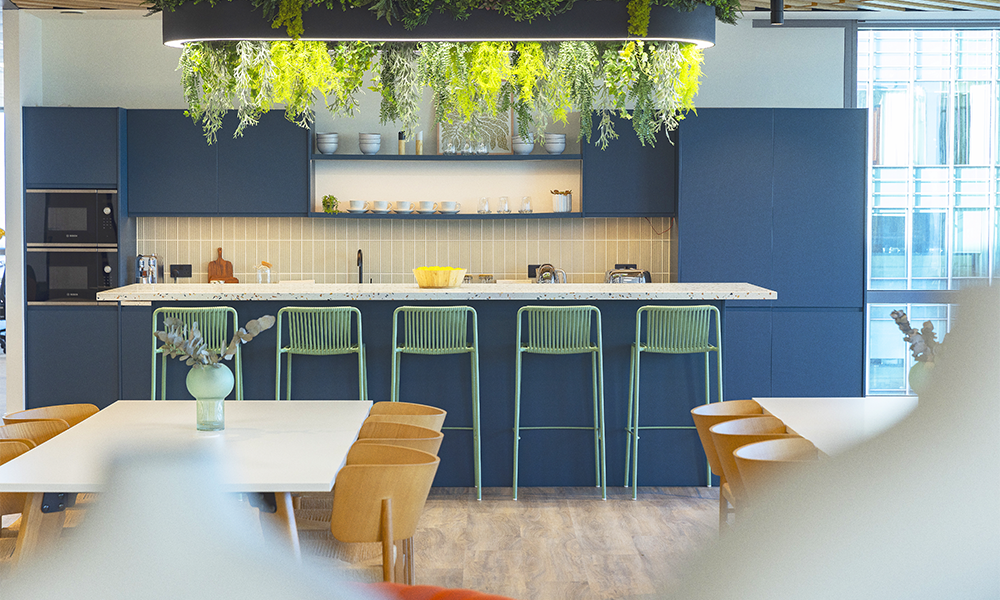
Designed by Thirdways, these include an internal central staircase, kitchens, breakout rooms, private work pods, a library and quiet spaces for prayer, breastfeeding and reflection.

It’s a project Emily has been deeply involved with, as she works to make the business as employee-friendly as possible.

“I hope people see that it’s a total reflection and statement of intent of who we want to be in the future,” she said.

“When you look down from this window at the very traditional banks, there’s a feeling here that we’re doing something really different.

“We’re trying to build an effortless customer experience with products that maximises value for our customers.

“It’s an exciting time, and I’m really proud that we’ve been able to collaborate with Canary Wharf and bring Zopa here.

“After the idea was pitched to us by an agent, we looked at 20 Water Street and I felt it was worth putting my neck on the line and make a compelling argument that this was the space we needed to be in.

“When I brought the leadership team here, our CEO could see why.

“To get him over that hurdle – to look at the space and see its potential – made me feel very confident that it was the right thing to do and we could get to a place where we could sign the deal.

“The economics were also compelling. It would have cost us the same amount to remain in our existing offices in a very old building because of the maintenance issues.

“It was never a place where the company could have grown further.”
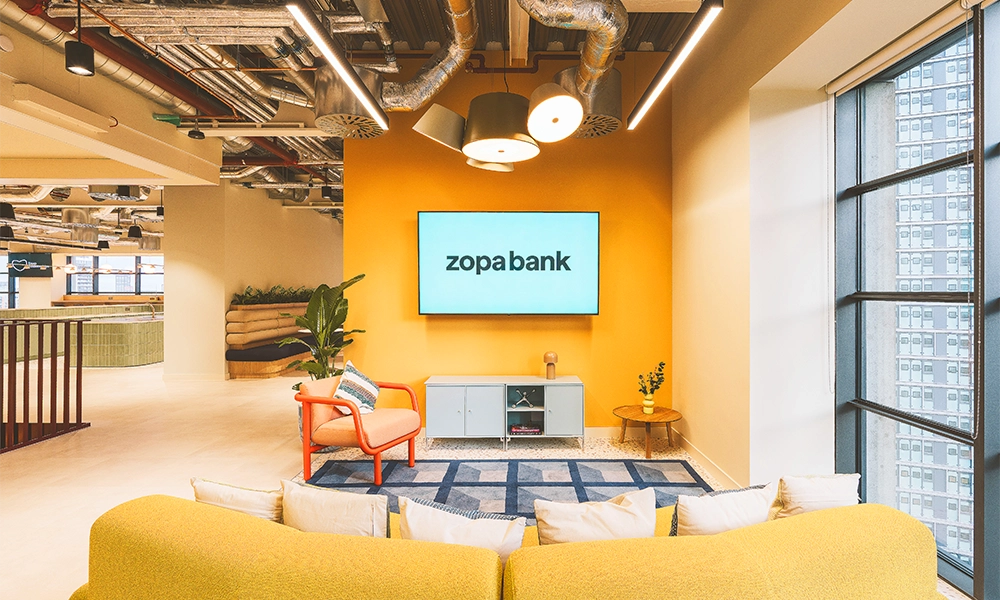
Zopa's new offices aim to reflect the bank's values - image supplied by Zopa
Zopa’s new offices aim to reflect the bank’s values – image supplied by Zopa

how spaces can help retain and attract talent

Located in Wood Wharf – an area that has recently welcomed the likes of Crate, Nora, Ong Lai Kopitaim, Cafe Seek and festive pop-up The Winter Club – 20 Water Street is now filled with Zopians settling into their new neighbourhood.

Emily said: “I don’t think people want what they once did from a workplace, so we didn’t want this design to feel like an office where you would just come and work.

“You’re also living your life while you’re here, so that time needs to be very enjoyable.

“If we can attract and retain great talent, the business can be very successful.

“When you look at the design – including elements such as a mothers’ room for example – it’s important to remember those parts of people’s lives don’t go away because they’re at work.

“They need to be able to come to this space and be happy here – as happy as they are at home.

“Our mission at Zopa is to create the home of money, but one of the things we thought about with regard to our office design was that we wanted it to be a place where our employees could grow and explore their ambitions too.

“Our London staff work at least two days a week in the office because human interaction is very important.

“It’s also important for our workers that we maintain balance.

“We did a great deal of staff engagement with this project.

“Before we signed the lease, we brought a group of about 30 Zopa influencers across and I took their views.

“There was nothing here for them to see at that stage, so we got a range of views about the area and the feel.

“When we decided to come here for definite, we brought over 300 employees for tours and got lots of feedback from that.

“The staff then chose the names for the floors and we also asked them what they wanted in there to make that part of their life at work as comfortable as possible.

“It’s so important to get feedback from the people who will be working here.

“We hope what we’ve done here is a recipe for success.”
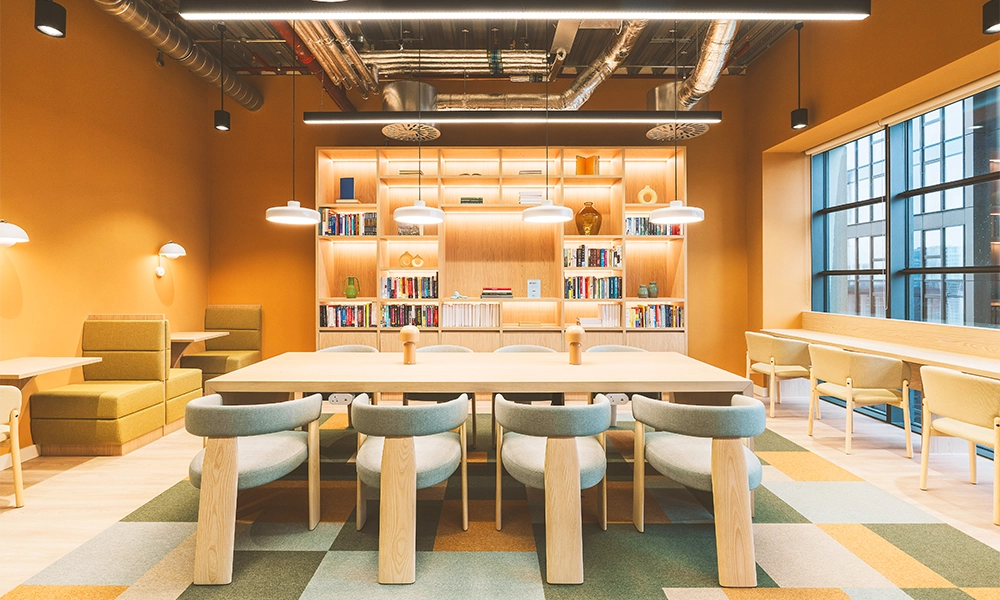
A library has been created for quiet reflection and focused work - image supplied by Zopa
A library has been created for quiet reflection and focused work – image supplied by Zopa

why Canary Wharf?

When asked what advice Emily would give other organisations considering a move to the Wharf, she said listening to the right people was key.

“I’d say consider every option, because Canary Wharf wasn’t on my radar originally,” she said. 

“It was an expert in the field who came to me and told me there was something really special happening here.

“The prices were good, so commercially it works and also a neighbourhood that pairs favourably with the business.

“Being prepared to do something different is also important. 

“Wood Wharf is amazing and we’ve been collaborating with the businesses here already. We’ve also done a lot of work to ensure staff find the more hidden parts of the estate.

“The fact we have the DLR, the Elizabeth Line and the Jubilee line all on the doorstep is great.

“I live in Woolwich, but this location is also fantastic for people coming in via Paddington too.”
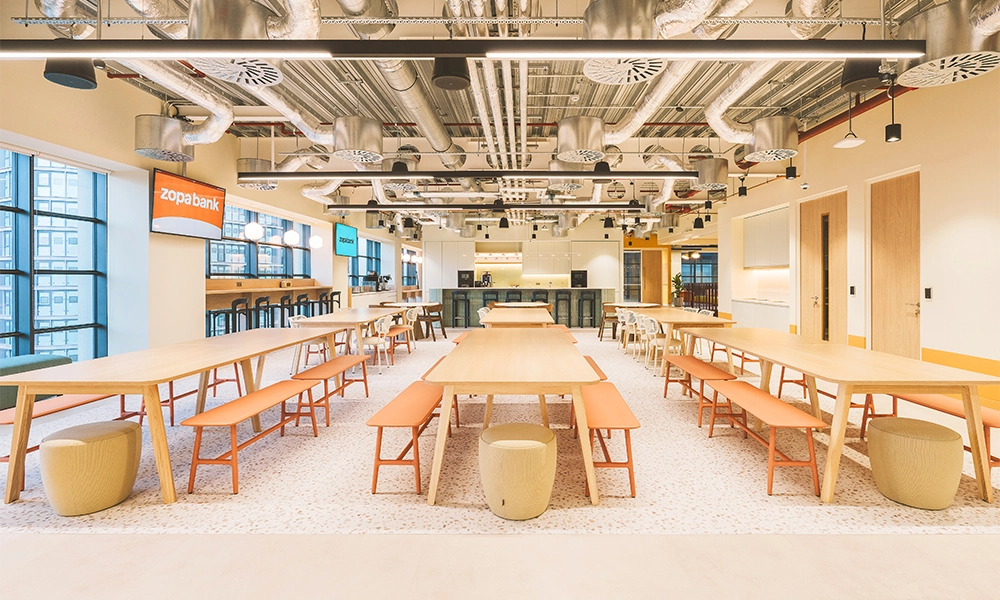
A communal dining area and kitchen at 20 Water Street - image supplied by Zopa
A communal dining area and kitchen at 20 Water Street – image supplied by Zopa

pride in the journey

As for Emily, she’s allowing herself a breath before making any plans for the future.

“I can’t think about what’s next until we’ve completely wrapped up the move and got our sign up,” she said.

“Then I’ll probably take a moment, a pause.

“The bank has ambitions to continue our growth plans and build innovative products and hopefully create long-lasting relationships with our customers.

“We launched our Biscuit Bank Account earlier this year and we have more exciting things planned.

“The only way is upwards – we’ll see what happens next.

“For now, I feel incredibly proud of what we’ve created – it’s a testament to the fact that my whole project team have worked unbelievably hard over the last 12 months to get us to this place. 

“When you look at where we are now, you can see the journey that Zopa is on.”
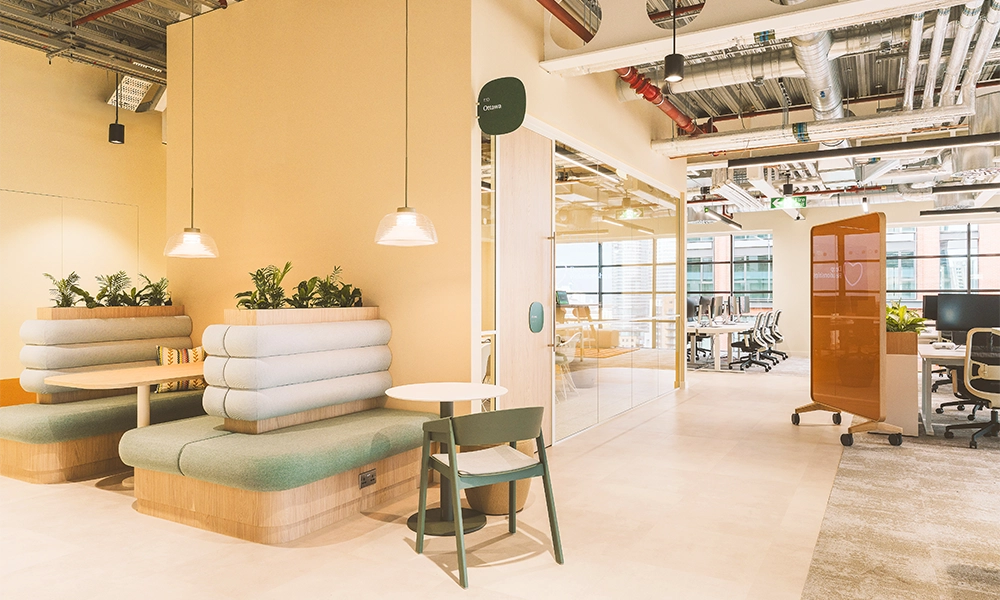
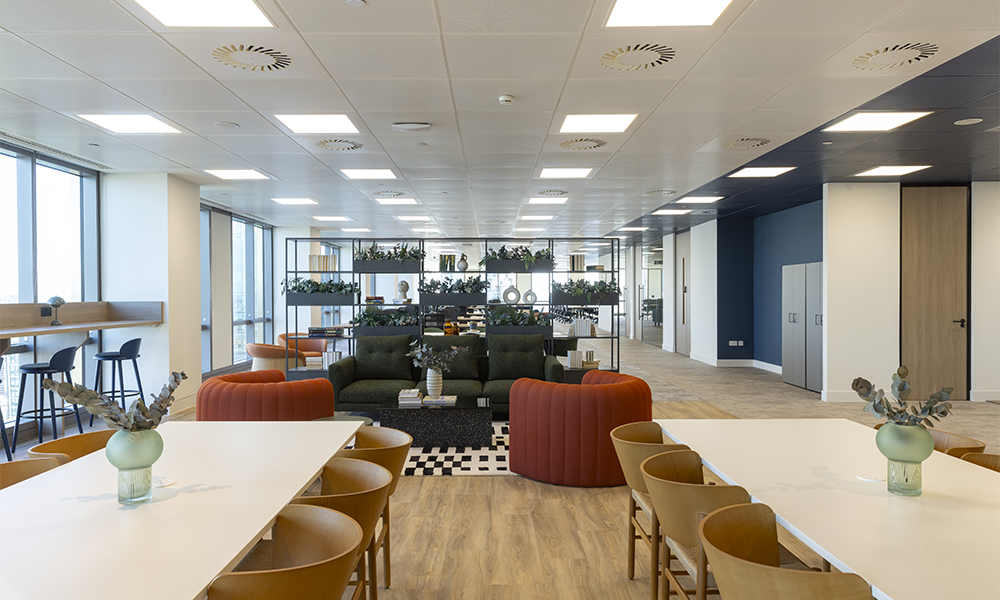
The bank's new space features plenty of break-out areas and meeting rooms - image supplied by Zopa
The bank’s new space features plenty of break-out areas and meeting rooms – image supplied by Zopa

key details: Zopa

Zopa is based at 20 Water Street in Wood Wharf and offers a wide range of services including its Biscuit Bank Account.

You can find out more about the bank on its website here

Read more: Why a degree in hospitality and tourism can boost your career

Read Wharf Life’s e-edition here

Subscribe to our free Wharf Whispers newsletter here

Subscribe To Wharf Life

Canary Wharf: How MadeFor is a vital piece of the estate’s office space offering

Fitted, furnished and managed solution presents firms of all sizes with a hassle-free option

MadeFor office spaces in Canary Wharf come fully furnished and ready to use

Subscribe to our free Wharf Whispers newsletter here
It wasn’t all that long ago, in the grand scheme of things, that Canary Wharf was a two-storey warehouse built in the 1930s handling bananas brought to the UK from the Caribbean.

The brick-built structure at what was then West India Docks’ Import Dock, managed to survive the bombing during the Second World War, but not the demise of the docks themselves. 

It was bought for £25million in 1988 by Olympia And York – the company that kicked off the regeneration project that would become the Canary Wharf of today – and was demolished without much ceremony a year later.

I mention this not because of some rose-tinted hankering for nostalgia – although the idea of dockers slipping on endless banana skins carries some slapstick appeal.

Instead it’s a reminder of just how far this part of London has come in 35 years.

There’s been much short-termist nonsense published recently about the idea that this part of the city might be in peril. It’s true – some companies based here have decided to move for various reasons.

But before launching into a cascade of gloomy thoughts about home working’s effect on the economy and the merits of office clusters, consider a different perspective.

Three-and-a-half decades ago, there was nothing much at Canary Wharf but derelict warehouses.

A group of people had to imagine what it might be, who might want to be there and what – if any – companies would come over. In the end, their creativity and bravery yielded success, with the arrival of the Jubilee line extension proving pivotal in that story.

Towers rose and were filled. They largely still are.

MadeFor customers enjoy self-contained spaces with modern facilities

Current media commentary cries out that Canary Wharf will have to reinvent itself if it is to continue to flourish.

But such pieces entirely miss the point. Canary Wharf has done nothing but endlessly reinvent itself since that old warehouse crumbled. 

The idea that a few financial institutions moved over here from the City in pursuit of cheaper rent and larger spaces in the 2000s and that nothing much has changed since, is simply perception lagging reality.

The estate and the surrounding area is on a constant path of change, renewal and development – its priorities shifting to meet and satisfy demand.

That’s the case with its shops, bars, restaurants and open spaces as much as it was in the decision to build housing on Wood Wharf. 

Canary Wharf Group (CWG) has demonstrated an increasingly open and agile approach to the land it manages – whether that’s embracing competitive socialising with Fairgame and Electric Shuffle or deciding to host a vast padel tennis complex – as it works tirelessly to broaden the appeal of the estate. 

But what of the office space itself?

Well there’s been diversification there too amid a long track-record of flexibility to serve the market.

While tech community Level39 provides small startups with a home and space to grow, funkier spaces have been created at Wood Wharf. 

North Quay will see significant lab space created as the estate continues to attract organisations from sectors beyond financial services.

Eggs, baskets and all that.

That hasn’t, of course, stopped the likes of Barclays and Citi recommitting to the area – doubtless convinced by an environment that now draws significant crowds at weekends in virtue of what’s on offer to visitors as well as residents.

Nevertheless, CWG hasn’t stood still on office space either, with MadeFor perhaps the punchiest addition to its offering in recent years.

Canary Wharf Group associate for office leasing Luke Thurlow

“In short, it’s our fully-fitted, furnished and managed workspaces,” said Luke Thurlow, CWG associate for office leasing and one of the team tasked with helping firms land on the Wharf or move into bigger premises.

“Traditionally, a tenant would take an empty shell and build it themselves, creating meeting rooms, break-out spaces and filling it with furniture.

“MadeFor takes away all of that hassle for the end-user, who can pretty much move in immediately if they like.

“Office space has always been a strong part of the business and this is part of diversifying our portfolio.

“It means Canary Wharf offers single desks and co-working at Level39, self-contained units under MadeFor and shell space if a client prefers that.

“MadeFor can cater for businesses with 10 desks in 1,000sq ft of space, right up to our biggest letting where Citi took 10 floors as part of a short-term solution to house staff while its tower is being refurbished.

“The message is that many people think Canary Wharf is only for larger businesses – big multinational companies, which we do have here – but even if you’re a small startup or scaleup, we can accommodate your needs.”

It’s an offer that’s clearly gaining traction, with recent signings, including business power supplier, Pozitive Energy, electric vehicle charging firm, Hypervolt, and Taiwanese energy trader, WelHunt, all opting for MadeFor offices at One Canada Square.

Global trading organisation FIA and manufacturing firm Rittal also recently announced they would be renewing their MadeFor leases in the building.

“These recent deals show that companies continue to see Canary Wharf as an international icon,” said Luke.

“Buildings like One Canada Square are seen as part of a company’s strategy to build its business, find new clients and retain top talent – there’s real appeal there.

“MadeFor appeals to both a variety of sectors and businesses of different sizes. Often, smaller firms don’t want the headache of fitting out a space. 

“These are self-contained workspaces so tenants are not sharing meeting rooms, break out spaces or kitchens with other occupiers. 

“That’s especially important so companies know who is coming in and out of their space – vital if you’re regulated by the FCA, for example.”

Layouts include break-out spaces and open-plan design

Essentially, MadeFor is a crucial piece in the puzzle.

One of the key ideas behind the creation of Level39 more than a decade ago was that it had the potential to bring fast-growing startups onto the estate.

With a vast portfolio, it could then flexibly serve the needs of those businesses as they grew.

MadeFor both provides space for companies that are expanding, but it also allows the estate to pitch more effectively to firms and organisations of varying size that aren’t home grown, but like the idea of a move to east London.

“One example would be challenger bank Revolut, which started at Level39,” said Luke.

“Now it is based in an 80,000sq ft space at the Columbus Building off Westferry Circus.

“Because CWG has been running the estate for more than 30 years we are able to take a long-term vision for our customers and as a custodian of this part of London.

“If a business is half way through its lease and bursting at the seams or looking to downsize due to an increase in hybrid working, we can have those conversations. 

“Other landlords use more conventional models where they buy a single building, develop it, lease it and sell it.

“This can make those situations more difficult. What we offer is stability.”

Don’t confuse stability with traditionalism, however.

Luke was keen to stress that MadeFor’s spaces were fitted out to reflect the needs of businesses today.

“Our design philosophy dispenses with reception desks and guest waiting areas,” he said.

“The idea is that visitors come directly into a break-out space where they can get a feel for how the business is working as soon as they arrive.

“We can, of course, design to a customer’s brief and we’re always working based on feedback from previous projects. 

“Perhaps if we’d done this three years ago we’d have had flashy boardrooms off reception areas – people didn’t think you should have staff mingling with visitors.

“But people aren’t working like that any more.

“Visitors want to get a flavour of the company – to be in your world rather than in a holding zone.

“Hybrid working presents great opportunities for businesses – if you look at their spaces and how they’re fitting them out, things are a lot more considered now.

“You’re seeing a lot more meeting rooms, collaboration spaces, fewer conventional rows of desks.

“Suppose you have a project team that’s coming in three days a week – what do they need? 

“Some customers have asked for more break-out space, while others want desks because people are also coming into the office to do more focused work and to make the most of sitting with colleagues to do that.”

CWG will even look after plants in its MadeFor spaces

Beyond the spaces themselves, the estate’s constant evolution is perhaps the most potent weapon in Luke’s arsenal when talking to potential clients.

But then there’s the added value of engaging with a landlord which is completely invested in fostering a thriving, vibrant local economy.

Luke said: “The quality of our office space and workspaces is generally well understood in the market.

“We produce top quality, best-in-class office developments.

“But what we’re also trying to show people who come to Canary Wharf are the lifestyle amenities – the shops, bars and restaurants, the green open spaces and the transport links.

“With the Elizabeth line, you’re 45 minutes from Heathrow. It’s about trying to excite people by getting them to picture themselves and their business here. 

“There are the technical details like the air conditioning and the Wi-fi, but most people who come to look at office space will think more about the coffee downstairs and dinner at Hawksmoor or Dishoom.

“We deliver high quality workspace, but it’s also about our tenant services team and the maintenance operation.

“We’ve also launched an app for the estate so people know what’s here and about all the events that are going on. 

“We’re not just a landlord collecting rent – will it be a Yoga session before work or finding out about Wharf Connect, our network for early career professionals?

“It’s all about what you can do here and, if we’re not doing something already, then talking to us about delivering it.

“It’s a very exciting time and, over the next 10 years people will see so much change here, whether that’s the landscaping of Middle Dock in partnership with the Eden Project or any of the other plans in the pipeline.”

Suffice to say evolution is a certainty at Canary Wharf as it brings life sciences and schools into the mix alongside residential, higher education, governmental bodies and much more.

That, however, will doubtless be easier for Luke and his colleagues to articulate to potential clients than it was for teams 35 years ago, when the whole process of convincing firms to give E14 offices a chance began.

  • key details

MadeFor spaces are available in Canary Wharf at One Canada Square, 40 Bank Street, 20 Water Street and the Columbus Building.

Offices are cleaned and managed including repairs, maintenance, waste management and refreshment options.

Find out more about MadeFor at Canary Wharf

Read more: New events space Broadwick Studio launches on Wood Wharf’s Water Street

Read Wharf Life’s e-edition here

Subscribe to our free Wharf Whispers newsletter here
- Jon Massey is co-founder and editorial director of Wharf Life and writes about a wide range of subjects in Canary Wharf, Docklands and east London - contact via jon.massey@wharf-life.com
Subscribe To Wharf Life