
IHRE26

Third Space Wood Wharf delivers contrast therapy via cold plunge

Brass Monkey technology complements sauna and steam room facilities in the club’s pool area as demand for icy immersion increases
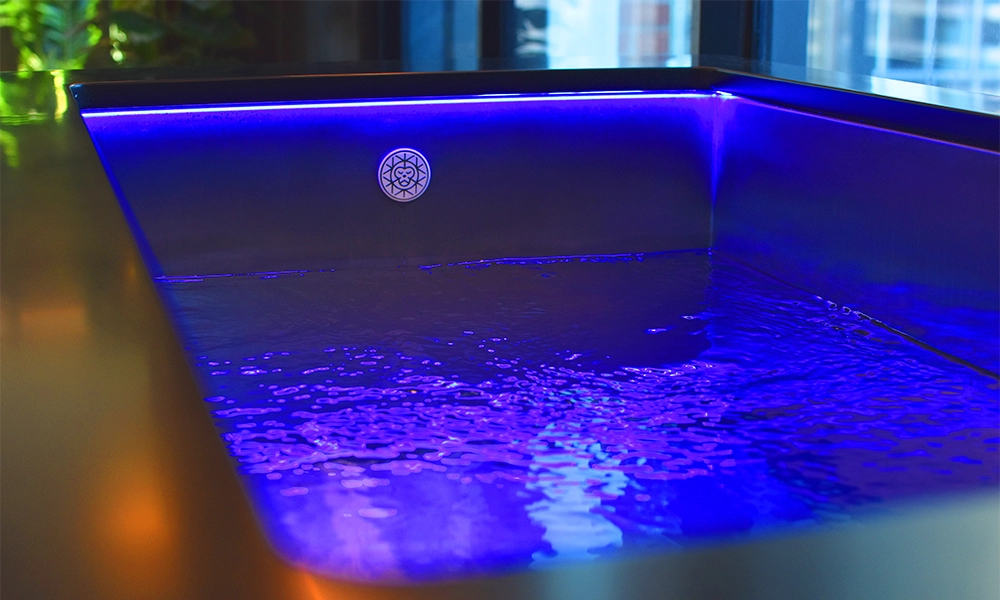
Into the blue: Third Space is embracing contrast therapy for its wellness benefits - image by Jon Massey / Wharf Life
Into the blue: Third Space is embracing contrast therapy for its wellness benefits – image by Jon Massey / Wharf Life

Subscribe to our free Wharf Whispers newsletter here

…my feet slip in first, breaking the gently shifting blue surface of the water, liquid so chilled it feels silken as I sink down into it.

Muscles tensing, heart-rate climbing, my breathing quickens as my body goes into full fight or flight mode in response to the unrelenting cold.

But I don’t lose it to the panic, I take deeper breaths, bringing the shock under control, then relax into the balm of the icy water, counting my inhales and my exhales.

The monolithic sensation of the chill is all I can think about – sensory overload – until a few minutes later it’s time to wake and emerge from the water… 
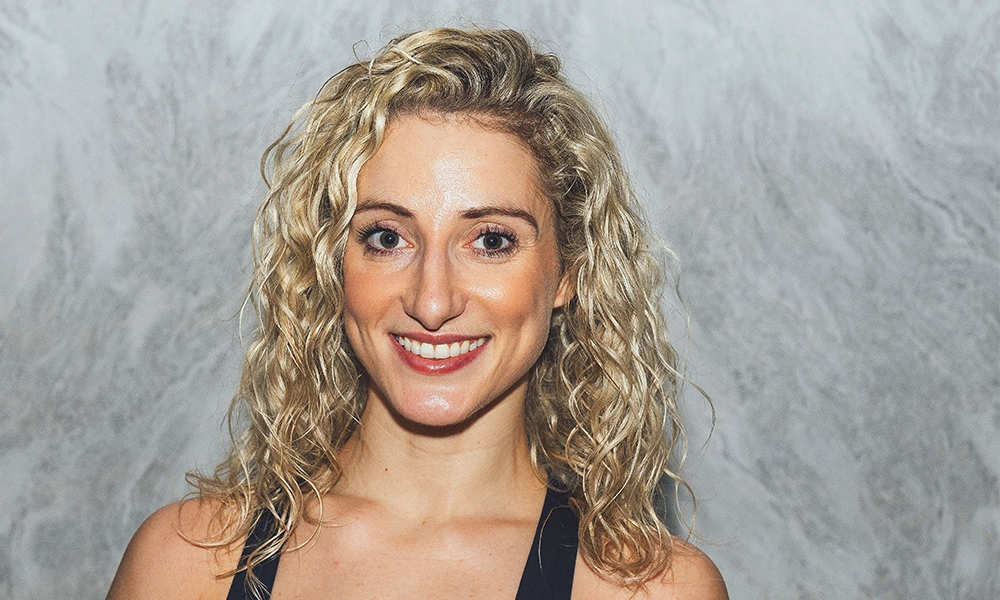
Third Space mind and body master trainer, Clare Walters - image supplied by Third Space
Third Space mind and body master trainer, Clare Walters – image supplied by Third Space

some like it chilled…

“Contrast therapy and cold exposure are not new disciplines, they’ve been around since ancient times,” said Clare Walters, mind and body master trainer at Third Space.

“There has been a really rich culture of sauna and polar plunges in lots of the Scandinavian and eastern European countries and the practices in this country go back at least to Roman times with baths of different temperatures.

“However, there’s a growing recognition of their benefits in the wellness industry.”

Recently, in response to this demand, the luxury health club fitted a Brass Monkey cold plunge facility at its Wood Wharf branch, offering members who’ve heated up in its steam room and sauna, or who just feel the need for a profound full-body chill, a poolside option overlooking the dock far below. 

“The brand is one of the leading providers of ice baths and they really know their stuff,” said Clare.

“The products are of a really high standard with the water constantly filtered to ensure its clean and that the temperature remains stable. 

“That’s important, because you need that cold shock to get the benefits.

“Recovery and wellness is very much something we’re prioritising in our clubs and, for me, it’s a mission to help people regulate their nervous systems.

“We have lots of ways of doing that and cold exposure is an important tool we can use.

“We offer cryotherapy at our Recovery Spa in Third Space Canary Wharf, which some people prefer.

“It’s much colder than the water of a plunge could ever be, but it’s a dry cold for up to three minutes and you warm up quickly afterwards.

“You still get the benefits, but it doesn’t feel quite as intense. 

“An ice bath can feel more dramatic and, because exposure is for a longer time, there’s an aspect of building mental resilience to it as well.

“When you go into the cold, you’re experiencing something which, in large quantities, could be very bad and possibly fatal – but is very beneficial for small amounts of time.

“Doing hard things you don’t necessarily want to do can help build mental and emotional resilience.

“It’s similar to training really hard in the gym.

“When you push yourself lifting weights, for instance, you know you’ve accomplished something and you feel really good about yourself.

“There’s also a neurological aspect to cold exposure.

“When you plunge or do cryo, you get a huge rush of dopamine into the bloodstream – around 200% higher than your baseline rate. 

“Drugs may induce that kind of change but only for a few minutes whereas, a cold water rush can last for many hours.

“When I do a cold plunge, I can walk around the city for hours feeling happy.

“It can be really good for regulating mental health, particularly in the winter months, when it’s grey and dark and there’s very little Vitamin D coming to us.”
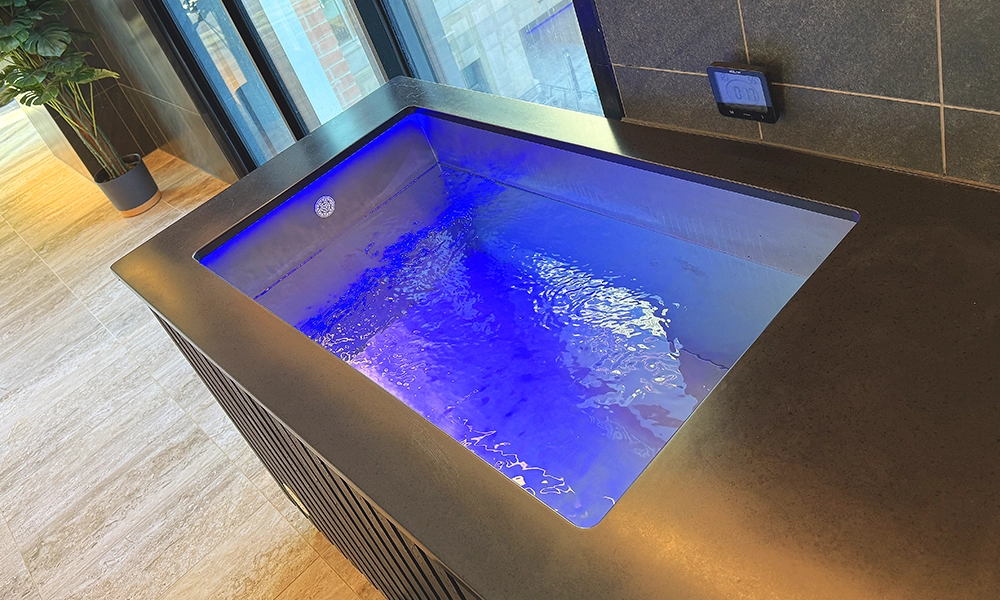

Ready and waiting, the Brass Monkey cold plunge at the Wood Wharf Club - image by Jon Massey / Wharf Life
Ready and waiting, the Brass Monkey cold plunge at the Wood Wharf Club – image by Jon Massey / Wharf Life

advice on cold plunging at Third Space

Alternating between hot and cold is also widely thought to further boost these benefits with both environments having the added bonus of easing muscle pain and other physical stresses.

But how best to approach the icy depths?

Clare said: “First of all I’d say you should not aim for a long period of time in the water.

“If you’re new to cold plunging, you should aim for 30 seconds plus, but definitely try to get all the way in. 

“I’ve seen so many people going in, getting to knee height, saying ‘no’ and getting straight back out again.

“Some get straight in and then out again.

There will be benefits, because you’ll be getting into your fight or flight response, but the real benefits come if you stick to it for a little bit longer.

“Doing it gradually can be real torture, so get in swiftly, but smoothly, not in a chaotic way.

“Get the water to neck height if you can – over you shoulders and to the back of your neck. It will feel more intense, but you’ll be able to calm down quicker.

“The gasp reflex is what we want – your sympathetic nervous system is triggered and your stress hormones are released.

“The heart rate starts to speed up and you get more blood flow around the body, but the longer we’re in the cold, we want to calm ourselves down – that’s when we think about breath.

“Focus on exhaling through pursed lips, which will force you to extend your exhale and start to calm down.

“Once you feel that’s happening, start to take an even, slow breath – breathing in for a slow count of four and then out for the same.

“Hold still. You can even close your eyes if you like.

“When I’m in the cold, my mind just goes clear, I just sit there and it feels amazing.

“Some people feel their extremities get cold – that’s because your blood vessels constrict and direct the blood flow to your vital organs to keep you alive.

“Combining a plunge with the sauna is great for this because in the heat your blood vessels open up and going between the two can be really good for circulation.

“Hands can also be kept out of the water for those who feel the cold in them.

“Ultimately a good rule of thumb to aim for is about one minute of immersion per degree of the ice bath.

“At Wood Wharf it’s kept between 5ºC and 7ºC.

“Typically women need less time, while men tolerate the cold a bit better.

“Conversely the opposite is true in the sauna. 

“Across a week, we say 11 minutes of cold plunging and an hour in the sauna will give you optimum benefit for both, although not in a single session.”
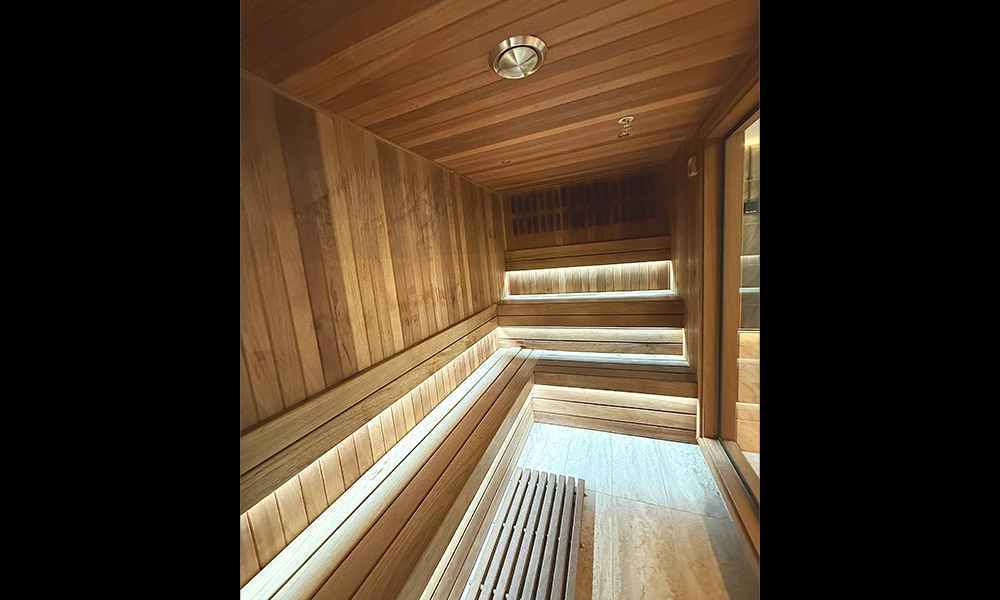
The sauna at Third Space Wood Wharf – image by Jon Massey / Wharf Life

embracing contrast therapy

With the facility at Wood Wharf up and running, further change is coming to the Canary Wharf club, which is set to open a new Wellness Spa later in the year.

This will include a hydropool, a cold plunge pool, a steam room, heated loungers as well as two different kinds of sauna.

There will also be a sky garden for members to relax in.

We’ll bring you more news on this major development in a future issue of Wharf Life

key details: Third Space membership at Canary Wharf

The Wharf membership at Third Space includes access to both its Wood Wharf and Canary Wharf clubs and costs £245 per month.

Group and Group Plus memberships, which include access to other sites are also available.

You can find out more here

Read more: Discover Georgian food and wine at Sad Meli in Royal Docks

Read Wharf Life’s e-edition here

Subscribe to our free Wharf Whispers newsletter here

Subscribe To Wharf Life

Canary Wharf: Why Third Space has introduced Sound Bath classes

How relaxation sessions fit with health club’s high energy programmes to offer members time out

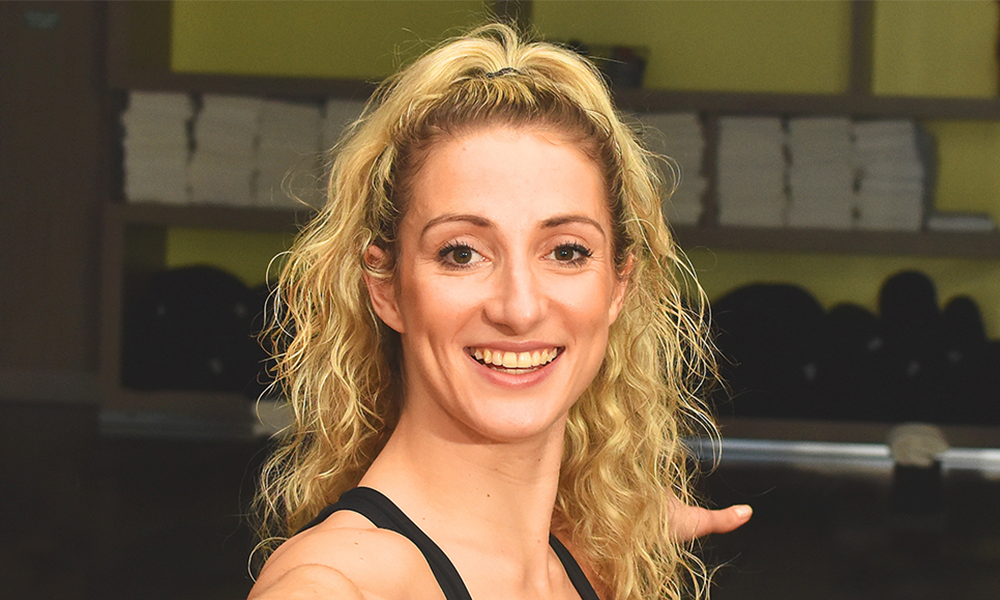
Third Space master trainer Clare Walters conducts a Sound Bath class

Subscribe to our free Wharf Whispers newsletter here
How often do we get the opportunity to take an hour for ourselves?

The modern world is busy.

There’s information overload. We, as individuals, have the ability to be in touch with more people now, than at any time in human history.

There’s more content from media sources – social and traditional – all with ideas, advice, entertainment and distraction, screaming for attention than ever before.

We can be at work 24-hours a day, pretty much anywhere in the world. Phones can even be used in the shower.

It’s all an endless, demanding torrent of stuff. That is life in 2023.

It’s also, perhaps, why Third Space’s Sound Bath sessions are proving so popular.

With its Canary Wharf branch the largest luxury health club in Europe – arranged over three floors above Waitrose in Canada Square – it boasts a grand list of facilities.

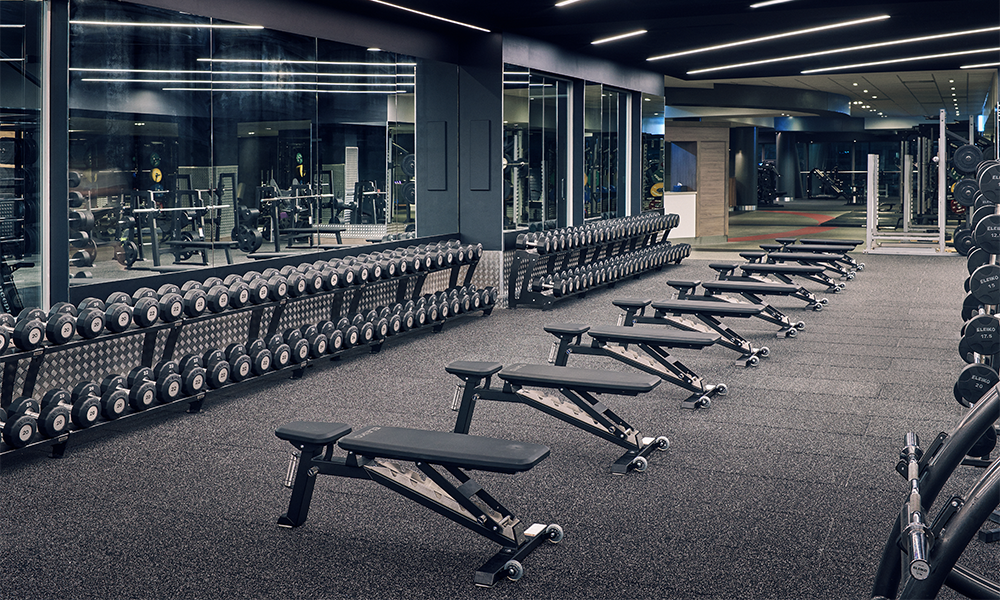
There’s a climbing wall, an enormous functional training space called the yard, a boxing ring, a swimming pool and that’s before you even start digging into the extensive free weights, resistance machines and cardio options on offer.

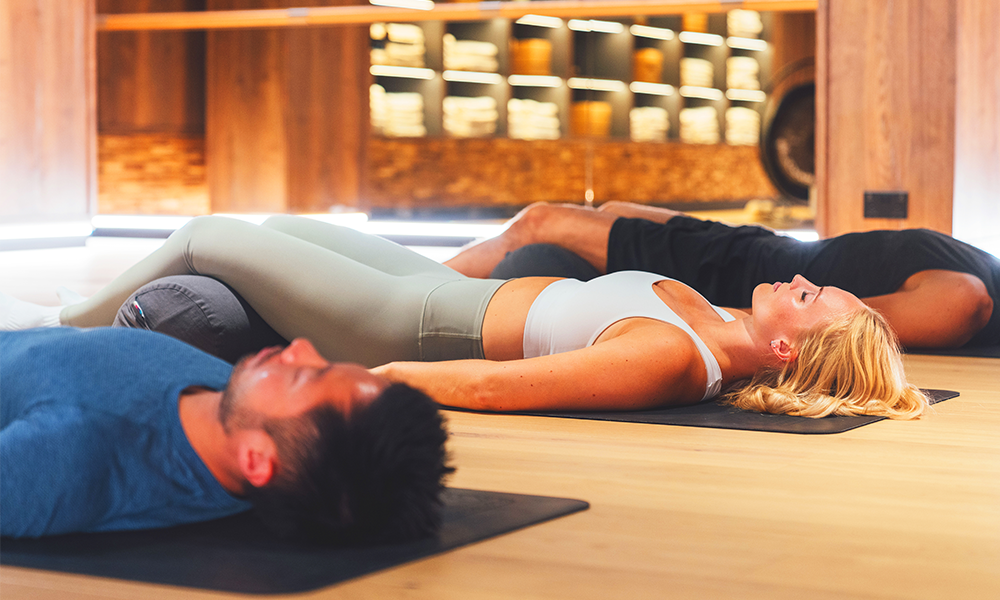
Participants can lie on their backs or sit on chairs for the sessions

There’s also a densely populated timetable of classes with names like Sweat X, Hardcore Cycle and Speed Fiends, keenly focused on helping its members get a serious sweat on.

“We do that really, really well – those high energy sessions when you look at the breadth of that offering,” said Gillian Reeves, head of group exercise at Third Space.

“There’s a whole plethora of options – strength classes with weights, HIIT classes, cycling classes – which is brilliant for overall health. 

“Then you go towards things like Yoga, which can also be high energy with practices like Vinyasa.

“Then at the rest end of the spectrum we have Yin Yoga, which is really popular here because it’s much slower and people know intuitively that they need to stretch.

“But we thought: ‘Why stop there?’.

“Let’s keep going and offer something beyond that.

“People, especially in Canary Wharf, work really hard and have very active lives. There’s lots going on and they really need that balance with rest and recovery.

“We decided to put on some trial Sound Bath classes and the waiting lists were really big – the demand was there, people wanted to do it and it confirmed what we were thinking.”

The Canary Wharf club is currently offering hour-long Sound Baths twice a week on Monday evenings and Saturday afternoons – but what actually happens in a class?

“It’s our way of offering peace and meditation to balance out all the activity – work, stress and exercise – a time once a month or a fortnight to find some stillness,” said Gillian. 

“We think it might be seen as the least intimidating form of meditation – there’s something intuitive about sound and music.

“People really relate to that and so they’re prepared to give it a go – they aren’t faced with complete silence for a long period of time.

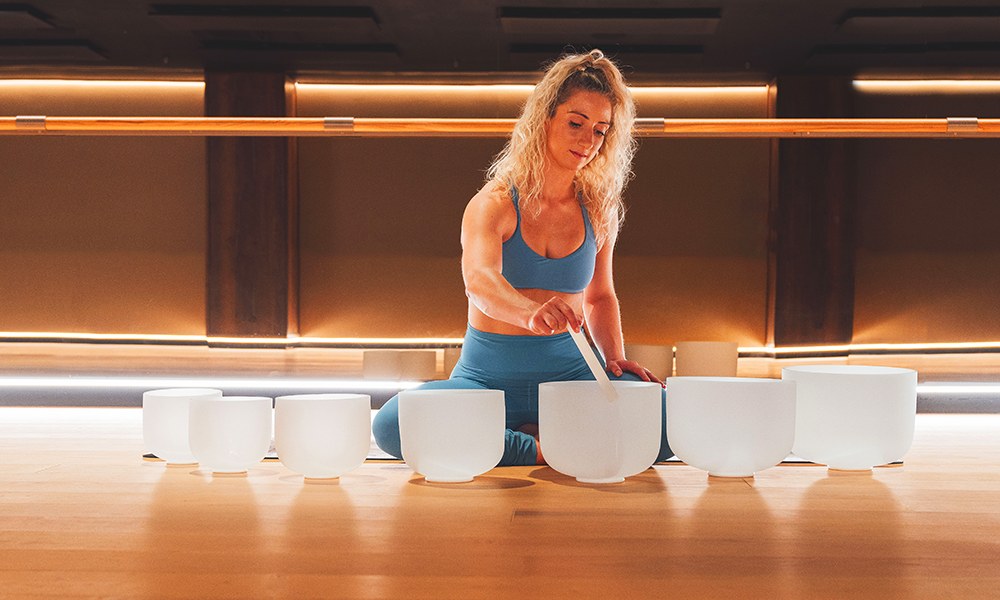
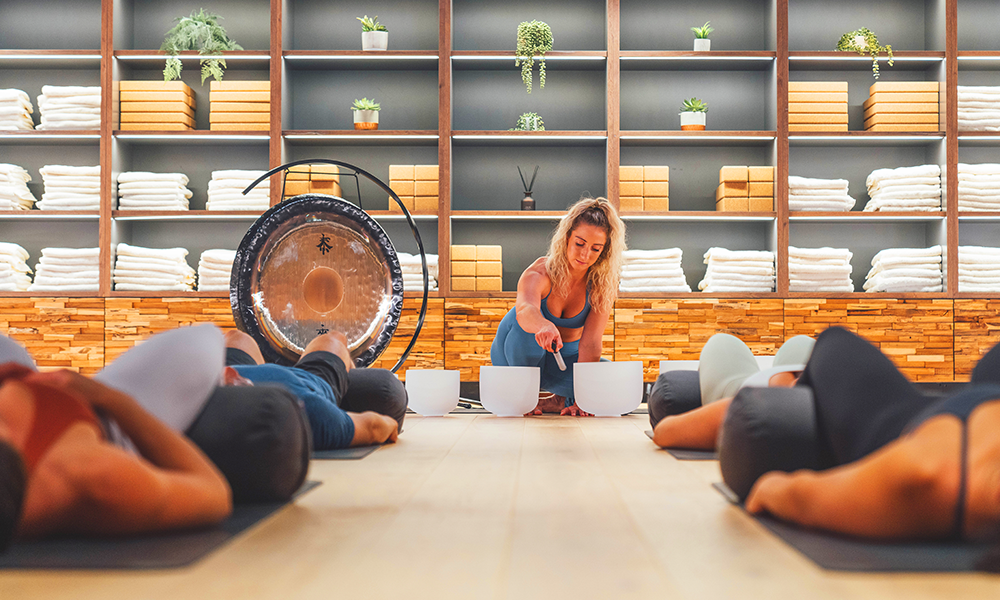
A series of instruments are used to produce the sounds

“You can turn up wearing whatever you want, because essentially you’re just lying down or, if preferred, sitting on a chair.

“We want you to be really comfortable on the mat so there are bolsters and blankets.

“There’s an introduction from the teacher, which deals with safety – the practice is not recommended for people with mental health issues, those with metal plates around joints or women who are pregnant, unless a doctor has said it’s OK.

“Then there’s a general overview of the class so people know what to expect.

“At launch, all of our teachers will use a common structure with a variety of instruments, but this will evolve over time.

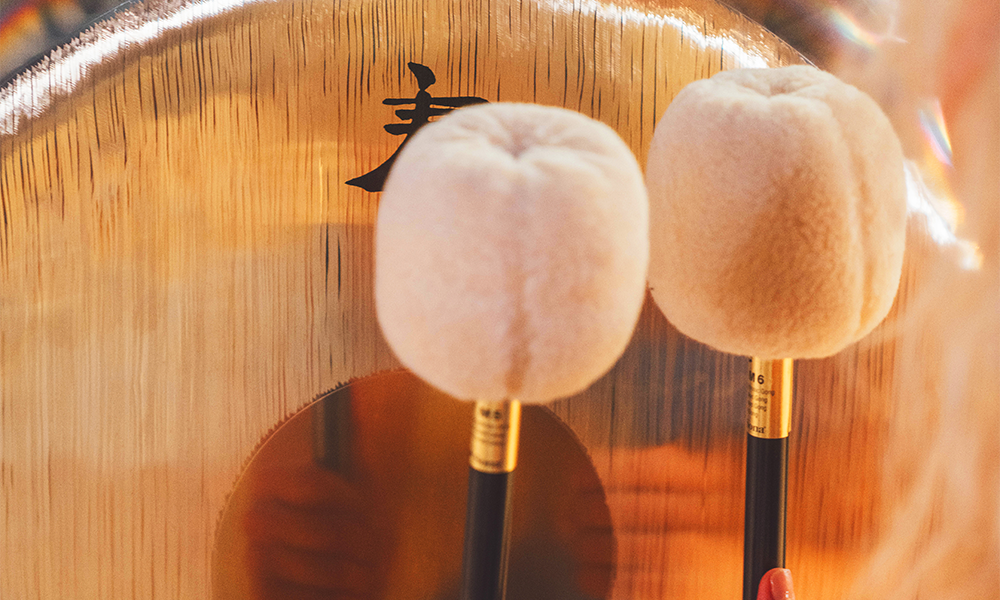
“The classes will start either with a gong or crystal bowls and there will usually be a crescendo towards the middle of the time.

“Then there can be a fade out with some chimes to finish.

“Sometimes a teacher will stay at the front the whole time, and sometimes they’ll walk around the class with small percussive instruments.

“At the end there will be silence and then some recorded music to signal the end of the session.

“What people will get from a class depends on them and their intention. For some it may be more spiritual and for others it’s relaxation.

“It might be a physical rest or allowing yourself to be still for mental health – if you just want a lie down, then that’s great.”

Third Space’s Yoga teachers have undergone extensive training with musician Tim Wheater and sound artist Cherub Sanson – the former a pioneer of sound healing in the west who has been engaged in it since 1982.

The club’s classes make use of crystal bowls from Cherub’s brand Cherebella.

The classes use crystal bowls from Cherebella

“Because of the vibrations of the different instruments that we use, it will shift people into more of a theta brainwave state – on the cusp of wakefulness but deeply relaxed,” said Gillian.

“It has a similar effect to practising meditation and has a lot of benefits for reducing stress and anxiety.

“Our bodies are really clever – if something needs repairing or healing, then they can do that. If we’re not running around and doing stuff, then they have the chance.

“Deep sleep, where the body produces delta brainwaves, is really good for us too – people who have participated in the classes have said they sleep better after a Sound Bath.

“The main thing is for people to come with as few expectations as possible – with an open mind, a sense of curiosity – and see what happens.

“As with everything we do at Third Space, our hope is that members feel better.

“With Sound Bath, they should feel good, more relaxed and calm.

“Like all holistic practices, attending a session won’t mean all the problems in your life are magically better, but it can certainly help.

“You might be having a bad time and find your perspective shifts, you could have a great thought or come in with a problem that you’ve solved by the time you leave.

“So far the feedback has been really positive.”

Find out more about Third Space Canary Wharf here

Read more: Sign up for the Santa Stair Climb at One Canada Square

Read Wharf Life’s e-edition here

Subscribe to our free Wharf Whispers newsletter here
- Jon Massey is co-founder and editorial director of Wharf Life and writes about a wide range of subjects in Canary Wharf, Docklands and east London - contact via jon.massey@wharf-life.com
Subscribe To Wharf Life

Canary Wharf: How those hitting the gym can achieve their goals with balance

Third Space mind and body master trainer Clare Walters on the physical and mental benefits of exercise

Third Space mind and body master trainer Clare Walters

Subscribe to Wharf Life’s weekly newsletter here

Will 2023 be the year it happens?

That the resolution takes and the good intentions are converted into consistent, positive action? 

January and February are traditionally the months of busy gyms as, for whatever reason, people decide to get fit, lose weight, gain muscle, improve their endurance or boost flexibility. 

But, how to achieve those goals and develop a habit that will stick beyond the arrival of spring?

That’s where Third Space mind and body master trainer Clare Walters can help.

Along with her colleagues, her role is to help the health club’s members take the steps they need to get where they want to go.

“Our message for 2023 is all about training for life,” said Clare. “It’s the idea that everything you do in the gym supports what you do outside it.

“At Third Space we provide facilities where you can train every part of your body.

“But it’s not just the physical, it’s also about training the mind and about the restorative side of things.”

Billed as the largest luxury health club in Europe and spread over three floors of the building that houses Waitrose in Canada Square, Third Space Canary Wharf isn’t short on space or amenities.

There are free weights, a swimming pool, a climbing wall, saunas, steam rooms, ranks of cardio machines, a combat zone, weights machines and a vast Crossfit-inspired training area called The Yard. 

Third Space Canary Wharf is currently undergoing a major update

That’s before you even get to the hundreds of classes every week – all included in the monthly membership. So how best to navigate such a wealth of options?

“The best thing you can do if you’re coming into training or returning to the gym, is to get as much guidance as possible,” said Clare, who trained as a dancer before embarking on a career in the fitness industry.

“You’ll see people on social media promoting crazy workouts and doing 30-day challenges. They can be great as a gateway into fitness but they are only ever the start. 

“You want to be training to make your life easier, whether that’s with the aim of climbing a mountain or just running after your kids in the playground.

“In my classes I use the example of my mum. She’s retired and she loves hiking.

“She was struggling on the hikes to get over stiles, so I’ve given her barre exercises and Pilates for strength, flexibility and stability.

“It’s about working out why you want to train – whether your goals are aesthetic or fitness related. I think having longer term goals really helps.

“They make you realise you don’t need to go hell for leather – you don’t want to start with a marathon if you’ve not been running before. 

 “It’s the same with any type of training – pace yourself, get expert guidance and speak to the instructors for advice.

“They will be able to suggest classes that will help.

“For example, a high intensity class will be very fast-paced with larger movements designed to switch on the bigger muscles.

“Adding in something like a Pilates class can help by focusing on the lesser muscles in the body that help with posture and general alignment.

“It’s more of a holistic approach to help maintain a balanced body and avoid injury.”

Then there are the mental health benefits, derived from both intense exercise and slower disciplines.

“People who train regularly can expect to feel like they have more energy,” said Clare, who practises circus skills including the trapeze, outside work.

“The endorphins it creates give you a natural mood boost and help minimise pain.

“Training makes you feel better about your life, yourself, better in your body on a mechanical level, a bit brighter, stronger and fitter.

“Walking up the escalator on the Tube won’t leave you puffing at the top.

“There’s something about lifting a weight that’s heavier than the one a week before, when you feel connected to your breath doing Yoga or when you go swimming and you can do more lengths than the time before. 

“We lead such busy lives, especially in London – having the space to concentrate on one thing is really important.

Clare enjoys Yin Yoga as a break from busy London life

“My favourite Yoga practice is actually Yin – it focuses on the softer, slower aspects of the discipline, with long held postures that are quite meditative.

“It’s good if you just need that little bit of space in your day – you can come into our studio, it’s warm, we dim the lights, we have calm music, and we’re creating that relaxing atmosphere.

“It’s like a haven – a third space away from work and home life where you can come in and only focus on yourself.

“Of course, one of the other great things about Third Space is the community.

“Members meet other members and become friends, whether that’s through attending classes or just chatting in the sauna.

“One of the things we’ve learnt during the pandemic is that people need other people  – isolation isn’t good for humans at all.

“It might simply be that you’re in a class, finding it tough, look to your left and right and feel that sense of connection – something that spurs you on.

“As a teacher, it’s really beautiful when I see this happening, or when people come to a class and then end up chatting a bit more and hanging out afterwards.

“We’ve also launched Hyrox classes that are aimed at equipping members with the skills to compete in those competitive events.

“Members can do those individually, just like the event, or they can team up with a partner and the classes are the perfect place to find someone to do that with.” 

In other news, the Canary Wharf club is undergoing an extensive refurbishment programme with many machines already replaced and interiors updated.

Membership for Third Space Canary Wharf costs £210 per month with group-wide access £20 more.

There is currently no joining fee.

Read more: How Dishoom Canary Wharf is all about a story

Read Wharf Life’s e-edition here

Subscribe to Wharf Life’s weekly newsletter here

- Jon Massey is co-founder and editorial director of Wharf Life and writes about a wide range of subjects in Canary Wharf, Docklands and east London - contact via jon.massey@wharf-life.com
Subscribe To Wharf Life