

Boisdale Of Canary Wharf

Adult Literacy Trust invites volunteers to apply as reading coaches

Charity works across eight London boroughs including Tower Hamlets and Newham as it helps learners improve their skills
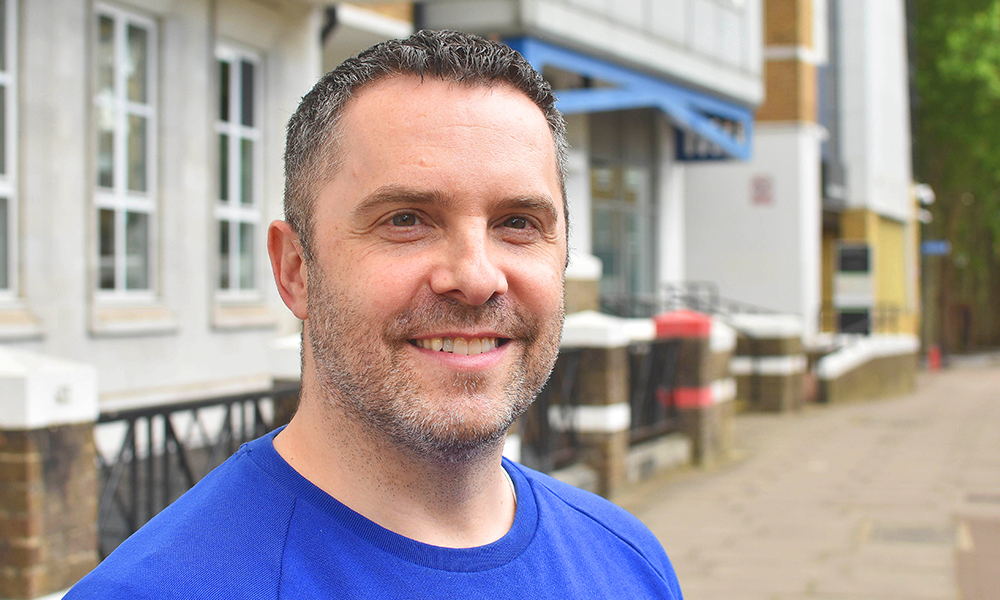
Adult Literacy Trust volunteer Declan Cashin - image by Jon Massey / Wharf Life
Adult Literacy Trust volunteer Declan Cashin – image by Jon Massey / Wharf Life

Subscribe to our free Wharf Whispers newsletter here

Literacy is – if you’re reading this – probably something you take for granted.

The ability to understand, evaluate and engage with written texts is typically one that’s acquired young, a process difficult to recall.

While we all develop and hone these skills individually, the majority of adults in the UK are able to read to at a least a basic level. 

But that’s not everyone. The Adult Literacy Trust – a charity working across eight London boroughs including Tower Hamlets – puts the proportion of the population struggling with basic reading skills at 15% of adults in England.

Being unable to decode complicated written texts can affect all areas of a person’s life.

The charity says people with poor literacy are twice as likely to be unemployed and, for those in work, earn 60% less on average than those able to read well.

Then there are many wider social impacts – the challenges faced by children when their parents struggle with literacy, the shame and stigma the adults feel when masking a lack of ability and the extreme social exclusion of simply not having access to the same information as everybody else.

Worse still, marginalised communities are among the worst affected including ethnic minorities, ex-offenders and those living in poverty.  

To help break those cycles, the trust recruits volunteers to act as reading coaches for adults.

Working with learning providers, they take part in free one-to-one sessions for people on courses to help them improve their skills, gain confidence and boost their employability and general wellbeing. 

Being able to decode the written word is an essential life skill - image by Megan Lee / Pexels
Being able to decode the written word is an essential life skill – image by Megan Lee / Pexels

giving something back

“My father left school at 13, so his education was interrupted,” said Declan Cashin, who volunteers as a reading coach through the Adult Literacy Trust at New City College’s Poplar campus.

“He could read, but it probably held him back. 

“I’ve made a career out of reading and writing, I know the joy they can bring and how important these skills are, but I also understand how vulnerable someone can feel if they’re having trouble with them.

“I’ve been involved in voluntary work before, but that was usually over the phone or through text messaging.

“I missed interacting with people and being a reading coach is something you have to do in person, so it seemed the perfect thing to try.”

Born in Ireland, Declan knew he wanted to become a journalist at a young age but initially studied English at university after a teacher talked him out of it.

Nevertheless, after graduating he trained to be a reporter and spent years working in the media, moving to London more than a decade and a half ago.

Today he lives in Hackney and works in communications in Stratford having succumbed to the lure of a “steady desk job”.

Having discovered the Adult Literacy Trust online, he applied to become a volunteer, enrolled on its training programme and began one-to-one sessions earlier this year. 

from interview to training

“The trust had an initial chat with me and then invited me for an interview to get a sense of my style and temperament – to ensure I had the right approach and level of empathy for the role,” said Declan. 

“Part of that process was about remembering what it was like to learn a skill, recalling being bad at something and then learning to keep that in your head because it’s probably how the person you’re matched with will be feeling about reading.”

Volunteers, who must be 18 or older, complete training sessions across four modules that include topics such as the purpose of the coaching role, who the learners are, the skills and knowledge needed and safeguarding.

They are then matched with a reader and meet with them weekly during term time, typically for an hour. 

“During training we were taken into classes at New City College to meet people who were using the trust’s service and to see how they were responding to it,” said Declan. 

“One of the things I noticed was how much more seriously everyone seemed to be taking their education in comparison to a school classroom.

“These people are really dedicated. 

“Older students often have many responsibilities – multiple jobs, kids and studying – and on top of that they’re taking time to improve their literacy.

“It’s incredible to see people making that effort to succeed. 

“I learnt that people often come to the Adult Literacy Trust when they are aiming to get a particular job or responsibility within their career and that further education is a route to that.”

Declan said that, while those using the trust’s services were struggling with literacy, that didn’t mean they couldn’t read at all.

meeting for the first time

“I was matched with a learner from the charity’s waiting list and we met for our first session just to get to know one another,” said Declan.

“He was born overseas and came to the UK as a teenager, so his schooling was interrupted. 

“His reading was actually already very good, but he wanted to gain confidence. He was also very clear that he wanted to maximise what he was getting from his course at the college.

“We sit in the library and read.

“At first we used the Metro newspaper because there are passages of different lengths and lots of different levels of complexity – everything from features to advertorials and sports stories.

“It was a good way to get a sense of his ability and what he was interested in, and then I could start to tailor the material.

“A couple of weeks later he brought his own book from home, and we’ve been reading some of that for the last few weeks.

“He knows what his issues are and what he needs to work on.

“He’ll run into certain words he needs to spend longer on.

“He can read very well, but it’s making sure the comprehension is there too.

“One of the things I’ve learnt from volunteers and the trust is that it’s crucial to make sure the learners are understanding what they are reading.

“It’s something that’s easy to take for granted if you don’t have that issue yourself.

“People want to improve their skills for many different reasons. 

“It might be to read for themselves for pleasure, reading to their kids, understanding official documents or reading material related to their studies. 

“We’re not there as teachers – we always refer learners back to their course leader to answer any questions on their studies – we’re there to help them develop the tools to engage with text, to break it down and to understand it.

“You certainly don’t have to be an expert on what they are studying.

“In the end, all you need to be is patient and constructive with your feedback to encourage them. 

“English is a strange, irregular language – it’s not always easy to understand. With my guy, we go at his pace.

“We’ve been reading his book for the last few weeks. 

“There might be certain words we need to spend longer on but that’s absolutely fine.

“Sometimes it’s about helping him understand that something isn’t actually very well written in the first place and why that might be.

“Getting through a few paragraphs is better than none. 

“His book is quite academic and complicated, but seeing him dive into it and his confidence growing has been really wonderful.”

getting something back

Declan said volunteering with the charity had been a pleasant surprise since he began as a coach.

“It’s very rewarding,” he said.

“I get to come to New City College, which is so buzzy – filled with people who are getting on with things.

“It’s allowed me to meet people I perhaps wouldn’t have otherwise encountered and taking an hour out of my day to help someone is a real privilege. 

“You also learn about yourself – how good you are at giving feedback and putting people at ease.

“It’s also about getting involved with something local that connects you to the people in the area you live and work in. 

“I’ve got so much out of it, I come out of our weekly session feeling really pumped up.

“Everyone – the learners and the volunteers – are in this for the right reasons and it’s really inspiring.”   

they say

The Adult Literacy Trust gathers regular feedback from service users. Here are some of their comments on the sessions it provides:

“It helps me to catch more, you know, so, with my teacher, I can ask him more questions. So, he is explaining more about what I’m interested in and I can talk with him about whatever I wish. It’s helping me a lot to improve my English.”

Learning to read has opened so many doors for me. It wasn’t always smooth sailing, but my volunteer, Janine, stuck with me through it all. She never stopped encouraging me. 

“Because of her, I found the courage to apply for a job I never thought was possible – and I landed it. This programme has helped me read, but it’s much more than that – it’s been a turning point in my life.”

Before, when they say we should read in class, well, I tried to put myself back. But now when it gets to my turn to read, I’m happy to, even if I make one mistake.”

It helps you with your mental health and wellbeing because you are reading with someone that will listen to you. It’s really helpful to become, for a moment, separate from all the hustle and bustle around you.”

Source: Adult Literacy Trust

key details: Adult Literacy Trust

The Adult Literacy Trust is currently accepting applications from prospective volunteers for training sessions in September.

Those wishing to find out more can email the charity’s volunteer and training coordinator via laura@alt.org.uk for more details or visit the organisation’s website here.

Read more: How Wharf Wellness is back with a packed programme in June 2026

Read Wharf Life’s e-edition here

Subscribe to our free Wharf Whispers newsletter here

Subscribe To Wharf Life

Stepney: How the Attlee A Level Academy achieved record-breaking exam results

The New City College east London campus is celebrating a 15% rise in its A Level pass rate

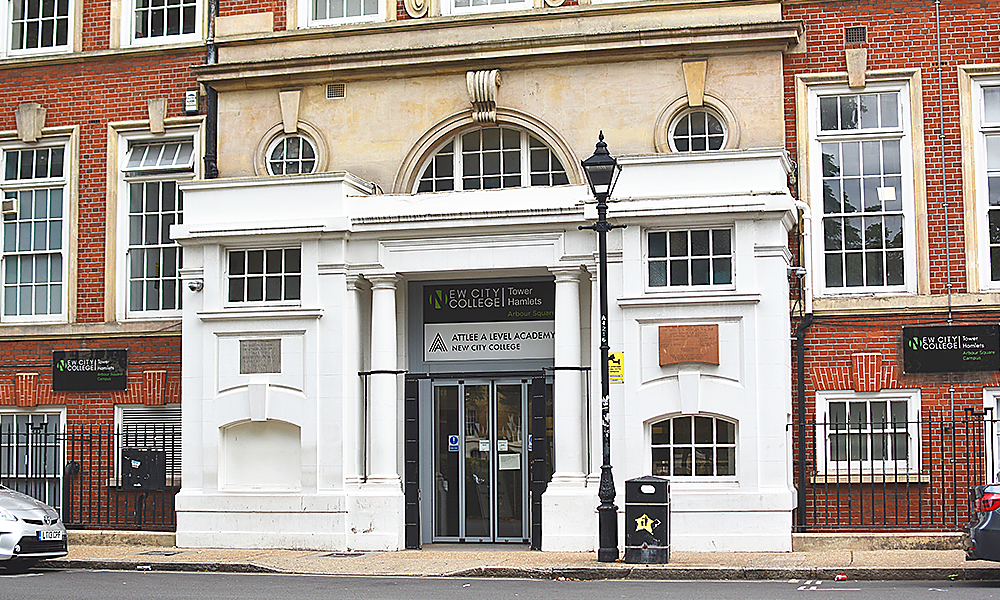
Image shows the main entrance to New City College's Attlee A Level Academy in Stepney, an Edwardian building in east London
New City College’s Attlee A Level Academy in Stepney

Subscribe to Wharf Life’s weekly newsletter here

Read the comments of its students below and the secret to the recent success of New City College’s Attlee A Level Academy becomes obvious.

Young people clearly relish the teaching they receive and the environment provided for them to learn in.

Located on the eastern side of leafy Arbour Square, just off Commercial Road and round the corner from Troxy, the academy occupies the fine Edwardian building that once housed Raine’s School. 

Most recently rebranded with the blessing of former prime minister Clement Attlee’s family in 2018, in 2022 it achieved record-breaking figures with a 15% rise in A Level pass rates and a 12% increase in students awarded higher grades over the last four years.

In total, 125 students achieved 371 A Levels between them.

“We’re really, really pleased with the results,” said Janet Smith, New City College principal with responsibility for A Levels across its operation.

“Attlee was formed by merging provision that was in Tower Hamlets and Hackney at this site – that started a journey of pulling it all together and really improving things.

“Then we got caught up in the pandemic with students getting centre-assessed grades, but these results really validate the work we’ve been doing to build high quality provision.

“Since that pre-pandemic merger, we’ve improved by 15% and that starts to establish us as a high-performing centre for Tower Hamlets.

“We offer the widest range of A Levels in the borough – it’s a great selection – and we’re particularly good at the sciences and helping the progression of our students into university to study courses such as medicine.

Image shows Janet Smith, a woman with dyed red hair, wearing rimless glasses and gold earrings set with green stones
New City College principal Janet Smith

“During the pandemic, the whole senior leadership team got involved to make sure we weren’t just inflating grades, that what we were doing was valid and we can now go on with the confidence that we avoided doing that.

“We’re particularly pleased that we’ve got 11 subjects here where all of the students who took the exam passed – that’s quite phenomenal.

“These are tricky subjects – business studies, politics, physics, media studies, psychology and sociology – and really significant numbers of high grades.”

Group principal and CEO at New City College, Gerry McDonald, said while many colleges no longer offered A Levels due to the “hard, competitive” nature of the market, Attlee had been created to focus on the student experience to ensure the academy continued to be seen as a first choice for students as opposed to staying on in school sixth forms.

“These results show we made the right decision to create the academy,” he said.

“We have a broad, broad offer with subjects like classical civilisation, which you wouldn’t find in a school, but also fantastic links to universities such as Queen Mary.

“Our teachers are mostly A Level specialists – they understand the syllabuses really well and some have been involved in developing them and are examiners too, so they understand how to support our students. Now our focus is on helping them achieve those higher grades.”

Image shows Gerry McDonald, a white-haired man with black-rimmed spectacles in a blue suit and white shirt
Gerry is group principal and CEO of New City College
Gerry McDonald is group principal and CEO of New City College

Janet said the attraction for those looking to study at Attlee was two-fold.

“There’s the academic side with a breadth of offer and lots of other students, so people can really learn from each other,” she said.

“You might be in a group of 20 and that’s a really rich cohort to work with.

“Then we have very strong links with industry so we offer internships and programmes that may not be what students would be able to get in a school.”

Gerry added: “There’s also the maturity of environment. Our students won’t get the sort of support they have at a school when they go to university.

“Coming to Attlee helps them prepare for that by making them more resilient, independent learners, while also allowing them to mix with different groups of people, rather than moving up with their Year 11 cohort.

“Helping our students progress is a really important part of what we do and, because Attlee is part of a large college, there’s a wealth resource that we can draw on in terms of teaching.

“As staff, we work hard to develop our teaching skills – all of the senior team still do some teaching – and our expectation is that teachers understand that they are role models. It’s about the enthusiasm we have for our subjects, not just about the exam, but developing those broader interests in our students. That’s what our passion is.”

Enrolment for the latest cohort of Year 12 students at Attlee A Level Academy runs until September 3, 2022.

New City College operates across nine campuses in east London including facilities in Hackney, Epping Forest, Havering, Rainham, Redbridge and Illford.

CASE STUDIES: NEW CITY COLLEGE

Image shows Naima El Hallili Kintlerova – a young woman with dyed red hair, wearing a black top.
Naima moved to New City College from George Green's School
Naima moved to New City College from George Green’s School
  • Naima El Hallili Kintlerova
  • Law A, History B, Psychology B
  • Future – Naima has a place at Royal Holloway University Of London to study history

Isle Of Dogs resident Naima was a pupil at George Green’s School before joining New City College’s Attlee A Level Academy to take her studies further after taking her GCSEs.

She said: “I was looking at colleges and this place just came up. I liked that it was local, so I went to an open day. I liked how friendly the teachers were, how they made me feel at ease.

“They have an open-door policy here so if you have a question, you can just go into the staff room and ask.

“It’s not formal, you don’t have to call the teachers miss or sir – it’s all on a first name basis and I liked that.

“I enjoyed coming to college more than school because you have that rapport with the teachers – it’s more like a community and it’s very supportive.

“I never used to be as confident as I am now with things like speaking in public – coming to this college has allowed me to make new friends, be comfortable with myself and speak up.

“I feel a lot of my confidence is because I came here and met a lot of people from different countries and cultures.

“The college gives you a lot of opportunities – you get to work at the academy, get paid and have access to internships.

“I had one with a bank and now I have a mentor who is there for the next few years to help me with things like writing a CV.

“Even from GCSE level I’ve liked history. I thought about doing law at university for a second, but you can always take a legal route later on.

“At college my history teacher was really kind and made the lessons really interesting.

“He was so helpful with exams and coursework and in the end it’s all paid off because I got a place at Royal Holloway.

“I’ve thought about becoming a historian, maybe doing a masters and a PhD, but I still have a few years to decide.” 

Image shows Geovanny Rodriguez, a young dark-haired man with pierced ears wearing a black shirt and white T-shirt
Geovanny studied at New City College between ages 14 and 18
  • Geovanny Rodriguez
  • Business A, Psychology A, English Lit B
  • Geovanny has a place at the University Of St Andrew’s in Scotland to study economics and management

North London resident Geovanny has had a less typical route into studying A Levels at New City College, having joined the institution aged 14 pretty much unable to speak English.

He said: “I’m originally from Colombia, but I moved to Spain when I was about 13, then I stayed there for a year and then came to the UK.

“ First I attended the college’s section for those aged 14-16 who don’t know how to speak English.

“Then I came to the Attlee A Level Academy and now I’m going on to study economics and management at St Andrews.

“I chose it because it’s a really good university and I liked the experience of going to Scotland.

“Unlike Naima I don’t have a passion for a subject like history, but studying business is good because it opens doors.

“My idea is to have a stable income and also to do my own thing with photography and clothes.

“Studying at New City College has been great.

“At first I didn’t really know anyone but then I found friends and I had a really good connection with the teachers. 

“The college also allowed me to run a pop-up shop and I donated 20% of the proceeds to charity.

“I take pictures of the things I like, not focusing on anything specific, just weird things I see as I go round.

“I’d definitely recommend the college as a place to study. It’s more like a community than a college because everyone knows each other. 

“While I live in North London, it’s totally worth the commute here to find supportive and helpful teachers – they were always there when I needed anything.

“It’s also good to come to a completely different area to the place that you live and to have that contrast to your life at home.”

Read more: How Blackout Dance Camp is rolling out London services

Read Wharf Life’s e-edition here

Subscribe to Wharf Life’s weekly newsletter here

- Jon Massey is co-founder and editorial director of Wharf Life and writes about a wide range of subjects in Canary Wharf, Docklands and east London - contact via jon.massey@wharf-life.com
Subscribe To Wharf Life