

East London Hawksmoor church’s Care For St Anne’s charity invites visitors to step back in time with help from Northeastern University London
Subscribe to our free Wharf Whispers newsletter here
Information, inspiration and connection is what Black Limehouse Lives promises when it opens in east London later this month.
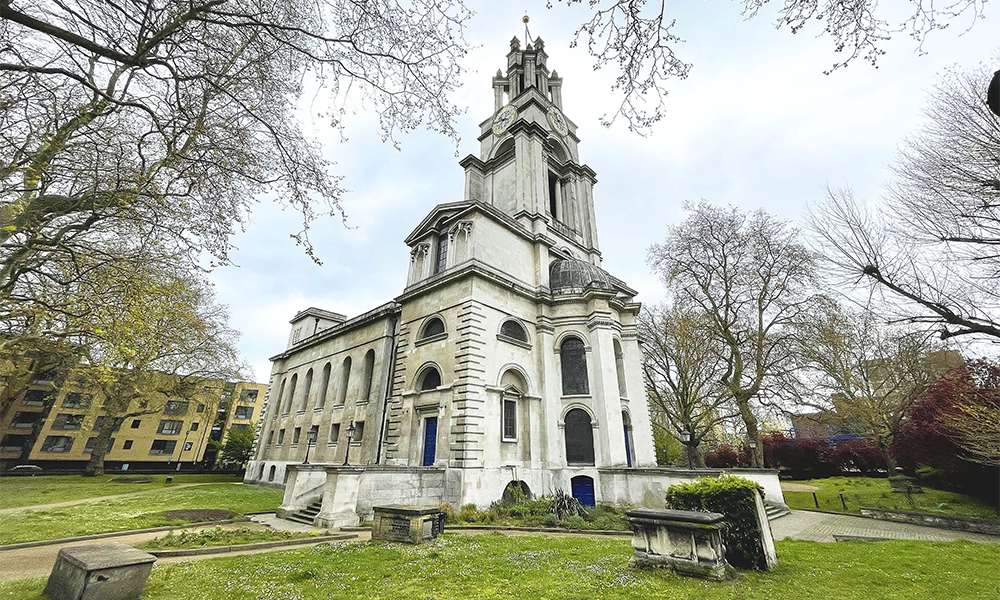
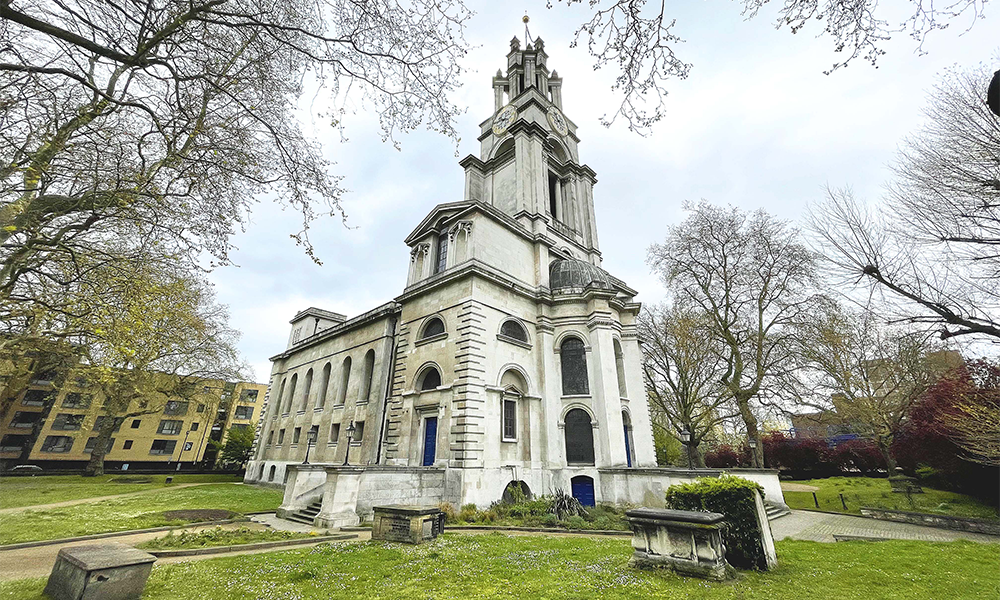
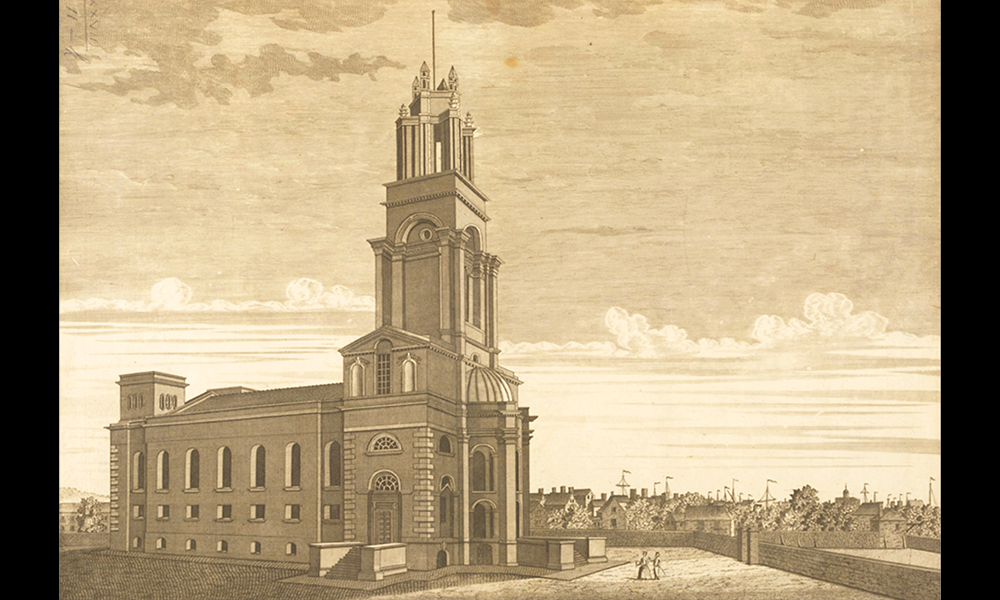
The exhibition is set to go on display at St Anne’s Limehouse from October 17, 2026, until February 20, with visitors invited to discover the lives of black people living in the area during the 18th and early 19th centuries.
Care For St Anne’s – the charity committed to restoring the Hawksmoor-designed church and opening it up to wider community use – has teamed up with Northeastern University London in St Katharine Docks to help research and create the displays during Black History Month.
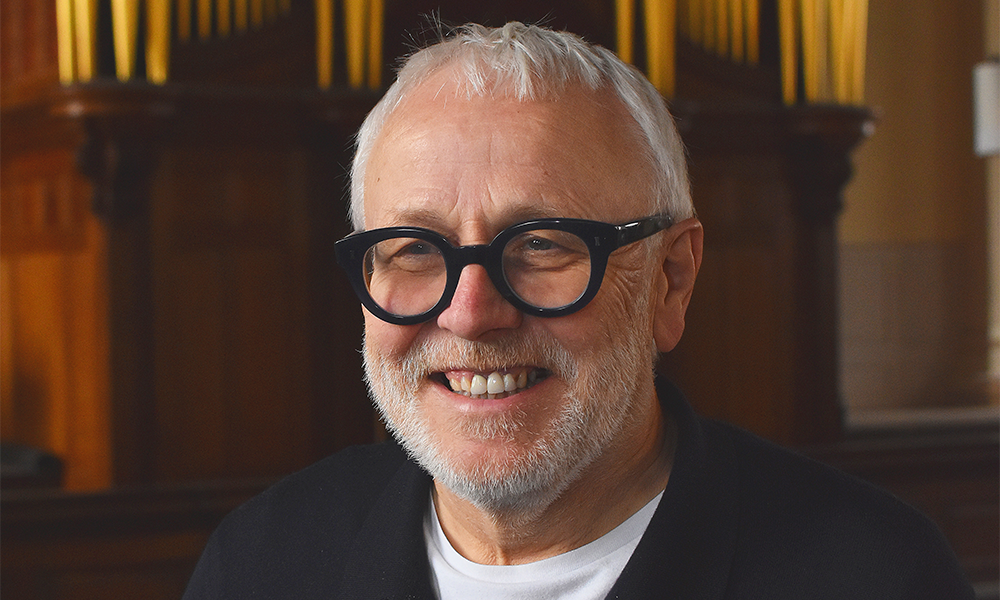
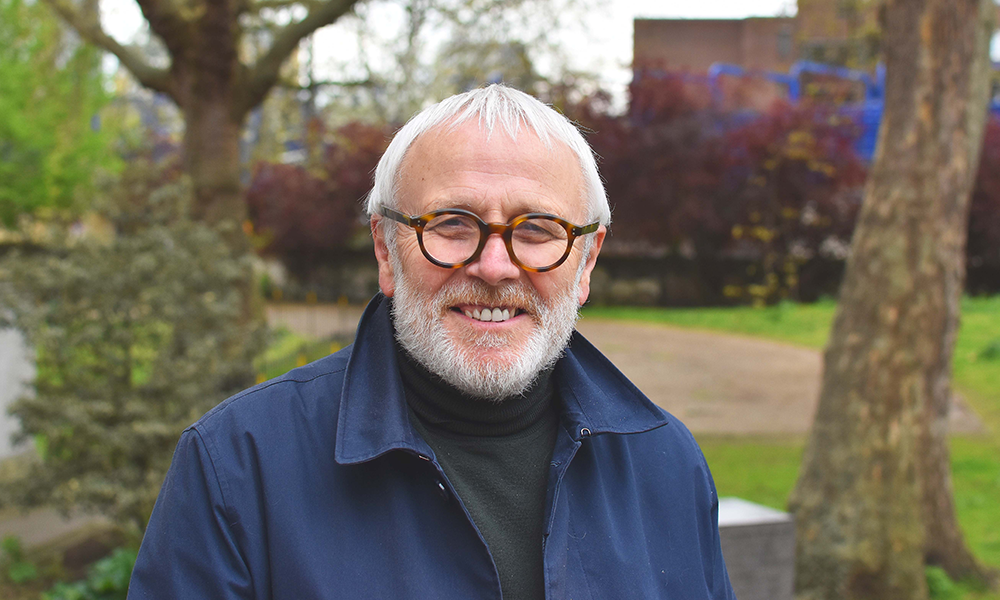
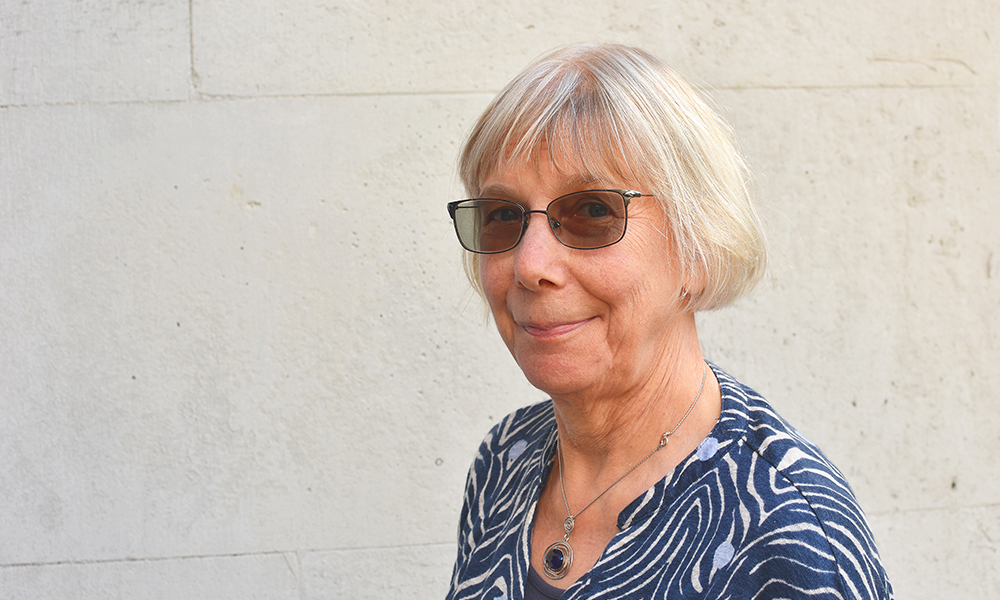
“I started volunteering at St Anne’s four years ago – I live partly in France and I’d been scaling down my work in the wine world and wanted to meet new people,” said Wink Lorch, who has led the Black Limehouse Lives project for Care For St Anne’s as co-curator.
“I’d lived in sight of the tower for 20 years, but I’m not a church-goer and the doors were always closed.
“When I had more time on my hands, I saw the charity was looking for volunteers and I thought it might be interesting.
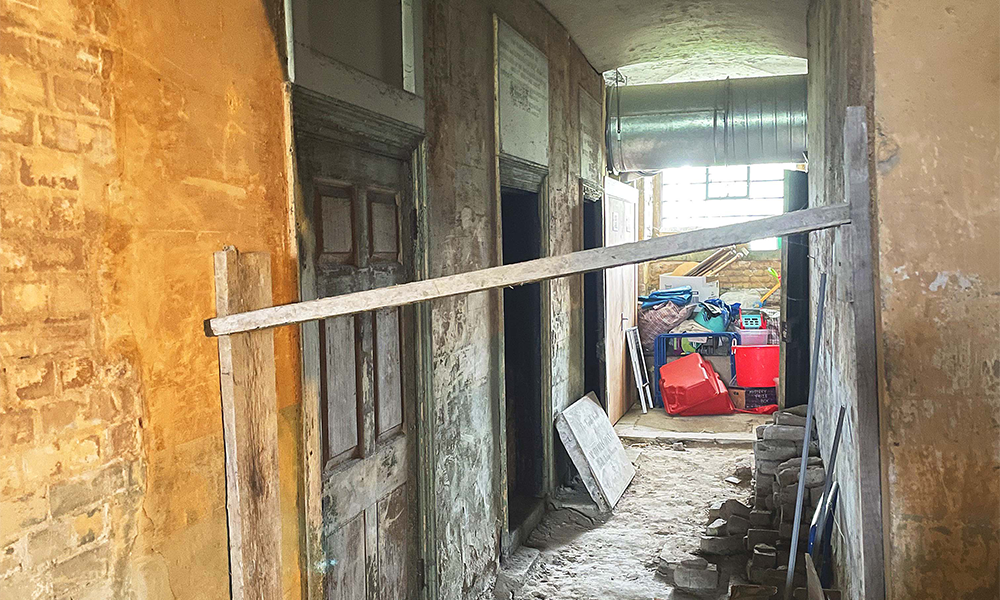
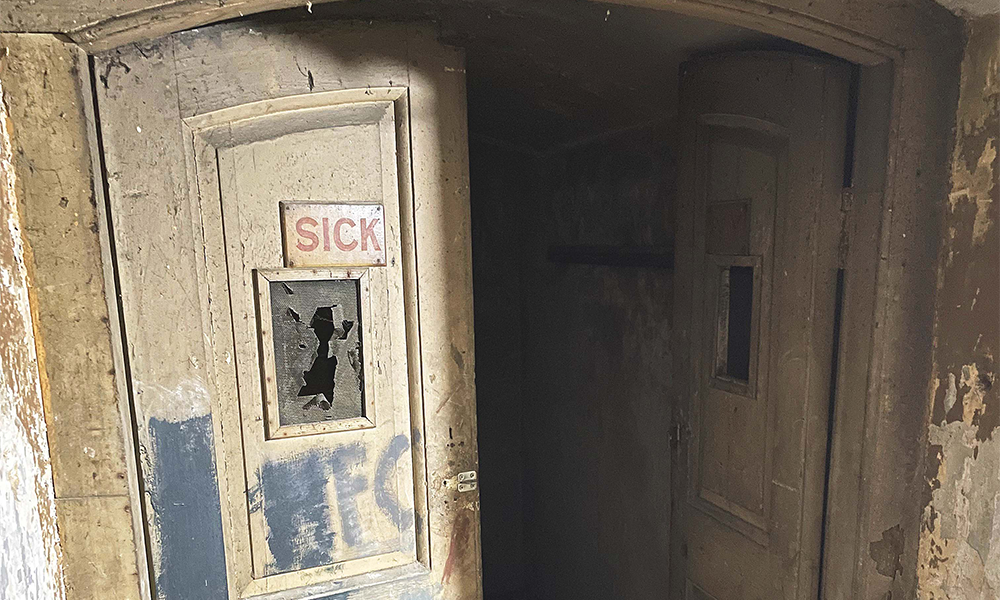
“At first it was just keeping the doors open, but I can write and edit, which is how I was thrown into the first Limehouse Lives project in 2023 – an exhibition inspired by a talk that Queen Mary University did here based on research they’d done on people buried in the crypt at St Anne’s.
“It included some we know had links to slavery and we got London Museum Docklands to write a panel for us to help put that in context.
“I publish my own books and know about project management, so helping curate the exhibition was something I really enjoyed doing.
“I discovered the Mapping Black London project at Northeastern University on a visit to St George-In-The-East, the Hawksmoor church in Shadwell.
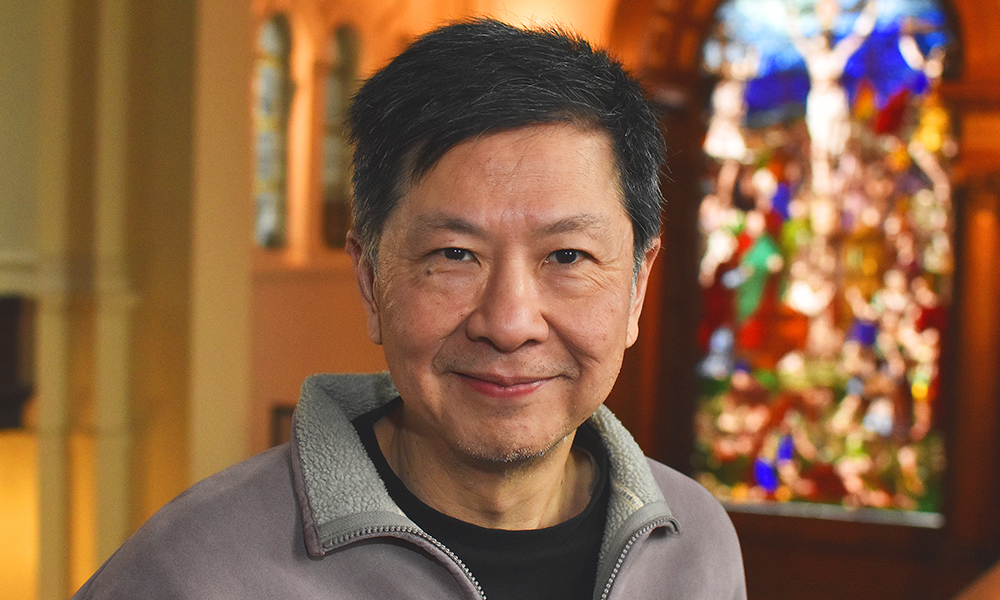
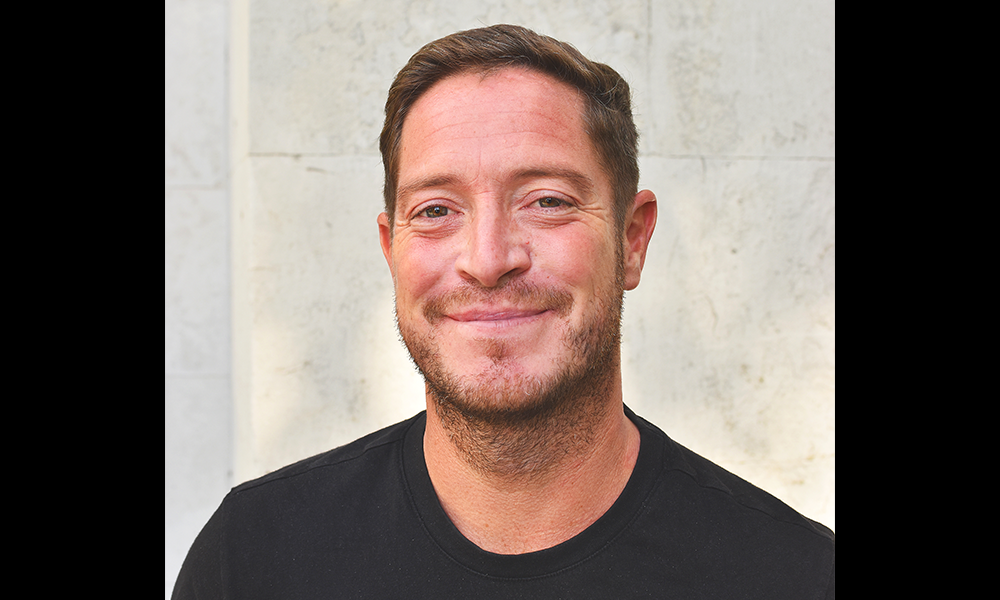
“I went there on an open day and Professor Olly Ayers who leads it was there with one of his post-grad students.
“I learnt about their project, which contributed to a wonderful exhibition at St George’s in April, and thought we might be able to link a revival of Limehouse Lives with similar research at St Anne’s.”
from the past to the present
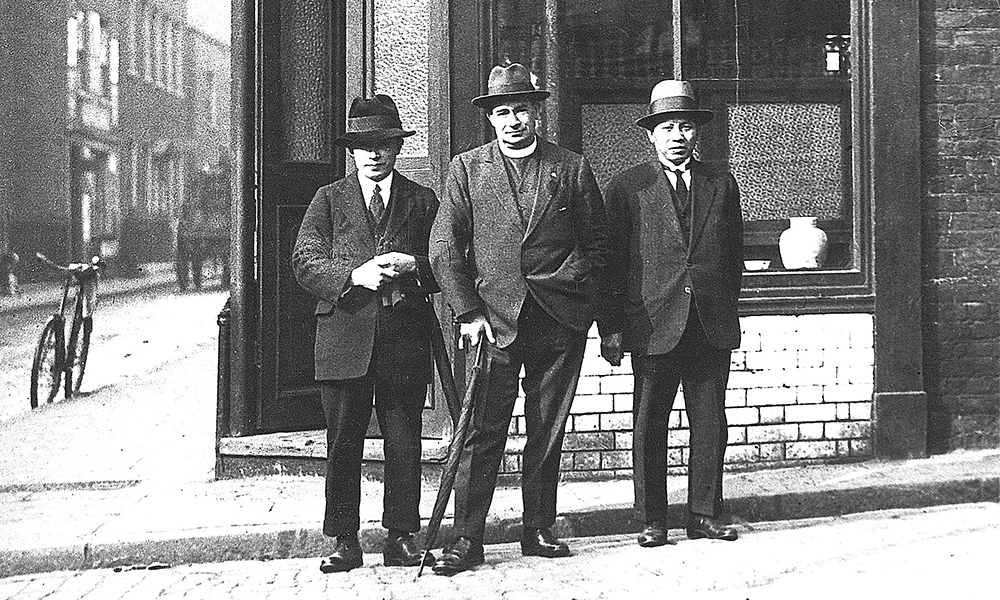
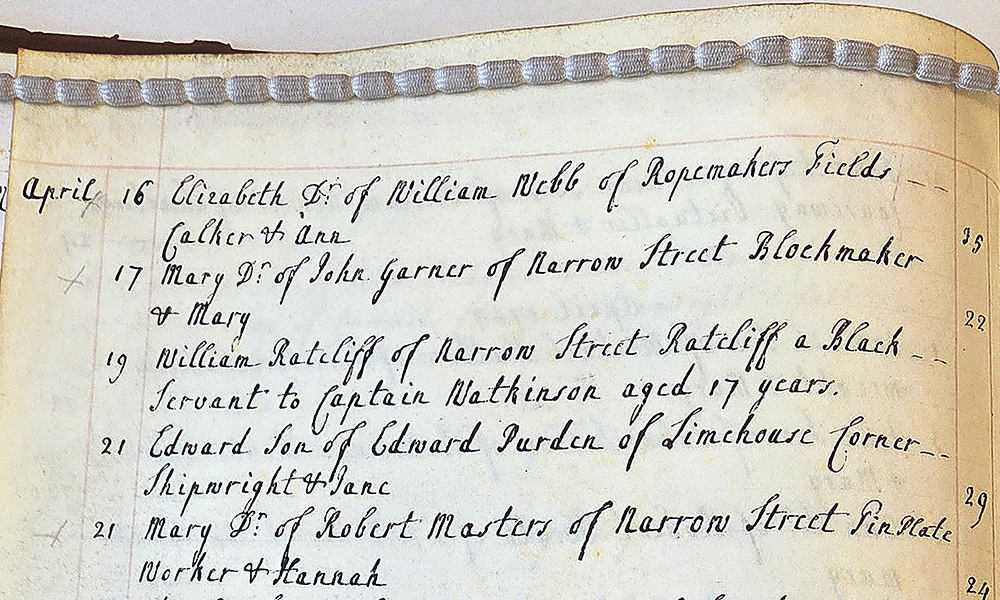
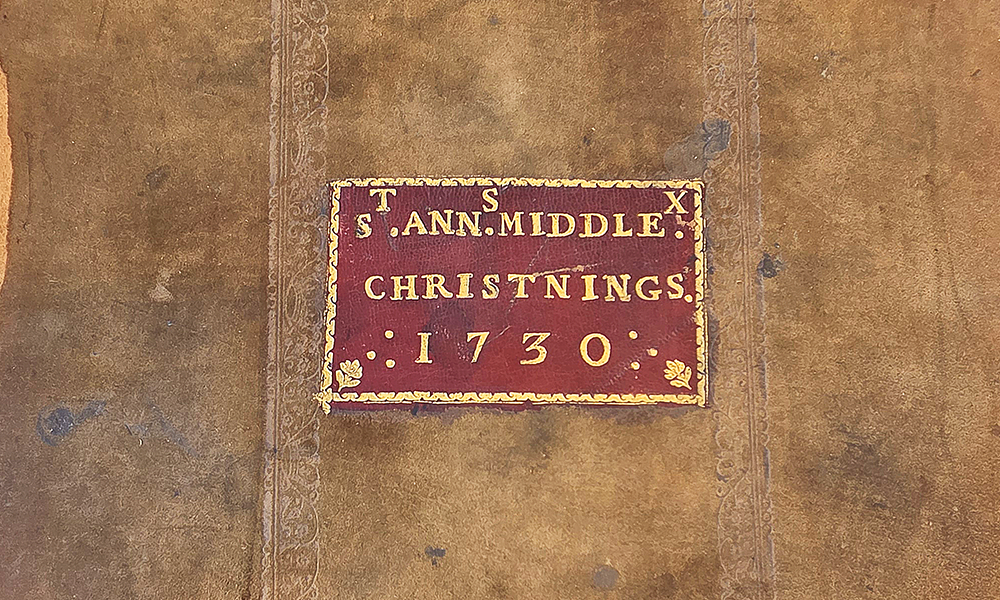
Scouring baptism and burial records, Black Limehouse Lives focuses on people who lived, worked, worshipped or were laid to rest in the parish between 1730 and 1830.
Olly said: “The Mapping Black London project has been going for nearly five years – we’ve researched the presence of black people in the city before 1948, prior to Windrush.
“We’re challenging the misconception that there was no black presence in the capital before that date.
“If you map something, you put people in times and places, and this helps history to come alive and make sense.
“We have a team of PhD students who are doing research on this and the scholarly dimension goes hand-in-hand with our public work.
“We found out early that there’s an appetite for thinking seriously about London’s black history.
“We’re now in Black History Month, but there are loads of examples where this is often not about history at all but about contemporary black culture or civil rights figures in the USA such as Rosa Parks and Martin Luther King.
“We can do a bit better and think about black history in Britain.
“This will be the third exhibition we’ve done with local partners.
“The principle is that if you show people that black history is not an abstract thing but that it concerns people in your church, in your neighbourhood and you can pinpoint that on a map, then it brings it alive in a meaningful way.
“We started off looking at Ignatius Sancho, the most important black Briton of the 18th century who was a prolific letter-writer and quite famous for speaking out against slavery.
“We wanted to look at the neighbourhood he lived in – he was a Westminster figure, with a shop not 100m from Downing Street and he married an East Ender called Anne Osborne of West Indian heritage.
“That got us thinking about the rest of the city and how these black communities were forming.
“If you’ve got the time to look in all the records to find these people, you can.”
context and connection
The exhibition seeks to place people – those who were baptised or buried by the church – in a wider context and to explore their stories.
While details of the individual lives of the people recorded in the parish records are scarce, it’s still possible to get a sense of some of the reasons they might have come to the church.
“For example, we found in the records that three people identified as black were baptised on the same day and all were adults,” said Wink.
“One was from New York, one from America and one from Bermuda.
“While we haven’t been able to find out anything about them, it’s likely they would have fought with the British in the American Revolutionary War.
“Black people who did that were promised freedom and a passage to England.
“We can also figure out how things might have been for them in London at that time.”
building out the stories
Olly added: “With this kind of work, you don’t just stop when you hit a dead end.
“We’re not likely to find a black person’s diaries or personal letter collection but, if we stop there, it’s history from the perspective of the guys in the crypt.
“We know there’s a bigger black presence in London so we don’t let that stop us.
“Putting people in a geographical location is important.
“The three people who got baptised on the same day, for example, were in a port city, so they might have been fresh off a boat and new in town.
“The first thing they would have done was to get baptised – there’s a whole question about what that means, but the short version is that they did this to emphasise their free status.
“Then we can talk about other things, such as whether they stayed in the area.
“There certainly were black people who were getting homes and building lives here.
“We can also look at the criminal justice records of the Old Bailey – what’s interesting there is that, over the records of several hundred years, there’s more than 600 black people we can identify in the transcripts, including people from the Limehouse area.
“What’s interesting is that they’re not just listed as the perpetrators of crime, sometimes they’re victims and sometimes they’re witnesses.
“That gives you a social life dimension to the lives of black people in the capital.
“London society in the 18th century was very discriminatory – money, race, ethnicity, religion and rabid anti-Catholicism, which is often forgotten.
“Adult baptisms can also be seen in the context that it was a practical fact that the church was responsible for distributing relief and charity, because the state didn’t want to get involved.
“So anyone wanting to benefit had to prove their residence in that parish – it was called gaining a settlement – and being baptised was a way of doing that.”
bringing everything together
The exhibition aims to place the lives of black Londoners in context by revealing the effects slavery, empire, migration and maritime trade.
Wink said: “Gradually the exhibition took the form of four parts – the black lives, the beginning of St Anne’s, a revival of the previous exhibition and an extension of that where we talk about burials in our crypt and churchyard, identifying more people.
“We’ve conducted this research because not everybody buried here was identifiable, so we’ve tried to do that.
“We also want to show how we did it – visiting the City Of London Archives, for example – and to show people that they can do it too and research their own ancestry.”
Olly said: “Ultimately, I want people to come away saying: ‘I didn’t know that’.
“That may prompt other things.
“From other exhibitions, we’ve had quite moving testimonies – that it’s changed someone’s understanding of history, their understanding of themselves and their place in the city.
“Ideas such as the past shaping the present can sound rather abstract.
“But this project has certainly changed me as I walk around these streets and think about what it means to be a Londoner in the present day.”
key details: Black Limehouse Lives
Black Limehouse Lives is set to open at St Anne’s Limehouse on October 17, 2026, and will be on display at the church until February 20, 2027.
Free to view, the exhibition will be open to the public on Thursday to Saturday from 10am-4pm.
Find out more about the exhibition
Read more: Why Third Space is spotlighting strength training
Read Wharf Life’s e-edition here
Subscribe to our free Wharf Whispers newsletter here