
Subscribe To Wharf Life

Canary Wharf: How Third Space can help Wharfers maximise their training days

Elite personal trainer Stephanie Whitehead talks gym workouts, top equipment and mental health

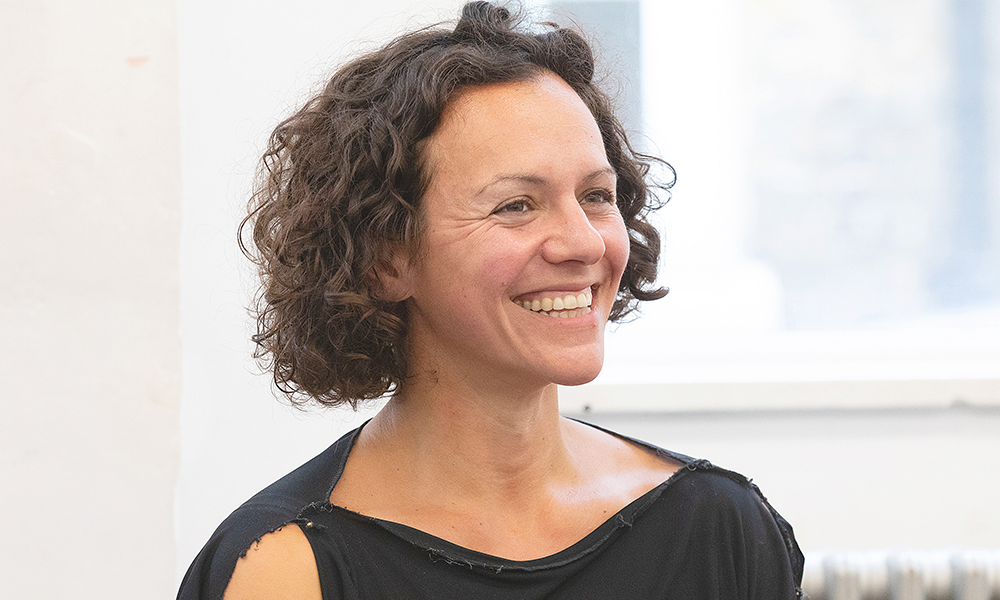
Third Space's Stephanie Whitehead
Third Space’s Stephanie Whitehead

Subscribe to Wharf Life’s weekly newsletter here

There’s more to going into work than toiling at a desk or moaning about your employer in the office kitchen.

It’s about coming to a different environment and being able to take advantage of facilities that simply don’t exist in the suburbs or the home counties.

Take Third Space in Canary Wharf, for example.

Set over three floors, it boasts more than 100,000sq ft of training space including a climbing wall, swimming pool, boxing ring and pretty much every piece of exercise equipment you can call to mind.

Regular readers of Wharf Life will already be familiar with the hundreds of classes it offers every week, with everything from Yoga and Pilates through to the epic Yard WOD set in its purpose-built CrossFit-style training area.

The club recently launched its autumn campaign, offering memberships with no joining fee, encouraging Wharfers to see its extensive facilities as an extra benefit to heading into work, as more and more people transition back to regular commuting.

Elite personal trainer at Third Space Canary Wharf, Stephanie Whitehead, said the benefits to exercising this way were clear.

“Training at the gym is very different from training at home,” she said.

“During lockdown, because I’m a trainer, I could be very resourceful and come up with great workouts using just one kettlebell and that would be great fun.

“But we don’t have to do that anymore. The difference here is, firstly, the environment. This isn’t working out on a mat on your kitchen floor.

“Here, you’re in amazing surroundings with people doing really cool things.  You’re somewhere else and focused – you’re ready to train.

Third Space Canary Wharf has received some recent upgrades including to its free weights area

“Secondly, it’s all the equipment. You’re not limited by what you have at home.

“If you haven’t been in a gym for a while, that can seem overwhelming – which is why having the input of a personal trainer is really important.

“Suppose, for example, you’re coming into the office a few days each week.

“We can put a programme together for you that fits that, tailored to maximise what you get out of each specific visit.

“Each trainer will have a different style and a different approach, but it’s our job to give you that clarity, structure and focus.

“It also prevents you just doing the things that you are good at, which can create imbalances in the body.

“My approach would be to work with a client on an all-round programme based on the number of days they are coming in to make sure all of their muscle groups are getting involved and we’re working on their whole body.

“For example, I’ll do strength training, but in terms of conditioning, I’ll always try to throw in bigger, full-movements like thrusters or squats.

“That way you get better results and the client gets more bang for their buck.

“I’d say a minimum of three visits a week is a good idea because that is just enough to build habit and consistency and it’s achievable.”

Stephanie says she believes in pushing herself and her clients

Stephanie has worked in the industry for more than a decade and has been a trainer at the Canary Wharf club for eight years.

She is also assistant fitness manager there, meaning she mentors new personal trainers as well as working directly with clients.

Having discovered a passion for fitness at university while studying psychology, she went on to compete in CrossFit before developing a career on the gym floor.

That broad background means she is well-placed to understand the benefits training can have on her clients’ mental health as well as their physical state.

“A lot of my clients would say they have very stressful jobs – lawyers who work really long hours, or bankers who might deal with mistakes involving millions of pounds – really high levels of pressure to deal with,” said Stephanie.

“Firstly, coming to the gym is a distraction and, secondly, it’s a complete break with everyday life.

“I always say to people that this is a place where they can leave work behind – one hour, which is just for them.

“No work, no phone if they want – just the training.

“Exercise is an outlet – a lot of my clients have a little vent at the beginning of their session and then forget the minutiae of the day.

“There’s also that feeling of achievement – getting that personal best on the 2k row or lifting heavier than ever before.

Third Space's recent upgrades include new pin-loaded weight machines
Third Space’s recent upgrades include new pin-loaded weight machines

“With consistency and discipline you will see results and that’s what’s so rewarding about it.

“It’s positive reinforcement and it’s just different from the feeling you get from, say, buying a nice pair of shoes.

“That can be great, but it wears off quite quickly, whereas the feeling you get from achieving in the gym, whether it’s building muscle or losing body fat, means you get fitter and stronger.”

Over the pandemic, many people will have naturally lost the habit of going to a gym and may be nervous about their ability to return to regular training. 

Stephanie said the best remedy was simply to start exercising, but not to worry about attaining a certain level of fitness before getting back in the gym. 

“Personal trainers are not like drill sergeants – we’re not going to go crazy at the beginning,” she said.

“Personal training is very tailored, so each individual client will have a different ability level. We’ll assess that in the beginning and we just go from there. 

“Every single person, no matter what strength or fitness level they’re at will certainly see progress by the end of a few months.

“It might be that that they’re moving better or they feel less out of breath. They might be stronger or feel better.

“But there’s definitely no minimum standard to start coming to the gym – any time is a good time to start.

“My tip would always be to increase frequency.

Stephanie says commuters can get great benefit from exercising three times a week

“If you’re going only once a week and progress seems slow, then going up to three times will be of benefit.

“It’s also important to not just do that same movements over and over. That’s where a personal trainer can really help.

“Personally, I like having a certain amount of pressure.

“That’s why I compete in CrossFit, because having that constant challenge to improve gives me a limitless reservoir of drive and motivation.

“My training philosophy has always been to push myself and, within their own limits, that’s how I work with my clients too.”

In addition to its Canary Wharf club, Third Space operates in the City and at Marylebone, Islington, Mayfair, Moorgate, Soho and Tower Bridge. 

  • Third Space is currently offering memberships to its clubs with no joining fee.
  • Other incentives include discounted personal training sessions, two complimentary guest passes to the club worth £50, a meal from Natural Fitness Food, 10% off at The Pearson Room and a 25% discount off the member’s first treatment or massage at the Third Space’s Canary Wharf Spa. 
  • Club membership at Canary Wharf costs £180 per person, per month. The cost of personal training sessions varies.

Read more: How Canary Wharf’s Junior Board is shaping the estate

Read Wharf Life’s e-edition here

Subscribe to Wharf Life’s weekly newsletter here

- Jon Massey is co-founder and editorial director of Wharf Life and writes about a wide range of subjects in Canary Wharf, Docklands and east London - contact via jon.massey@wharf-life.com

Subscribe To Wharf Life

Isle Of Dogs: Why Craft Central’s director is reaching out to the local community

Jo McLean says she’s excited to play her part in building the makers charity back up after Covid

Jo McLean has taken over as director of Craft Central

Subscribe to Wharf Life’s weekly newsletter here

BY LAURA ENFIELD

For the last two years it has been heads down at Craft Central to keep things ticking over.

The creative charity on the Isle of Dogs had to bring in outside funding for the first time as the effects of the pandemic took hold.

But there is a new director at the helm – Jo McLean – who is ready to build the organisation back up and is looking around her to find its future direction.

“I took the job because I was really excited by the idea of a creative hub,” said the former professional musician, who knits and silversmiths in her spare time.

“I’m very much driven by community engagement. I think artists should sit at the heart of communities and be a really great resource for them. I see the potential for that to happen at Craft Central.”

A classically trained French Horn player, Jo spent 12 years touring internationally before packing away her instrument and starting a career in arts organisations.

“My first proper job was at Cove Park, an artist residency centre in Scotland,” said the 52-year-old.

“I was in charge of a capital project bringing in more accommodation and supporting the visual arts and crafts residences. That was when I first got interested in design and craft.”

A graduate of the Royal Northern College Of Music in Manchester, Jo lived in Scotland for 25 years working for organisations such as Uz Arts and The Touring Network and overseeing the creation of her own home, which gave her a new appreciation of architecture and buildings.

“I’ve always been really interested in good design and craft,” she said.

“So that’s kind of where my path into this area has come from.

Craft Central is based at The Forge on Westferry Road

“I’ve led organisations across all genres of arts, from performance through to visual arts, theatre, literature and lots of consultancy work as well around organisational development, which is, I suppose, where my real interest lies.

“This job brings together my two passions, which is great.

“It’s been a turbulent few years and the charity wanted somebody who was going to come and build up the organisation again and I have the skills to do that.”

It was love as well as work that brought Jo to the capital as she met her husband, a Londoner, and they tied the knot a few years ago.

“We had a long-distance relationship for quite a long time and decided we needed to come together,” said Jo, who recently dusted off her French horn to play on a new album by The Bluebells’ of Young At Heart fame.

She first moved to London just before the pandemic to work for Clod Ensemble, based on Greenwich Peninsula, but returned to Scotland after a year. When she saw the role at Craft Central she knew it was her chance to move down here for good.

“I was ready for a challenge, said Jo, who now lives in north London. “I’ve done organisation internally in CEO type roles but this role was very much building based, which I’d never done.

“The pandemic has left its financial mark on the organisation. 

“It’s always been self-sustaining, but the next couple of years are slightly trickier in terms of how we make the business model work as well as it used to.

“All the parts are there, it just sort of needed an architect to put them all together and help everybody to make it work, which is what hopefully I’ll do.”

She had never set foot in the area before, but had heard of Craft Central from friends who have studios there.

Formed in 1970, the arts organisation spent 40 years in Clerkenwell, but in 2017 moved to The Forge on the Isle Of Dogs – one of the last buildings from the golden age of shipbuilding in the area. 

Located on Westferry Road, it was built in 1860 for CJ Mare And Company and constructed the keel for battleship HMS Northumberland.

It fell into decline in the 1900s, but was restored and transformed into studios and workspaces used by Craft Central, by the construction of a virtually freestanding two-storey birch plywood structure within the existing Flemish bond brick walls.

“I was blown away – it’s a stunning, incredible building,” said Jo, who is currently hunting for a facilities manager to help take care of the site.

“What I really liked about it is there’s a connection to the west coast of Scotland, which has a really rich shipbuilding heritage and I’ve been told that a lot of Scottish people moved to the Isle Of Dogs for the shipbuilding industry down there. 

“So being in that sort of very heavy industrial building feels quite comforting to me.”

The Forge's studios are home to more than 70 makers
The Forge’s studios are home to more than 70 makers

With around 77 makers based there, the studios are almost full, but Jo is concerned about the effect the cost of living crisis will have this autumn.

“Artists are going to be really hard pushed to afford the luxury of having a studio,” she said.

“I am anticipating people will have some very difficult decisions to make and I’m thinking about how we can make sure that we have a full space and keep the business model working.

“Our rent review will be due next year and I’m sure the utilities will go up. We are going to have to face some harsh realities about increases to our costs. 

“I’m going to do my very best to make sure we don’t pass those on to our studio holders, but it will largely depend on whether we can find some support to help us.”

The pandemic already saw bosses seek outside funding for the first time, from the Foyle Foundation and Garfield Western Foundation. Jo said more would be needed this year to make the figures work.

“My ambition is that in two years we won’t be relying on any sort of trust, foundation or public funding in order to operate as a centre for craft, but we would be looking for funding to run programmes with the community,” she said.

Jo is hoping to forge relationships with companies in Canary Wharf and beyond to help spread its work further into the Island.

“Craft Central isn’t just about the building – it’s going to be really important to take the brand beyond that,” she said.

“I’m trying to find as many places to connect to as I can, locally and more widely. I’ve inherited a really fantastic team and we’re looking forward to the future.

“For a while its been head-down, let’s hold this together and the team did a fantastic job of that. Going forward, it’s our ambition to be much more embedded in the community. 

“Ways we can work with residents and local groups is going to be a definite focus.”

 Jo already plans to register Craft Central as an Arts Awards venue to help broaden its work with young people.

“I think it’s really important that we engage with children,” she said. 

“Craft isn’t taught so much in schools any more and I think a part of what we can offer is a window into another world for young people.

“We want to work more with older people, because the motor skills associated with craft are a recognized benefit in ageing as well.

“There are so many benefits associated with art of any type, but particularly in craft. It connects you to yourself.”

Craft Central's makers work in a range of different areas
Craft Central’s makers work in a wide range of different areas

Read more: How Canary Wharf’s Junior Board is shaping the estate

Read Wharf Life’s e-edition here

Subscribe to Wharf Life’s weekly newsletter here

- Laura Enfield is a regular contributor to Wharf Life, writing about a wide range of subjects across Docklands and east London 
Subscribe To Wharf Life

Canary Wharf: Why Feels Like June is all about the warmth of welcome

Restaurant and bar at recently opened Tribe hotel wants to draw residents and workers to Wood Wharf

Feels Like June is located in Wood Wharf

Subscribe to Wharf Life’s weekly newsletter here

It wasn’t so very long ago that there wasn’t really much to visit Wood Wharf for. Those days of promissory hoardings are long gone.

MMy Wood Wharf is finding its feet, complete with a basement jazz club, Emilia’s Crafted Pasta is well established as a place for generous bowls and Hawksmoor continues to be a lunchtime hit, ably assisted by arguably one of the best bars on the Wharf – The Lowback – beneath.

But those are just for starters. Patty&Bun, a chain so hip all its melons are twisted, is serving decent drippy burgers on Park Drive and recently launched hotel Tribe has opened its doors as the first place for visitors to stay actually on the Canary Wharf estate. 

Its bar and restaurant, which also acts as a workspace, is the optimistically named Feels Like June – a moniker that is entirely appropriate for a heatwave but that might be more a reach in, say, January.

For restaurant manager, Juan Esquivel, the name is more about the warmth of welcome his team and the hotel aim to extend to visitors and guests.

“First of all, we are casual – you won’t find us in suits,” he said.

“We want people to feel like they are on holiday when they come here and we don’t want people staying with us at Tribe in their rooms, we want them here.

“The social hub is the lobby and there’s a salad bar and a grab-and-go coffee shop.

Feels Like June manager Juan Esquivel

“But Feels Like June also works as a standalone restaurant. It’s inspired by California both in what we serve, but also by the state’s summer vibe.

“I think the designers have done a really good job – you won’t find a normal linear restaurant here.

“It’s more relaxed, like a lounge, so people can sit with a drink and a book or do some work on a laptop.

“We want this place to be for everybody – an approachable product with great service – a place where Wood Wharf’s residents can meet holidaymakers, Canary Wharf workers and the hotel’s guests.

“The name isn’t about the weather, it’s about the warmth we bring to our guests. The seasons may change, but here you will get that same summery feel – always welcoming.”

Originally from Argentina, Juan has worked in Mexico, Spain and London, most recently for six months at Gaucho.

“I’ve always worked for luxury brands and, for me, coming here was about asking why we can’t bring that level of service and product to a wider audience,” he said.

“Tribe is part of Ennismore (which recently merged with hospitality giant Accor), and we are really proud to be the first hotel on the Canary Wharf estate.

“As a brand it’s a new concept and this is the first in the UK – the flagship for all of the openings around the world.”

Open all day with options for breakfast, lunch and dinner, food and drink-wise, Feels Like June promises diners dishes that prioritise health and natural ingredients.

“Personally I love the sea bass, which comes with herb butter and lemon curd,” said Juan. “It’s very tasty and the steaks are good as well.

“All of our desserts are gluten-free and we do things like a banana split because that’s something fun to share – we have a lot of families at the weekend so it works for kids as well.

Food at Feels Like June

“We also have a caramelised pineapple dish with mango sorbet, which is very summery and has rum in it so there are lots of tropical flavours.

“At the bar we are looking to have lots of low alcohol versions of drinks – our versions of classics.

“For example, guests can have our Minimal Colada, a version of a Pina Colada that’s clarified and more summery with coconut rum, banana, pineapple, coconut water and salt.

“The idea is you can have a drink with lunch and be fine to do some work.”

Guests can expect to pay around £13 for a cocktail, while small plates cost between £8 and £17. Main dishes range from £14 to £25 and salads are about £12. 

“We’re open for breakfast and we will have a lot of guests from the hotel, but we also have an a la carte menu for our other customers,” said Juan.

“We’ve also just introduced a brunch menu, which we think is going to be very popular at the weekend.

“Feels Like June really brings a different kind of space to Canary Wharf where everyone can find something to enjoy.

“We already have regulars and I really like our staff to engage with our customers and to have conversations with them. 

“In turn I think the people who are living here are very happy that more things are opening. Here we want people to always feel that they are welcome.”

The bar at Feels Like June

Read more: Discover Dancing City at Canary Wharf as GDIF returns

Read Wharf Life’s e-edition here

Subscribe to Wharf Life’s weekly newsletter here

- Jon Massey is co-founder and editorial director of Wharf Life and writes about a wide range of subjects in Canary Wharf, Docklands and east London - contact via jon.massey@wharf-life.com

Subscribe To Wharf Life

Canary Wharf: Why Joe Powell-Main is the act to look out for at Dancing City

Weekend dance spectacle returns to the estate as part of Greenwich+Docklands International Festival

Joe Powell-Main will perform with the Royal Ballet at Dancing City

Subscribe to Wharf Life’s weekly newsletter here

Dancing City is back.

One of the regular pillars of the sublime Greenwich + Docklands International Festival (GDIF) will once again take over Canary Wharf for a whole weekend, filling the estate with free shows for all to enjoy. 

Running from 1pm to 6pm on both September 10 and 11, 2022, this year’s outing will see 12 separate companies and artists put on some 22 performances in eight locations. 

Consequently, its 2022 iteration offers the familiar opportunity to both explore the estate on a Saturday and Sunday, while catching some very high quality dance in the process.

While it’s worth aiming to see all of the shows – GDIF has a well deserved reputation for giving a platform to artists of the highest quality – there’s a real buzz around one of this year’s pieces.

Sleepwalker is a collaboration between disabled dancer Joe Powell-Main and the Royal Ballet in a story that has almost as many twists and turns as the choreography.

Born in mid-Wales, Joe began dancing aged five, auditioning for the Royal Ballet School’s junior associate programme, travelling to Birmingham to train every Saturday and going on to perform with the Birmingham Royal Ballet.

“From there, when I was about 10 years old, I auditioned for the Royal Ballet Lower School in Richmond and gained a place there,” said Joe.

“There were dancers competing for a place from all over the world and they only took a dozen girls and boys each year.

“I studied there for about three and a half years, and I was lucky to perform with the Royal Ballet in Nutcracker.”

But then disaster struck – a period of prolonged growth meant Joe developed problems in his left knee that led to surgery and further complications.

Then he was involved in a serious car accident that left him unable to use his left leg, meaning he had to leave the Royal Ballet School.

“That’s when I acquired my disability,” said Joe. “It was a very tough time. Since I was young, I’d poured my heart into dancing.

“My parents had supported me and taken me everywhere. I’d put all my eggs in one basket, and having the rug pulled from under me like that at 14 was not a nice thing.

“What was difficult for me as a child and as a teenager was that I had been very active.

“Then there I was, in a place where I was having difficulty with my physical mobility – it was difficult for me to see what I could do with my life.”

It took some time, but Joe found his way back to dance.

His mother spotted some classes for wheelchair users on a trip to see his ballet teacher sister perform and, although they were in Manchester, the family made things work. 

He spent a few years dancing Latin and ballroom, going on to win competitions before embarking on a performing arts course at college, initially in musical theatre before switching to dance with the encouragement of his teachers.

A degree in dance and performance at the Arden School Of Theatre in Manchester followed during which time he was making efforts to connect with ballet dancers with disabilities on social media.

These endeavours led him to connect with Ballet Cymru in Wales where he first attended a summer school, gained acceptance as an apprentice and joined the main company in 2020.

Joe and Isabel Lubach will perform Sleepwalker four times over two days

“Because of lockdown, it was a year of waiting, but in 2021 things started opening up and we did some performances of Giselle,” said Joe.

“Then someone reached out to me from the National Lottery to be a part of the ParalympicsGB Homecoming ceremony.

“They also made the decision that it would be cool to reach out to the Royal Ballet, given my connection with them previously and we did a performance last September at Wembley Arena.

“That’s how I became the first dancer in a wheelchair and on crutches to perform with the Royal Ballet and returned to that connection.

“I was asked if I would be interested in doing something for GDIF this year – another collaboration with a company – and luckily the Royal Ballet were really interested in keeping contact going between us and seeing what was possible.”

That has led to Sleepwalker, a piece directed by Royal Ballet principal dancer Alexander Campbell, which explores themes from George Balanchine’s ballet La Sonnambula.

“It’s something people haven’t seen before,” said Joe.

“We started the process of creating the 10-minute piece in March with some research and development. I think there’s a perception, especially with classical ballet that dancers make everything look easy but one of the beauties of this duet is that we’re not afraid of showing the work that’s going on

“I think the audience will have an expectation of what’s coming next, but they really won’t know. Also, because people will be all around us, everyone will view it slightly differently and that’s exciting as well.”

While he acknowledges that his childhood classical training prior to acquiring his disability puts him in an unusual position, Joe hopes his performances and career will serve to inspire companies to embrace greater diversity in the dancers they work with and the programmes they develop, not least so more people can enjoy the benefits of performance.

“While rehearsing, outside of performing, I would classify myself as quite shy,” he said.

“I don’t know what happens but when the music comes on and I’m on stage I gain confidence from somewhere.

“I’m not sure where that comes from, but it’s very enjoyable.

“What’s most important to me is the sound of the music I’m performing to. 

“You can explore the choreography, but when it all comes together, that’s the most exciting thing.

“In front of an audience I’m not the world’s most confident public speaker, but when I’m dancing I can express things through movement – you don’t need words.

“Even if it’s a piece you know well it feels new every time you perform.

“It might be finding something different in the venue or in the movements and I find that really interesting.

“I’ve not been to Canary Wharf before but I’ve seen pictures and I think performing the piece outside will be a big change with people all around us.

“I hope that our audiences for Sleepwalker will have their perceptions of what a classical ballet dancer might look like challenged.

“I also hope they seek out opportunities to see more dancers like me.

“I hope companies will also be more willing to bring disability and classical ballet together – if we can keep an open dialogue, we can tackle anything.” 

  • Sleepwalker will be presented at 1.35pm and 3.55pm on both days of Dancing City at Canary Wharf’s Columbus Courtyard.

DELIVERING THE FESTIVAL

GDIF artistic director Bradley Hemmings

“As always, for Dancing City, we like to make a virtue of the stunning outdoor spaces, piazzas and waterfronts which characterise Canary Wharf,” said GDIF artistic director Bradley Hemmings.

“We’ll be down at Jubilee Plaza, Westferry Circus and Wren Landing, but we’re also trying to explore more spaces on the estate than we have in the past so there will be events at Crossrail Place and at Harbour Quay Gardens at Wood Wharf. 

“It’s an event where you can imagine you’re in a European city with all the squares and open spaces – that’s the spirit of it.

“We all know Italy, Spain, Portugal and France, with their wonderful street cultures and that’s what this part of the festival does for east London.

“This year we have a range of fantastic shows on offer including Migrare by Cia Maduixa, which is presented entirely on stilts as four migrant women fight for a new place to call home.

“Then there’s Four Seasons at Westferry Circus by James Wilton Dance with capoeira, acrobatics, martial arts and classical dance all set to music by Vivaldi.

“There’s new work from the hip hop company AndroidX + MHz called Crowd_Ctrl.

“This integrates movement with a projection screen behind, which will be like watching a choreographed graphic novel at Jubilee Plaza.

“That’s a London premiere. And there are so many other things besides.

“We’re so pleased to be supported by Canary Wharf to fill the estate with companies from the UK and overseas again for 2022.”

Read more: Greenwich+Docklands International Festival is back for 2022

Read Wharf Life’s e-edition here

Subscribe to Wharf Life’s weekly newsletter here

- Jon Massey is co-founder and editorial director of Wharf Life and writes about a wide range of subjects in Canary Wharf, Docklands and east London - contact via jon.massey@wharf-life.com

Subscribe To Wharf Life

Stepney: How the Attlee A Level Academy achieved record-breaking exam results

The New City College east London campus is celebrating a 15% rise in its A Level pass rate

Image shows the main entrance to New City College's Attlee A Level Academy in Stepney, an Edwardian building in east London
New City College’s Attlee A Level Academy in Stepney

Subscribe to Wharf Life’s weekly newsletter here

Read the comments of its students below and the secret to the recent success of New City College’s Attlee A Level Academy becomes obvious.

Young people clearly relish the teaching they receive and the environment provided for them to learn in.

Located on the eastern side of leafy Arbour Square, just off Commercial Road and round the corner from Troxy, the academy occupies the fine Edwardian building that once housed Raine’s School. 

Most recently rebranded with the blessing of former prime minister Clement Attlee’s family in 2018, in 2022 it achieved record-breaking figures with a 15% rise in A Level pass rates and a 12% increase in students awarded higher grades over the last four years.

In total, 125 students achieved 371 A Levels between them.

“We’re really, really pleased with the results,” said Janet Smith, New City College principal with responsibility for A Levels across its operation.

“Attlee was formed by merging provision that was in Tower Hamlets and Hackney at this site – that started a journey of pulling it all together and really improving things.

“Then we got caught up in the pandemic with students getting centre-assessed grades, but these results really validate the work we’ve been doing to build high quality provision.

“Since that pre-pandemic merger, we’ve improved by 15% and that starts to establish us as a high-performing centre for Tower Hamlets.

“We offer the widest range of A Levels in the borough – it’s a great selection – and we’re particularly good at the sciences and helping the progression of our students into university to study courses such as medicine.

Image shows Janet Smith, a woman with dyed red hair, wearing rimless glasses and gold earrings set with green stones
New City College principal Janet Smith

“During the pandemic, the whole senior leadership team got involved to make sure we weren’t just inflating grades, that what we were doing was valid and we can now go on with the confidence that we avoided doing that.

“We’re particularly pleased that we’ve got 11 subjects here where all of the students who took the exam passed – that’s quite phenomenal.

“These are tricky subjects – business studies, politics, physics, media studies, psychology and sociology – and really significant numbers of high grades.”

Group principal and CEO at New City College, Gerry McDonald, said while many colleges no longer offered A Levels due to the “hard, competitive” nature of the market, Attlee had been created to focus on the student experience to ensure the academy continued to be seen as a first choice for students as opposed to staying on in school sixth forms.

“These results show we made the right decision to create the academy,” he said.

“We have a broad, broad offer with subjects like classical civilisation, which you wouldn’t find in a school, but also fantastic links to universities such as Queen Mary.

“Our teachers are mostly A Level specialists – they understand the syllabuses really well and some have been involved in developing them and are examiners too, so they understand how to support our students. Now our focus is on helping them achieve those higher grades.”

Image shows Gerry McDonald, a white-haired man with black-rimmed spectacles in a blue suit and white shirt
Gerry is group principal and CEO of New City College
Gerry McDonald is group principal and CEO of New City College

Janet said the attraction for those looking to study at Attlee was two-fold.

“There’s the academic side with a breadth of offer and lots of other students, so people can really learn from each other,” she said.

“You might be in a group of 20 and that’s a really rich cohort to work with.

“Then we have very strong links with industry so we offer internships and programmes that may not be what students would be able to get in a school.”

Gerry added: “There’s also the maturity of environment. Our students won’t get the sort of support they have at a school when they go to university.

“Coming to Attlee helps them prepare for that by making them more resilient, independent learners, while also allowing them to mix with different groups of people, rather than moving up with their Year 11 cohort.

“Helping our students progress is a really important part of what we do and, because Attlee is part of a large college, there’s a wealth resource that we can draw on in terms of teaching.

“As staff, we work hard to develop our teaching skills – all of the senior team still do some teaching – and our expectation is that teachers understand that they are role models. It’s about the enthusiasm we have for our subjects, not just about the exam, but developing those broader interests in our students. That’s what our passion is.”

Enrolment for the latest cohort of Year 12 students at Attlee A Level Academy runs until September 3, 2022.

New City College operates across nine campuses in east London including facilities in Hackney, Epping Forest, Havering, Rainham, Redbridge and Illford.

CASE STUDIES: NEW CITY COLLEGE

Image shows Naima El Hallili Kintlerova – a young woman with dyed red hair, wearing a black top.
Naima moved to New City College from George Green's School
Naima moved to New City College from George Green’s School
  • Naima El Hallili Kintlerova
  • Law A, History B, Psychology B
  • Future – Naima has a place at Royal Holloway University Of London to study history

Isle Of Dogs resident Naima was a pupil at George Green’s School before joining New City College’s Attlee A Level Academy to take her studies further after taking her GCSEs.

She said: “I was looking at colleges and this place just came up. I liked that it was local, so I went to an open day. I liked how friendly the teachers were, how they made me feel at ease.

“They have an open-door policy here so if you have a question, you can just go into the staff room and ask.

“It’s not formal, you don’t have to call the teachers miss or sir – it’s all on a first name basis and I liked that.

“I enjoyed coming to college more than school because you have that rapport with the teachers – it’s more like a community and it’s very supportive.

“I never used to be as confident as I am now with things like speaking in public – coming to this college has allowed me to make new friends, be comfortable with myself and speak up.

“I feel a lot of my confidence is because I came here and met a lot of people from different countries and cultures.

“The college gives you a lot of opportunities – you get to work at the academy, get paid and have access to internships.

“I had one with a bank and now I have a mentor who is there for the next few years to help me with things like writing a CV.

“Even from GCSE level I’ve liked history. I thought about doing law at university for a second, but you can always take a legal route later on.

“At college my history teacher was really kind and made the lessons really interesting.

“He was so helpful with exams and coursework and in the end it’s all paid off because I got a place at Royal Holloway.

“I’ve thought about becoming a historian, maybe doing a masters and a PhD, but I still have a few years to decide.” 

Image shows Geovanny Rodriguez, a young dark-haired man with pierced ears wearing a black shirt and white T-shirt
Geovanny studied at New City College between ages 14 and 18
  • Geovanny Rodriguez
  • Business A, Psychology A, English Lit B
  • Geovanny has a place at the University Of St Andrew’s in Scotland to study economics and management

North London resident Geovanny has had a less typical route into studying A Levels at New City College, having joined the institution aged 14 pretty much unable to speak English.

He said: “I’m originally from Colombia, but I moved to Spain when I was about 13, then I stayed there for a year and then came to the UK.

“ First I attended the college’s section for those aged 14-16 who don’t know how to speak English.

“Then I came to the Attlee A Level Academy and now I’m going on to study economics and management at St Andrews.

“I chose it because it’s a really good university and I liked the experience of going to Scotland.

“Unlike Naima I don’t have a passion for a subject like history, but studying business is good because it opens doors.

“My idea is to have a stable income and also to do my own thing with photography and clothes.

“Studying at New City College has been great.

“At first I didn’t really know anyone but then I found friends and I had a really good connection with the teachers. 

“The college also allowed me to run a pop-up shop and I donated 20% of the proceeds to charity.

“I take pictures of the things I like, not focusing on anything specific, just weird things I see as I go round.

“I’d definitely recommend the college as a place to study. It’s more like a community than a college because everyone knows each other. 

“While I live in North London, it’s totally worth the commute here to find supportive and helpful teachers – they were always there when I needed anything.

“It’s also good to come to a completely different area to the place that you live and to have that contrast to your life at home.”

Read more: How Blackout Dance Camp is rolling out London services

Read Wharf Life’s e-edition here

Subscribe to Wharf Life’s weekly newsletter here

- Jon Massey is co-founder and editorial director of Wharf Life and writes about a wide range of subjects in Canary Wharf, Docklands and east London - contact via jon.massey@wharf-life.com

Subscribe To Wharf Life

Wapping: Why photographer Jonathan Goldberg travels to islands in the Thames

Jonathan will present a talk about his work at the Classic Boat Festival in St Katharine Docks

Photographer Jonathan Goldberg

Subscribe to Wharf Life’s weekly newsletter here

BY LAURA ENFIELD

Did you know there are 180 islands in the River Thames? That’s 180 mysterious pockets of land most of us will never set foot on.

If your interest has been piqued, you’re in good company, because I was enthralled when photographer Jonathan Goldberg began to tell me of his journey into the unknown.

He has visited 65 islands over the last four years for his series Estuary Hopes, Upstream Dreams, which captures life on their shores including an abandoned torpedo factory and an artists commune.

“I’ve always been fascinated by islands in general, and my projects are often based around my backyard,” said the Willesden Green resident.

“Other photographers might want to go to exotic locations and travel far, but that leaves a big carbon footprint and there’s so much on your doorstep you might not know about. 

One of Jonathan's images of Taggs Island
One of Jonathan’s images of Taggs Island

“The Thames islands are every bit as intriguing as the more publicised locations precisely because they lie under the radar. 

“I’m always quite fascinated by things that are seemingly so close yet a little bit hidden.”

He will be sharing details of his journey at St Katharine Docks this summer as part of the Classic Boat Festival, which in turn is part of the Totally Thames Festival.

The 49-year-old will be discussing his work with author and journalist Sasha Arms, whose book, Carl Goes London Islands informed his travels.

Some photographers do not have a predilection for verbosity and there is an argument that art should not be explained.

But Jonathan gallantly attempted to answer my questions about his travels, which he said gave him a greater awareness of the layers of history and many quirks to be found along the river.

His first stop was Eel Pie Island in Twickenham, one of 60 inhabited blobs of land in the Thames.

One of Jonathan's Eel Pie Island images
One of Jonathan’s Eel Pie Island images

“People of a certain age tend to know about it because it’s got a very colourful history,” he said.

“In the 1960s and 1970s, there was a venue where a lot of the big music performers of the day played – The Who, Pink Floyd and David Bowie.

“It’s sort of private now, but it’s home to a lot of artists’ studios and they have an open day twice a year, so I went in the summer and it piqued my curiosity.”

He took the easier road (or waterway) next, travelling to the islands that are designated parkland or open to the public.

“I fixed on the people who frequented the islands and tried to find interesting and diverse characters and the everyday goings on,” he said.

One of his favourite discoveries was Tagg’s Island near Hampton. 

“It’s quite exotic-looking because the landscape gardener has planted numerous plants and there’s a lagoon in the middle of the island,” he said. 

“All around it are these houses which look really interesting because they are technically houseboats but never move – they are moored permanently.

“Something about the architecture is really ornate and quirky.”

The softly spoken photographer, who started his career on newspapers such as the Hendon Times and the Ham And High in the 1990s, was mostly welcomed ashore.

But he recalls one island that “looked like an 1980s housing estate” where his subjects were extremely reticent about appearing in front of the lens and all but escorted him back to the river after 30 minutes.

In contrast, he has spent “too much time” on Canvey Island and some of its most easterly neighbours.

One of Jonathan's images of Lots Ait
One of Jonathan’s images of Lots Ait

Jonathan said: “Sheppey is one of my favourite places to photograph because it feels rather like the end of the world and is a bit weird with loads of diverse things going on –  an industrial corner, a nudist beach, a tacky holiday resort and a nature reserve.”

The furthest west he has been is Osney, near Oxford, and Fry’s Island near Reading, which is almost entirely given over to the Island Bohemian Bowls Club.

He has plans to explore that area further, ahead of an exhibition in Henley next year which will showcase part two of the project.

“I’ll keep going because there are some islands that really interest me and I want to represent a few other facets of island life in my photos,” he said.

However, there are some islands he knows he will probably never get to set foot on.

“Magna Carta Island, which was where the Magna Carta was signed, has just one big mansion that’s owned by a private individual.

“I don’t feel like I’m going to get a chance to photograph that,” he said.

While that piece of history has been allowed to slip away from public view, others like Platt’s Eyot have benefited from their remoteness.

“It’s home to an enormous warehouse and used to be where World War Two torpedoes were constructed,” said Jonathan. 

“It’s semi-derelict but preserved, so they’re not allowed to knock it down. 

“I think that if this warehouse had been on the mainland it might have been demolished for housing.”

This project follows his series The Runway Stops Here, which documented a different kind of island – an ecological one. 

He spent five years visiting and photographing Grow Heathrow – a sustainable community living entirely off-grid in protest at the proposed expansion of the airport.

One of Jonathan's images of Trowlock Island
One of Jonathan’s images of Trowlock Island

“I would sit around the campfire, help out, make food and that played quite a formative role in my life,” he said.

“It was really great to hang out with a lot of people who were really committed to environmental protest and living sustainably.”

Jonathan said he is often lured by the siren call of the islands to make his own escape from mainstream society.

“I often get a real yearning to snap up a property and think it would be lovely to live there,” he said. “But then again, there are practicalities that need to be considered.

“Some have flooding issues, some you have to get a boat to and, in the winter, they’re not as appealing.”

For now, he’s happy to document these snippets of land that are imbued with so much history and encourage others to look more closely at the landscape around them.

“Hopefully, my pictures will encourage people to seek out places that are surrounded by nature and wildlife, look around more and have a greater interest in the natural world in the immediate vicinity,” he said.

“The islands are a really great place to be a bit more at one with nature because, with water all around, you are, by definition, surrounded by nature.

“You get an amplified sense of the changing seasons and time of day and beautiful sunsets and sunrises – a feeling of tranquillity.”

Thames Islands: Presentation and Discussion is set to take place on September 10 from 3pm-4.30pm. Entry is free.

A free exhibition of Estuary Hopes, Upstream Dreams will be held throughout September at Watermans Arts Centre, Brentford.

The Classic Boat Festival at St Katharine Docks

EVENTS + TALKS AT THE CLASSIC BOAT FESTIVAL

The free three-day boating extravaganza returns with around 40 vintage and preserved vessels assembling in the central basin of St Katharine Docks. 

They will include the Dunkirk Little Ships, Bates Starcraft and other working vessels. Visitors will be able to board some of them and meet their owners.

The festival is set to run September 9-11 in the afternoon (3pm-5.30pm) on the Friday, and from 11am-6pm on the Saturday and 11am-5pm on the Sunday.

The opening and closing will be marked each day with a salute of horns.

There will also be food stalls, entertainment, nautical goods and services available on Marble Quay. Talks will be held on the SKD events platform and include:

  • Tom Cunliffe – Fri, 4pm
  • The Queen’s Row Barge Gloriana – Sat, noon
  • The history of St Katherine Docks with Dr Oliver Ayers – Sat, 1.30pm
  • Thames Islands – Sat, 3pm
  • Gloriana as above – Sun, noon
  • Association of Dunkirk Little Ships – Sun, 3pm

Read more: How Canary Wharf’s Junior Board is shaping the estate

Read Wharf Life’s e-edition here

Subscribe to Wharf Life’s weekly newsletter here

- Laura Enfield is a regular contributor to Wharf Life, writing about a wide range of subjects across Docklands and east London 
Subscribe To Wharf Life

Royal Docks: How Blackout Dance Camp combats mental and physical health issues

Founder Levan Peart talks dance at UEL, Britain’s Got Talent and expanding his London operation

Blackout Dance Company founder Levan Peart
Blackout Dance Company founder Levan Peart – image Matt Grayson

Subscribe to Wharf Life’s weekly newsletter here

“Dancing feels liberating – to be present and grounded in the moment gives me an outlet and a medium to express, be and present myself and to connect with others – it’s powerful,” said Levan Peart, dancer, student, choreographer and social entrepreneur.

The founder of community interest company (CIC) Blackout Dance Camp is constantly striving to harness that power as a way to combat mental and physical health issues.

“I really think they are synonymous – when you address one, you address the other,” he said.

“In the digital age, we can be frequently distracted – with social media, for example – so it’s great to come into a space, connect with others and to have that freedom of expression. 

“The exercise also releases endorphins so it generally improves your state of being and it stimulates your cognitive abilities because you’ll be using your brain in ways you’re not used to.

“You’re having to think and coordinate with your body but at the same time, release and let things flow.”

As a child, Levan danced with his siblings, discovering a passion that has been the foundation of his activities and one he is driven to share.

“I’ve loved dance since I was young – getting home from school and watching dance movies like You Got Served, Stomp The Yard, Streetdance, Step Up and Honey, and dancing to the music channels non-stop,” he said.

“Then two of my sisters and me joined a dance school having seen a story in the local newspaper.

“I’m from Telford originally – a very small town with not many opportunities and not much diversity, but we joined that group and that exposed us to the street dance world a bit more.

“Then my sisters, me and some other people split off and formed our own group called High Definition, which appeared on Britain’s Got Talent.

“My sisters and me also did Sky One’s Got To Dance when we were growing up as well.”

Levan now studies at the University Of East London
Levan now studies at the University Of East London – image Matt Grayson

While still in his teens, he first created Blackout at school, entering national competitions before the project evolved further.

“I’d been approached by some parents who wanted me to involve their dependants in dance, so we formed a group, with regular classes and entering competitions,” said Levan.

“From there, things just snowballed – I was getting into working with schools and meeting more and more teachers who wanted our services.”

Next came a partnership with local community centre The Wakes, offering free dance sessions to young people from low income backgrounds.

“That felt incredible – to give that gift of dance, because it was something, growing up, that I struggled to access,” said Levan.

“It was a real pleasure to be able to give that for free and there was a massive demand for it as well.”

Through that project, he was put in touch with Nicky Kent of Social Heart CIC who helped him set Blackout up as a social enterprise, before a move to London’s Royal Docks beckoned.

“I knew I wanted to get onto the Dance: Urban Practice course at the University Of East London (UEL), years ago,” said Levan.

“It’s the only course of its kind and I knew with my roots that this was the sort of environment I’d feel more aligned with.

“I’m not classically trained, I don’t have that background and this programme covers dance from other origins.

“But it was a bit of a lost dream. I didn’t have the right credentials to get enough UCAS points to be accepted.

“However, I did manage to get onto the New Beginnings access course at UEL – that meant travelling every week from Telford to London, a round trip of five hours.”

Having completed that programme and been accepted onto the undergraduate course, Levan is now seeking to develop and expand his activities with Blackout in both Telford and London.

“For me, it’s being able to balance Telford and London, because Telford is part of my roots and it’s somewhere I’m passionate about,” he said.

“The course at UEL has exceeded my expectations. For me it’s been an incubation period, a time of transcendence – spiritual, mental and physical growth.

Levan started Blackout in Telford
Levan started Blackout in Telford – image Matt Grayson

“Being exposed to new networks and meeting new peers – it really is a different life coming from a cold spot in the UK to such a bustling city, which is thriving and full of opportunity.

“With Blackout, we’re at the stage now of establishing a presence in London and the course I’m on at UEL is exposing me to a whole group of people we can look to work with in the delivery of our own funded projects, going forward.

“We offer a range of specialist dance, education and wellbeing services, integrating Caribbean-style dance with commercial dance to create our signature style.

“Our organisation is split into three segments. There’s the educational element, where we go into schools and deliver mass movement workshops where we can reach up to 400 children at any one time.

“We have our participatory element, which is our dance camps, workshops and intensives.

“The main aim of that is to bridge the gap between industry settings and community settings – to level the playing field for those from marginalised backgrounds. 

“We welcome beneficiaries from all walks of life, however we do have a focus on members of black and ethnic minority communities, LGBTQIA+ dancers, neurodivergent groups and those living in low-income areas.

“The third element is performative, where we have showcases and the opportunity for beneficiaries to take part in short films and screenings.”

Right now, Levan, 22, is focused on growing Blackout’s operations in the capital. 

“I want to continue to build up our programmes in schools in London – to build up a strong roster of people that we can use to deliver these services,” he said.

“There’s only so much you can do with a small team, so collaboration is key for the kind of mission that we have.

“I want to expand the team, expand the roll-out and also the organisation so there’s more time to focus on the artistic vision.

“Eventually it would be nice to create full-length films to raise awareness about issues we’re tackling through our work.

“Potentially, in the future, we’d even like to look at theatre.

“At the moment the programmes we offer in east London with our short films are on a call-out basis, so people should keep engaged with our social media profiles (@blackoutdancecamp) and keep an eye out for project opportunities.”

Levan is expanding Blackout's operation in London
Levan is expanding Blackout’s operation in London – image Matt Grayson

GAINING RECOGNITION

Levan has recently been honoured for his achievements at the Student Social Mobility Awards organised by charity upReach, attending a ceremony at the House Of Lords hosted by Baroness Helena Kennedy.

As well as winning the top Creative Industries Sector Award, he was also named as one of the upReach 10 in recognition of his grit, resilience and determination.

The accolade comes on the back of his success in winning the top prize of £2,500 in an incubator pitch competition organised by HSBC, where he impressed the judges with his entrepreneurial vision.

Levan said: “Winning that money didn’t feel real for a moment, especially as UEL is so close to HSBC’s tower.

“I was shocked but really grateful. It means a lot when you know where you came from and what you’ve had to do to get to where you are. It felt really good to get that external appraisal.

“With the Social Mobility Award, I didn’t think someone  from my demographic and origin would ever enter the House of Lords and take these awards with me.

“It’s a demonstration of what we can achieve if we work for it.

“This recognition has made me more determined than ever to succeed. I feel like this platform has made me more accountable to myself.

“I’ve set a benchmark and I know what I’m capable of. 

“I’m ready to spread my wings and help create a better society for Blackout’s beneficiaries.

“That’s the core of what I’m doing with Blackout – improving the lives of others.”

Read more: M restaurant opens in Canary Wharf

Read Wharf Life’s e-edition here

Subscribe to Wharf Life’s weekly newsletter here

- Jon Massey is co-founder and editorial director of Wharf Life and writes about a wide range of subjects in Canary Wharf, Docklands and east London - contact via jon.massey@wharf-life.com
Subscribe To Wharf Life

Canary Wharf: How M restaurant takes dining on the estate to another level

Founder of the steak specialist, Martin Williams, on water bikes, St Tropez and carbon-neutral meat

M founder and CEO Martin Williams
M founder and CEO Martin Williams – image Matt Grayson

Subscribe to Wharf Life’s weekly newsletter here

Water bikes, duck eggs from the local waterfowl, hydroponically grown salad ingredients from the Isle Of Dogs – oh, and steak, a great deal of steak.

There’s something happening on the lower floors of Newfoundland tower at the eastern edge of Canary Wharf and it promises a completely different experience to anything the estate has seen before.

Open now for summer previews, with an official launch set for September 5, M restaurant has been long in the making.

For the brand’s CEO and founder Martin Williams, to see the doors open is both a thrill and a challenge.

“We signed the deal for the space when the building was just foundations and it went up pretty spectacularly,” he said. 

“But it’s taken a bit longer than everybody planned, with the pandemics and the war, but it’s great that six years on the dream has become a reality.”

That dream is one that builds on the success of M’s first two sites – in the City’s Threadneedle Street and Victoria. 

Cobia tartare at M restuarant

Its latest opening, in Canary Wharf, promises to further the spirit and verve of the brand.

It’s a reflection of the complementary dichotomy Martin’s character hints at – a man who is at once laser-focused on the detail of the businesses he runs, balanced by the kind of sense of fun that has seen his restaurants offer wheel of fortune prizes to Christmas revellers and an hour of free wine and cheese to mark the recent spate of Governmental resignations.

The slick operation of the venues is a given, but it doesn’t take much for him to sail away on the romance of the inspiration behind them.

“While there are small moments of self-congratulation in running a business – when everybody’s gone home and you sit there and feel you’ve achieved something – in your mind you’re always thinking what more you can do, how you can make the place super special,” said Martin.

“When you walk into any restaurant, you’re looking at the micro details – when I dine out with my wife, she makes me sit facing the wall.

“And there’s so much detail in our Canary Wharf restaurant – the inspirations are from the Cote d’Azur, the Riviera and Lake Como.

“We want to stay with the water – we’re surrounded by it with 360º glass – and we wanted to play on that with the colours.

“There are lots of net details, metalwork inspired by yachts, portholes, seagulls – real maritime inspiration and that feels very fitting.

Tuna tataki at M restaurant
Tuna tataki at M

“There’s nothing like this on the Isle Of Dogs or in Canary Wharf – it’s a different level in terms of decor, the level of hospitality and the quality of the products.

“When combined with the wow factor of the views, people who visit will very quickly acknowledge this is somewhere special.”

M is set to launch its St Tropez Beach Brunch on August 27 and 28, slightly ahead of its official opening.

Running from noon-3pm on the Saturday and Sunday of the Bank Holiday weekend, £65 buys a two-course meal and 90 minutes of free-flowing Mirabeau wine or  cocktails.

As with other M sites, the venue has a range of facilities that will act as host to a varied programme of events in addition to its core business.

“We’ve tried to create a venue that you can use for a number of different reasons,” said Martin

“On the ground floor we have La Petite M, which is a wine and wagyu bar with wagyu sausage muffins and bacon sandwiches for breakfast – then it goes into wagyu Cuban sandwiches for lunch and, in the evening, charcuterie plates and wine

“The cafe is very much a grab and go concept and with 600 residents above us, we think it will be very popular for breakfast.

“Then, the main venue is our gastro playground, which is reached via a spiral staircase. It’s akin to walking into a hotel lobby, a very sensory environment that we hope will build anticipation.

Martin says M is a gastronomic playground
Martin says M is a gastronomic playground – image Matt Grayson

“Go up and you’ll be confronted with six ageing chambers for our beef – it’s a bit in-your-face.

“Then there’s a cocktail bar, two private dining rooms, a private members’ lounge, a wine tasting area, a terrace and the grill restaurant specialising in Provencal cuisine.

“Throughout, you can enjoy heightened hospitality.

“It’s always our intention to give you an amazing dining experience.

“We’re cooking on wood, coal and smoke and we specialise in beef with the best meat from around the world.

“We have quality wagyu from Japan and cuts of Blackmore wagyu from Australia – exclusive to us, Heston Blumenthal and The Ledbury – so there are some incredible beef offerings

“All of our steaks are carbon neutral – the way we do that is by having partner farms across the globe where we know the farmers very well and we measure their carbon footprint and the methane output of the cattle. 

“Then we measure the transportation impact of bringing all of our foods to the table, and then we mitigate or reduce that at source as much as possible, and we offset it with a charity we have that is concerned with a reforestation programme in the Amazon.

“That means you can dine knowing it’s not having a negative impact on the environment.

“We also offer a lot more besides. About 50% of our diners eat steak and that means half order other dishes – the rest of our menu has been described as Michelin level food with flair. 

Wagyu scotch egg at M

“We’re very casual and accessible, but the quality is up there with the best restaurants in the UK.”

That M’s third site is in Canary Wharf is no coincidence. Martin, left Marske-By-The-Sea near Middlesborough for London aged 18, working in hospitality through his studies before deciding to take restaurants “very seriously” at the age of 24.

His first managerial role was at Gaucho’s Canary Wharf branch, a business he eventually rose to become MD at and that he is once again running alongside M.

“We had a sheltered upbringing with one row of houses between us and the North Sea and a five-minute drive to the North York Moors – Heartbeat country,” he said. 

“When I came to London it was a wonderful shock to the senses, very busy and very diverse.

“You could be anyone you wanted to be. Canary Wharf has changed immeasurably since I first came here – it’s a very different landscape.

“When I launched M in 2014, I was looking at the Wharf and the City, but the Threadneedle Street site had previously been a restaurant so a lot less capital was needed to open.

“This new venue should be the making of M. 

“I love Canary Wharf, the cleanliness and the safety but also the journey it’s been on over the past 15 years to become more than a sterile environment, with real culture and art and the way the waterways are being used in different ways now. 

“We’re hoping to do a competition where businesses and residents can race water bikes along Middle Dock with some great prizes for the winners.

“We want to open with a bang and offer the highly competitive people of Canary Wharf a way to have some fun, get some exercise and enjoy the world’s best beef.”

M’s signature Bakewell Tart

Read more: Go for a dip in the dock in Canary Wharf

Read Wharf Life’s e-edition here

Subscribe to Wharf Life’s weekly newsletter here

- Jon Massey is co-founder and editorial director of Wharf Life and writes about a wide range of subjects in Canary Wharf, Docklands and east London - contact via jon.massey@wharf-life.com

Subscribe To Wharf Life

Greenwich: How GDIF is set to fill east and south-east London with performances

The 2022 edition of the Greenwich And Docklands International Festival runs from Aug 26-Sept 11

GDIF will feature Charon, a zoetrope-like installation

Subscribe to Wharf Life’s weekly newsletter here

“We’re opening this year with a truly amazing event – Spark – the creation of a Dutch artist called Daan Roosegaarde, it’s a complete reimagining of what an environmentally sustainable public celebration might look like,” said Bradley Hemmings, artistic director and founder of the Greenwich And Docklands International Festival (GDIF).

“He’s taken inspiration from fireflies to create this wondrous moment, that audiences will see lying on their backs on the grass in front of the Queen’s House.

“They will be surrounded by myriad moving sparks in the sky – something very beautiful and very much echoing the magic of the natural world.

Sat in Festival.org’s offices at the Old Royal Naval College, Bradley’s obvious enthusiasm for GDIF is undimmed as he looks ahead to overseeing its 27th iteration. 

Taking place across an ever-evolving spread of locations in east and south-east London from August 26 to September 11, 2022, it promises 18 days of free arts performances selected to astonish, amaze, delight, amuse and challenge those attending.

“As always, this year’s GDIF is going to be characterised by a whole range of extraordinary and spectacular events, as well as performances taking place at a more local level,” said Bradley.

“The last two years have been difficult for everyone – certainly in mapping out, understanding and planning how things might transpire.

“We were incredibly fortunate to be able to deliver two festivals with a strong sense of confidence, so we’re incredibly proud of that.

“This year we’re in different territory, with new challenges and new contexts. We’ve always been a free festival and that’s something people can make the most of as we’re in the middle of a cost of living crisis.

“It does put into sharp relief the power of a festival like GDIF – it is there for everyone, accessible, and we try to go the extra mile to make sure we attract people who might otherwise not attend the arts.

“For 2022, we’re going out to new sites, like Rathbone Market in Canning Town, Avery Hill Park in Greenwich as well as Thamesmead near Abbey Wood and Deptford, to bring performances to different areas.

“That’s one of the challenges of going outdoors, because for each site we have to create the theatre as there’s nothing on the ground.

“Of course there are venues we work at every year – Greenwich town centre for Greenwich Fair on August 27, for example, but actually discovering new sites and venues, as well as returning to places after a period away, is what keeps GDIF fresh and audiences awake and excited by what we’re doing.

GDIF founder and artistic director Bradley Hemmings

“For example, it’s great to be working with Tower Hamlets again  – we have a wonderful audio piece at Island Gardens called Final Farewell, that takes people on a journey through the streets and parks of the Isle Of Dogs.

“Then we also have a new production from Air Giants called Unfurl over in Bethnal Green Gardens, which features ingenious, soft robotic technology – people will walk in a garden of giant inflatables that come in a whole range of different colours and react to the public passing by.”

The problem when writing a preview piece about GDIF is the sheer depth and number of the performances it offers. 

With limited space, it’s hard to convey the often surprising blend of art, acrobatics, dance, circus, theatre and spectacle the festival offers – soaking the locations it touches in the unexpected to create memories that still echo many years after. 

In previous years I’ve watched an acrobat tussle with a huge robotic arm, seen a whole band swing on a giant chandelier suspended from a crane high above dancers in an imaginary ballroom and been charmed by two performers being silly with a stack of buckets.

Bradley is, understandably, at pains to select highlights given the embarrassment of riches on offer – a reflection perhaps of the fact that all the performances have the potential to be affecting in their different ways.

“We care deeply about all the events, although one of the things we’ve done is continue to work very closely with Flanders House in London and this year we’re focusing on Flemish circus,” he said. 

“There’s an amazing performance as part of GDIF 2022 called Follow Me, by a company called Be Flat, which will take people on a completely wondrous tour of a part of Thamesmead using acrobatics, Parkour and ingenious staging to draw the audience in. 

“They are incredibly skilled performers who will leave amazing images in people’s minds after it’s gone.”

The best thing to do, of course, is just see as many performances as possible and decide for yourself.

DIARY DATES

While there are far too many performances to list over the 18 days GDIF runs in east and south-east London, here are a few highlights that demand a place in the diary

Island Of Foam is set for Greenwich Peninsula

Sept 3-4, 6pm, freeGreenwich Peninsula

Artist Stephanie Lüning will use mountains of rainbow-coloured foam to transform Greenwich Peninsula.

Bradley said: “This is a UK premiere, a very exciting, unpredictable event with a huge outpouring of foam as Stephanie controls the palette and how the colours behave.”

Charon will be at Limmo Peninsula

Sept 1-10, 8pm, freeLimmo Peninsula, Royal Docks

Originally created for the Burning Man festival, Peter Hudson’s kinetic installation is a 32ft-high zoetrope powered by volunteers.

Bradley said: “Audiences arrive at the artwork having gone on an immersive sound journey. This is an extraordinary piece sited right beside the River Lea with the figures appearing to move.”

Peaceophobia will take place in Stratford

Sept 7-10, times vary, £10 Here East, QEOP Multi-storey car park

This unapologetic response to rising Islamophobia uses verbatim speech from members of modified car clubs.

Bradley said: “This play by Zia Ahmed casts real people using their own words as they tell their stories, all while stripping down a car and putting it back together again.”

Discover Ukraine: Bits Destroyed will be at the Old Royal Naval College

Aug 26-29, times vary, freeOld Royal Naval College

This work sees mosaics destroyed in the Russian invasion of Ukraine projected onto the buildings of the Old Royal Naval College.

Bradley said: “This is a project that really speaks to the destruction of the country’s cultural heritage since the February invasion, and shares with us this remarkable tradition of mosaic-making.”

Read more: Go for a dip in the dock in Canary Wharf

Read Wharf Life’s e-edition here

Subscribe to Wharf Life’s weekly newsletter here

- Jon Massey is co-founder and editorial director of Wharf Life and writes about a wide range of subjects in Canary Wharf, Docklands and east London - contact via jon.massey@wharf-life.com

Subscribe To Wharf Life

Canary Wharf: How Unifi.id delivers tech that helps firms cut carbon in their buildings

Level39-based company’s real-time occupancy data designed to help reduce energy wastage

Unifi.id CEO and founder Paul Sheedy

Subscribe to Wharf Life’s weekly newsletter here

“You cannot manage what you can’t measure,” said Paul Sheedy, the CEO and founder of Unifi.id.

“The one thing we focus on is giving clients the right measurement tools so that they can manage their buildings better.”

In the mouth of a lesser individual, technology designed to track building occupancy in real time and adjust systems such as lighting, heating and air conditioning accordingly might seem a little dry.

But Paul positively vibrates with passion when it comes to his specialist subject.

On the one hand there’s the engaging Irish lilt of a Dubliner and a glint in the eye.

On the other there’s a burning frustration and exasperation that more isn’t being done to tackle climate change and humanity’s continued overuse of resources.

He’s disarming, funny and deadly serious.

“We talk a lot about smart buildings,” he said, waving a hand to indicate the London skyline stretching out to the City and beyond as we gaze out of the 39th floor of One Canada Square in Canary Wharf.

“But 96% of buildings around the world are not smart.

“What we’re trying to do is deliver the things companies need to actually make them smarter.

“In most buildings, energy wastage is about 30% – just think of that in the wider context of cutting emissions and gas and electricity prices rising so quickly.

“My focus is all about using less energy and so lowering organisations’ carbon footprint very, very rapidly.”

Unifi.id's long range RFID cards are logged by its detectors
Unifi.id’s long range RFID cards are logged by its detectors

Based at Canary Wharf’s tech community Level39, Unifi.id has developed technology embedded in entry and exit swipe cards that allow its detectors to log employees as they pass key points in a building. 

Paul is quick to stress this isn’t about tracking the exact movements of individuals as they go about their day, but rather knowing who is in what general area at any given time and then using that data in a number of different ways.

“The lingering effect of the lockdowns is a good example,” he said. “Almost all buildings are being run as they were pre-Covid.

“Companies have all their cleaning staff, their restaurant staff and security staff in as though the occupancy was the same.

“But some buildings still have only around 2% of staff in on a Friday.

“That those buildings are being run in the same way is ridiculous.

“Before Covid, the way buildings were occupied was consistent, but now there’s not a single one that we run that has any consistency.

“Occupancy is so sporadic and it can be extreme on Mondays and Fridays.

“It’s criminal that all the lights are on, the air conditioning is cooling every floor, with only a fraction of the staff in.

“That’s why our technology can have an impact – the more we monitor, the better our predictive analysis gets. For example, we can see the effect of external factors. 

“We see that about 7%-12% fewer people come to the office on a Thursday if it’s raining.

“In contrast, rain on a Tuesday hardly affects anything and we think there’s a psychological reason for that because if you’ve been working from home on Friday and Monday, by Tuesday you’ll be feeling a need to return to the office despite the weather.

“On a Thursday, you might just think it doesn’t matter so much, especially if you’re working at home or off on the Friday.

“Then you have other factors such as train strikes, which can affect occupancy over an entire week.

“Occupancy detection also allows building owners working with us to tell the buildings in advance so they can adapt – keeping floors closed and turning down the air con, for example. 

“What we’re really trying to say to organisations is that they can adapt to this new way of working, but there will be consequences, so they may need to use hot-desking because certain areas won’t be open.”

The key for Unifi.id is giving organisations this ability to track change so they can adapt what their buildings are doing in real time, rather than simply guessing what’s happening.

Paul says energy is wasted in the vast majority of buildings

“We think there will be a change,” said Paul.

“People working from home, paying for all the lighting and heating, will recognise that it would be cheaper for them to go to work, so it will get busier later in the year.

“In many sectors where there is flexibility, we already know what’s happening.

“Staff are seeing that it’s the right time to go back to work, socialise and interact with other people again.”

Greater numbers back in buildings makes Unifi.id’s technology even more relevant, given its obvious safety benefits.

Should a building catch fire, for example, knowing exactly how many people are in it and where they are is potentially life-saving information for the emergency services.

“This is something I’m particularly passionate about, because back in Dublin when I was a child, we had 48 of our neighbours die in a dance hall fire – they couldn’t get out of the building,” said Paul.

“What we want to do for the London Fire Brigade and for the tenants of buildings is to bring in a new policy where, in real time, if something does go wrong, the emergency services and building managers know the occupancy of the building.

“That means they can monitor the evacuation of the building and could save firefighters’ lives if they then don’t need to go in.

“Also we look at how many people in a building have mobility issues and where they are, so efforts can focus on getting them out safely.

“People don’t always do sensible things when it comes to an evacuation. 

“We have mechanisms in place where, if we can see people heading the wrong way, a completely automated communication is sent to their mobile to tell them where to go and what to do to get to the ground floor, even if that’s to avoid a certain evacuation route.”

Paul created Unifi.id following the success of Symphony Retail AI, a company he co-founded that analyses loyalty card transaction data to better understand the behaviour of shoppers.

Originally conceived to create beacon technology – the idea of sending messages from companies to people’s phones based on their location and profile – his firm switched its focus to property when it eventually became clear in the advertising world that this was a non-starter.

“I hate to admit failure, but I will,” said Paul, who has been based at Level39 since it launched as a tech accelerator hub in 2013.

“The world was convinced that beacon technology was going to be the next big thing in advertising, but it never happened.

“No retailer anywhere in the world ever made it work to detect the right customer at the right time to send them the right offer.

“In reality it didn’t work because it didn’t think about the individual and what they would have to do. 

“So now we focus on making technology that isn’t dependent on people doing certain things to make it work – the more you do that, the better your product is going to be.

“It’s more difficult for the company, but hey, I wouldn’t get out of bed if I didn’t know it was going to be a challenging day ahead of me.

“I enjoy squeezing the grey matter and the brains of brilliant people I work with to find what piece of physics we can break, bend or enhance.

“So we transformed into a proptech company, delivering simple essential data to those managing buildings so they can make them more efficient and better for the environment.

“Over the past two years, it’s not been a great time to be working in occupancy technology, so a lot of what we did in 2020 was to go back to our clients and say: ‘This will end, tell us what we could do to be even better after Covid’. 

“With their responses, my tech team sat down and we just worked relentlessly on building new solutions, working out what the next steps would be.

“We saw that the market was moving from card-based access control to apps.

“But we know this doesn’t make sense because people don’t tap in and out so much using an app, whereas the RFID technology in our cards  means we automatically detect people walking into or out of a building or past our detection points.

“We realised that the way to get around this was to develop a facial recognition system. 

“We only hold the vectors of a face in the camera, and only when an employee of the company walks in or out of the building – this would be detected and put in the database of who is in the building.

“Then we’d mesh that with 3D counting cameras – with these, we don’t know who you are, but we do know how many people pass them, so in reality we have absolute accuracy on the usage of each floor of a building.

“This means that if we do have an evacuation, for example, we know the numbers of people on each floor and we can detect them as they enter each stairway, so we can see the flow and quickly identify where there might be blockages or problems and allow the fire brigade to get to them.

“We really believe that this will become a global system, which will go into major cities around the world, like Dubai and New York.

Paul is clear that Unifi.id’s technology cannot be used to monitor the exact position of employees – this isn’t about tracking who’s at which desk and how many trips they take to the toilet in a day.

He said this would not only be an invasion of privacy on an ethical level, but also that such data would not be very useful.

“We have been careful with every client that we will never be a Big Brother solution – we’re only detecting people as employees or visitors who are allowed access to a particular floor of a building,” he said.

“Secondly, we will never put our technology into places like toilets or cigarette-smoking areas. If an employer wants to do that, they will be doing it without our technology. That’s not what this is about.

“One of my key points is that it should be actionable data, which would deliver the best solution, not just collecting data for the sake of it.

“The world isn’t taking climate change seriously enough.

“We’re failing on every single metric and we have to realise this isn’t about governments – its about organisations and individuals making the right choices on every single thing they do. We have to contain energy with every single device we use. 

“What the UK does have is an amazing ecosystem of accelerators for technology companies and a lot of them are now focused on proptech. 

“We’re now working in collaboration with a lot of those companies and, because we’re working with them, this country is now at the forefront of this sector going forward. 

“We work with people on LED lighting and automated building management systems and by using our data, businesses can rapidly cut energy wastage now.”

Read more: How Ultimate Performance helps its clients achieve their goals

Read Wharf Life’s e-edition here

Subscribe to Wharf Life’s weekly newsletter here

- Jon Massey is co-founder and editorial director of Wharf Life and writes about a wide range of subjects in Canary Wharf, Docklands and east London - contact via jon.massey@wharf-life.com
Subscribe To Wharf Life